
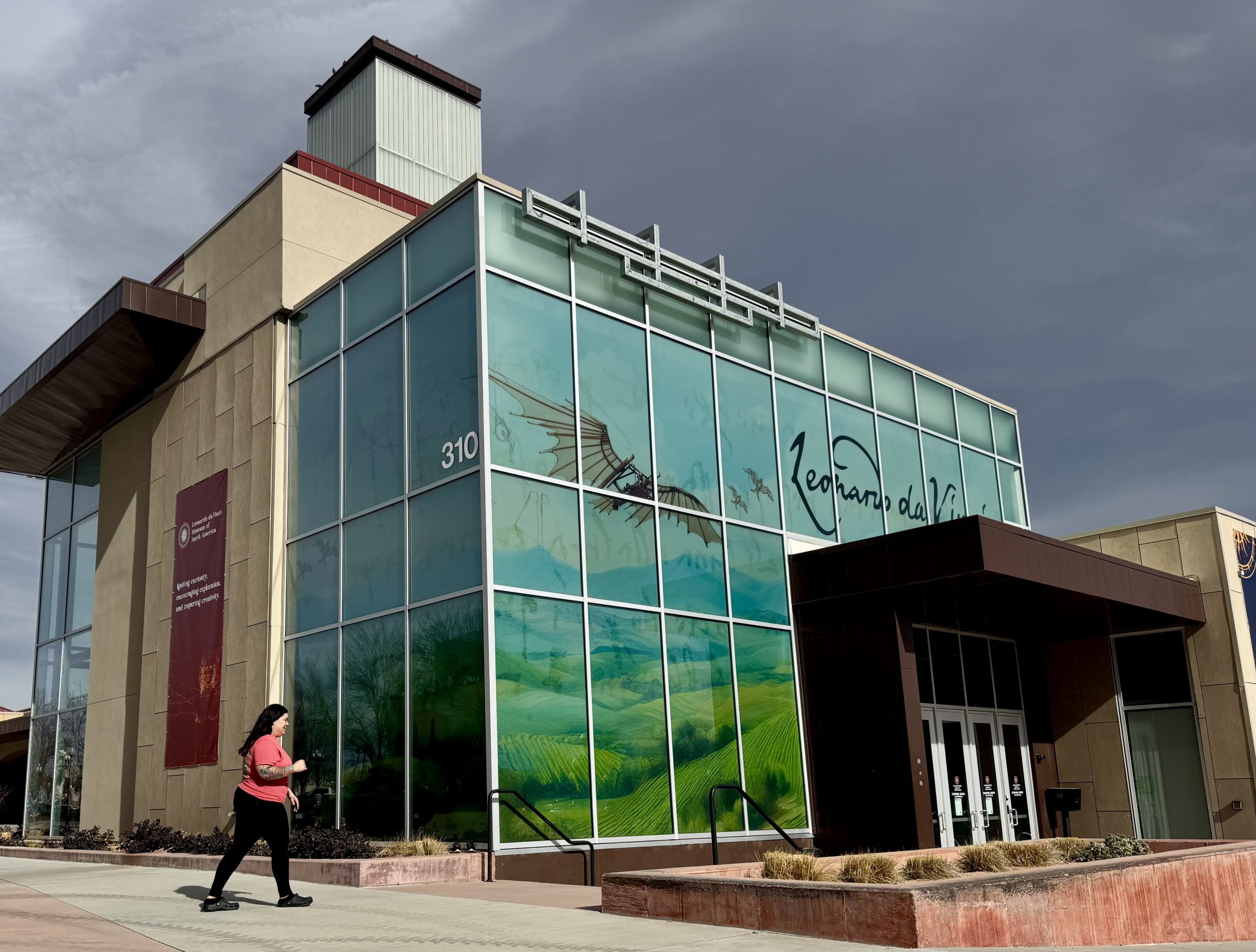
The new Leonardo da Vinci Museum of North America, opened June 12, has everything you’d expect of an institution dedicated to the renowned 15th century Italian artist and inventor: a nearly 20,000-square-foot space large enough to house several one-of-a-kind reproductions of his work that you won’t find in just any museum, starting with the palazzo-worthy lobby.
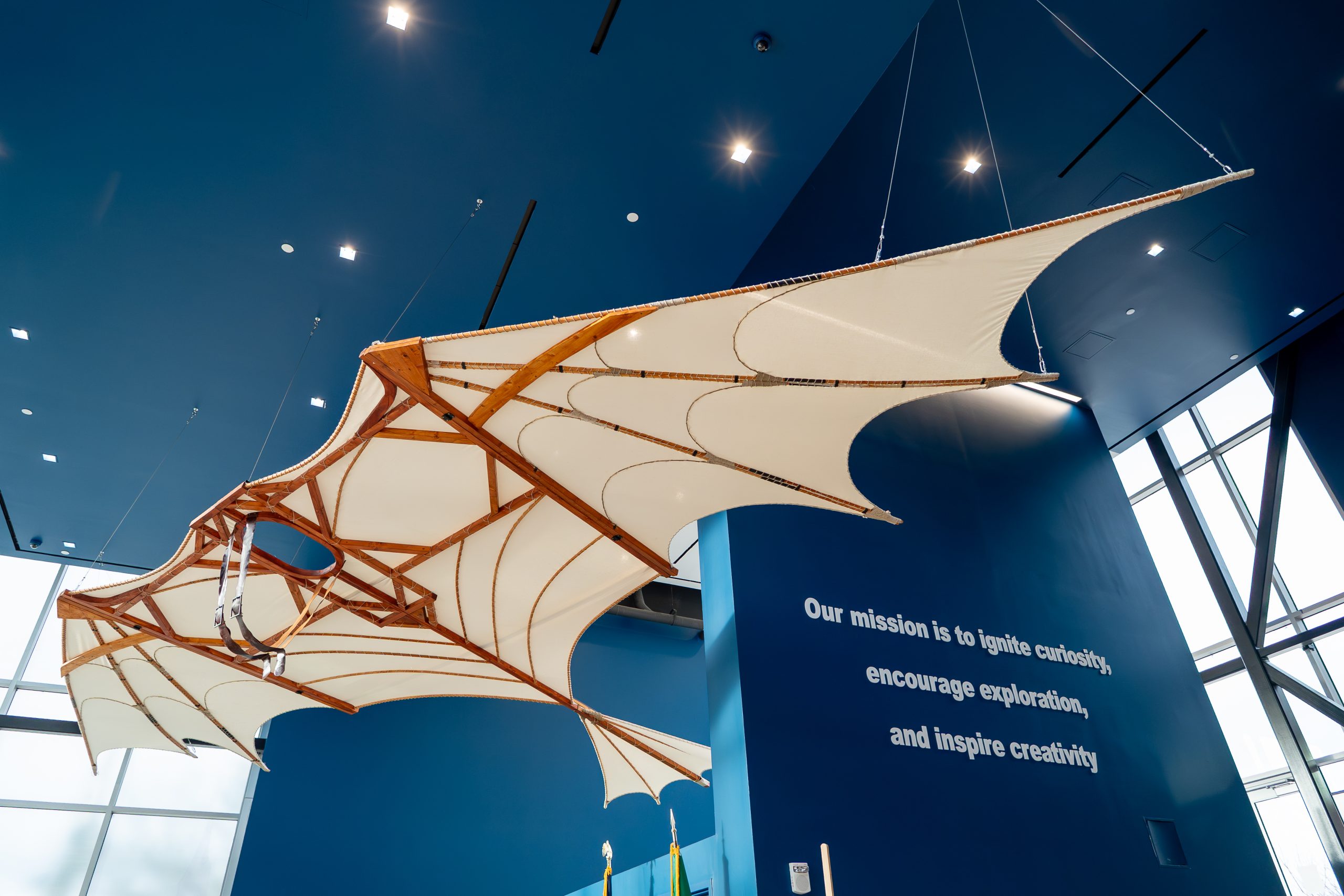
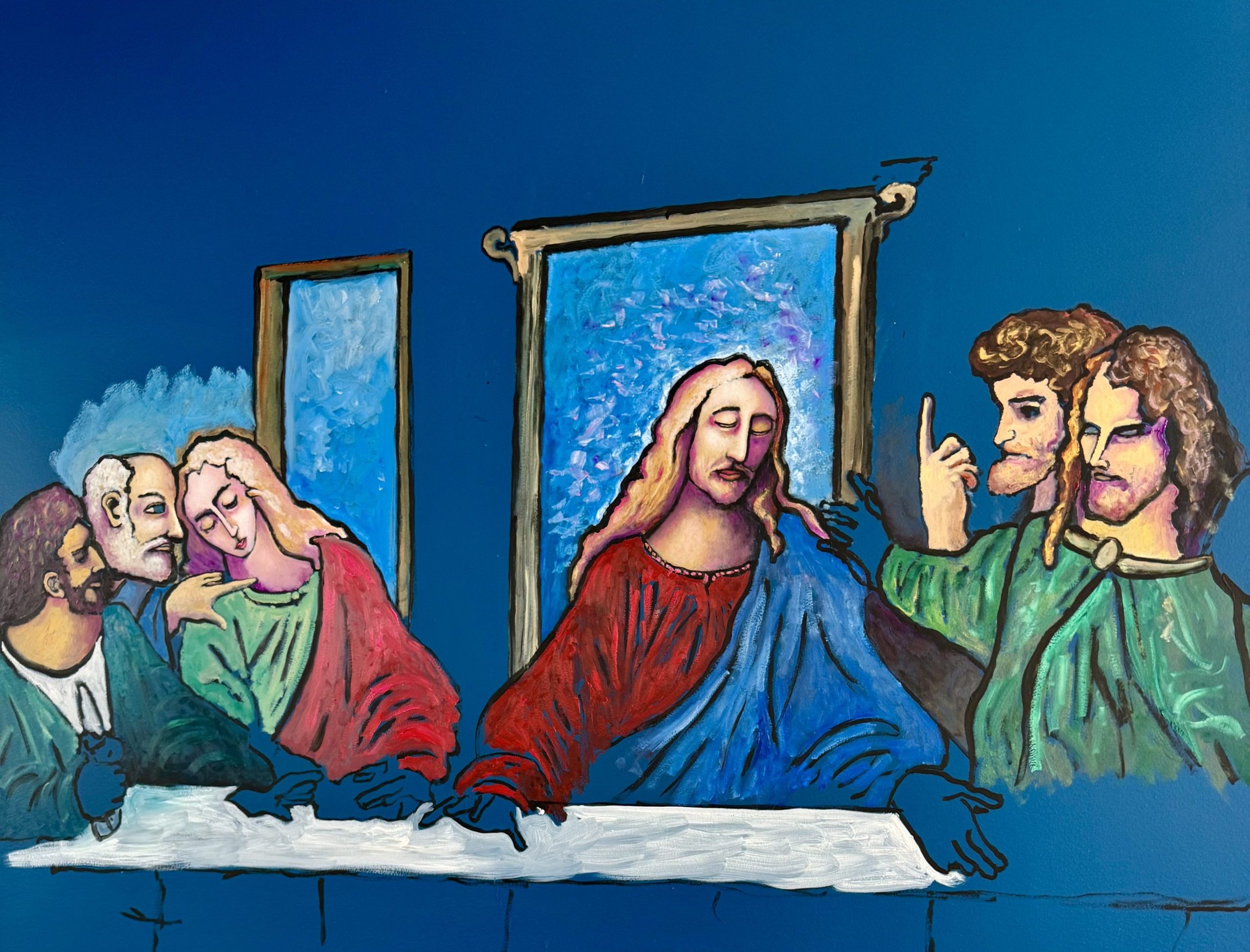
A flourish of towering, peacock-blue walls, high above one to the left featuring beginnings of a mural-style recreation of da Vinci’s iconic work the Last Supper, the museum’s pièce de resistance soars overhead from the ceiling: a 39-foot-glider fashioned from canvas and wood, a full-scale reproduction of the one da Vinci’s apprentice tested in 1506. The only one in the world.
The master himself is even there to greet you, digitally of course, from a screen situated behind the natural-wood ticket desk.
“Hello, my name is Leonardo da Vinci,” he says. “It’s nice to meet you.”
To the right, a galleria beckons visitors toward the museum entrance, ushered in by two stone figures—a flower-adorned female in a garden, a male in a Tuscan setting—painted by local artist Bonnie Waugh.
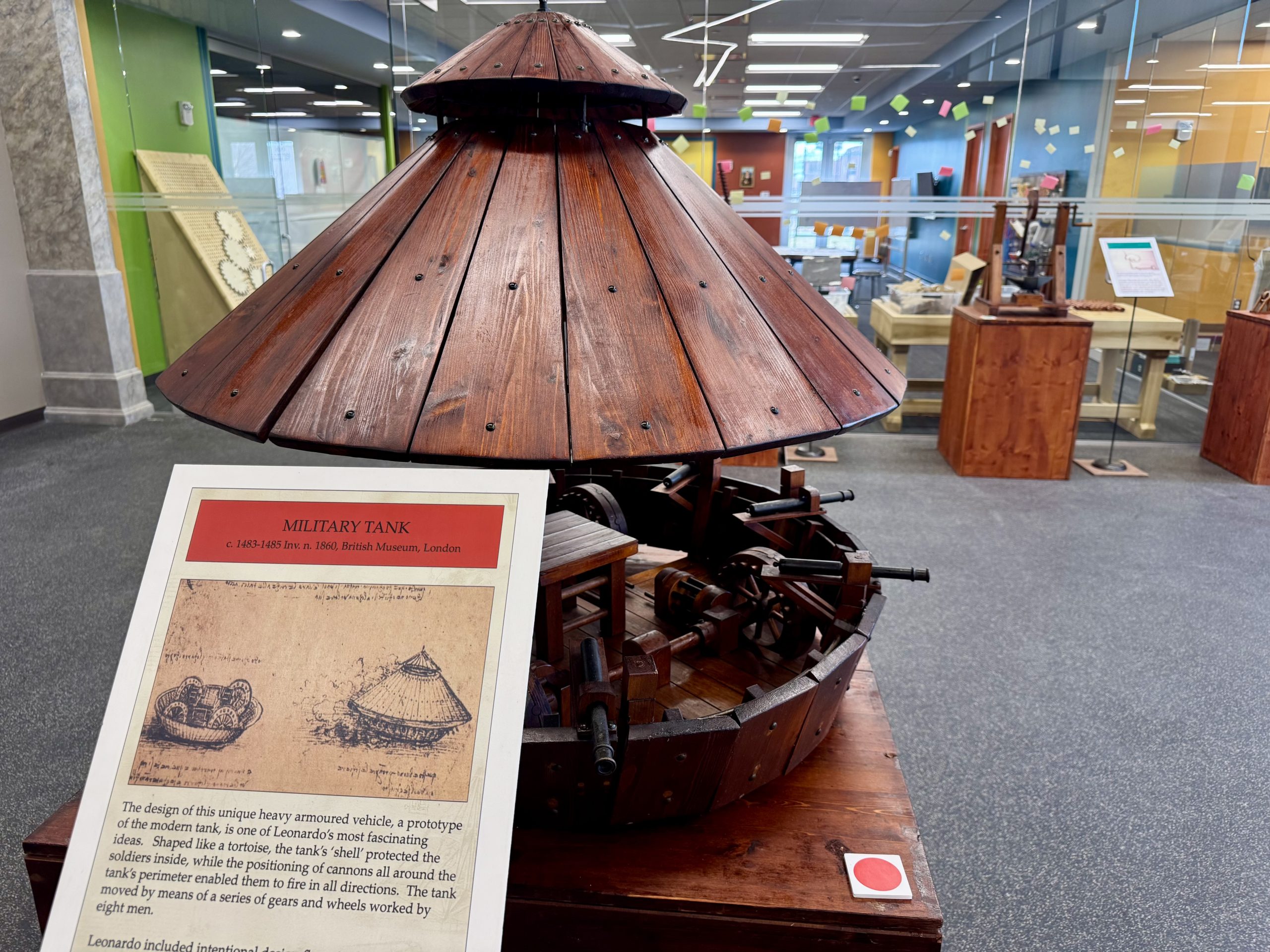
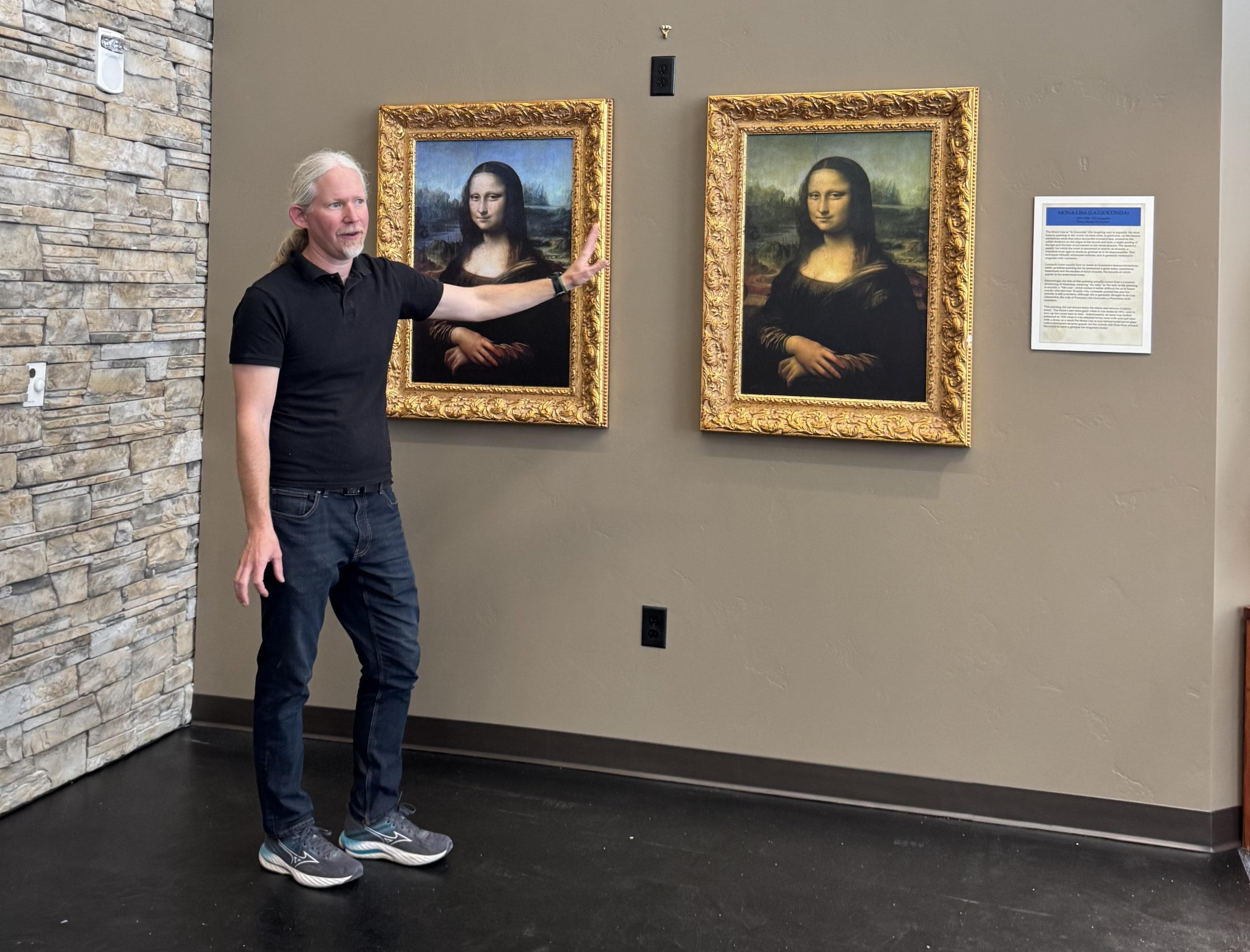
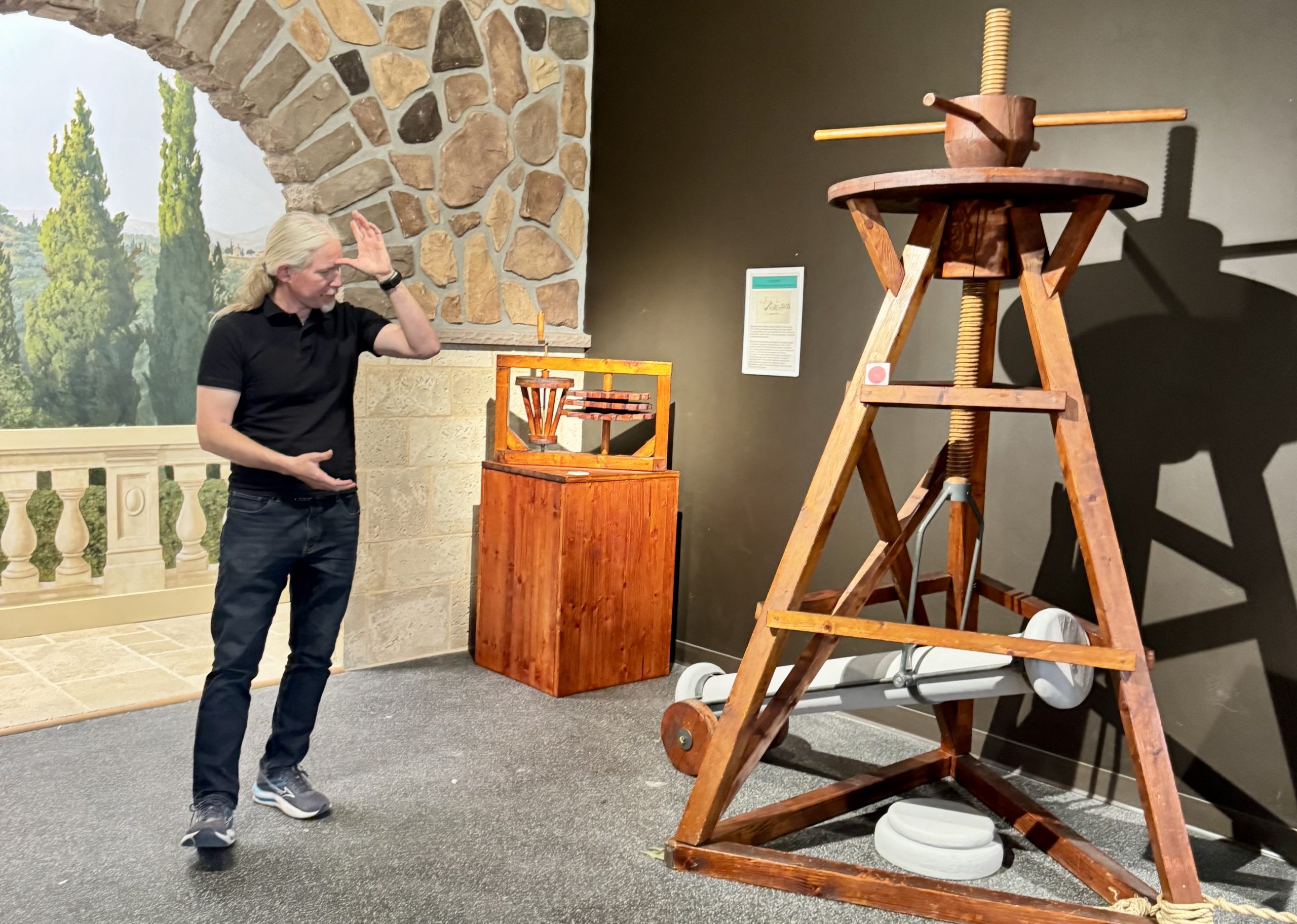
Beyond the trompe-l’oeil stone arch, the cavernous exhibit hall displays more than 60 exhibit pieces representing da Vinci’s vast body of work, from reproductions of his work like the Mona Lisa and the Annunciation, to inventions like the Archimedes Screw (used for irrigation), parachute, and life buoy. There’s also a section dedicated to his military/war machines inventions, including movable barricades, a Scorpion War Boat, and the Da Vinci Tank.
There’s even a Codices Library, a small room displaying da Vinci’s surviving notebooks containing thousands of his drawings, observations and inventions, the most complete collection in North America.
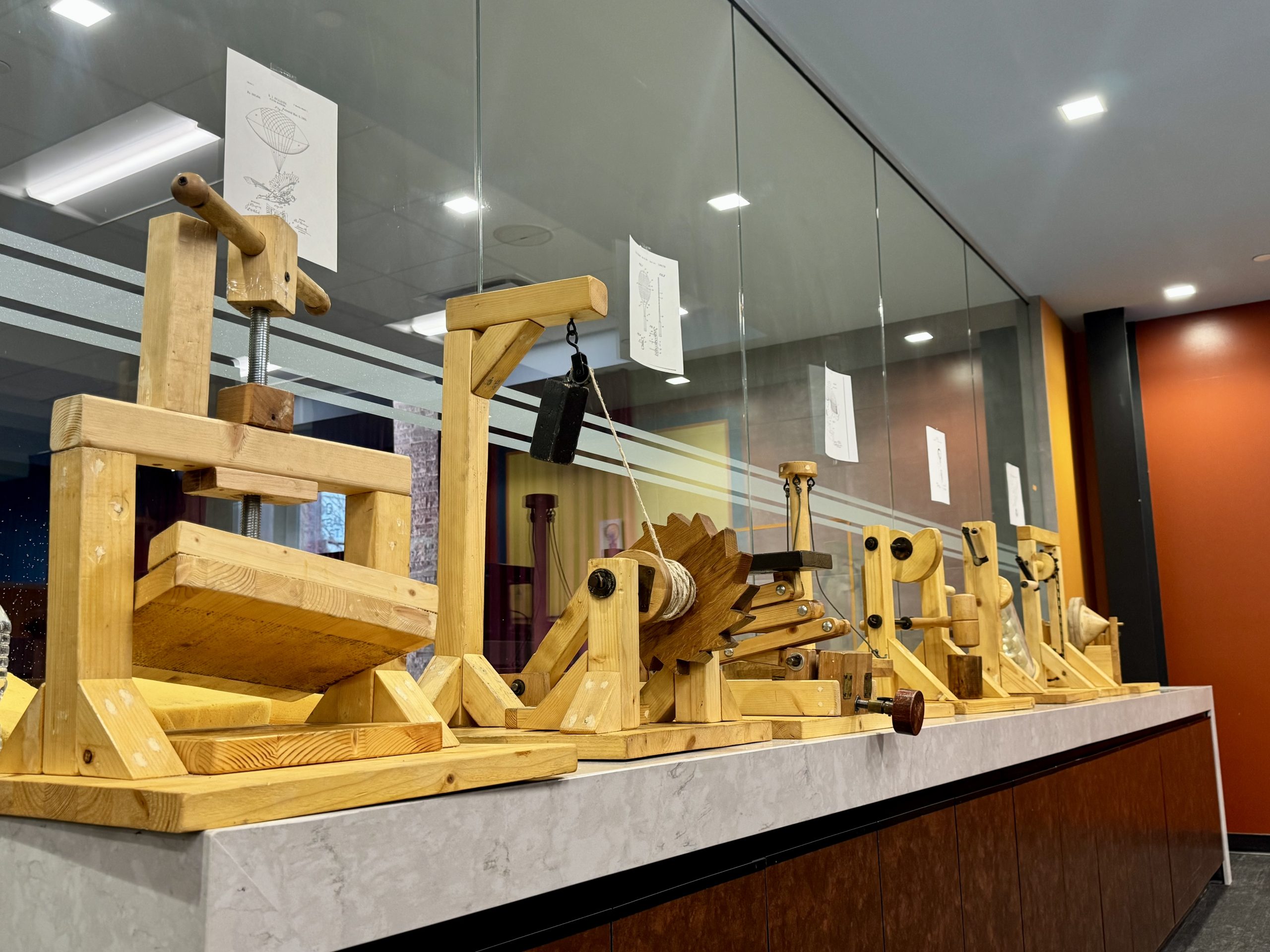
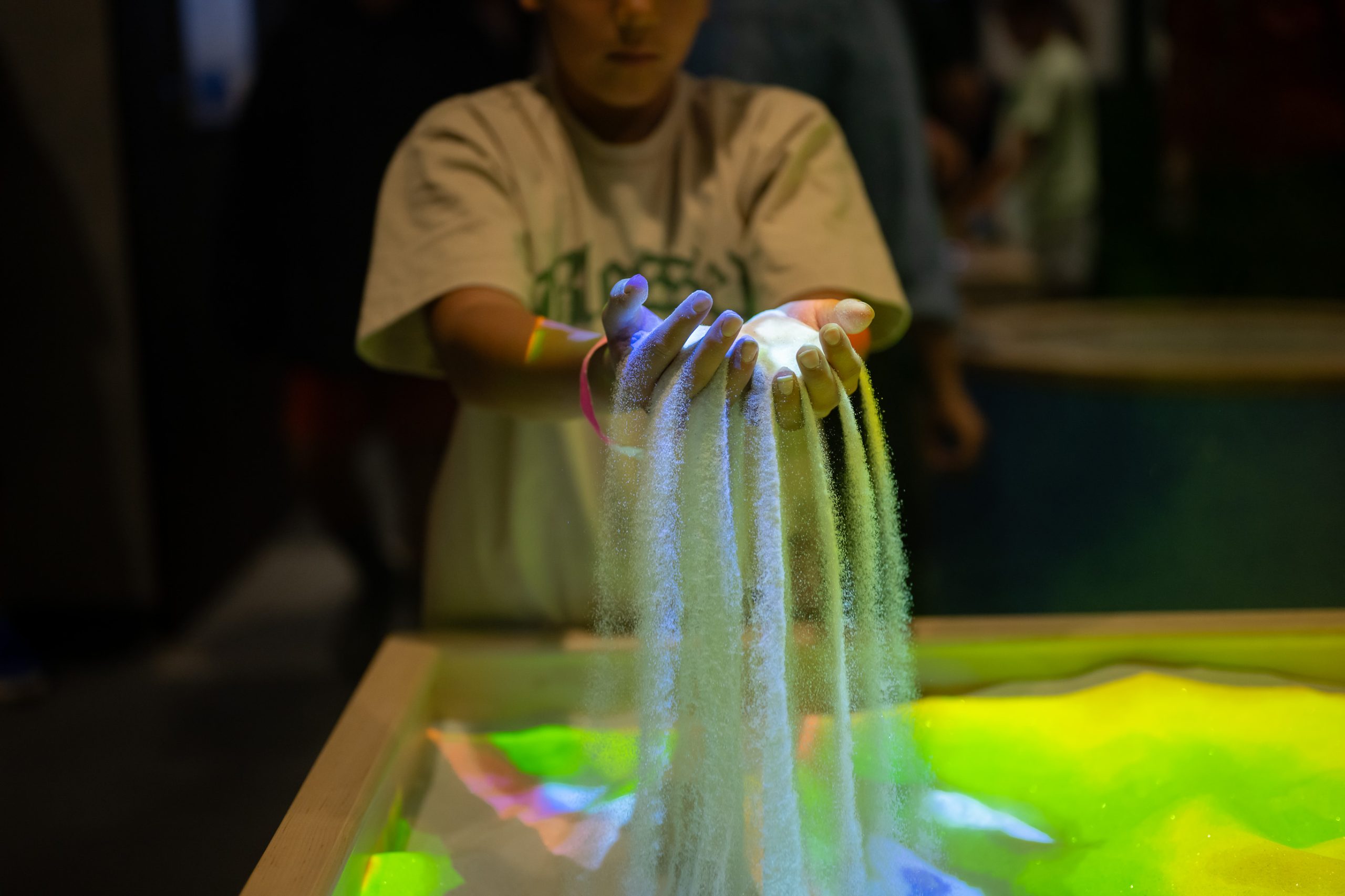
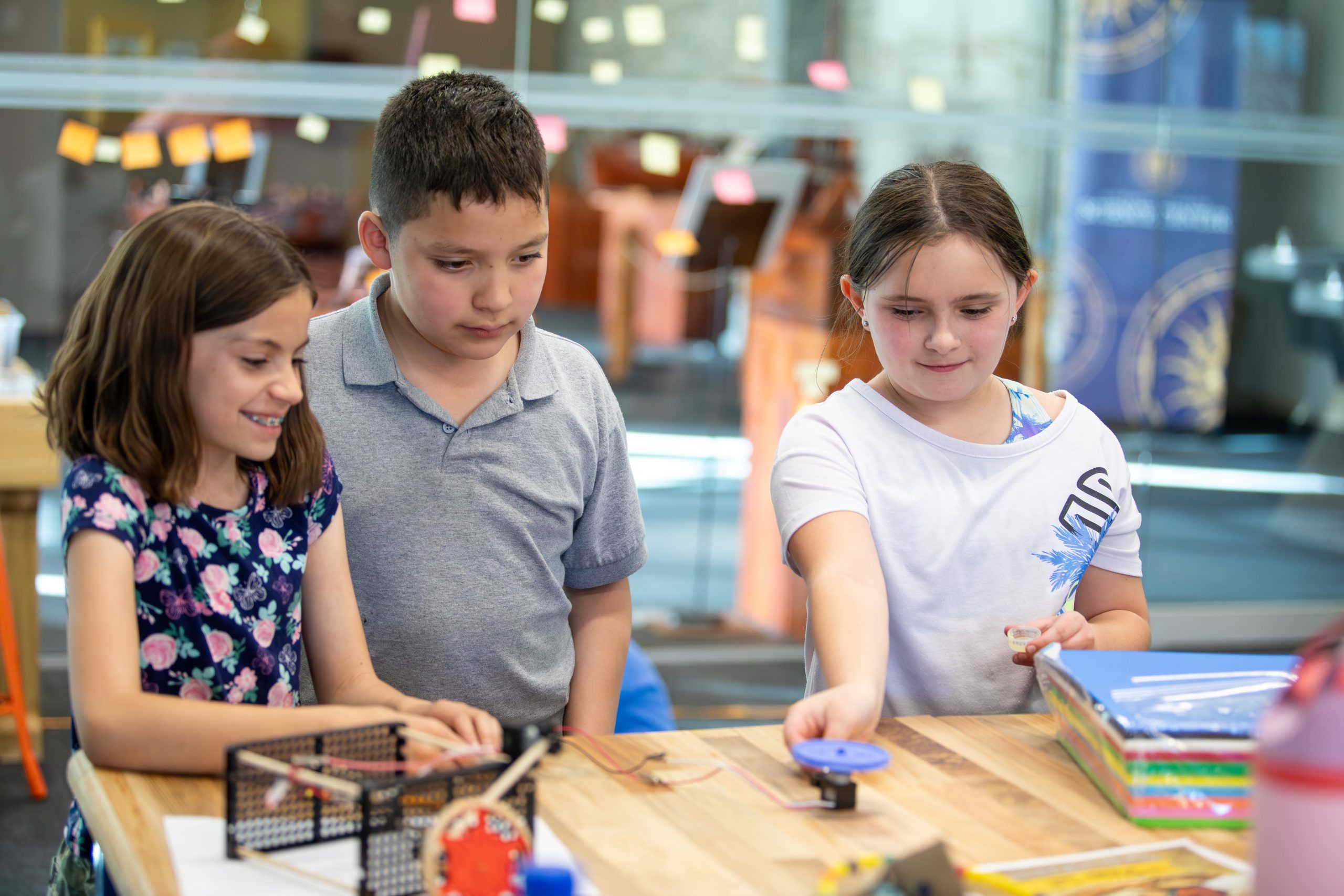
And, at the very back of the building, a STEAM center will act as an education hub, offering interactive/hands-on machines for students to learn about science, technology, art, and mathematics.
Indeed, North America’s only permanent Leonardo da Vinci Museum is everything you’d expect and more.
Well, except the location.
Situated in a newly expanded 45,000-square-foot conference center along a quiet riverwalk inspired by San Antonio’s Paseo del Rio—in a Colorado city where the Rocky Mountains give way to arid plains—North America’s first permanent museum dedicated to Leonardo da Vinci is located in Pueblo, Colo., pop. 170,000. (Only two other museums are designated as permanent partners with the Museum of Leonardo da Vinci in Florence, located in Beijing and the resort town of Seogwipo-si on Jeju Island in South Korea. Affiliate museums are also located in Brazil, Australia, and France.)
Located just two hours south of Denver, roughly 100 miles from the New Mexico border, you’re not alone if you’ve never heard of it.
As a lifelong Coloradan, I can attest that the general response by locals when learning about the museum is some version of, “Wait. In Pueblo?”
Nicknamed Steel City or “the Pittsburgh of the West,” it has struggled for decades to overcome its rust-belt reputation as an economically depressed outpost devoid of tourist attractions beyond the Colorado State Fair and renowned Pueblo Green Chile.
Considered more of a thoroughfare along Interstate 25 on the way to somewhere else like Albuquerque or Santa Fe, the museum’s founding director and president, Joe Arrigo, knew it could be so much more.
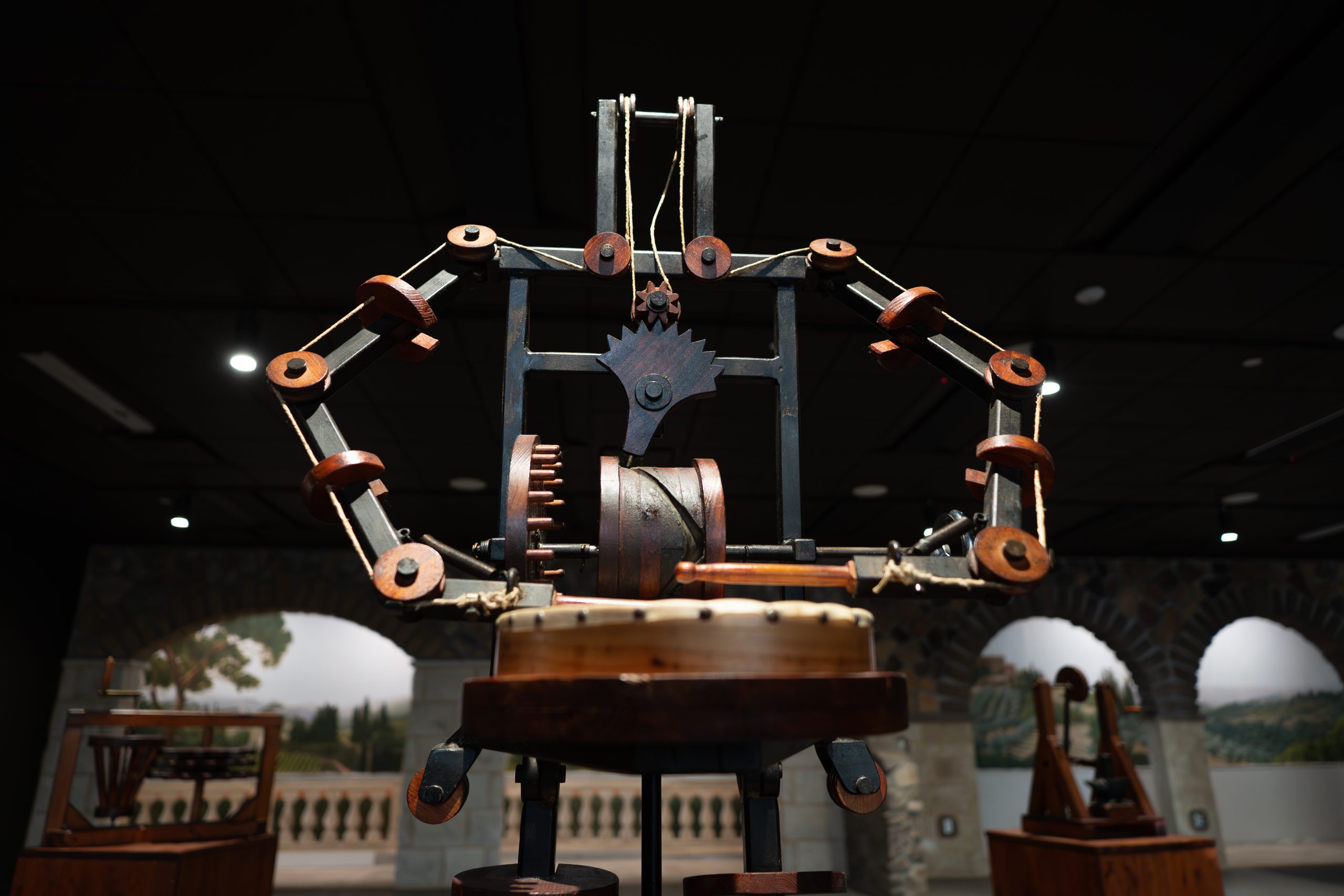
A lifelong Puebloan, former music teacher and retired businessman, Arrigo was serving on the board of Pueblo’s Sangre de Cristo Arts and Conference Center ahead of its 50th anniversary in 2022. To mark the occasion, Arrigo helped secure the traveling exhibition “Da Vinci: Machines & Robotics,” created by the Artisans of Florence (AOF, https://artisansofflorence.com), for display at the center that year.
“That’s where we met Joe,” says Thomas Rizzo, AOF’s director of travelling exhibitions.
Based in Florence, Italy, AOF specializes in reconstructing ancient and lost technology, called “forensic archaeology,” in partnership with the Museum of Leonardo da Vinci, to bring the artist’s works to life.
“The Niccolai family, who own the museum in Florence, have been building and designing, researching, and reconstructing Da Vinci’s machines since the 1960s,” Rizzo says. “The AOF were one of the first to pioneer looking through (Da Vinci’s) drawings and creating life-size models with true-to-era materials.”
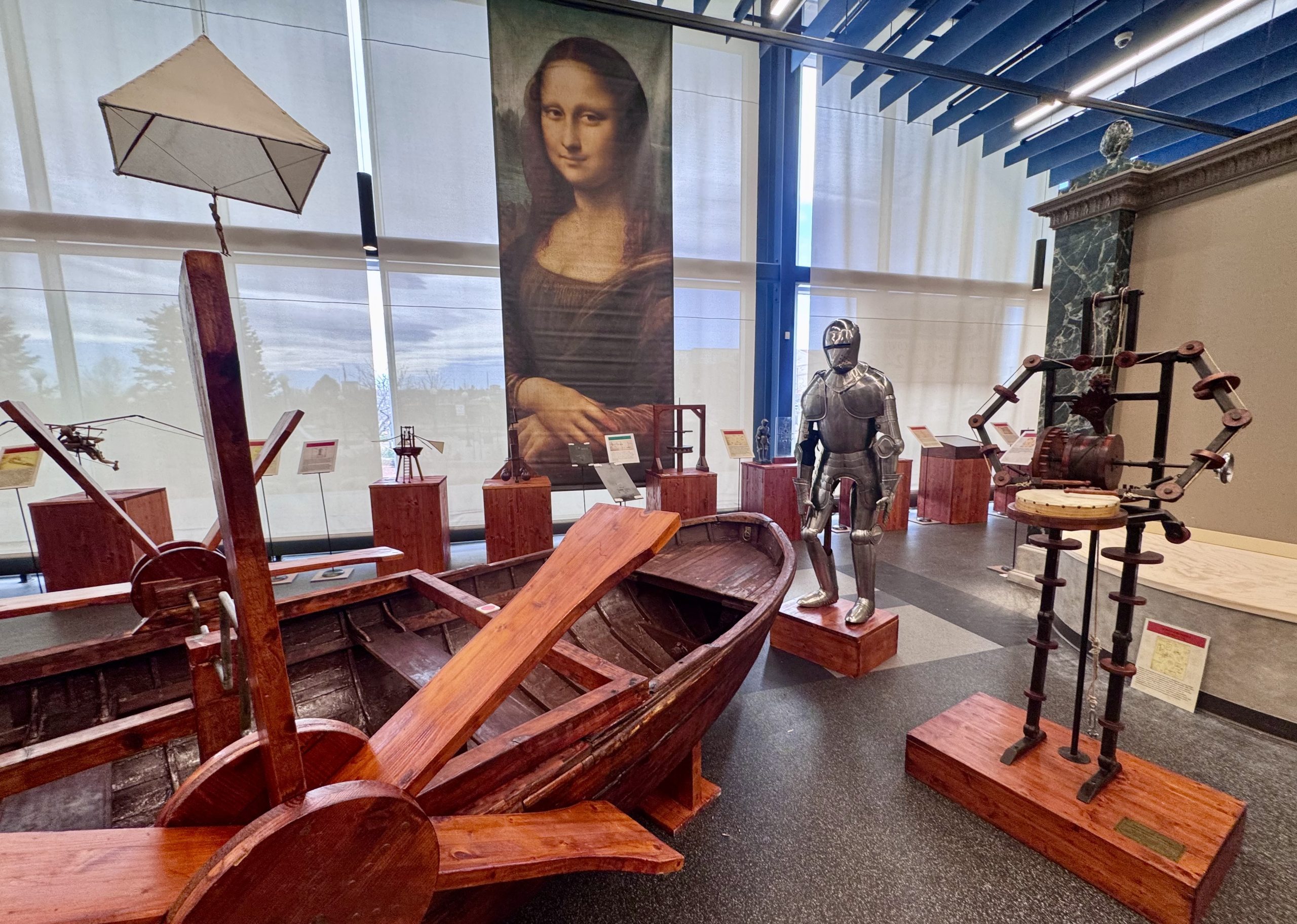
It’s also how Arrigo learned about AOF’s logistical challenges in storing and moving traveling exhibits throughout the U.S. He had the perfect solution: Store them in the cement igloos (700 in all) at the PuebloPlex, a former WWII military depot used for stowing supplies and ammunition, located just 15 miles east of Pueblo.
That’s when the serious conversations began, Rizzo says.
“We were looking for a long time, maybe five years, for the right place to build a permanent Da Vinci museum (in North America),” Rizzo says. “We couldn’t imagine it (in Pueblo) back when we were here to do the Sangre de Cristo event. But certainly, after talking to Joe, and he came to Italy and saw the full scope of what it could be, we kept talking.”
Pueblo has always been an orphan, Arrigo says, due in large part to the city’s steel-producing industry, a byproduct of which included sulfur dioxide gas.
“The whole town smelled like eggs,” he says. “We began to clean that up (in the late 1970s). And look at it now.”
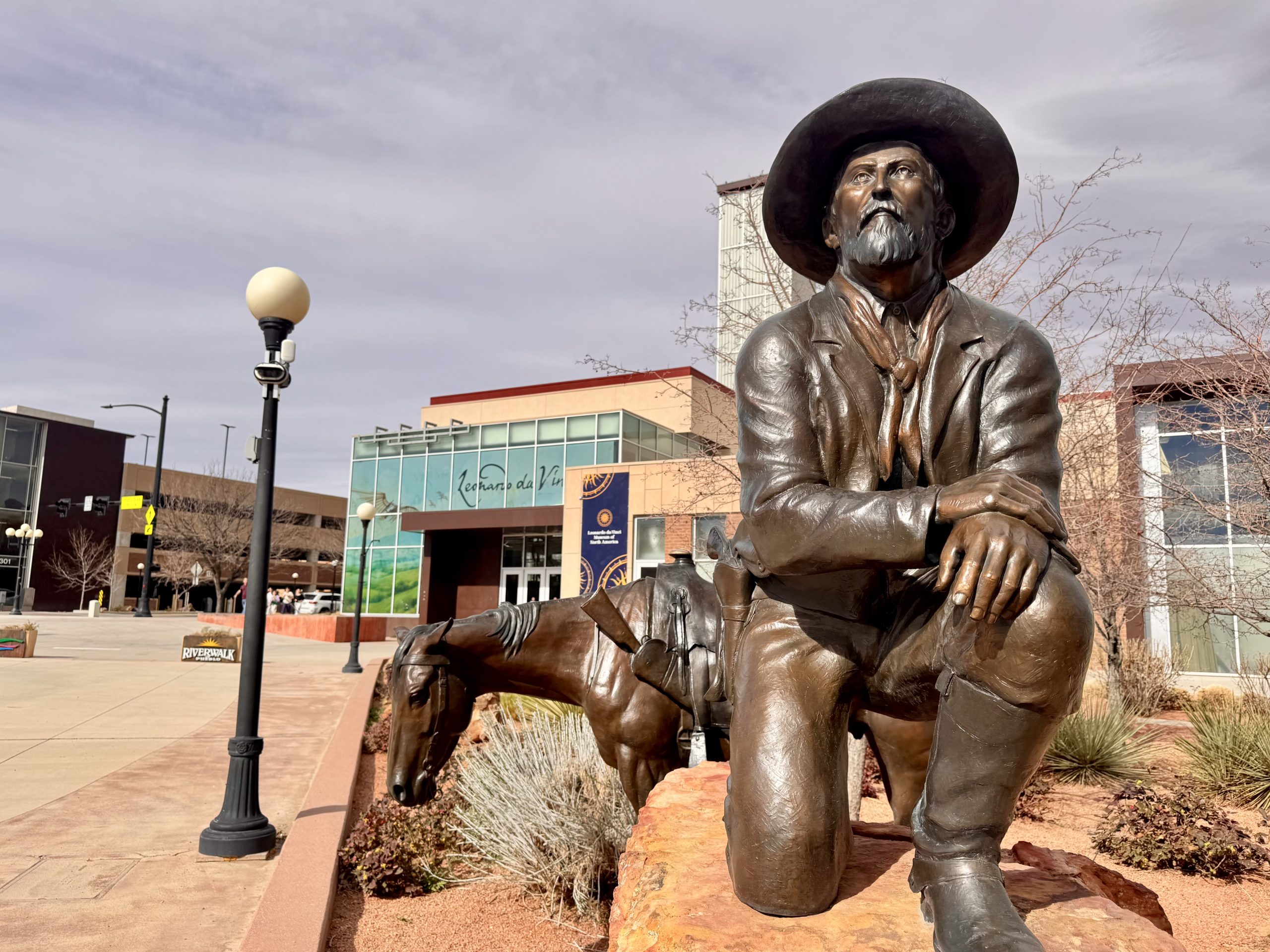
The city’s Historic Arkansas Riverwalk that winds through downtown has been quietly boosting Pueblo’s economy since opening in 2000, attracting boutique hotels, restaurants, and breweries to rival other tourist destinations. Once the building space opened in late 2024, formerly the Professional Bull Riders Sports Performance Center, the museum deal was sealed.
“The riverwalk, the boathouse (officially the Pueblo Toyota Boathouse, opened in April), and what we’re doing along with the convention center — I think it’s really an exciting sort of thing that’s going to be happening,” Arrigo says. “We’re in a beautiful, beautiful location.”
But beauty isn’t the city’s only highlight, Rizzo says.
“The thing that really struck us about Pueblo was, number one, there’s an incredible arts community here,” he says. “Number two, there are people that are really engaged and really want to see their community grow. And we love that the people are so passionate about their city.”
It’s also in the ideal location.
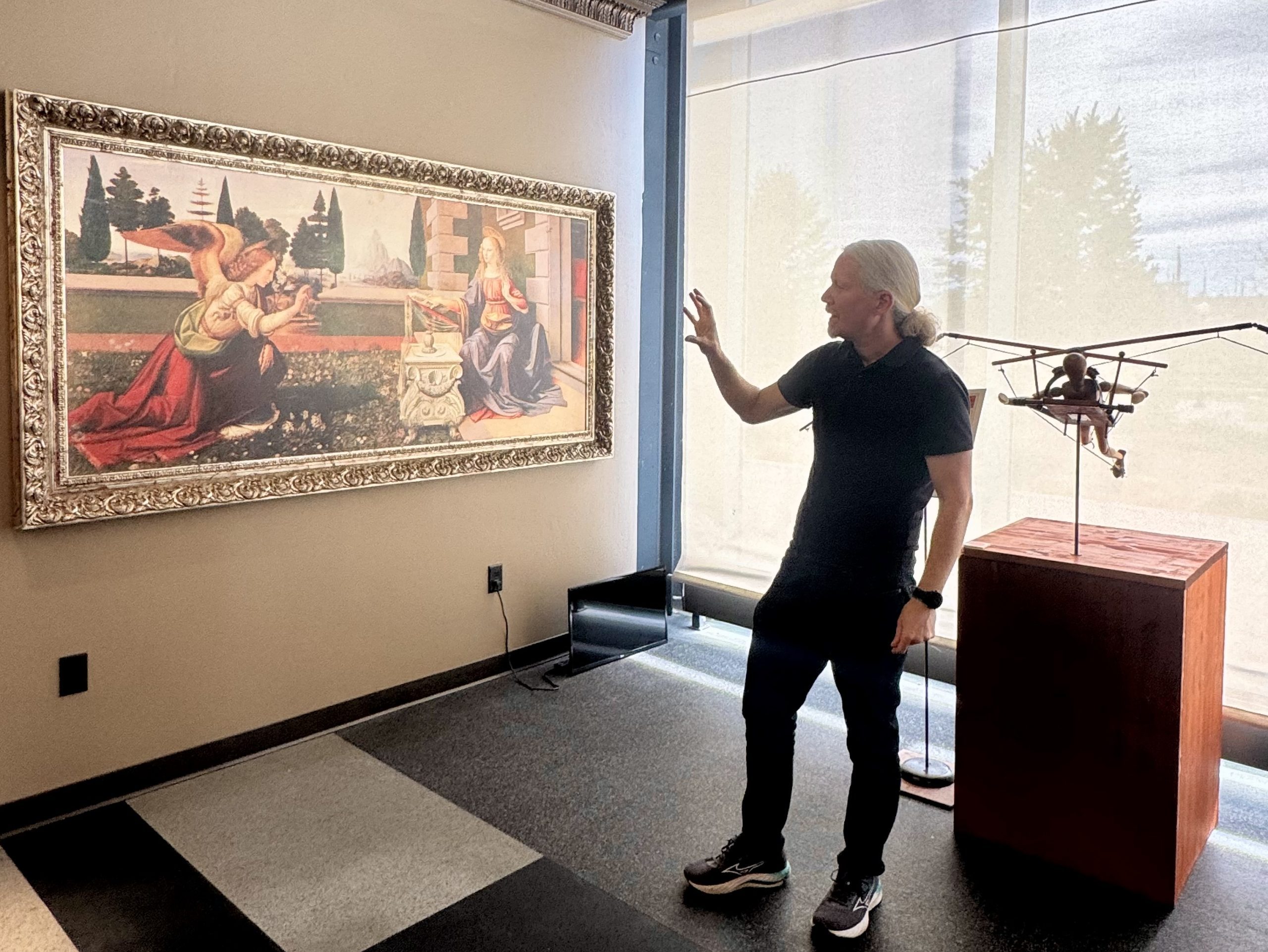
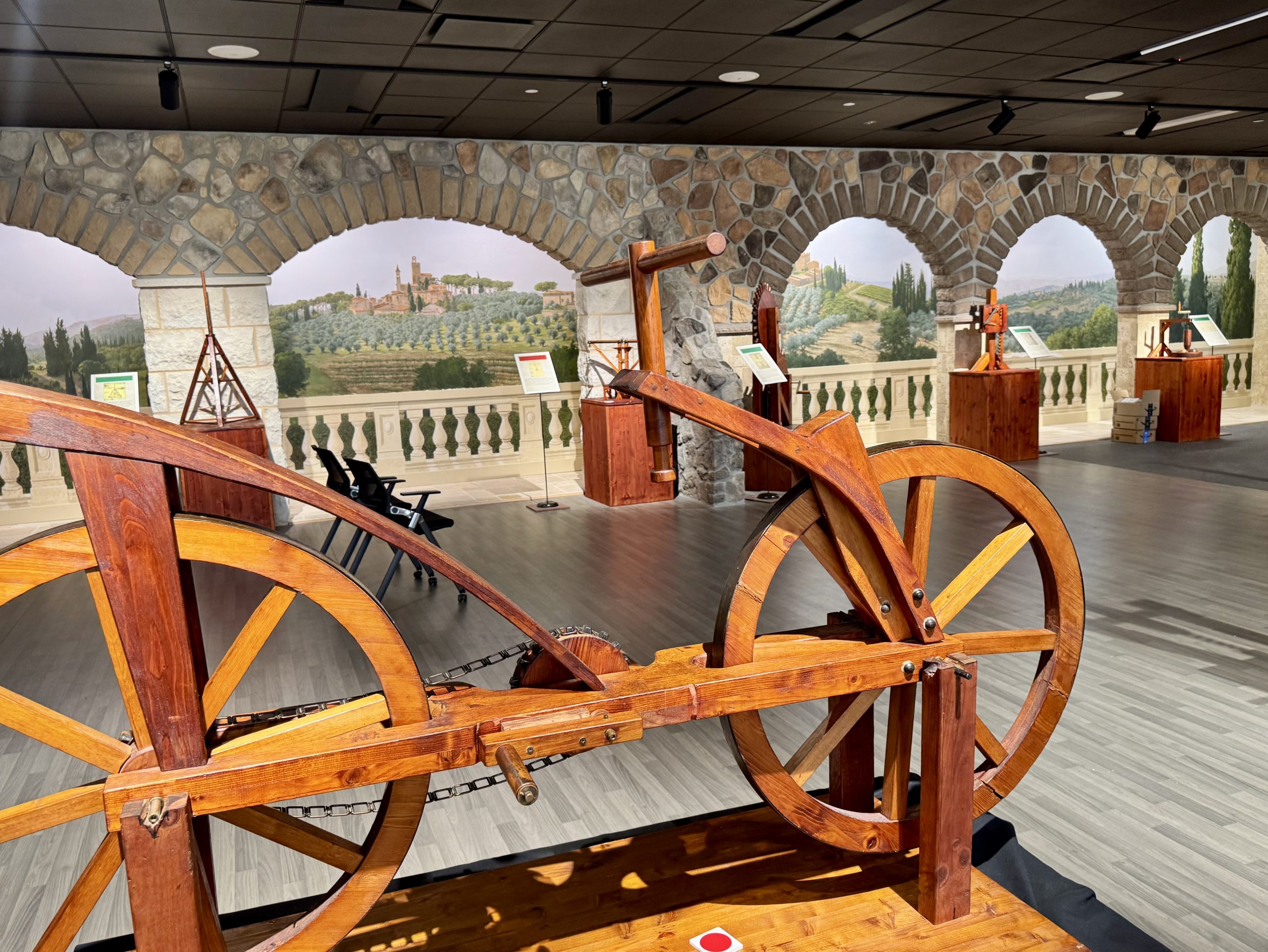
“We tour these exhibitions itinerantly all around America, and (Pueblo is) literally the center of the country,” Rizzo says. “So from a logistics point of view, it’s very convenient.”
It also offers something the country’s most famous cities can’t: room to grow.
“If you go to a big city, the doors are shut, more or less,” says AOF Head Artisan Paolo Gori. “(The tourist attractions) are all already done. So we felt that that’s space we could fill.”
The museum also fills a critical educational gap for local students, as the Pueblo City Schools District 60 cut back to a four-day week since 2018 due to budget cuts and teacher retention.
“When we found out that the children don’t go to school on Fridays, we really thought, ‘We have to help out,’” Rizzo says. “The thing that really cemented it all was the fact that there’s an underserved population here in terms of education, science education, arts education.”
It also motivated Arrigo.
“Because our youngsters only go to school four days a week, we’re trying to bring creativity and problem-solving skills back in things they’re not getting in any other way—to put art with science, to fuse that back together,” he says.
The museum’s mission statement says it all: to ignite curiosity, to encourage exploration, leading to problem solving, creative skills that leads to innovation.
“Some people are going to be doctors, but other people are going to be stay-at-home-(parents),” Arrigo says. “I mean, whatever you are, you just need to be the best that you can be. And that’s our idea — we are trying to create well-rounded, wonderful human beings.”
By Heather Mundt, a freelance writer based near Denver Colorado.