
In 1776, while America’s founding fathers were in Philadelphia signing the Declaration of Independence, colonial forces in New York were in a desperate and losing fight to defend the strategically important city on the Hudson.
The Aug. 27 Battle of Brooklyn — the largest of the Revolutionary War — was a catastrophe. The only good news for patriots was the evacuation of the Continental Army from Brooklyn to Manhattan on a fortuitously foggy night. A failed evacuation could have ended the revolution immediately.
That September, someone started the so-called Great Fire, which burned a swath of Lower Manhattan. And by the end of 1776, colonial forces had retreated from all of New York City, leaving hapless New Yorkers — rebel and loyalist, immigrant and Indigenous, slave and free — to face a seven-year military occupation.
Many left. In the first year, the population crashed to around 5,000 from an estimated 20,000, then over the next six years rose to approximately 50,000 as loyalist and black refugees converged for a measure of safety and, for the blacks, freedom. The British Army stayed until Nov. 25, 1783 (Evacuation Day), more than two years after the war’s end and nearly three months after the Treaty of Paris was finalized.
It’s almost unfathomable, but the badly battered New York City was America’s first capital (1785-1790).
Washington slept here
Gen. George Washington, later President Washington, didn’t just sleep here. He came, he fought, he retreated, he returned (as liberator) and he returned again (as president).
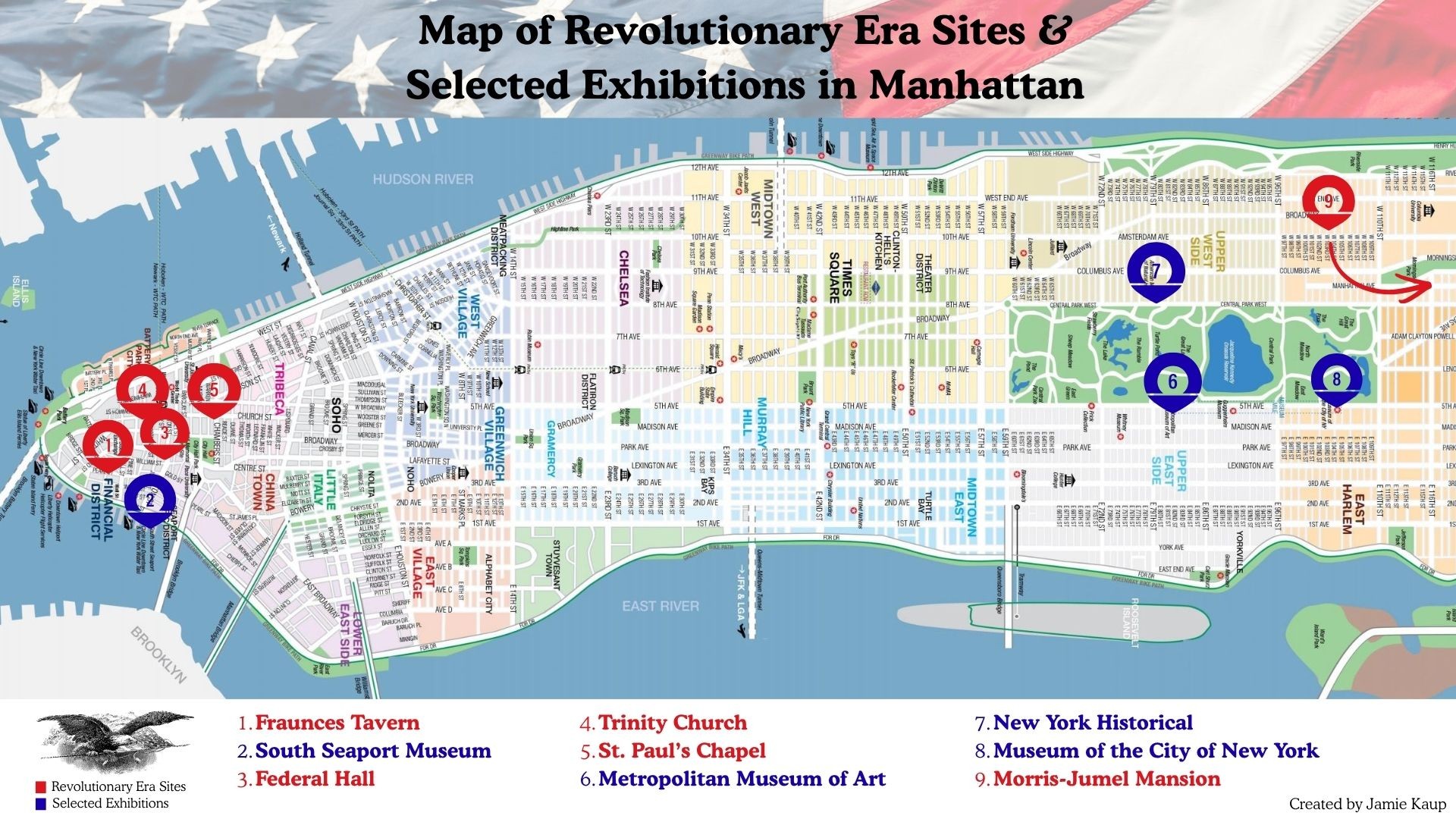
Visitors can follow his footsteps and those of thousands more who lived the New York story in the Revolutionary Era. Some of Manhattan’s surviving institutions — plus a few newer ones with relevant exhibits — are as follows:
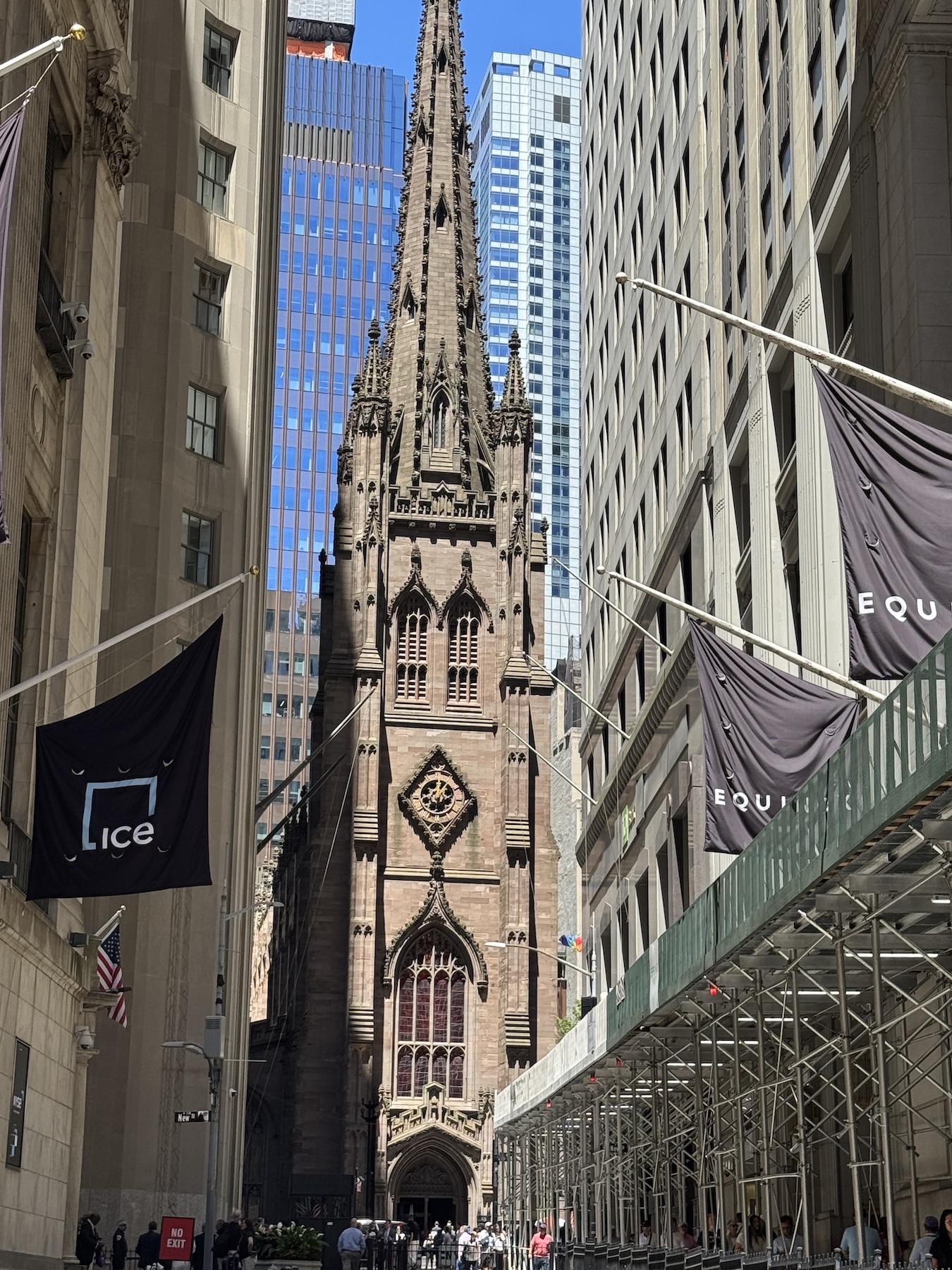
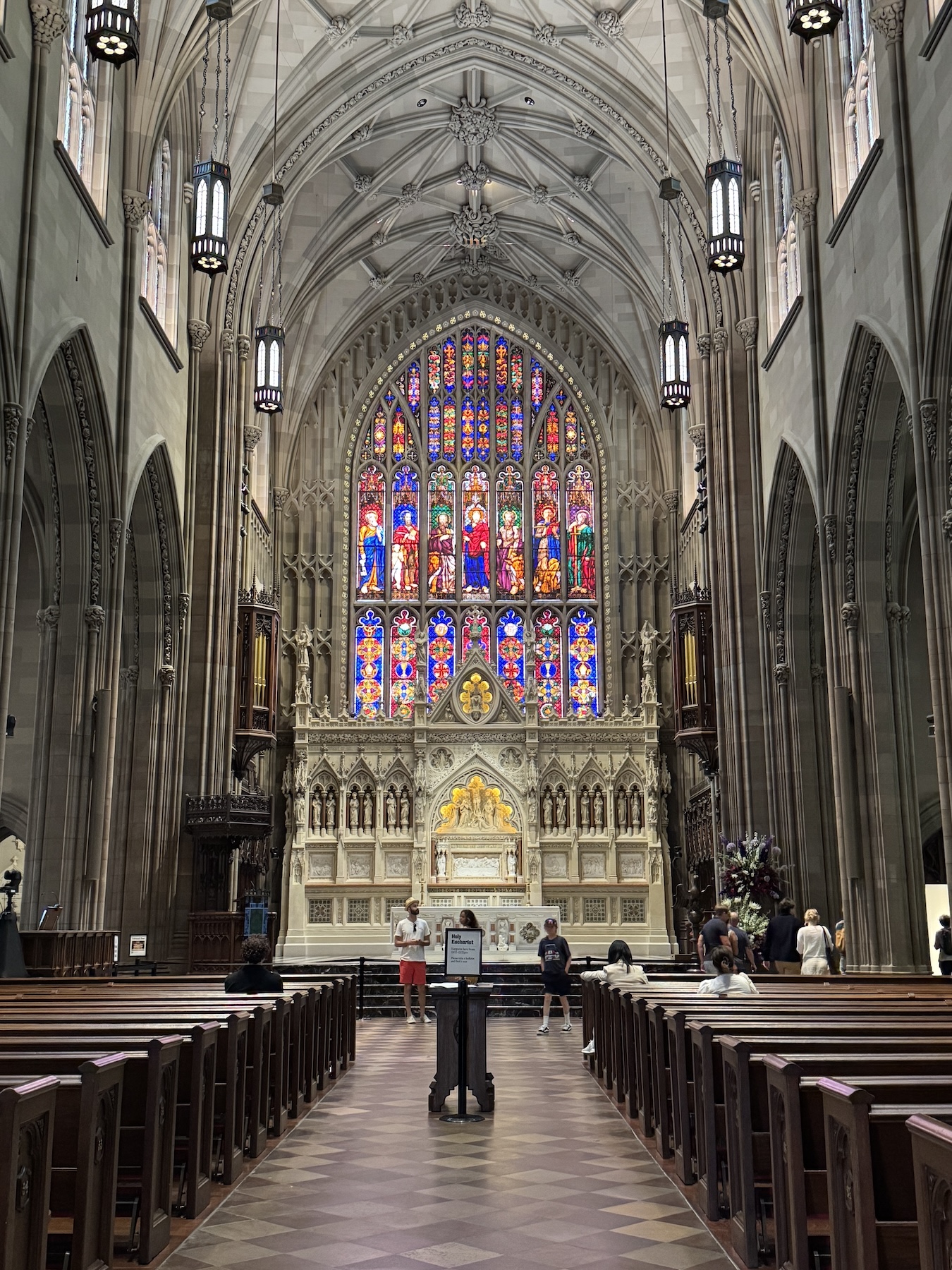
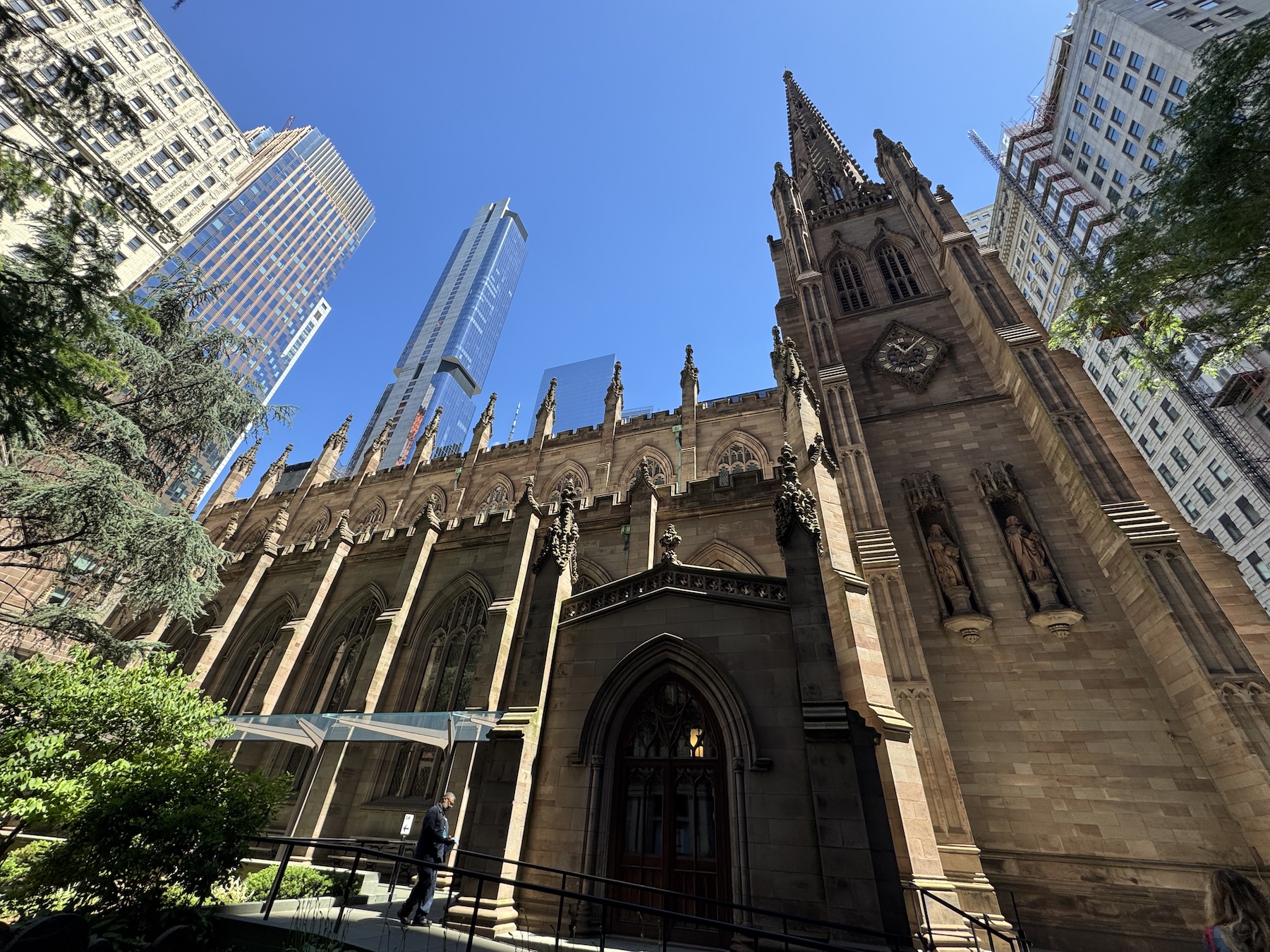
- Trinity Church (89 Broadway), opened in 1698 with an annual rent of one peppercorn, payable to the king. The church was destroyed in the Great Fire and rebuilt by 1790. Roof beams collapsed in 1839, the impetus for a third construction, which opened in 1846. Trinity is considered one of America’s finest examples of Neo-Gothic architecture; its 281-foot steeple made Trinity the country’s tallest building for 23 years.
Washington attended services here before the Great Fire and, as president, attended the 1790 consecration. Alexander Hamilton and family attended services; he and his wife Eliza are buried in the churchyard.
When Queen Elizabeth II visited during America’s bicentennial in 1976, the rector hand delivered 279 peppercorns in back rent.
Visitors can enter the still-active church most days; ditto for the cemetery. Trinity offers programs of music and thoughtful conversations available to all, and routinely spends millions in grants for neighborhood support programs.
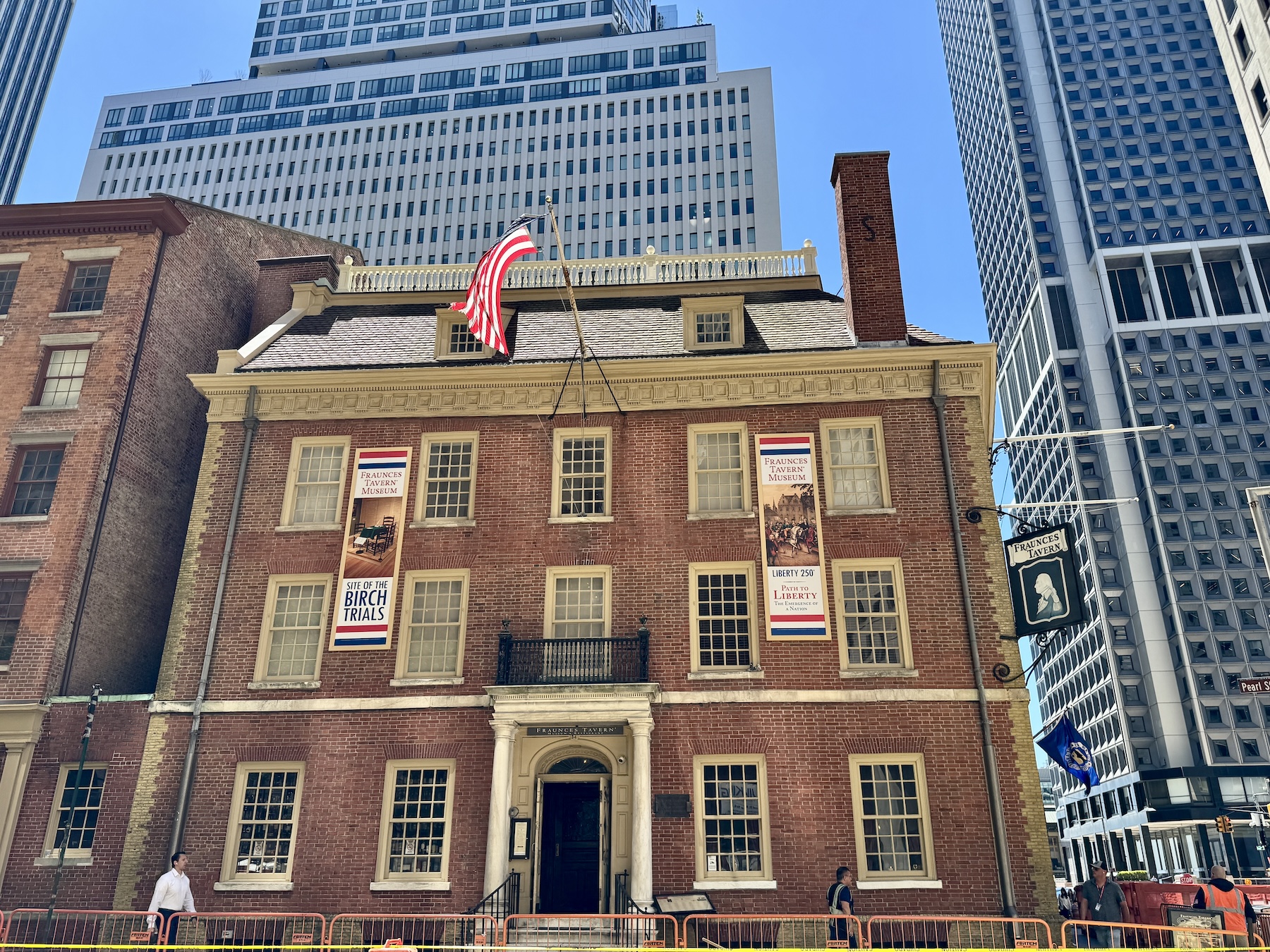
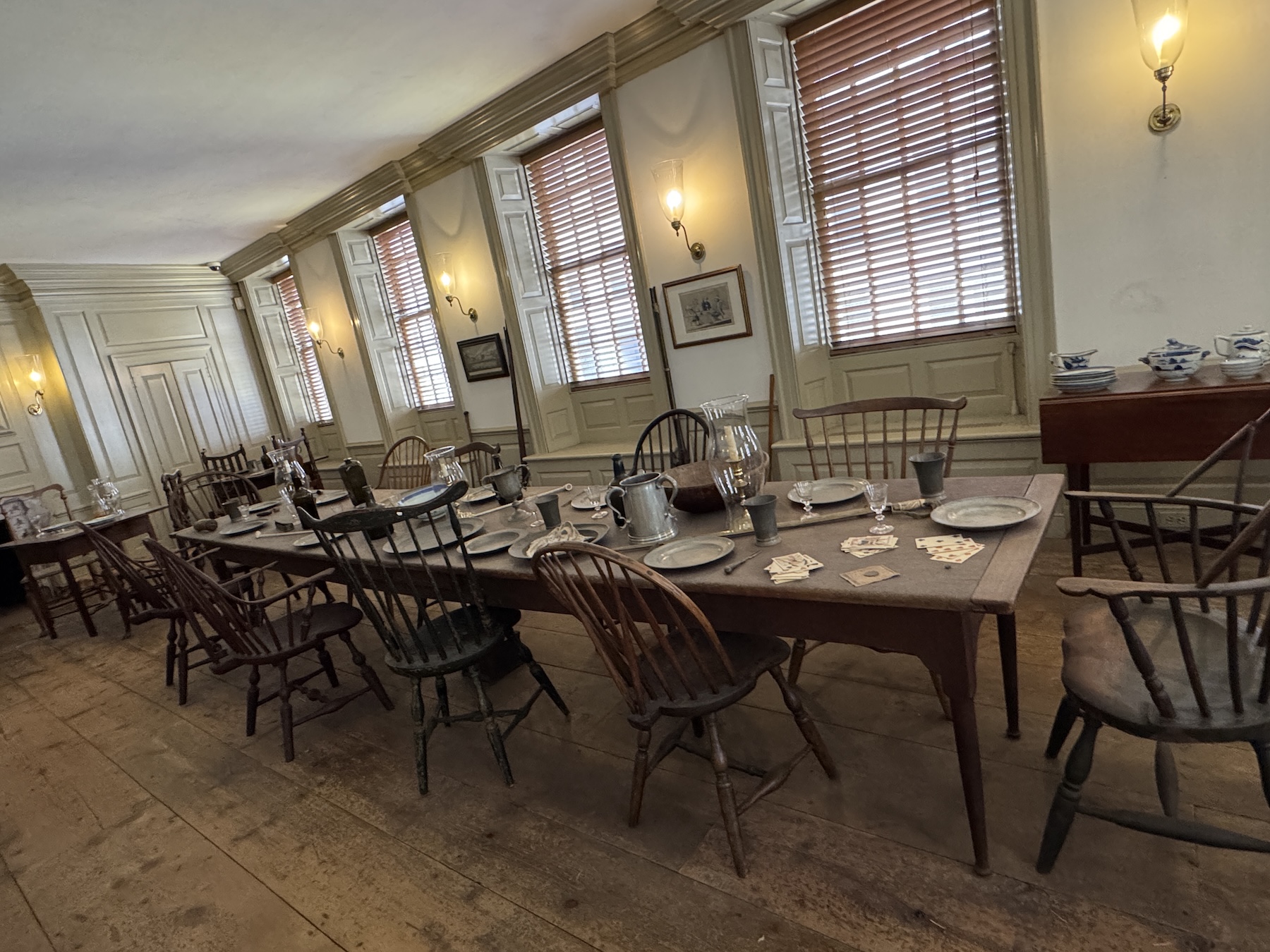
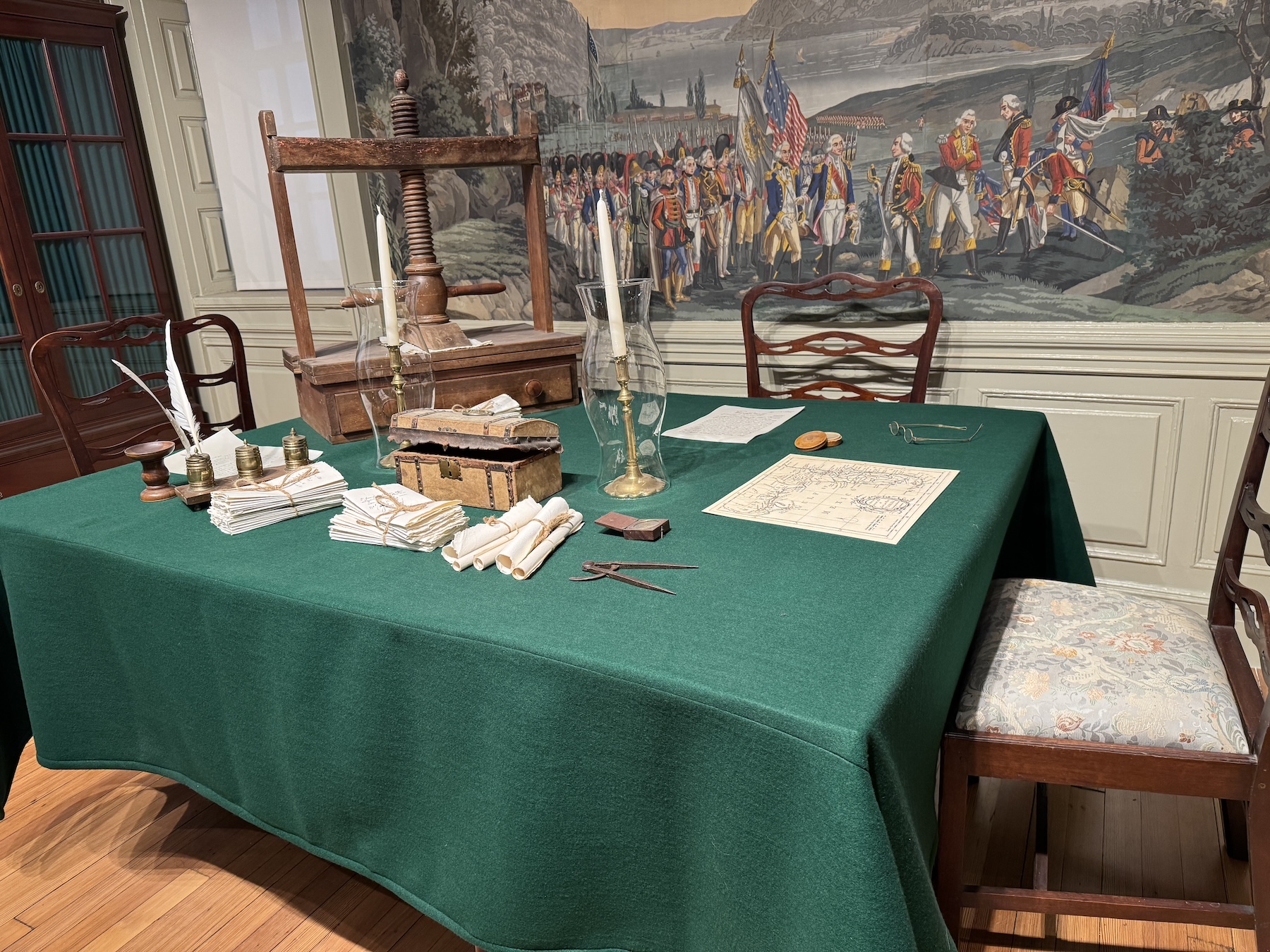
- Fraunces Tavern (54 Pearl St.), a museum as well as thriving restaurant in Lower Manhattan. In 1762, Samuel Fraunces converted a 1719 home into a tavern that became a hotbed of revolutionary discourse and later a source of aid to colonial POWs and intelligence for the Continental Army.
It was also the setting for 1) British trials that led to evacuation of slaves who had helped the British; 2) Washington’s farewell to his officers, and 3) in 1785-1788, the country’s departments of foreign affairs, war and treasury while the U.S. was governed by the Articles of Confederation.
The restaurant and upstairs museum meander across a complex of five connected historic buildings. The museum’s permanent exhibits deal extensively with the tavern’s story. In addition, the museum launched a multi-year exhibit, “The Path to Liberty: The Emergence of a Nation,” to be rolled out in segments..
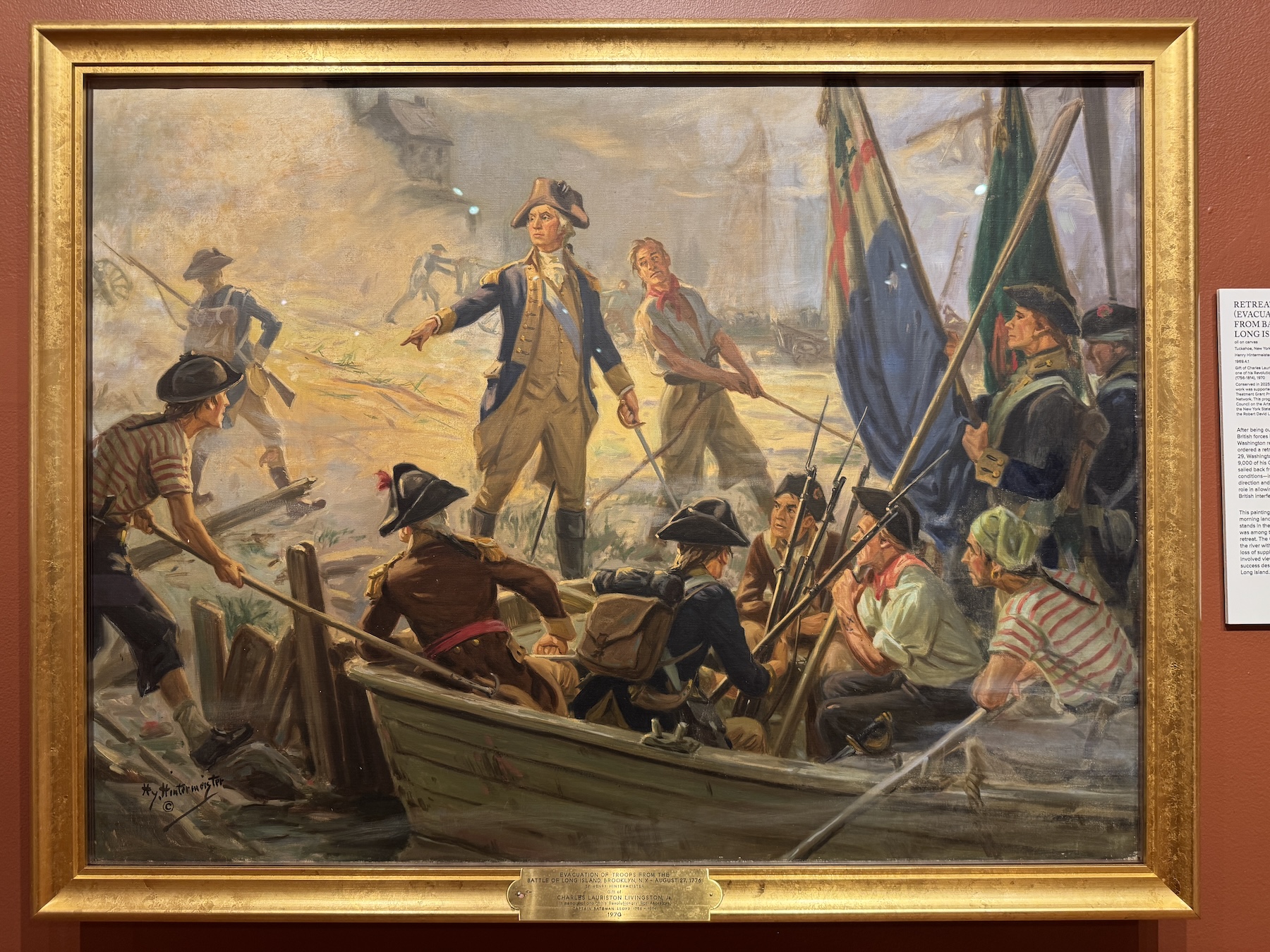
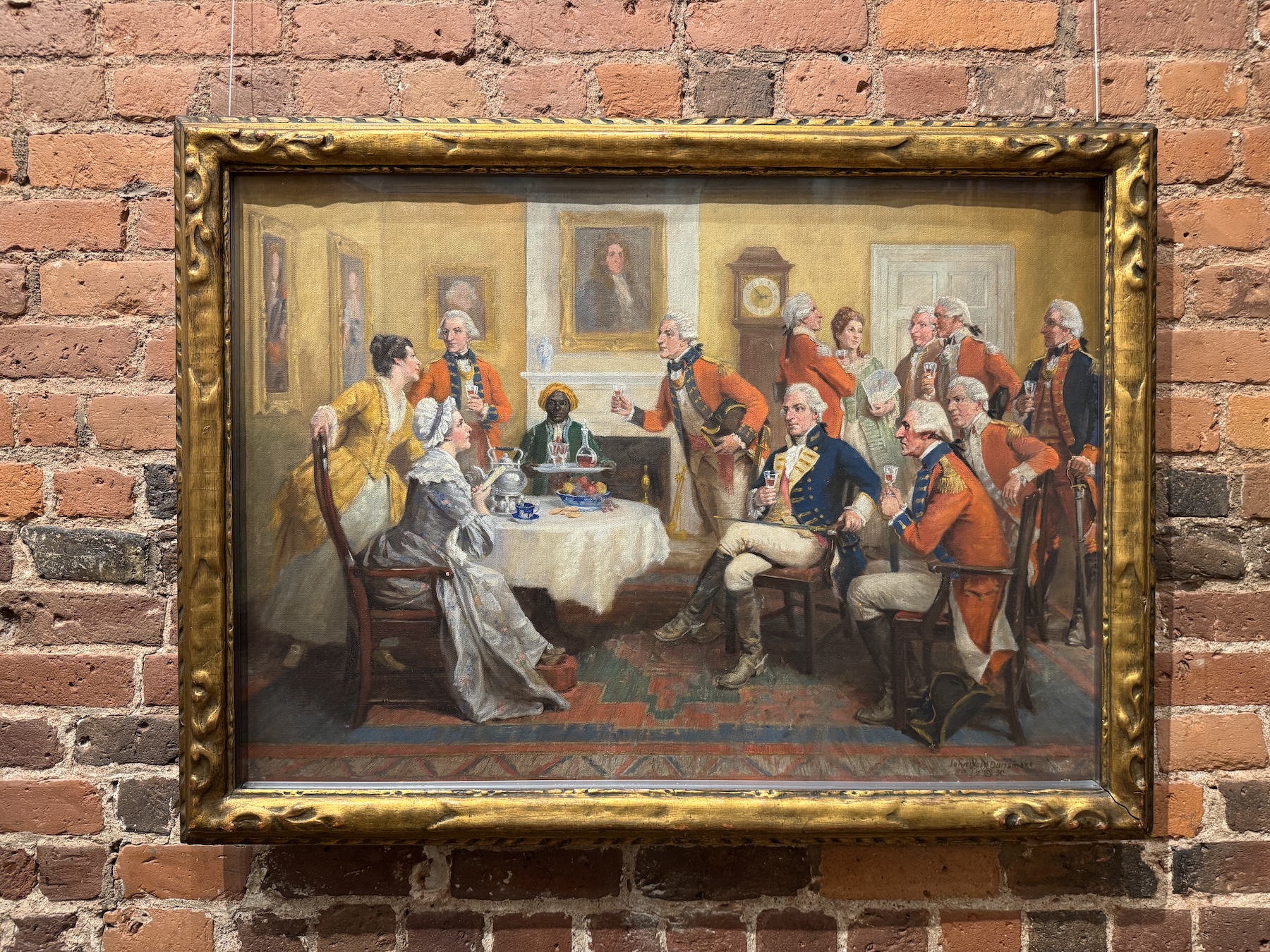
The museum also promotes its “Liberty 250” program, including a lecture series plus events like an Evacuation Day dinner and reenactment of Washington’s farewell.
Fraunces Tavern is an ideal tourist attraction: Come for the exhibits, stay for dinner in one of the facility’s evocatively fitted-out rooms.
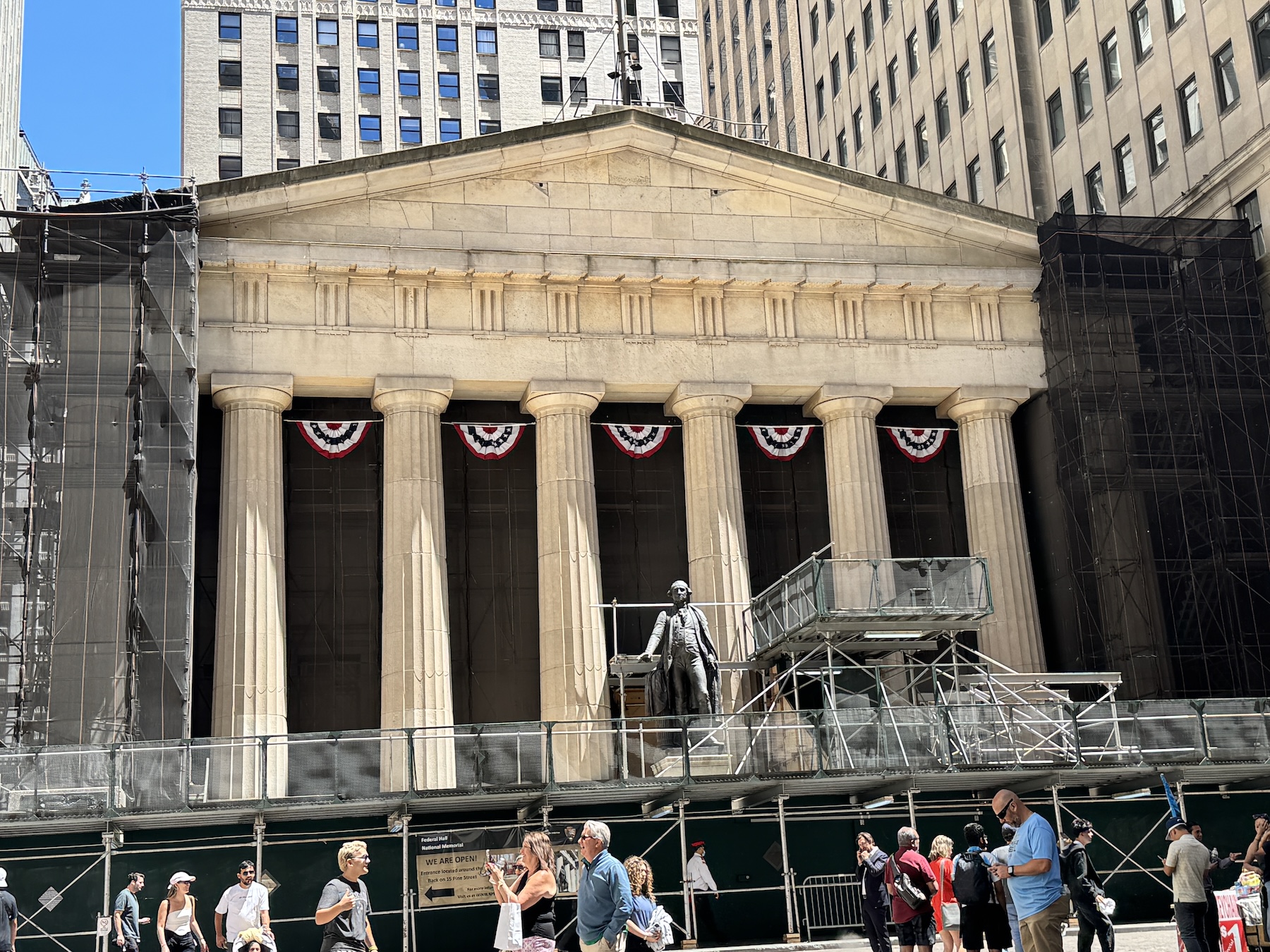
- Federal Hall (26 Wall St.), site of Washington’s first inauguration on April 30, 1789. After ratification of the U.S. Constitution, America’s first Congress, Supreme Court and parts of the executive branch were housed here in a former city hall. Congress wrote the Bill of Rights at this site.
New York’s old city hall was replaced in the 19th century by a customs house, the Greek Revival building seen today. The 1883 statue of Washington is one of the most photographed in New York.
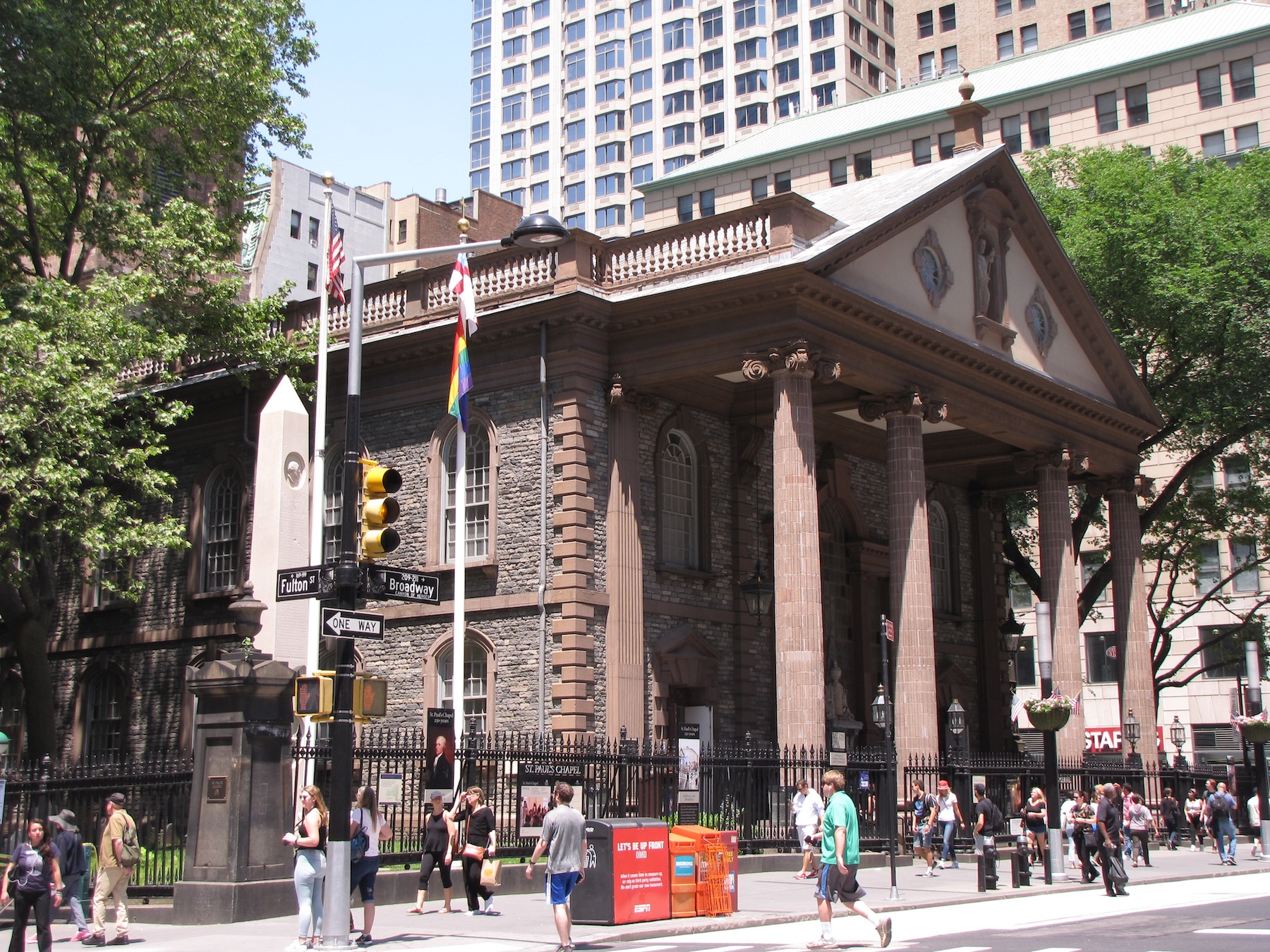
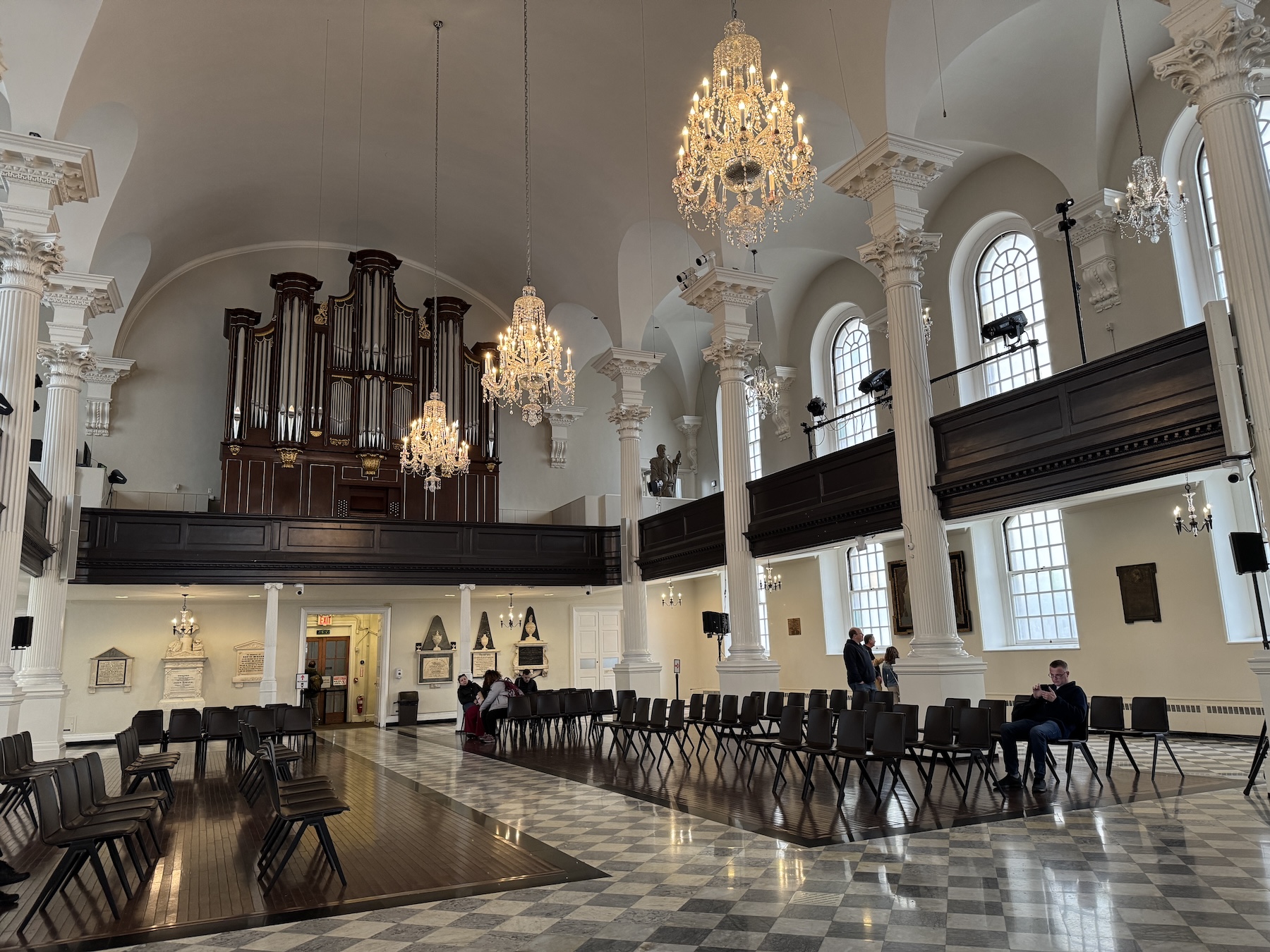
- St. Paul’s Chapel (209 Broadway), dating from 1766, the only surviving colonial-era church in Manhattan. The nearby Trinity Church built St. Paul’s to accommodate a growing congregation, but after the Great Fire, it absorbed Trinity’s parishioners, one of them Washington. On Inauguration Day in 1789, the first president walked from Federal Hall with Martha and members of Congress to St. Paul’s for a prayer service. He attended services here until the capital moved to Philadelphia in 1790.
Having escaped the Great Fire, the chapel — only 100 yards from the World Trade Center — escaped the destruction of Sept. 11, 2001. After which, for about nine months, it served as a rest and recovery center for workers at the 9/11 site.
Visitors today see mementos from the Revolutionary Era and post-9/11 recovery days. The latter include a cross and communion chalice fashioned from material salvaged from the trade center. The chapel hosts free concerts and cultural programs open to all.
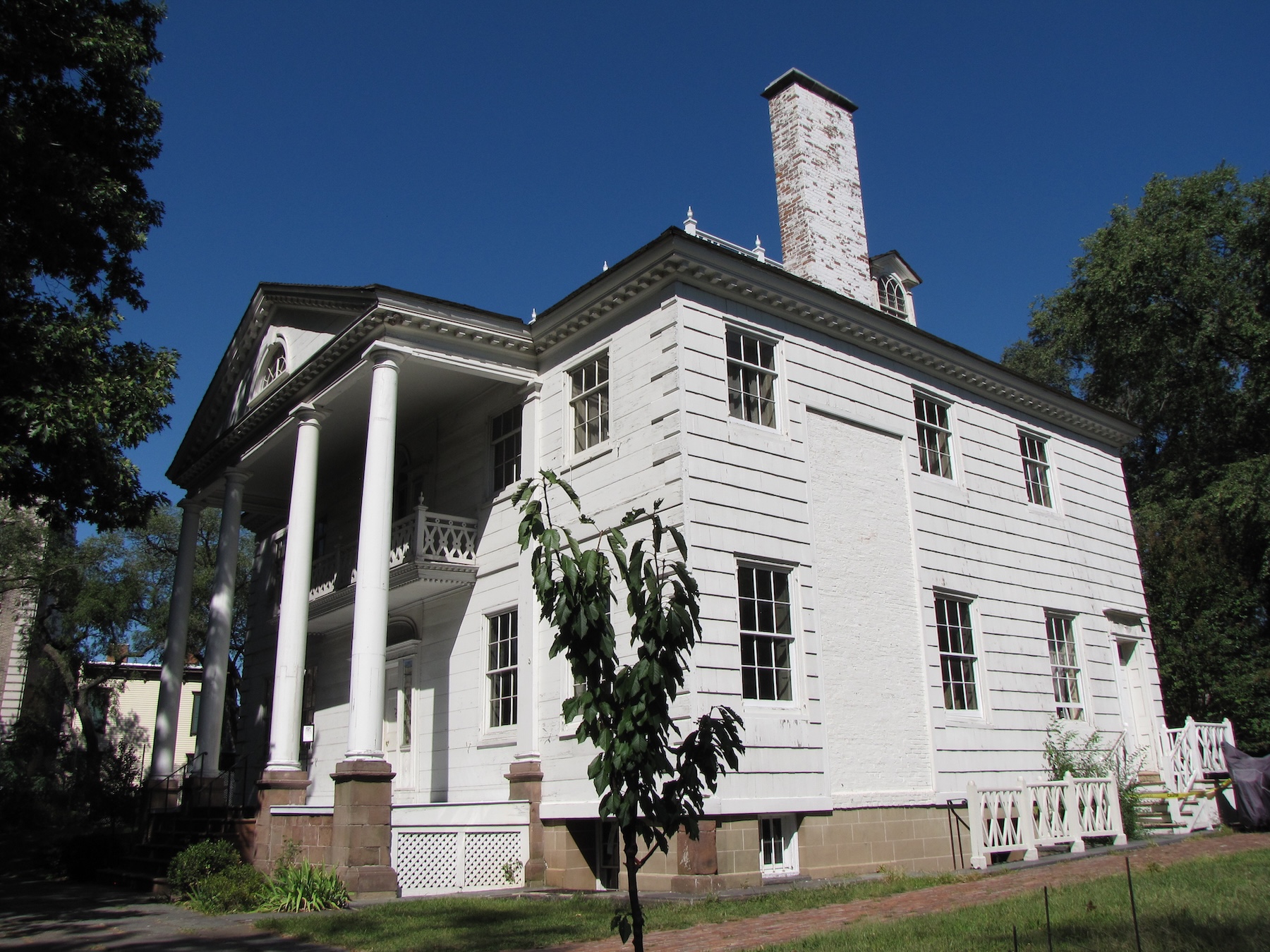
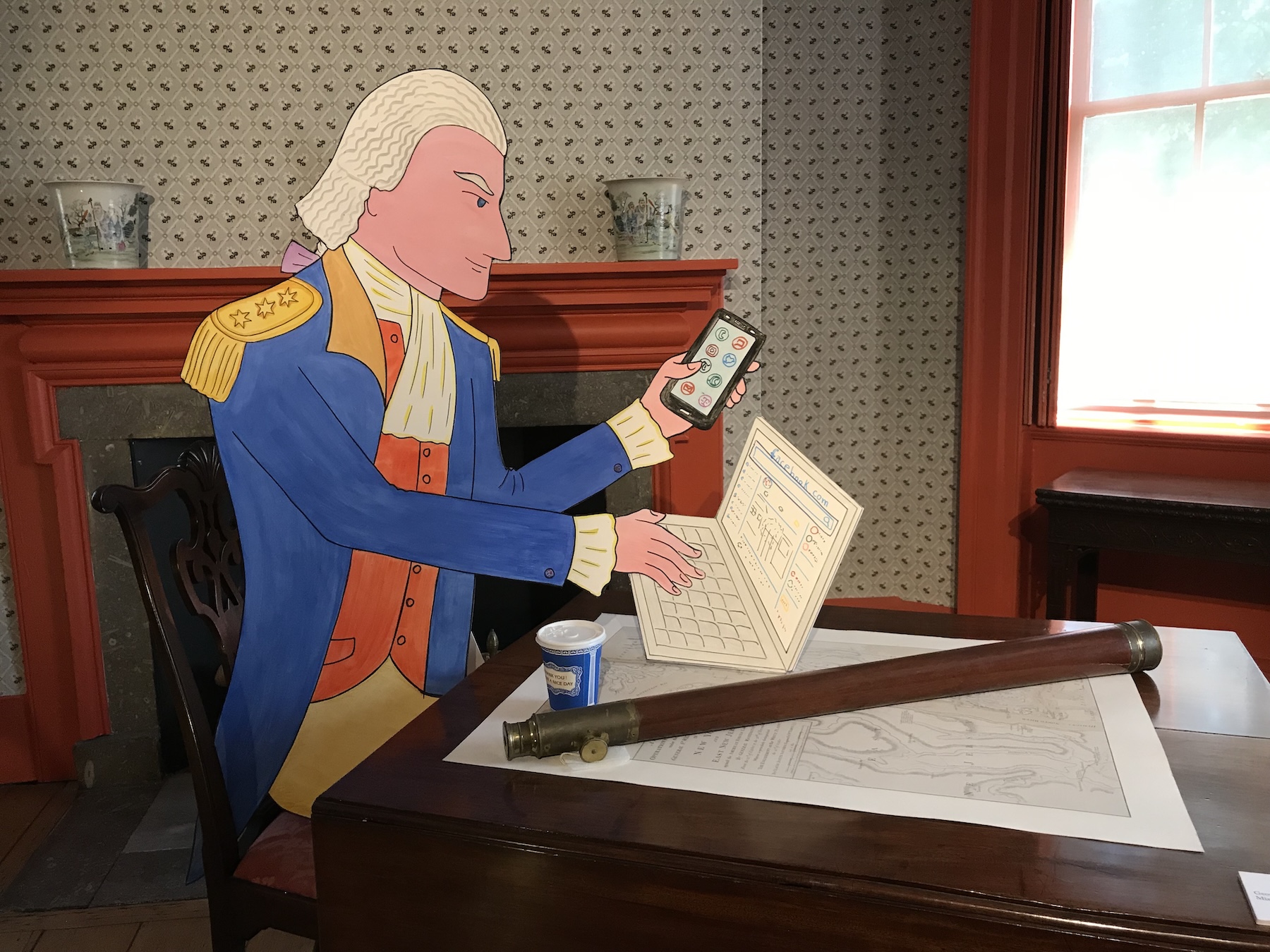
- Morris-Jumel Mansion (65 Jumel Terrace), built in 1765 as a summer residence for British Colonel Roger Morris. Located in Upper Manhattan amidst farmland and forests, it was 11 miles from the city proper.
After the Continental Army retreated from Brooklyn, Washington used the then-abandoned home as his headquarters for about five weeks. The property, on Manhattan’s second-highest point, afforded strategically helpful views of Manhattan and well beyond.
Once the Continental Army had left the city, Britain’s military used the house, too. Post-war, it served as a tavern, stagecoach stop and inn, then gained new owners, the Jumels, hence the hyphenated name.
The mansion is undergoing renovations but will reopen to visitors sometime this fall. At that time, visitors will again see the room that was Washington’s office and the bedroom where he slept — with an enslaved valet nearby.
The museum meanwhile continues to offer neighborhood walking tours, events on the house grounds, virtual programs, plus educational programs virtually and in classrooms.
Side dish
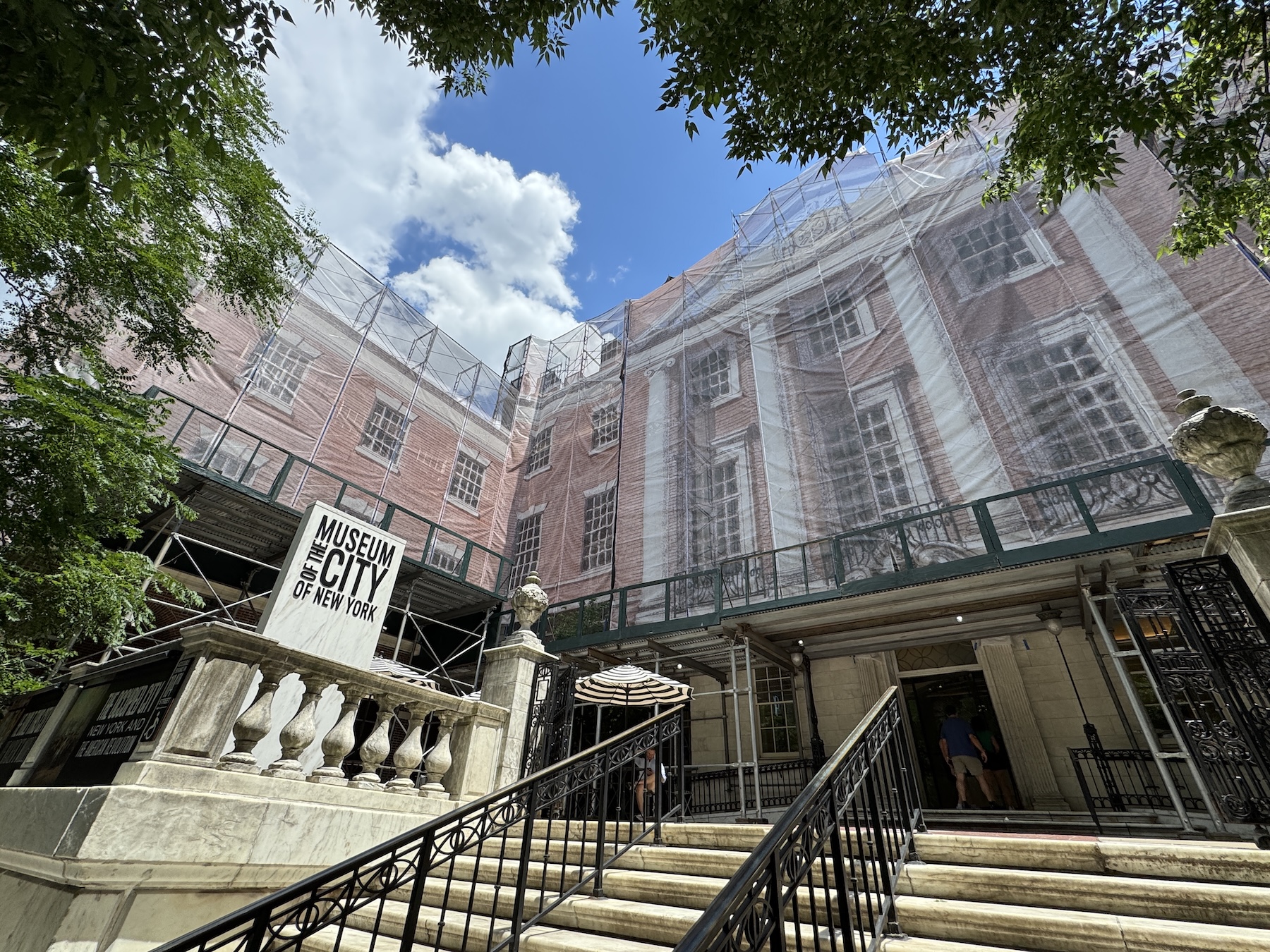
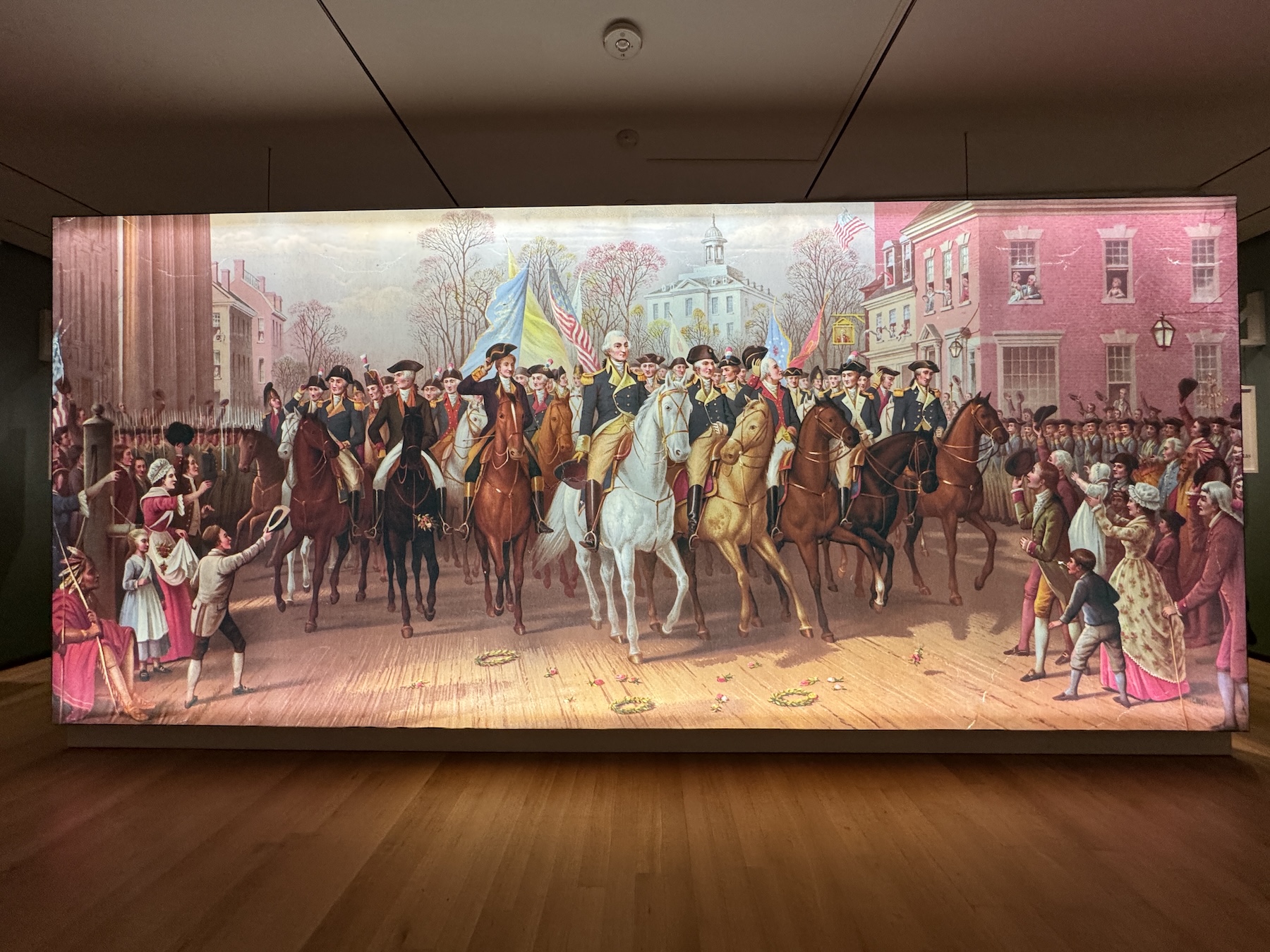
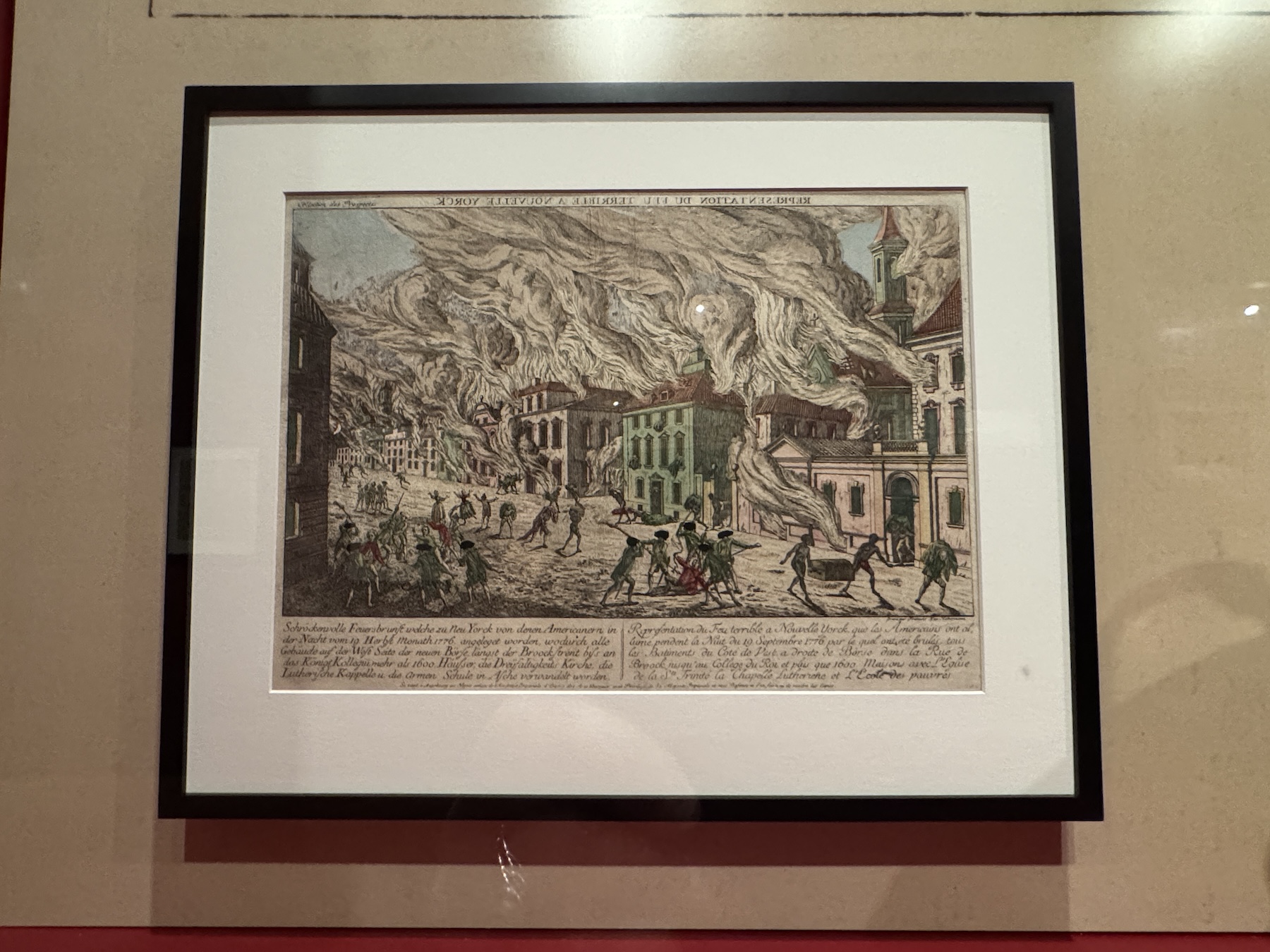
- Museum of the City of New York (1220 Fifth Ave.), site of “The Occupied City” exhibition through May 1, 2027. The museum utilizes an entire floor (7,000 square feet) for the show, organized in six sections, each devoted to a different time segment, within the dates 1763 to 1790. The show includes an eye-popping film of how the city may have looked after the Great Fire; the visual is a customized adaptation of material from the “Assassin’s Creed” video games.
The museum itself is featured here https://sideofculture.com/2024/11/the-museum-of-the-city-of-new-york-required-viewing-for-visitors-and-new-yorkers-alike/
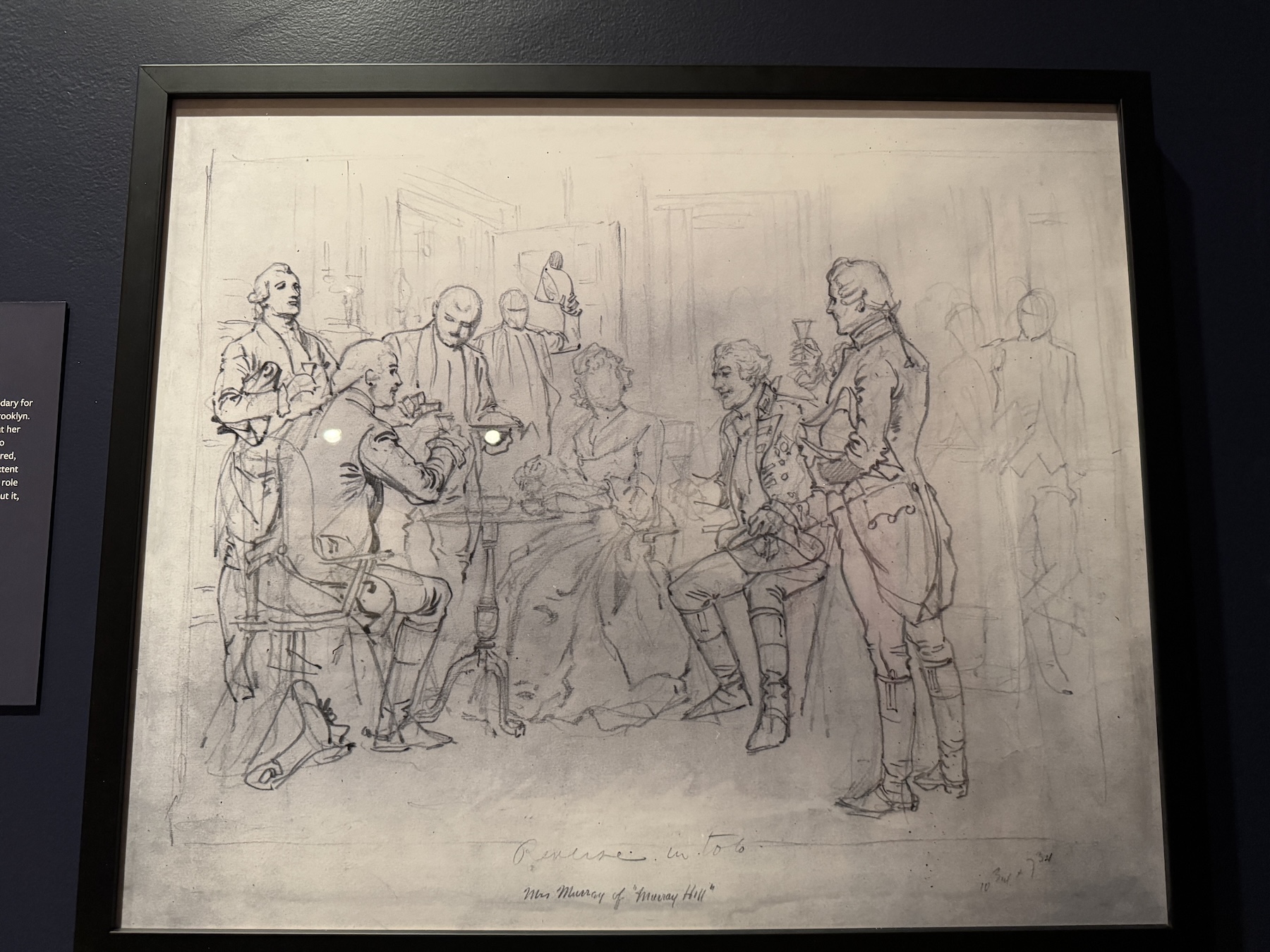
- New York Historical (170 Central Park West), host to an exhibition entitled “Revolutionary Women” on view through Oct. 25. This show explores the extent of women’s economic and civic influence during the Revolutionary Era. A separate and broader “Democracy Matters” exhibit runs through Nov. 1. Based on the real event, the latter includes a life-size video representation of New York patriots pulling down a statue of King George III. Surviving bits of the statue are displayed here.
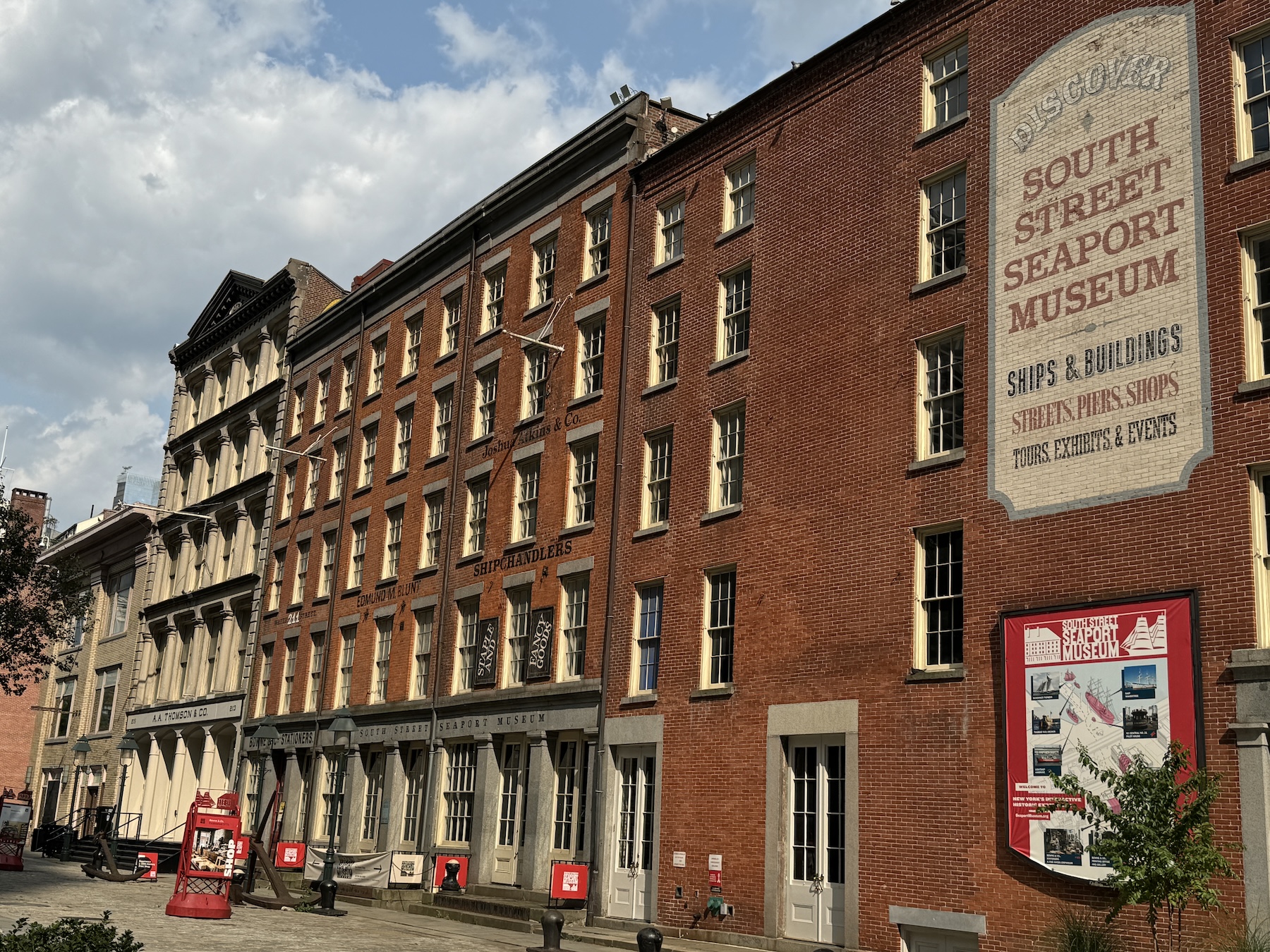
- South Street Seaport Museum (12 Fulton St.), based in a 19th century historic district. A special exhibit here, on for the summer, entitled “The Promise of Liberty: Words That Shaped a Nation,” is focused on founding documents. Displays include a broadside of the Declaration of Independence, printed ca July 14-16, 1776, and an official edition of the Constitution, dated Sept. 17, 1787.
More about the seaport facility appears here https://sideofculture.com/2025/06/where-new-york-begins-the-south-street-seaport-museum/
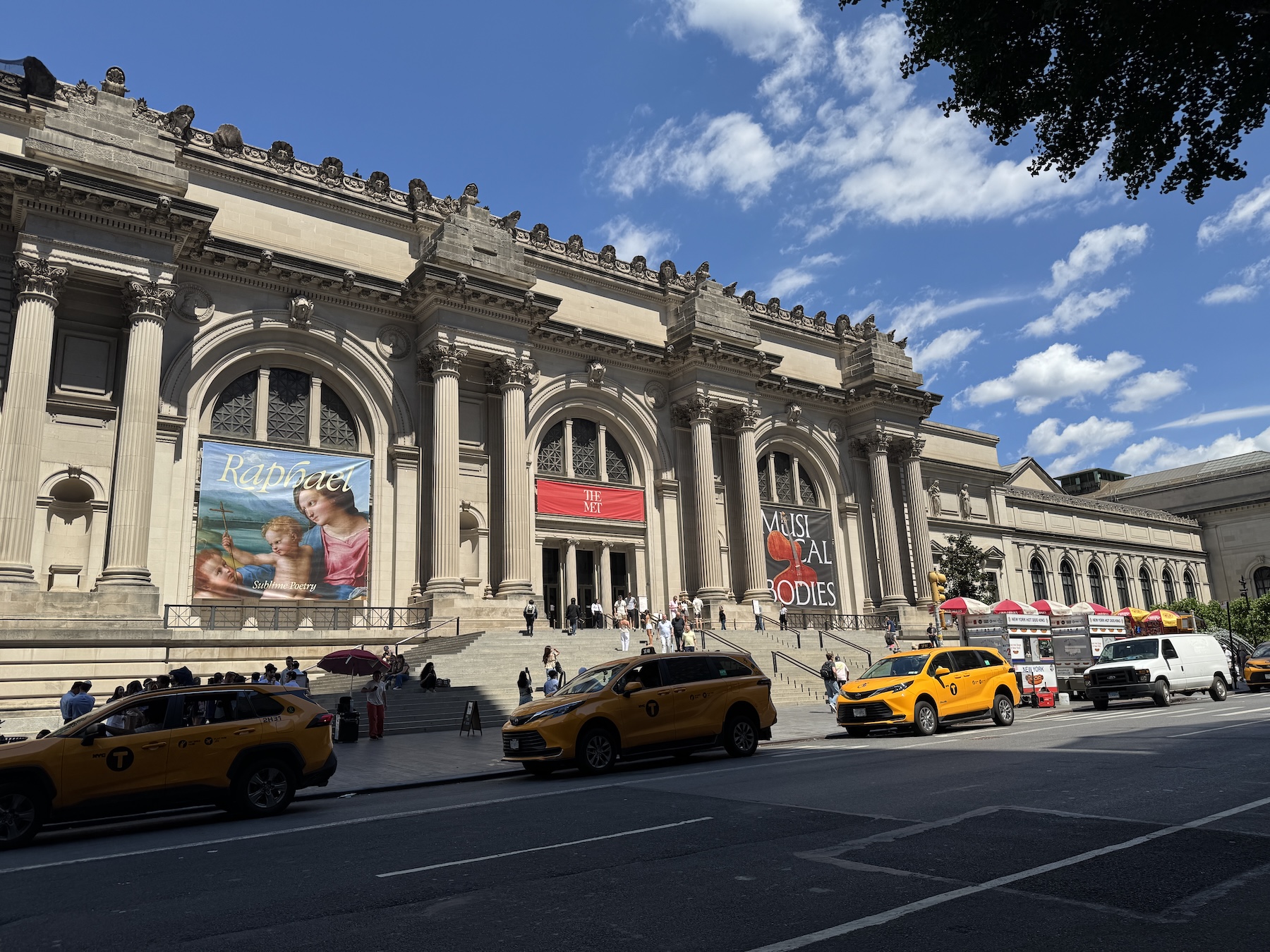
- Metropolitan Museum of Art (1000 Fifth Ave.), host to “Revolution!” a showing of engravings and other art for a sweeping view of the era, on view through Sept. 7.
Top Photo by Nadine Godwin: Trinity Church, first constructed in the 1690s but devastated by New York’s Great Fire of 1776. George Washington, the general, worshipped at the first Trinity Church before it was burned.
Nadine Godwin is a New York-based freelance travel writer. She is the former editor in chief and current contributor to the trade paper, Travel Weekly; editorial director of BestTripChoices.com, and author of “Travia: The Ultimate Book of Travel Trivia.” All of the photos are by Nadine Godwin unless otherwise indicated.