
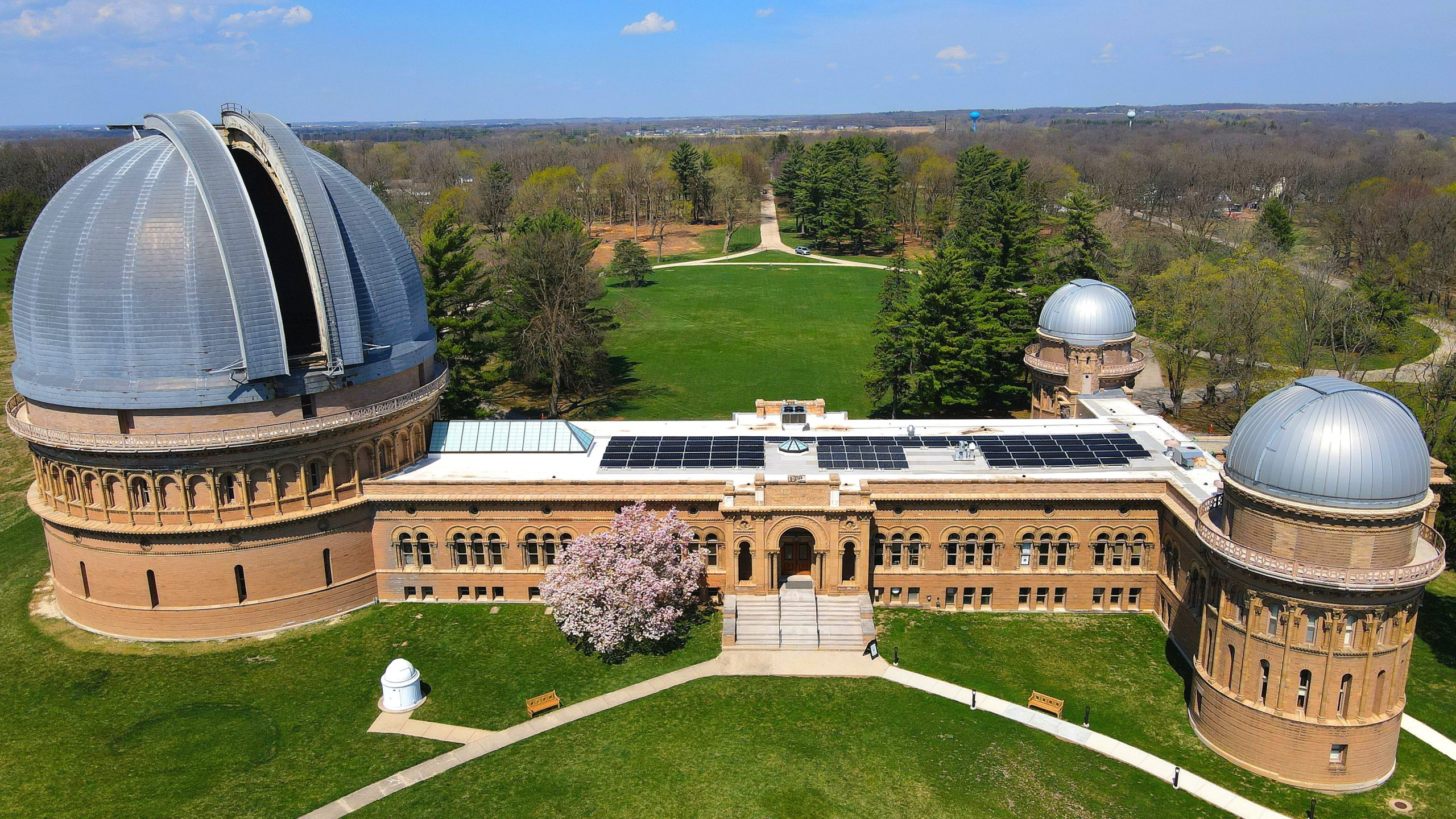
At first glance, it seems impossible that a place as grand as Yerkes (rhymes with turkeys) Observatory came close to disappearing. The silvery dome still rises above Geneva Lake. The Beaux Arts facade still commands attention. Century-old trees still frame long views in the way landscape designers intended more than 100 years ago. This landmark of science and design stood at a crossroads where its future was far from certain, urban development.
Today, visitors arrive for telescope tours, concerts, lectures, exhibitions, children’s play experiences, ecology walks, and arts programs. But the story behind that revival is one of community organizing, civic imagination, and a vision for the future.
Yerkes Observatory in Williams Bay, Wisconsin, opened in 1897 as the crown jewel of American astronomy. Commissioned through University of Chicago founder and funded by transportation magnate Charles Tyson Yerkes, it became home to the world’s largest refracting telescope (similar to a spyglass), and earned the reputation as the birthplace of modern astrophysics.
Scientists who worked here shaped modern understanding of the universe. Edwin Hubble spent time at Yerkes before proving galaxies extended beyond the Milky Way. Nancy Grace Roman, later known as the “mother of Hubble Space Telescope,” worked here as well as astronomer Carl Sagan of PBS’s “Cosmos” series. Many physicists, instrument makers, and students passed through its doors.
But Yerkes was always more than the telescope.
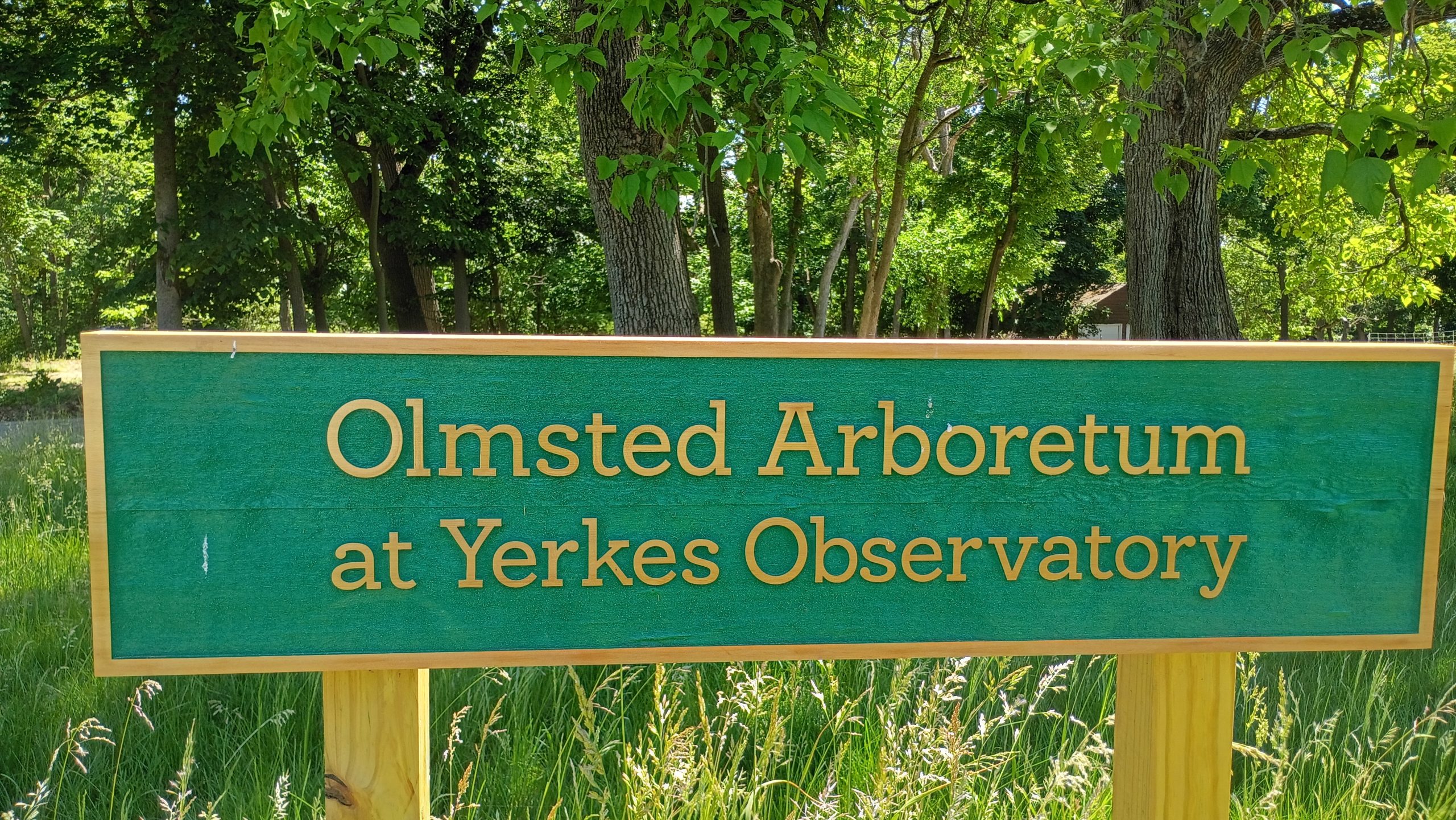
In 1906, the Olmsted firm, led by John Charles Olmsted, the nephew and adopted son of Frederick Law Olmsted, designed the observatory grounds. Instead of creating formal gardens, the designers composed an experience: a sweeping elliptical drive, broad lawns, carefully positioned trees, and unfolding lake views that elevated the architecture and encouraged contemplation. The landscape became an extension of the scientific mission itself. Over time, research shifted elsewhere. New observatories appeared in darker, more remote locations. By the early 21st century, maintaining the historic campus became increasingly difficult.
Then came a proposal that galvanized the community. In the mid-2000s, plans emerged that envisioned transforming portions of the property into private residential and resort development. Proposals included homes and hospitality uses across the lakeside landscape surrounding the observatory. Residents pushed back.
Opposition centered not only on preserving a historic building but protecting the integrity of the Olmsted-designed setting. Community members argued that once the landscape was fragmented, the relationship between architecture, science, and place would be permanently altered. The Village of Williams Bay ultimately declined to approve zoning changes that would allow residential redevelopment. That decision changed everything.
The observatory remained intact.
Years later, when the University of Chicago announced it would cease operating Yerkes in 2018, a different possibility emerged. Instead of private development, local leaders formed the Yerkes Future Foundation with a mission that sounded ambitious and, at the time, improbable: save the observatory, preserve public access, restore the landscape, and create a new civic future.
In 2020, under the leadership of founding board chair Dianna Colman, the Yerkes Observatory, was officially transferred to the Yerkes Future Foundation. What followed was not a museum restoration frozen in time.
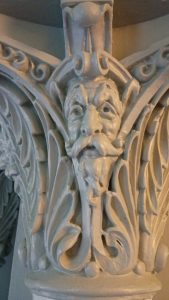
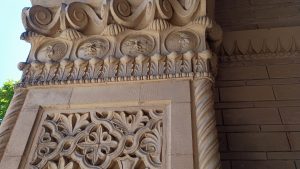
The foundation adopted what became known as a “brick-by-brick, tree-by-tree” approach. Exterior masonry was repaired. Roofs and skylights replaced. Historic interior details refreshed. Electrical systems modernized. Accessibility improved. Trails expanded. Native plantings returned. Solar power and ecological upgrades brought the site into the present while respecting its historic character. The restoration extended outdoors.
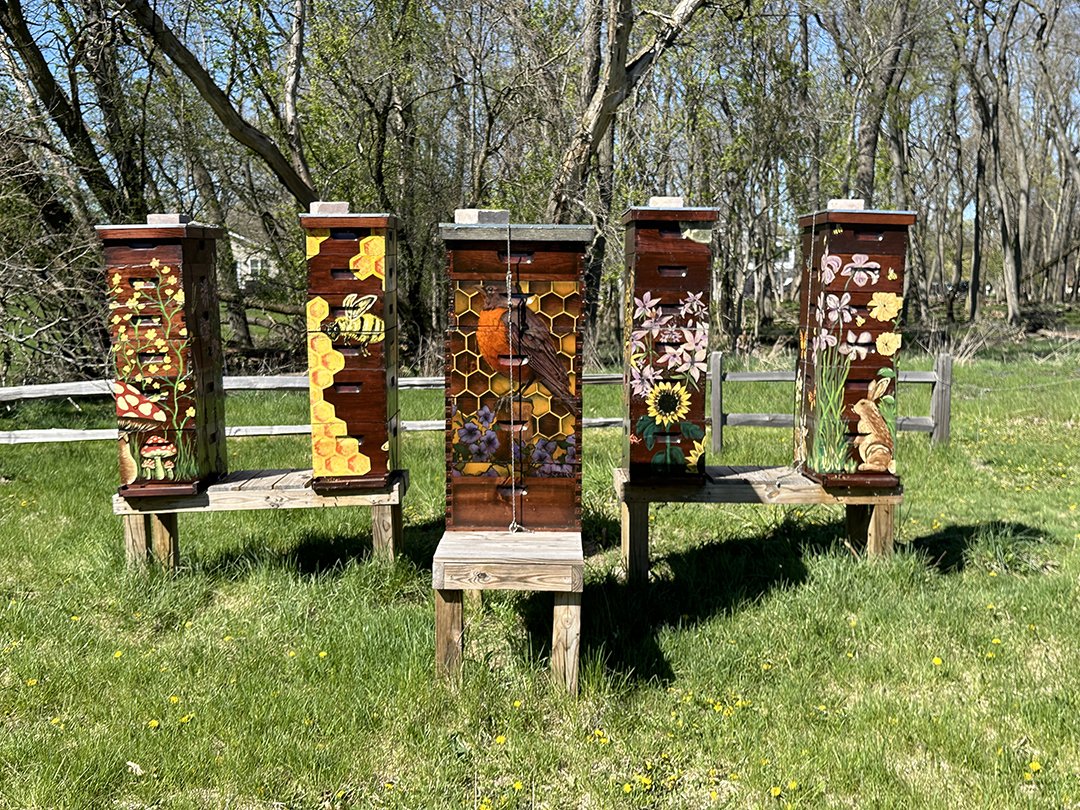
The Olmsted landscape became a living project rather than a static artifact. Prairie areas were revitalized. Woodland trails reopened. Pollinator habitats appeared. A small apiary joined the grounds. A goat herd was brought in to eat the invasive species, while historic tree patterns in the 50-acre arboretum were preserved wherever possible. The result is that Yerkes feels less like a preserved monument and more like a campus in motion. Inside, astronomy remains central.
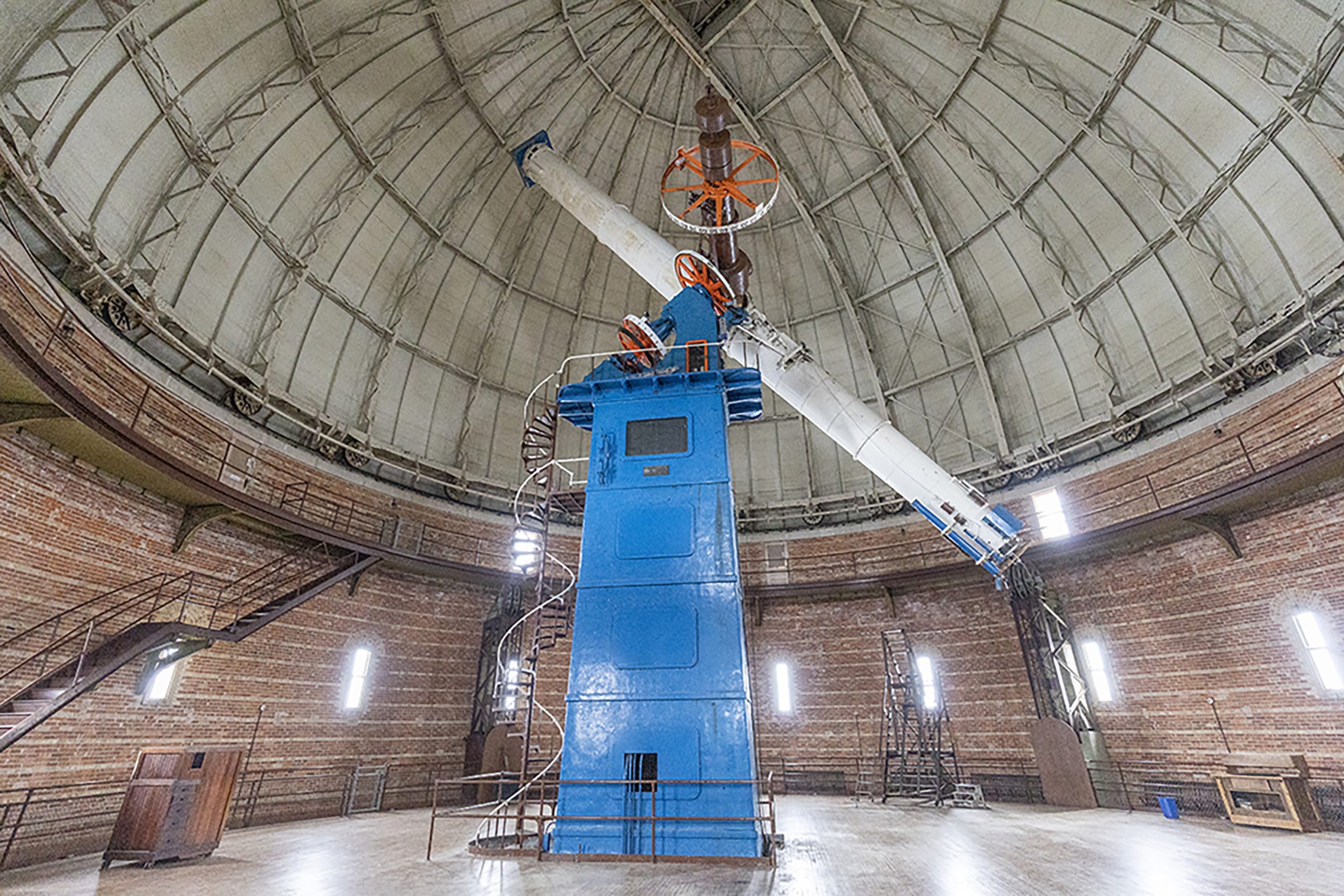
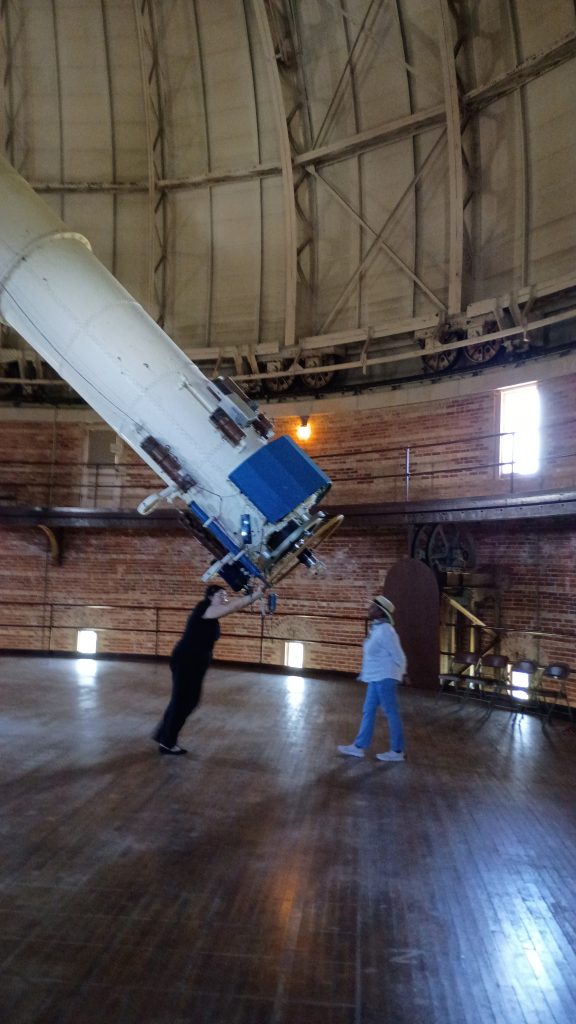
Visitors can experience daytime and evening tours, public observing opportunities, lectures, open houses, and encounters with the legendary Great Refractor. Recent additions to the observatory’s stewardship also include ownership of a vast archive of historic astronomical glass plates, opening opportunities for future research and public interpretation. The most visible sign of Yerkes’ next era is not in the dome, It’s the development of Play/Space.
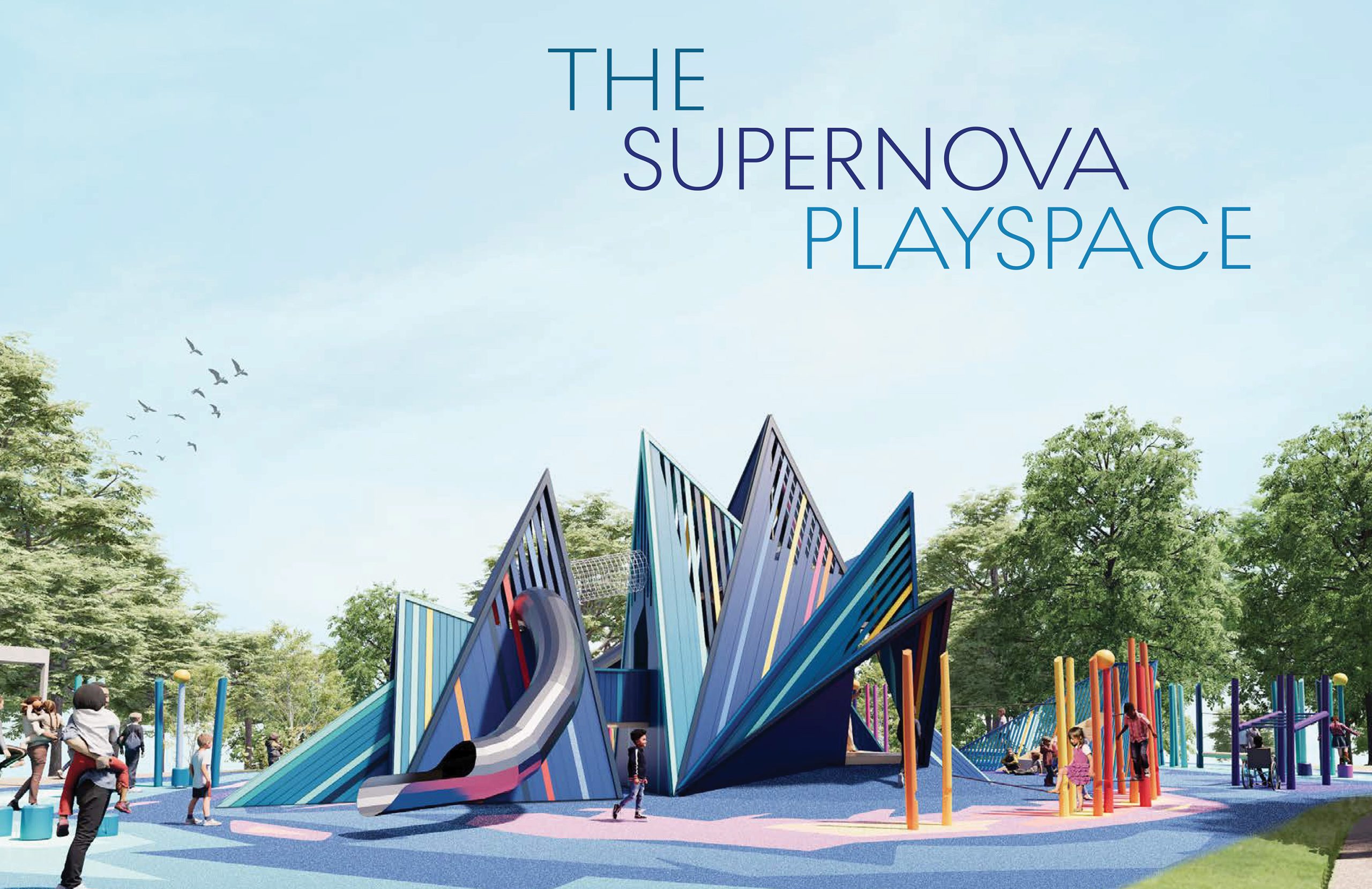
Designed by Saiki and to be built by Danish firm MONSTRUM, using sustainable sourced wood, Play/Space transforms learning into exploration. Designed as an immersive outdoor environment, the sensory-rich experience draws inspiration from astronomy and natural systems.
Rather than a conventional playground, the Blair Family Foundation Play/Space will use interconnected accessible zones intended to support different ways of engaging with the world. Nature-based elements encourage movement and discovery. Supernova-inspired structures invite imaginative play. Areas designed for varying sensory needs allow children and families to engage at their own pace. With the help of a $700,000 grant from the State of Wisconsin and the foundation’s fund raising efforts, the Play/Space and adjacent Cosmic Family Pavilion, will provide a quiet space with family restrooms, picnic tables, charging stations, water fountains and a neutral space for those with sensory sensitivities. The Village of Williams Bay has signed a Development Agreement for the Play/Space and Cosmic Family Pavilion. The concept reflects a larger philosophy emerging across the observatory campus: curiosity belongs to everyone.
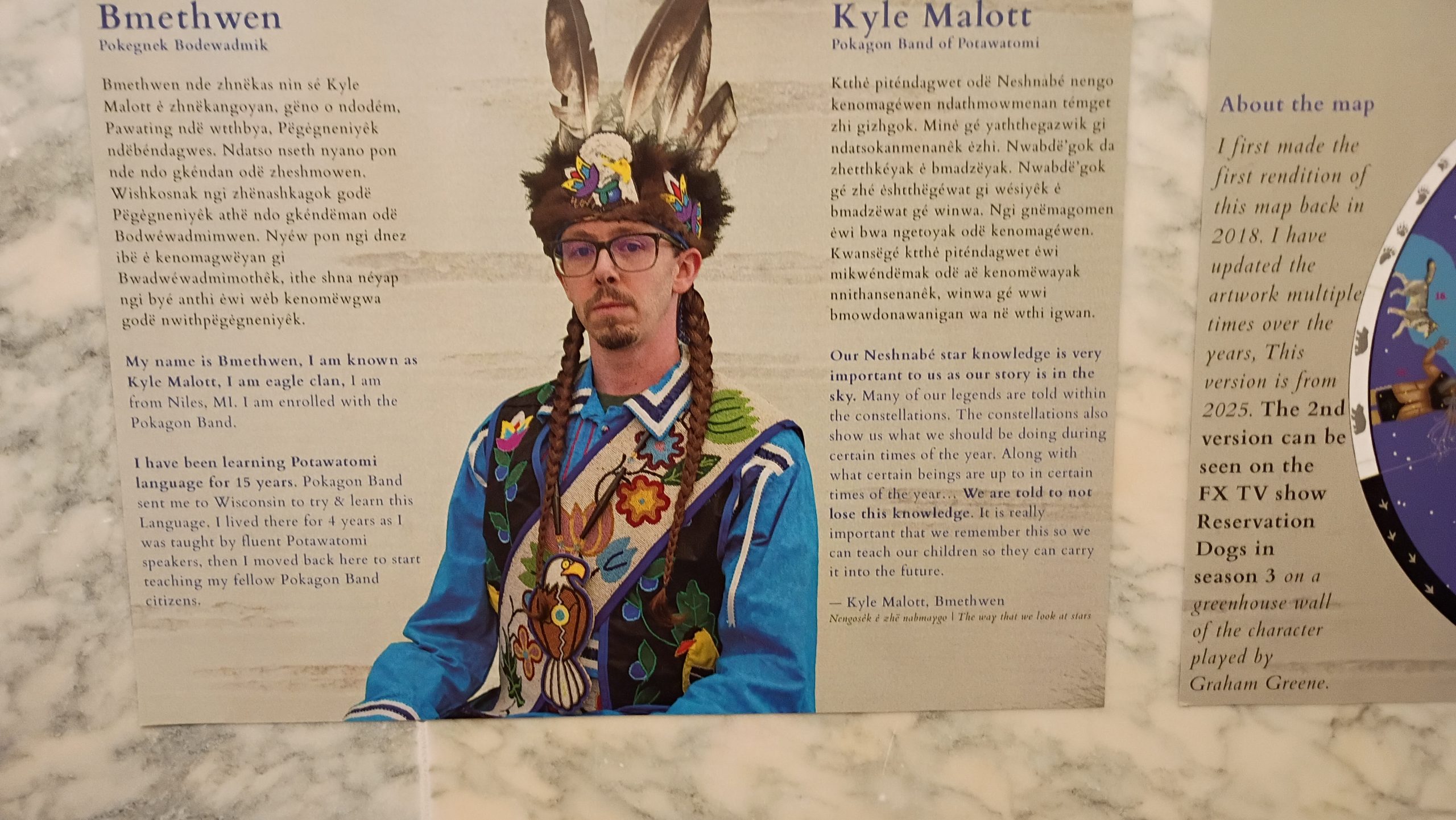
That same thinking drives Yerkes’ expanding arts and science programming in STEM and STEAM activities and that includes the Council of the Three Fires, Ojibwe, Odawa, and Bodéwadmi, that provide a unique perspective, from the introductory wall text “Through the generosity of the Council of the Three Fires, Ojibwe, Odawa, and Bodéwadmi, visitors are invited to experience Anishinaabe astronomy, across multiple mediums, including basketry, beading, visual and performing arts, Native Americans in Science, Technology, Engineering, Arts and Mathematics (NSTEAM), and astrophotography, each reflecting the deep interconnections among land stewardship, water-sky relationships, language, and culture.” The exhibition will be on display to the end of September 2026.
Science talks, like the recent Chanda Prescod-Weinstein presentation, sit alongside musical performances. School groups share the calendar with artist-led experiences. Community events create opportunities to encounter astronomy through storytelling, visual art, ecology, and hands-on learning.
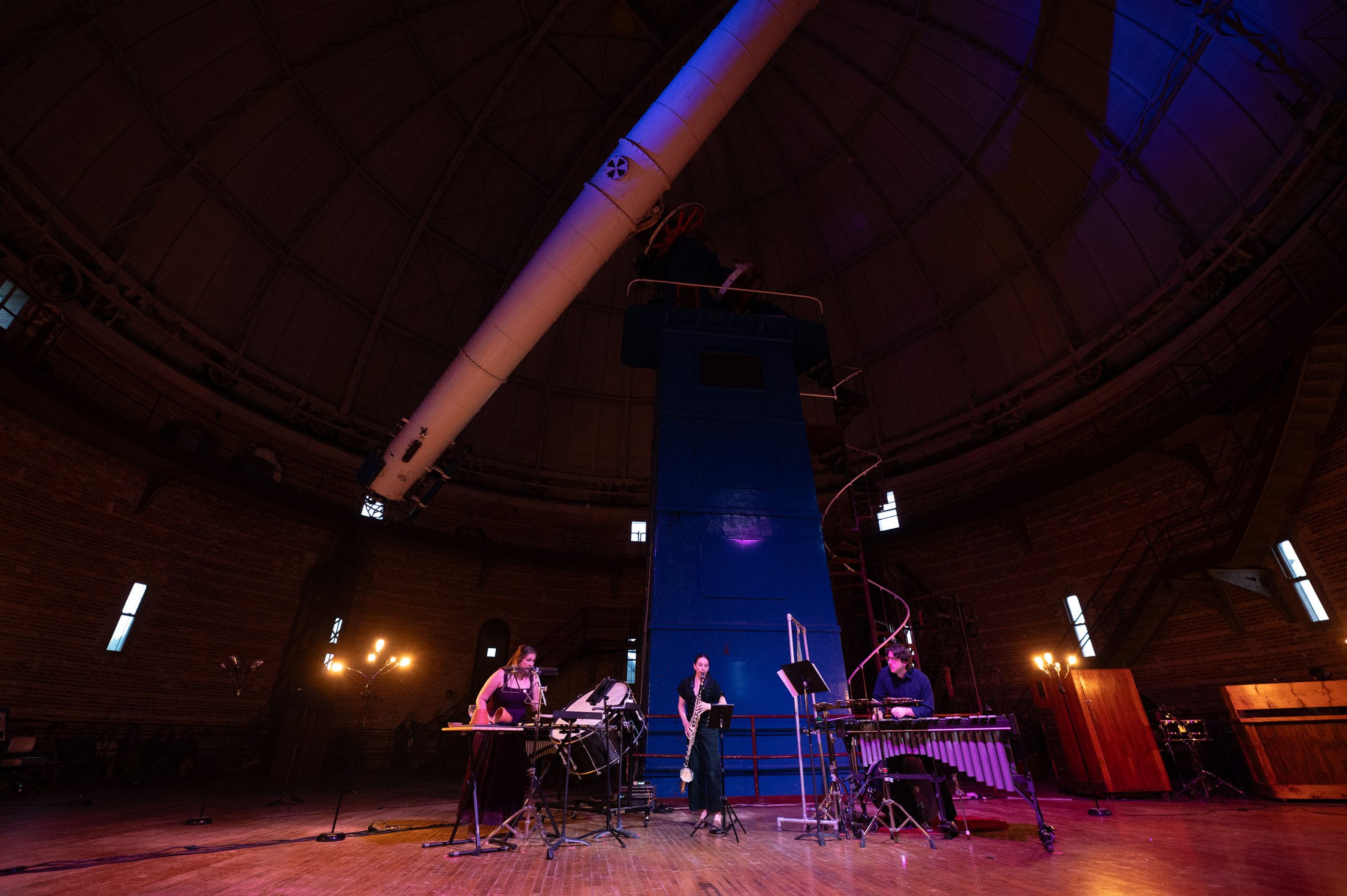
Future plans envision artist residencies, expanded exhibition galleries, educational facilities, sculpture installations, and additional spaces for public gathering.
Current exhibitions and interpretive experiences increasingly blur traditional boundaries. Historic instruments, stories of astronomical discovery, restored architecture, contemporary artistic responses, and ecological interpretation combine into a broader conversation about how humans understand the universe and themselves.
At Yerkes, the stars remain overhead. But the institution itself has become grounded in something equally powerful: local stewardship. Many preservation stories end with saving a building. Yerkes suggests that is only the beginning. What was preserved here was not simply architecture or a telescope. It was public access to wonder, a designed landscape that still shapes experience, and the belief that science and art belong in everyday community life.
In Williams Bay, the observatory did not become a subdivision, nor the sliver of shore line, a marina. Instead, it became a place where children climb through galaxies, visitors walk an Olmsted landscape, artists interpret the cosmos, and one of America’s great scientific landmarks continues asking the same question it always has: What’s out there?
Well, in the “spirit” of a Side Dish.
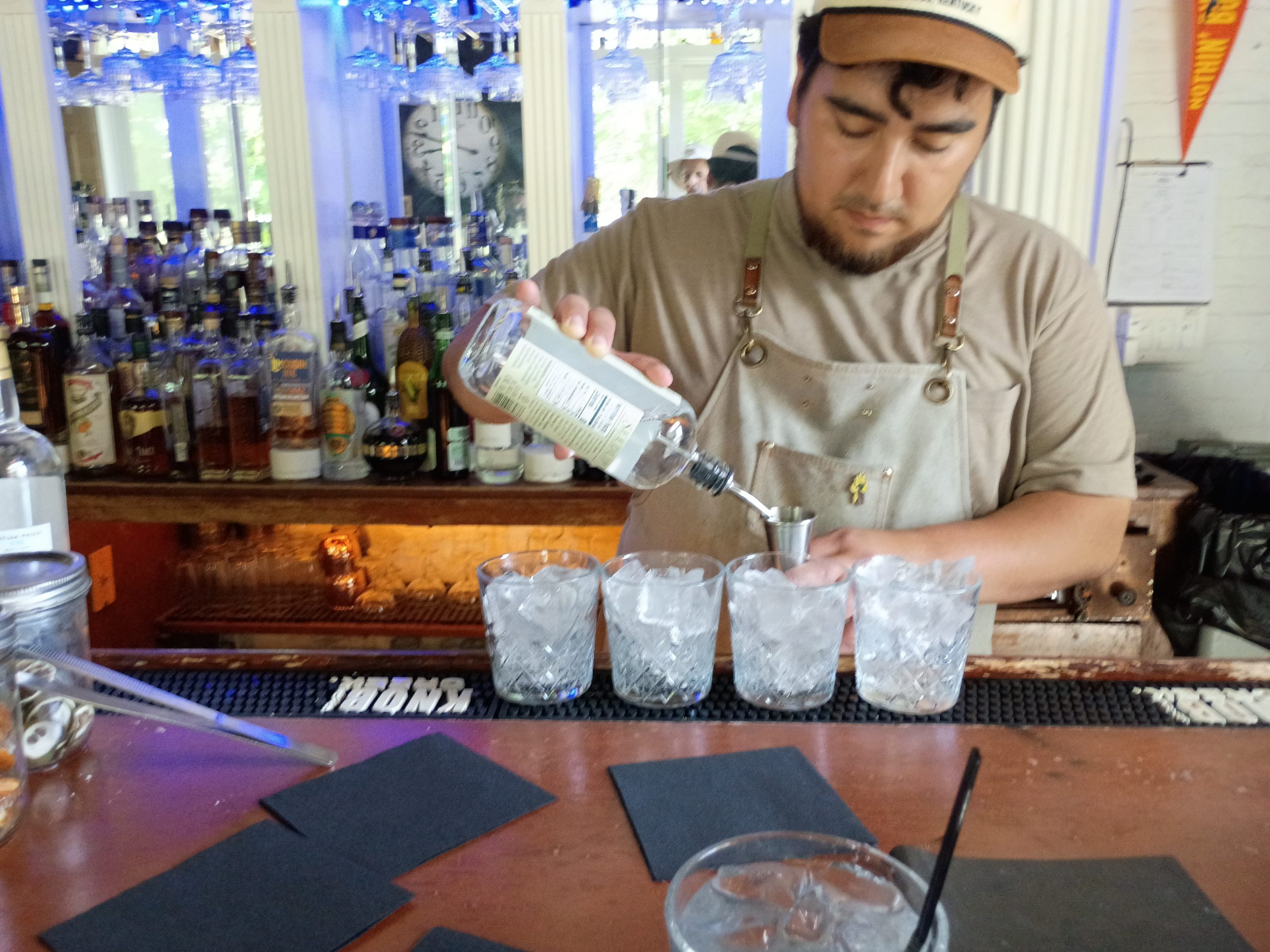
Juan Barbosa, a contestant on the Tales and Cocktail and featured mixologistat Maxwell Mansion’s Apothecary in nearby Lake Geneva, offers up a “Milk Punch”
2 oz whole milk
2 oz heavy cream
2 oz brandy or bourbon
¾ oz of simple syrup
2 dashes of vanilla
¼ teaspoon of citrus zest
Add ice to your shaker, after 10 seconds or so, strain and serve.
nutmeg optional garnish
For a mocktail swap out the alcohol and replace with alcohol-free brandy, bourbon, or rum. Also consider swapping in ¼ teaspoon of yuzu zest.
By Mark Laiosa who is curious about the world.
Featured Photo: Yerkes Observatory, Williams Bay, Wisconsin with its new solar panel array. Photo by Will Borgan