
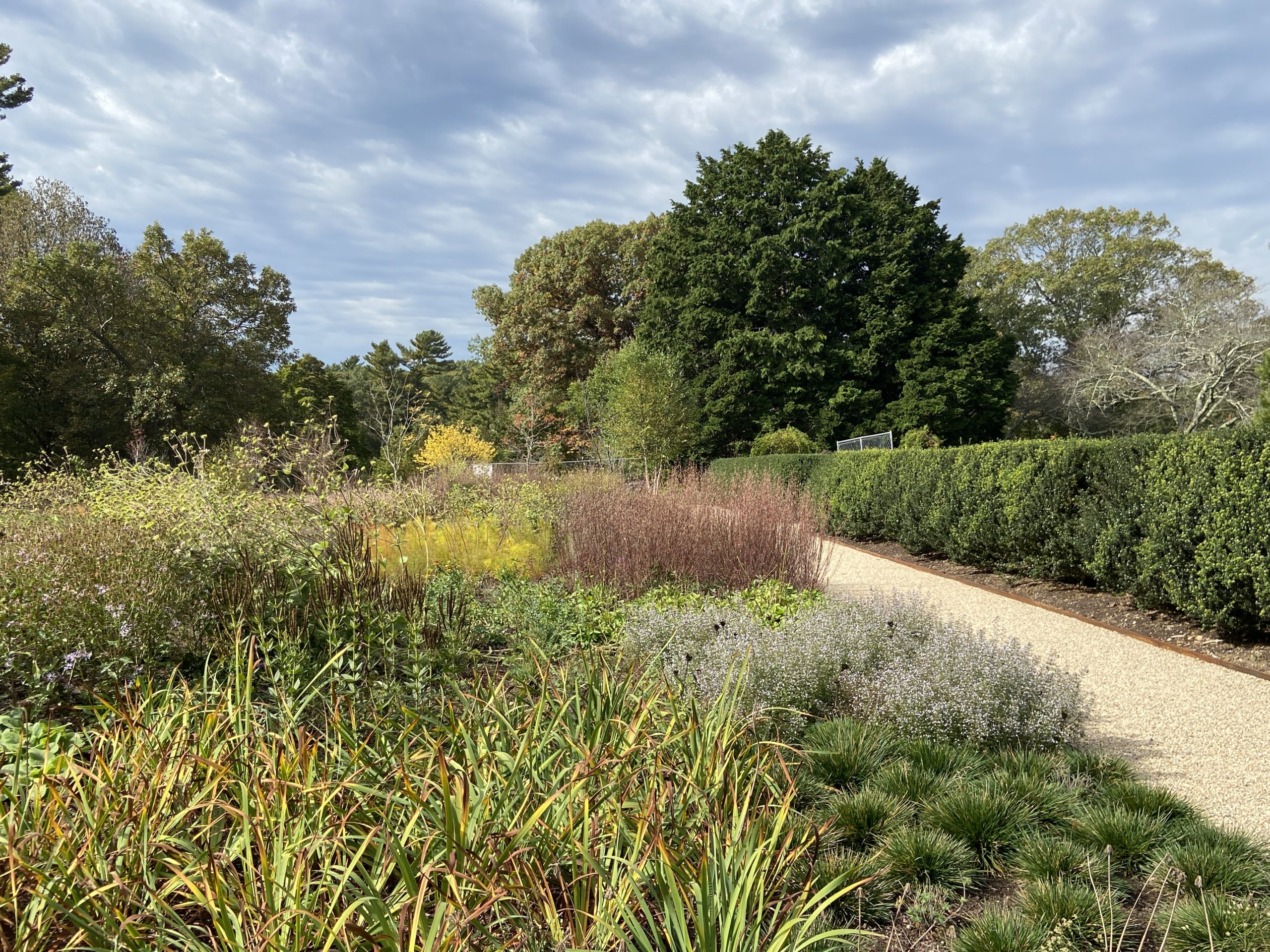
“The most beautiful acre on Long Island” is how Planting Fields Arboretum State Historic Park in Oyster Bay describes its brand-new Piet Oudolf–designed perennial garden, which opened to the public on October 17. The first public garden in the New York City area by the acclaimed Dutch garden designer of the High Line and Battery in more than a decade is a major addition to the 409-acre historic former private estate turned free public park, covered recently in Side of Culture.
At an October press preview, Dr. Gina Wouters, President and CEO of the Planting Fields Foundation, spoke about the foundation’s two-pronged mission to preserve the site’s heritage and also enhance and add to its value. The foundation partners with the New York State Office of Parks, Recreation, and Historic Preservation to care for Planting Fields. Dr. Wouters envisions the Oudolf Garden as an important community hub for the 200,000 people who visit the park annually for recreation and inspiration. The new garden—Planting Fields has about 20 others—has already engaged about 200 people, both staff and volunteers, who assisted in its creation. Activities such as yoga and garden tours will be offered, and curriculum featuring the Oudolf Garden will be developed for the many children who visit. The following photos were taken several days before the opening.
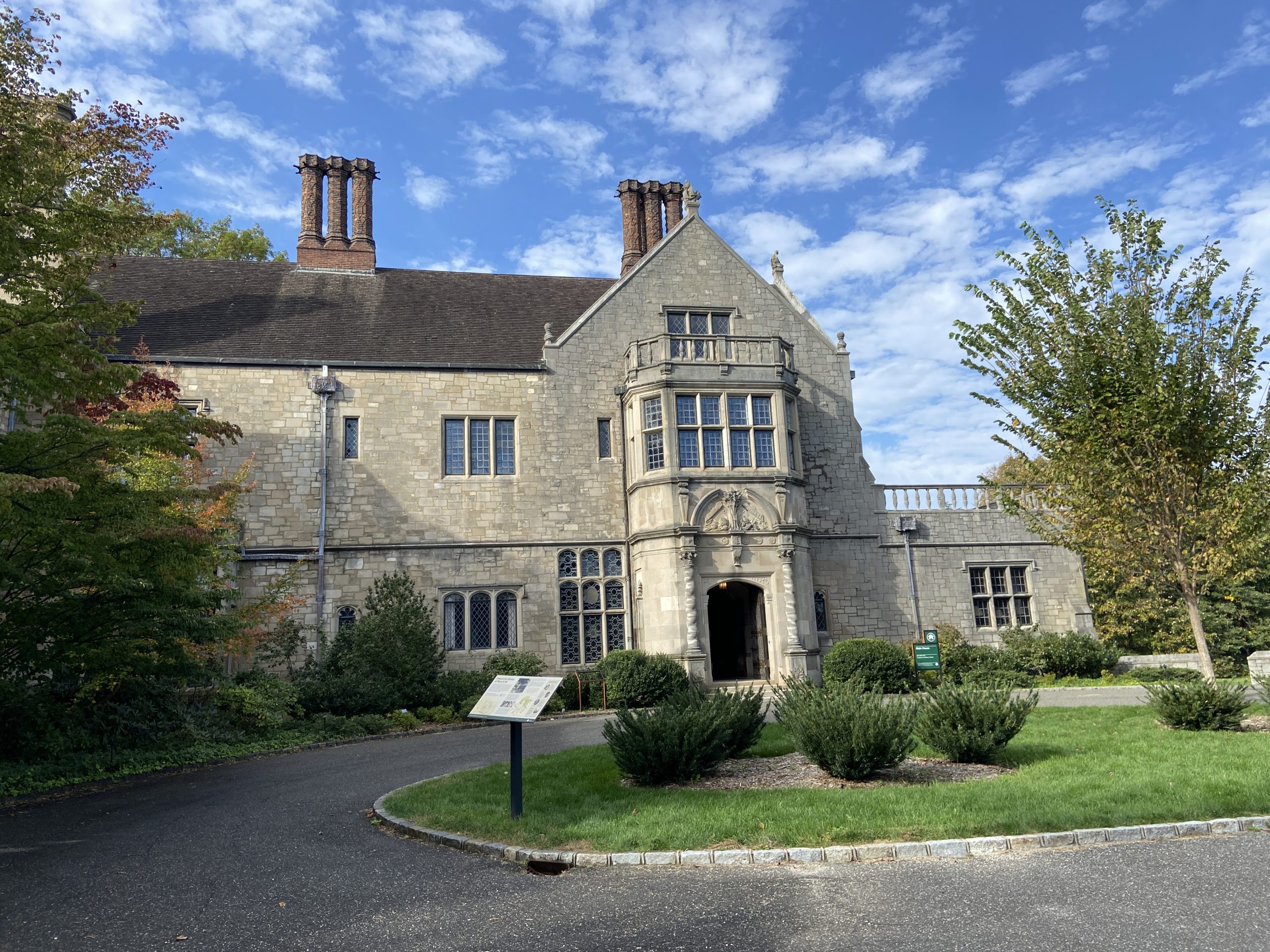
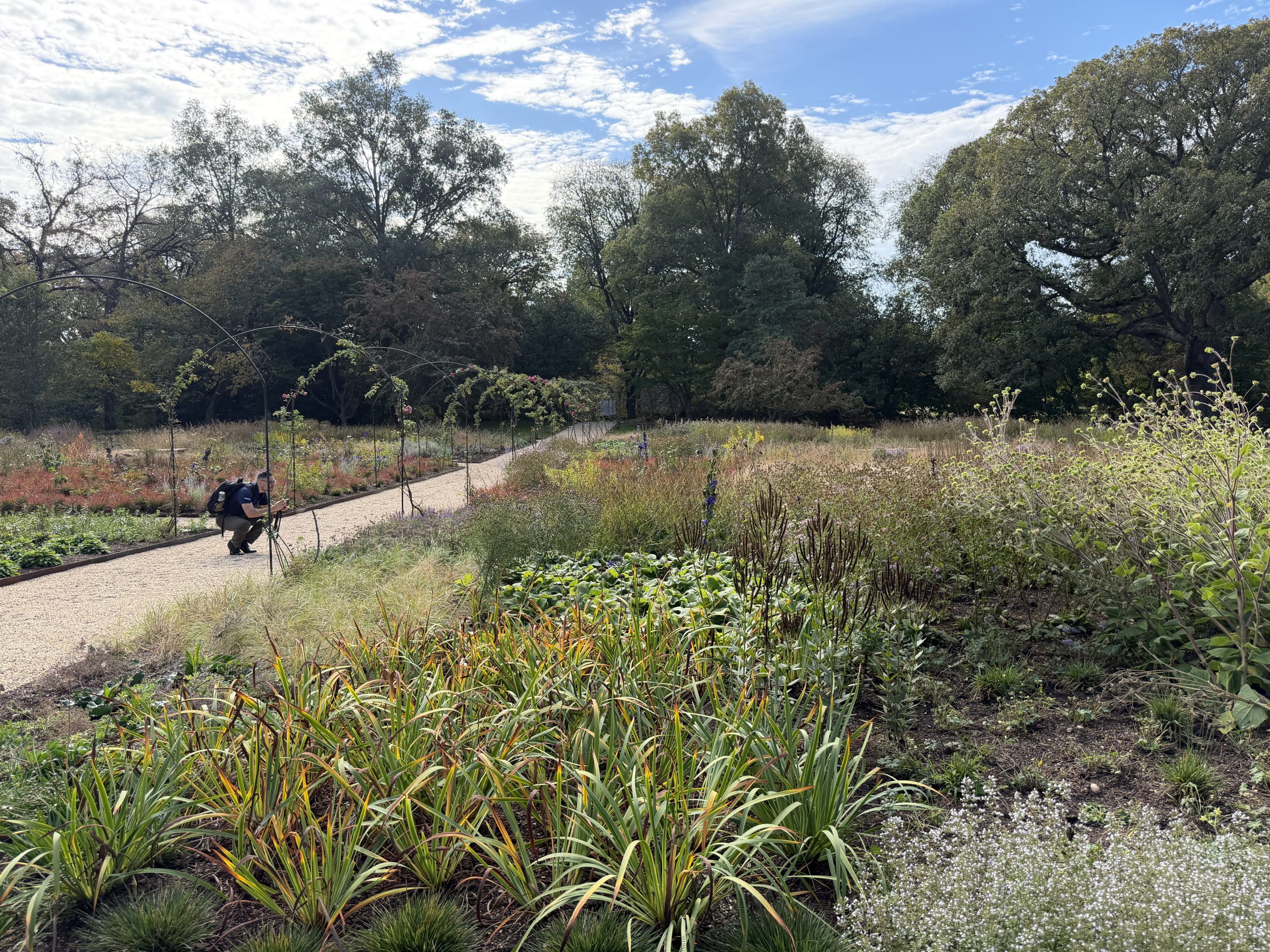
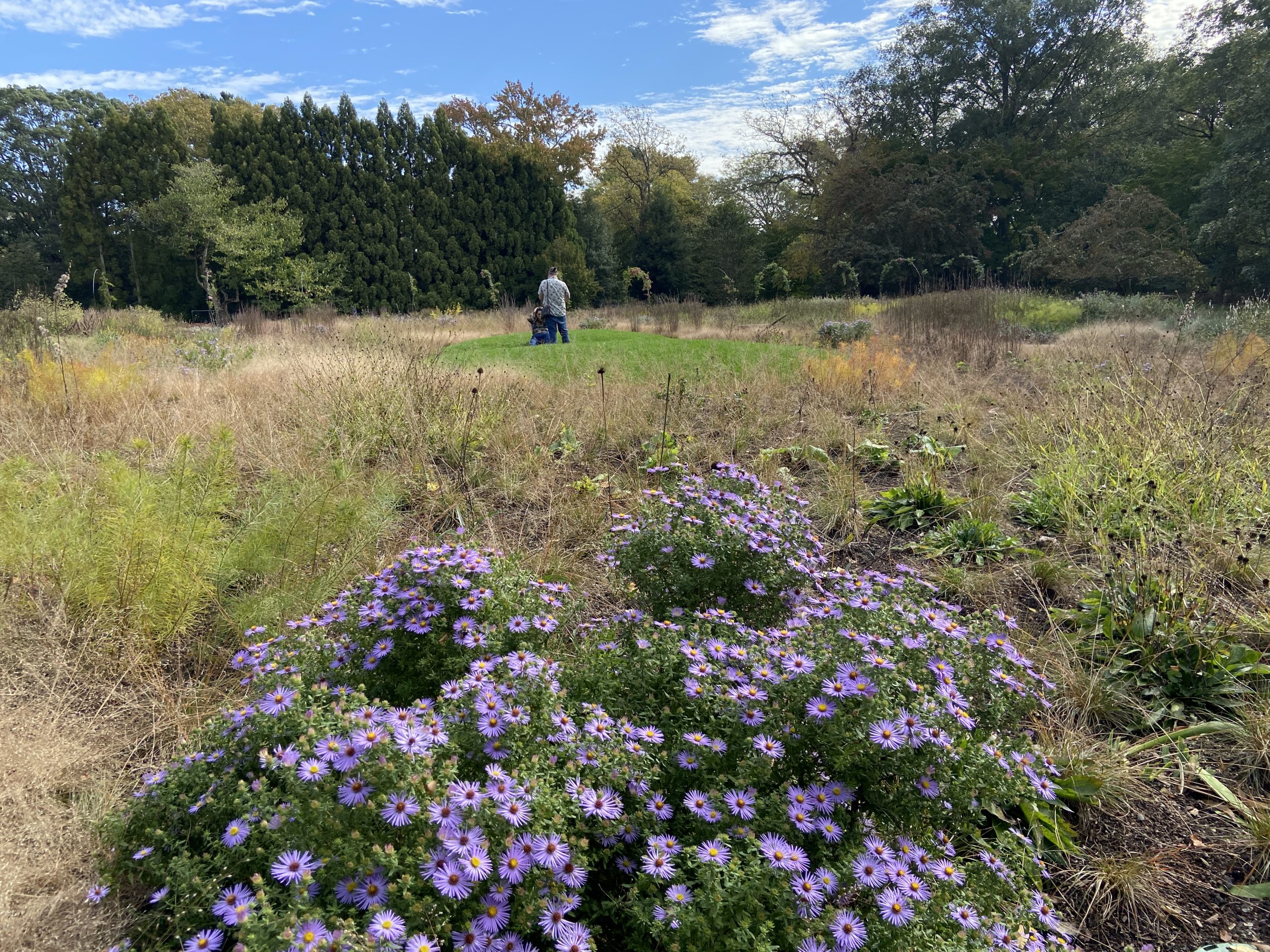
The early 20th-century Main House at Planting Fields, a 65-room mansion built by William R. Coe and Mai Rogers Coe and now open for seasonal tours, is surrounded by a landscape of lawns and trees designed by Olmsted Brothers. The gardens close to the house now include the Oudolf Garden, which preserved the historic rose arbor amid block plantings of mainly native perennial plants and grasses. Valuing structure and sustainability over color, the garden will provide interest in all seasons, such as foliage, seed pods, and plant skeletons. Oudolf has famously said that a plant is only worth growing if it looks good when it is dead.
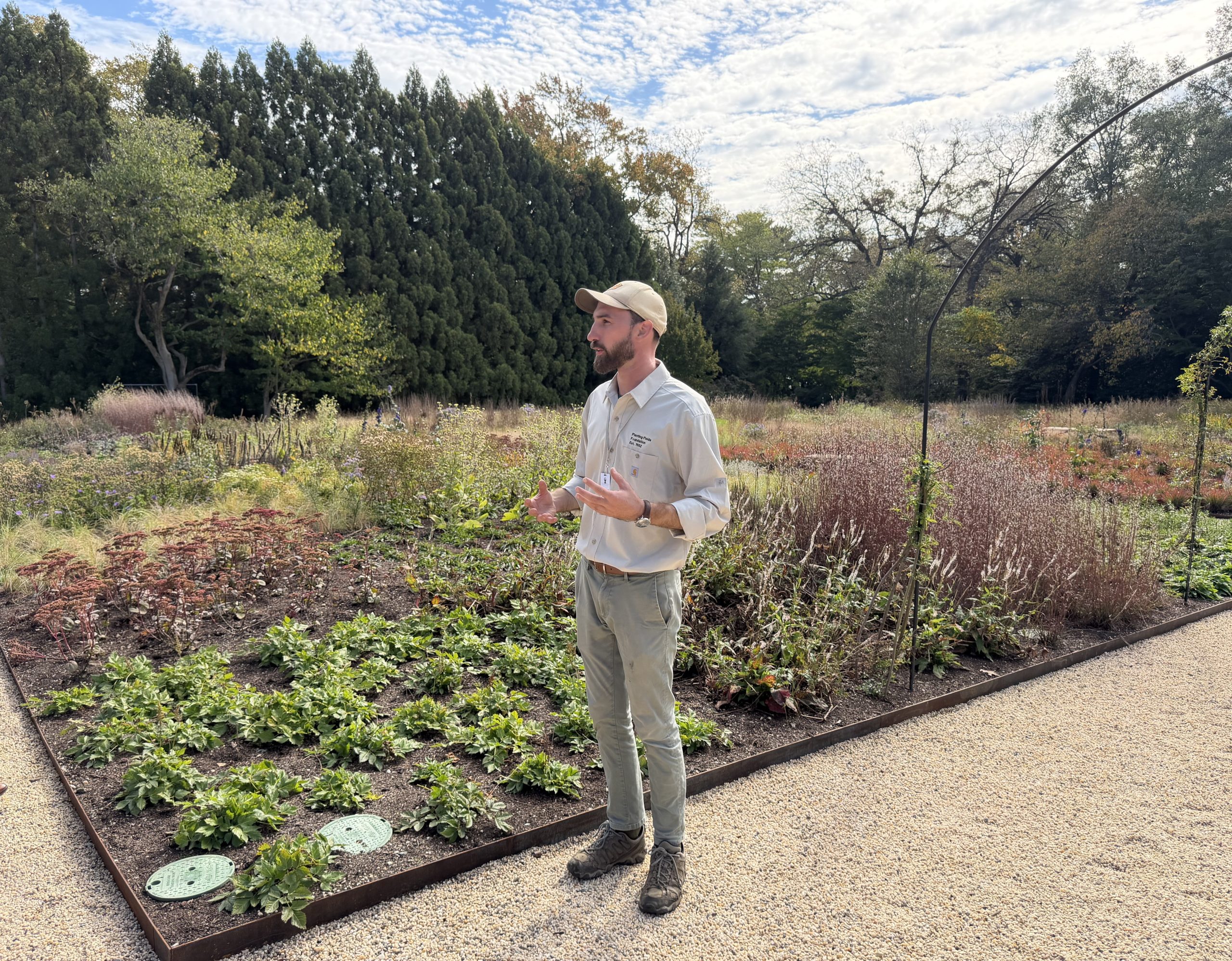
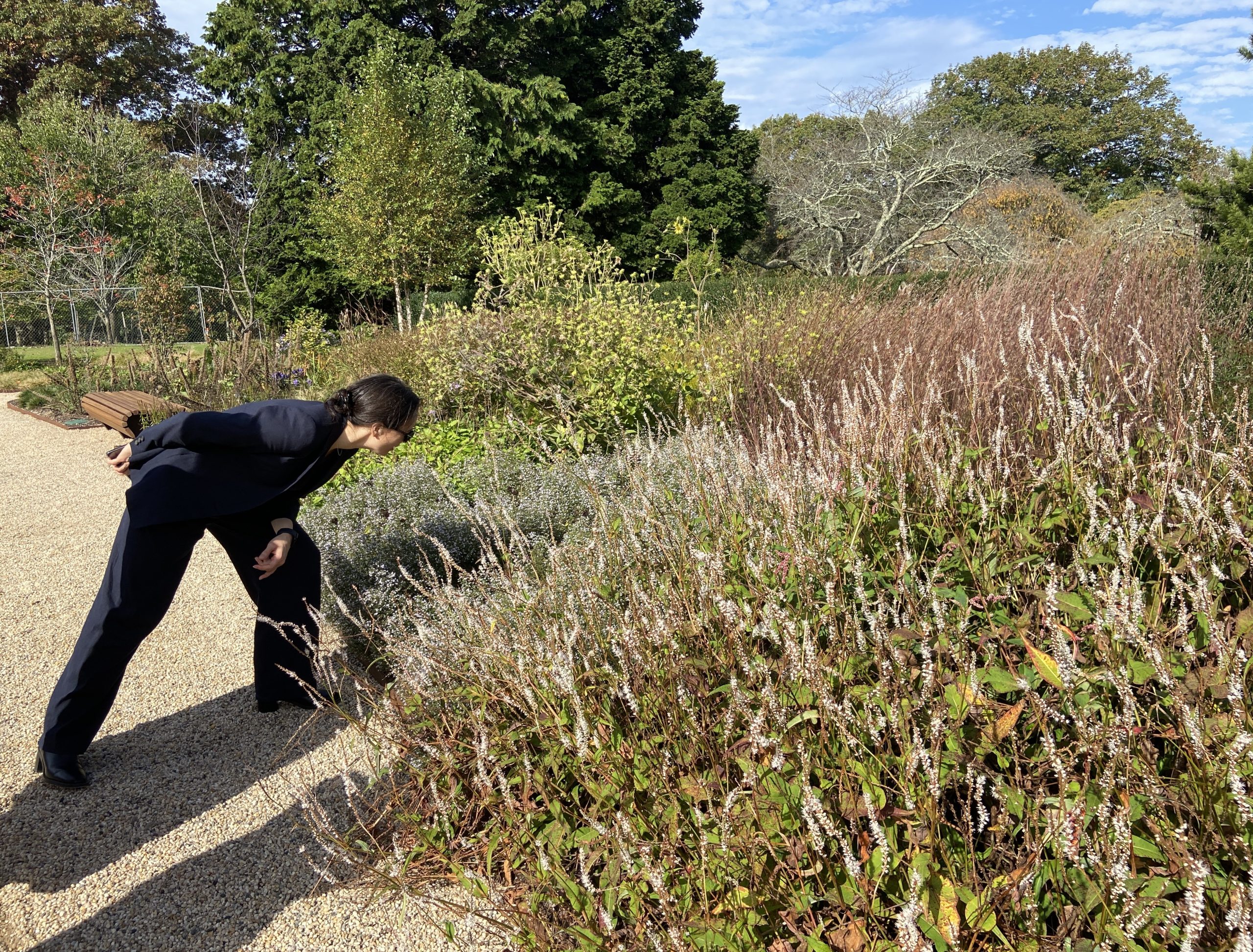
Landscape Curator Peter Slothower, who is in charge of the Oudolf Garden, consulted gardeners at other Oudolf-designed gardens during the garden’s creation. He also noted that he can’t maintain the garden on his own. Part of his job is “cultivating the community that will take care of the garden and see it into the future.” The biodiverse plants already support pollinators such as bees and butterflies. During the press preview, Dr. Wouters examined blossoming calamint plants that were loaded with bees at work.
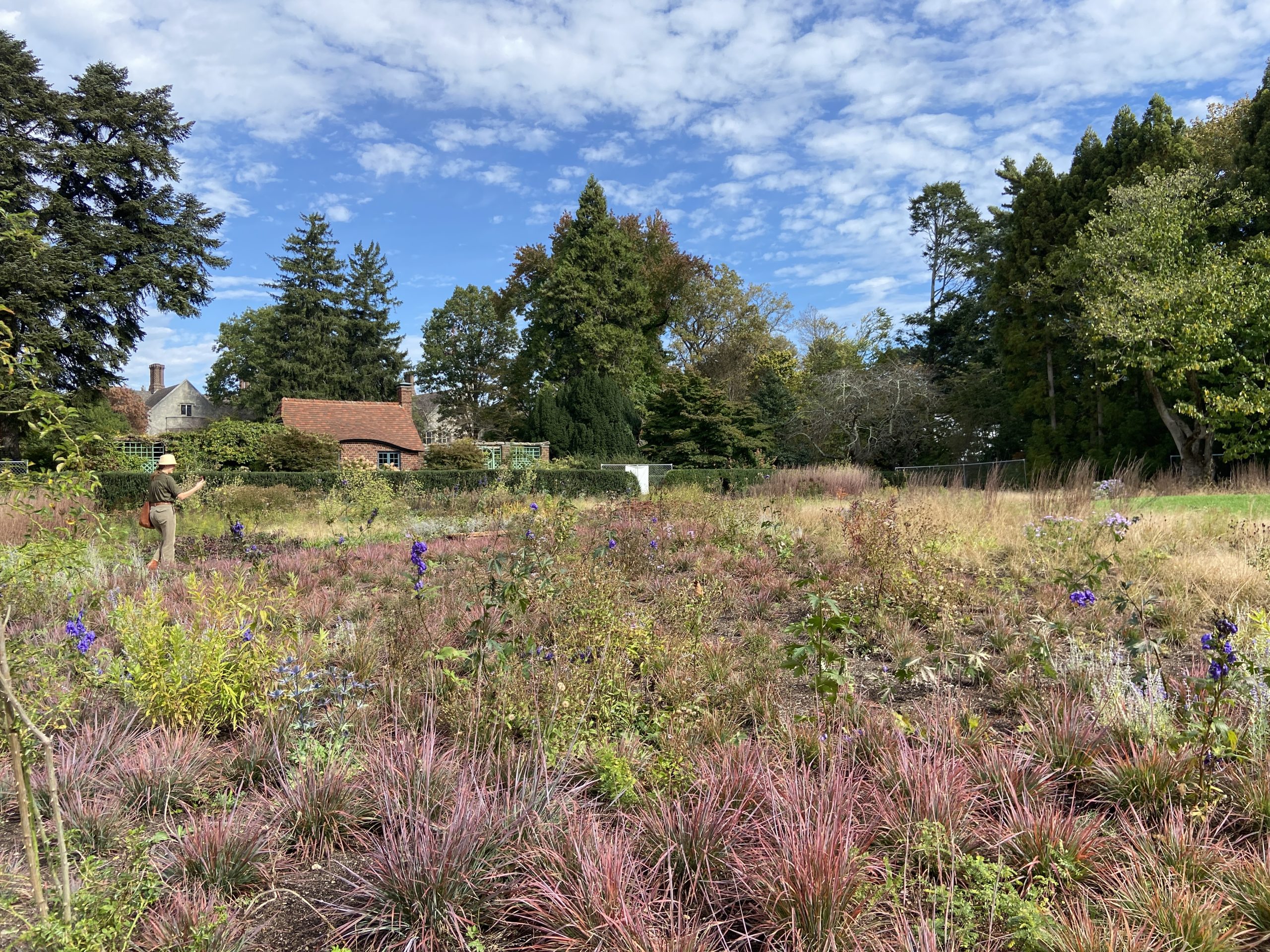
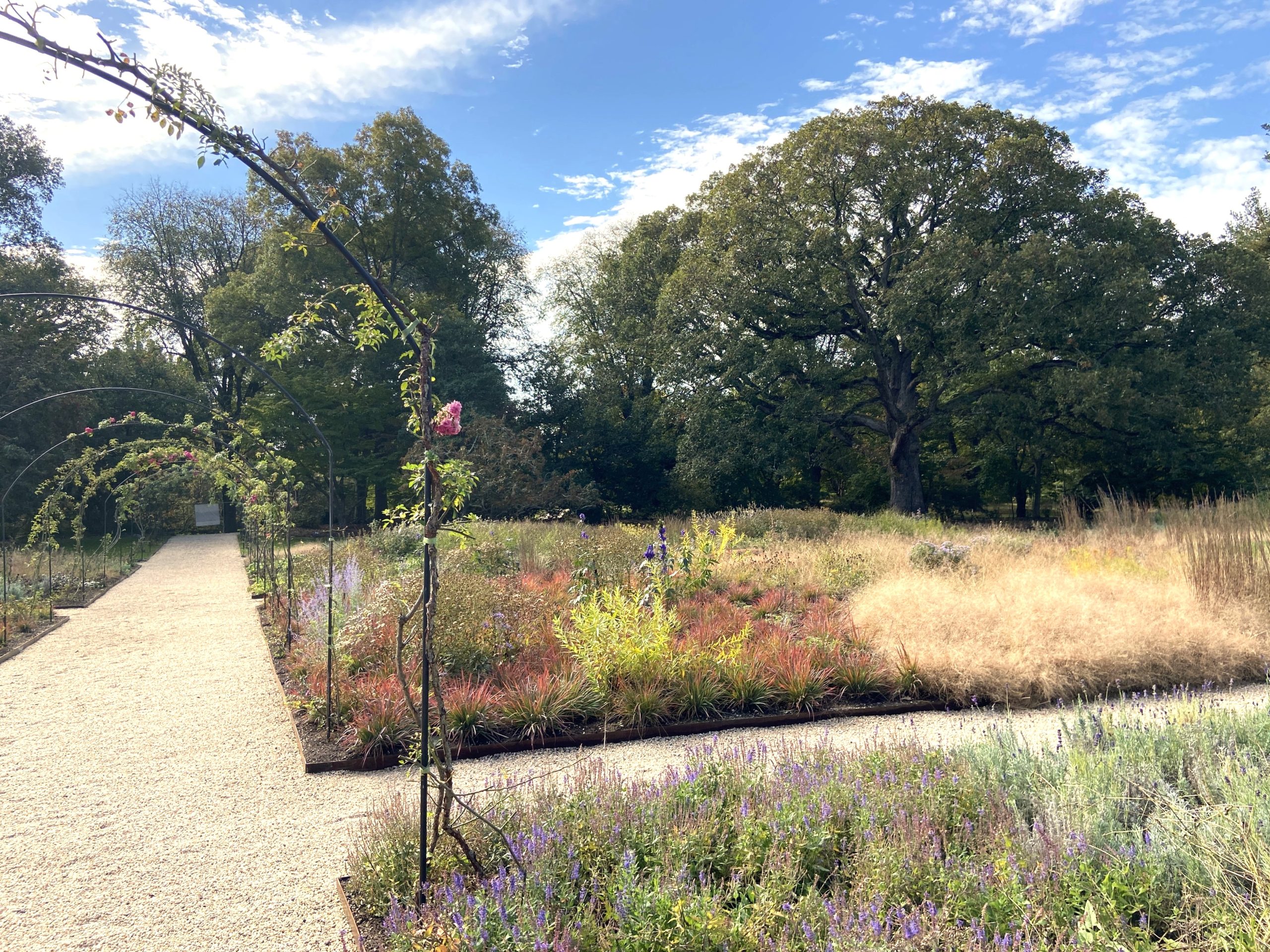
Although the garden is newly planted with more than 100 species, it showed lovely fall color when it opened. Beyond the hedge that borders one side are nearby structures and gardens like the brick Tea House that is part of the Pool Garden and (in the distance at the back left of the photo) the gray stone Main House. On another side of the garden, the Rose Arbor and plantings of perennials and grasses extend to a line of mature trees that serves as a border. The towering white oak, a Planting Fields treasure (in back right of photo), is more than 300 years old.
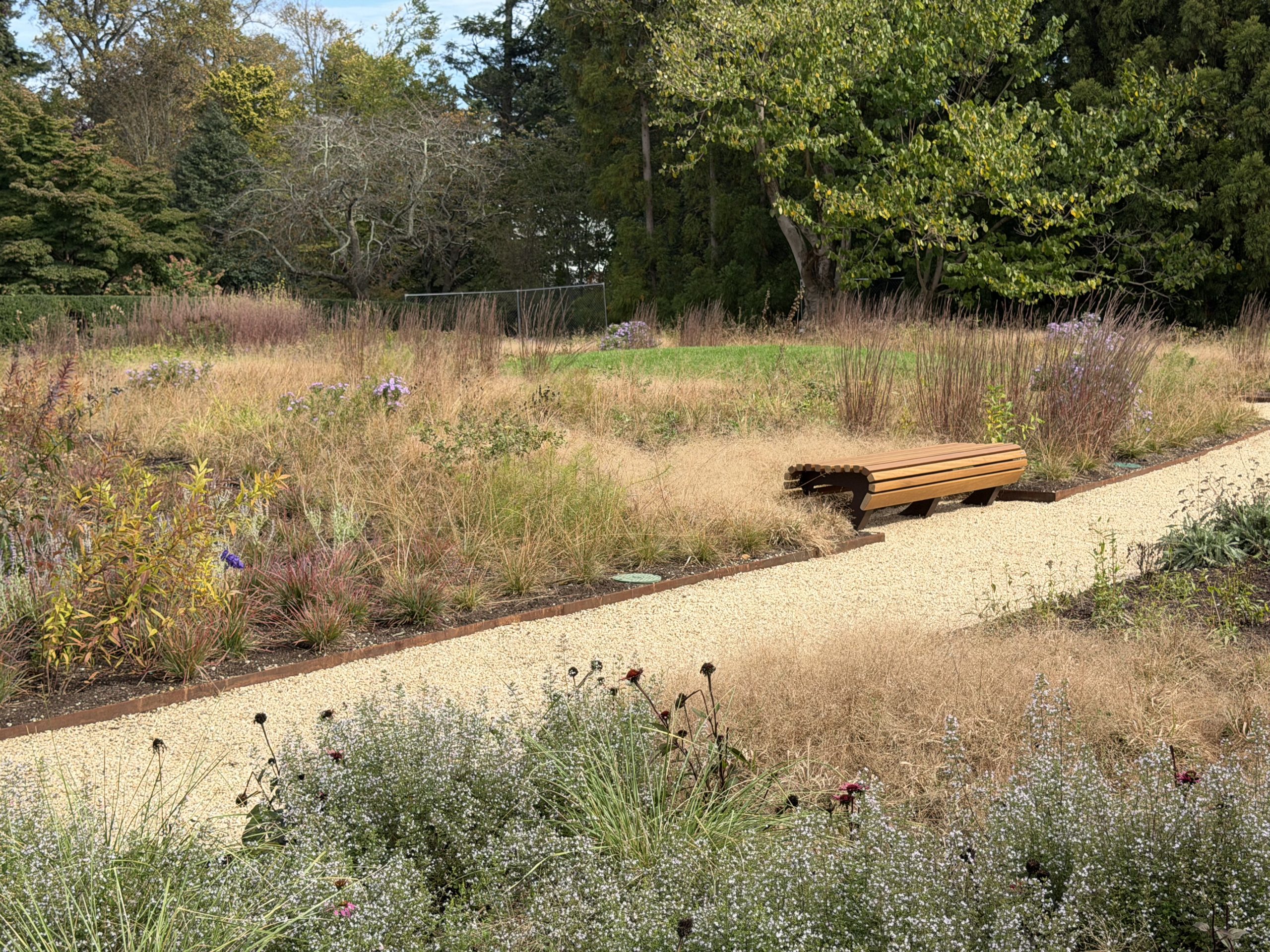
Details were carefully considered in the garden design. For the paths that divide the different quadrants of dense plantings, Oudolf chose beautiful curving wooden benches. The benches provide a place for sitting and reflecting, and they also offer a different perspective on the plants. Two slightly raised grassy mounds, another distinctive feature, provide additional places to stroll and view the garden, or even sit.
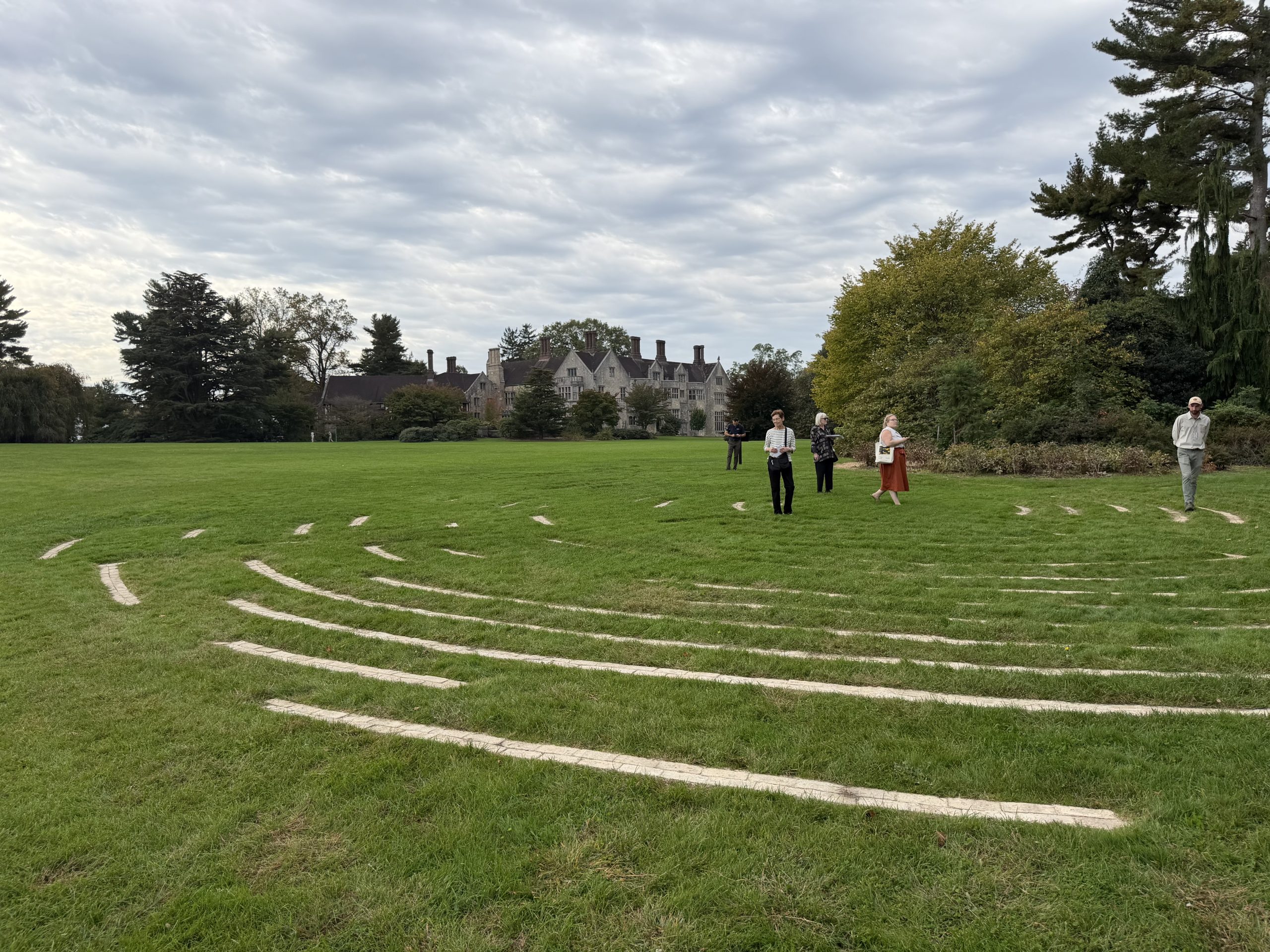
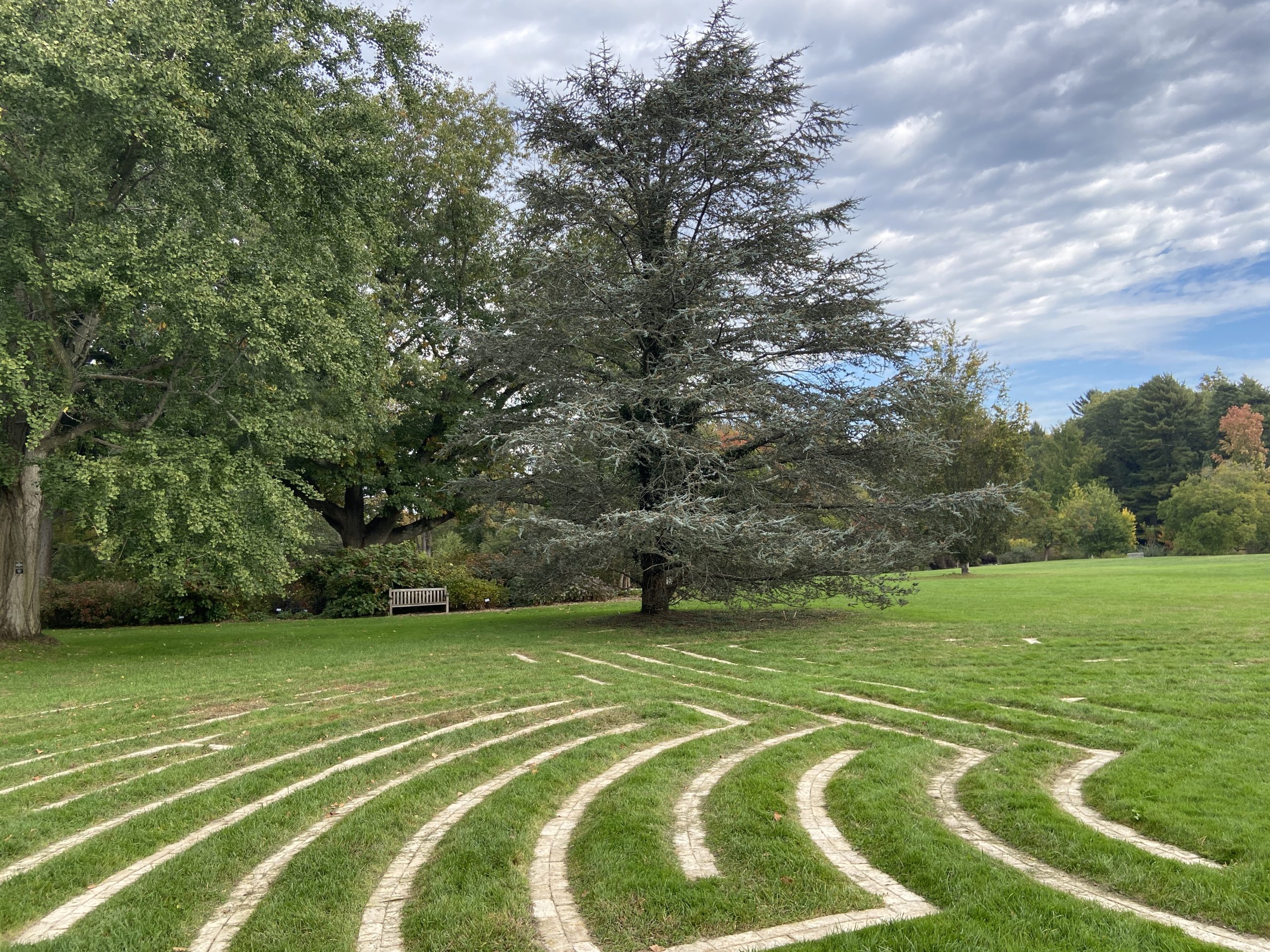
Also opened on October 17 and on view through September 1, 2027 is Dutch artist and filmmaker Fiona Tan’s Fragment of the Foundations for a Babel Tower, an installation located across the lawn from the Main House. Visitors can walk over the work to study it. The curving lines of 4,500 white clay bricks set in the grass can be considered on many levels, including as a type of garden folly (nonessential historical structures that serve as focal points in landscapes) or as a reference to humans’ ongoing folly in attempting to exert control over nature and belief, as in the biblical story. The website will list upcoming special programs about the installation.
Whether you visit now, as fall’s colors change, or in the future, for example when spring bulbs appear, the Oudolf Garden at Planting Fields will continue to grow and change. It’s well worth a visit in any season.
Linda Cabasin and Mike Squires took all photos featured in this story.
Linda Cabasin is a travel editor and writer who covered the globe at Fodor’s before taking up the freelance life. She is a writer for Fodor’s Philadelphia and a contributing editor at Fathom. Follow Linda on Instagram at @lcabasin.