
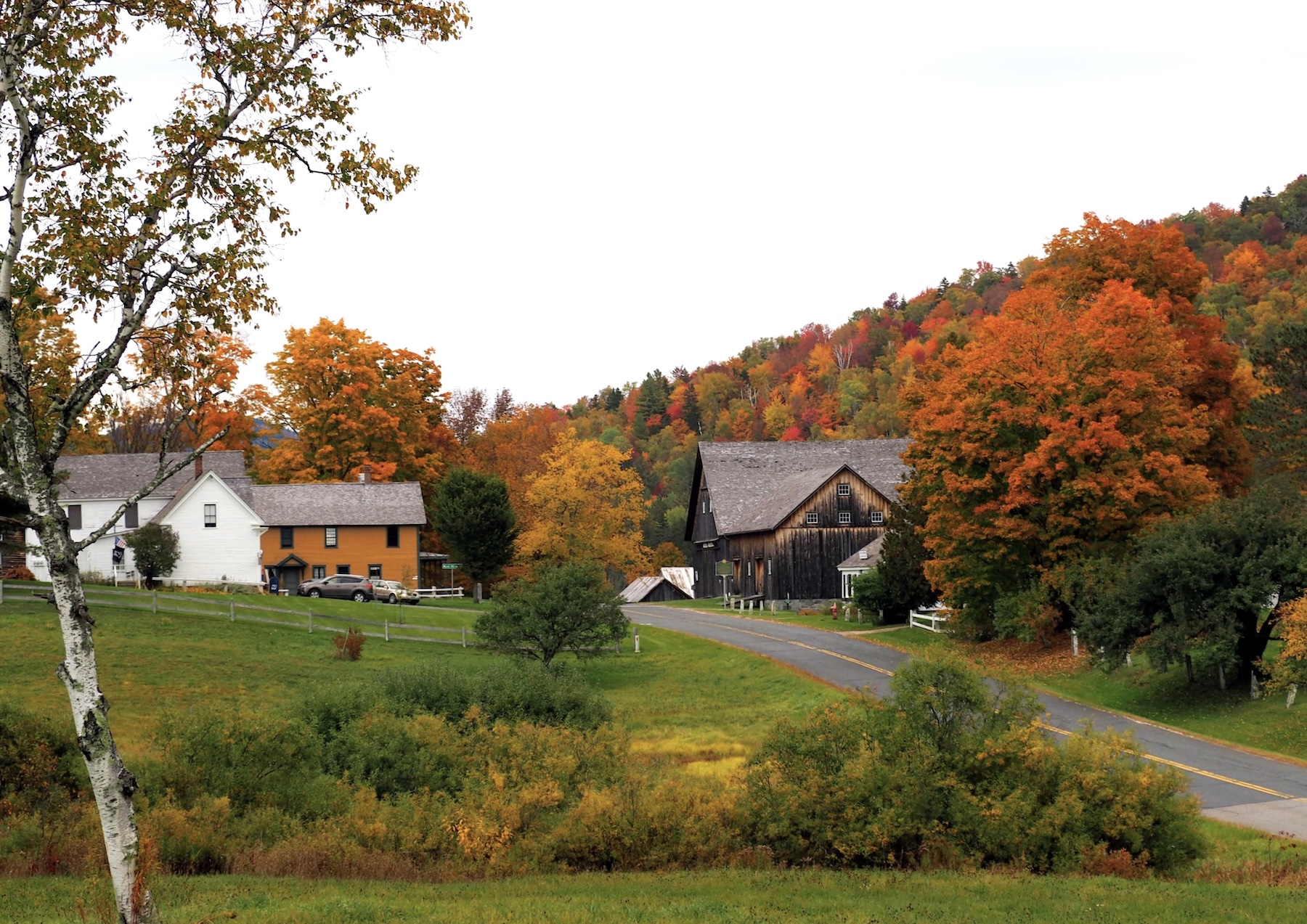
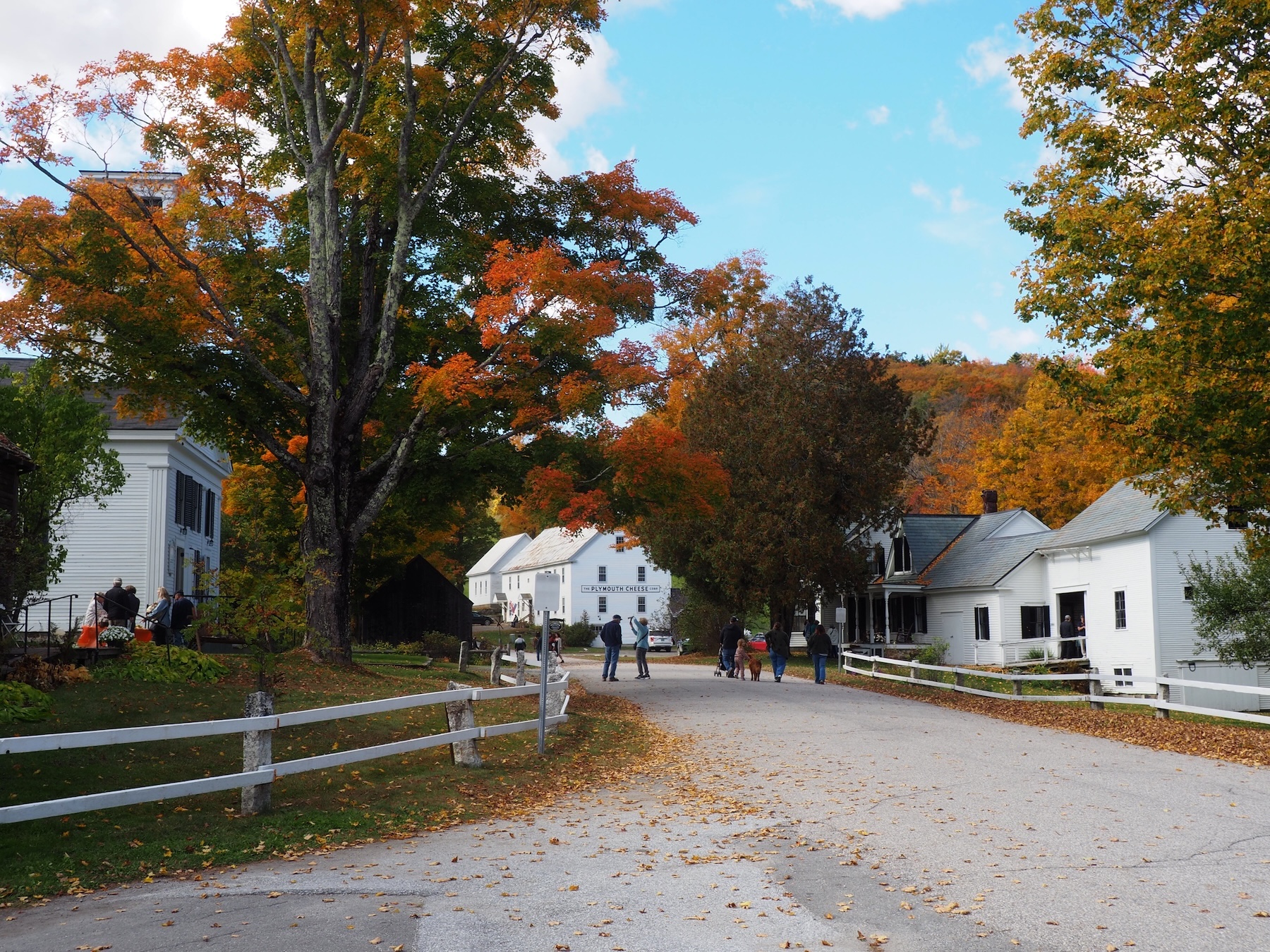
Vermont is dotted with appealing small hamlets, many with wood frame houses, a small white steepled church and maybe a one-room schoolhouse, constructions that could date from the 19th century and occasionally the 18th. The look further embodies the New England ideal when leaves are changing color in the fall.
Plymouth Notch is such a hamlet, except that its tiny downtown is the President Calvin Coolidge Historic Site, a location managed by the state of Vermont. Coolidge was born here and is buried here.
The attraction is open to visitors five days a week in late spring and summer, but from mid-September through late October, it is open daily for leaf peeping season. Visitors can combine a dose of American history with a leisurely day outdoors in this park-like setting with picnic tables invitingly positioned around the grounds — and a few tables indoors, as needed, in one of the barns.
The former president
Coolidge isn’t one of our better-known presidents, but he served six years. He ascended to the office in 1923 when President Warren G. Harding died, was elected in his own right in 1924 but did not run in 1928. His presidency a century ago coincided with the 150th anniversary of the signing of the Declaration of Independence. Coincidentally, his birthday was July 4.
He was a modest man and a man of fairly few words. But he said enough that visitors get a sense of him when visiting the birthplace.
The site, a National Historic Landmark, includes the following:
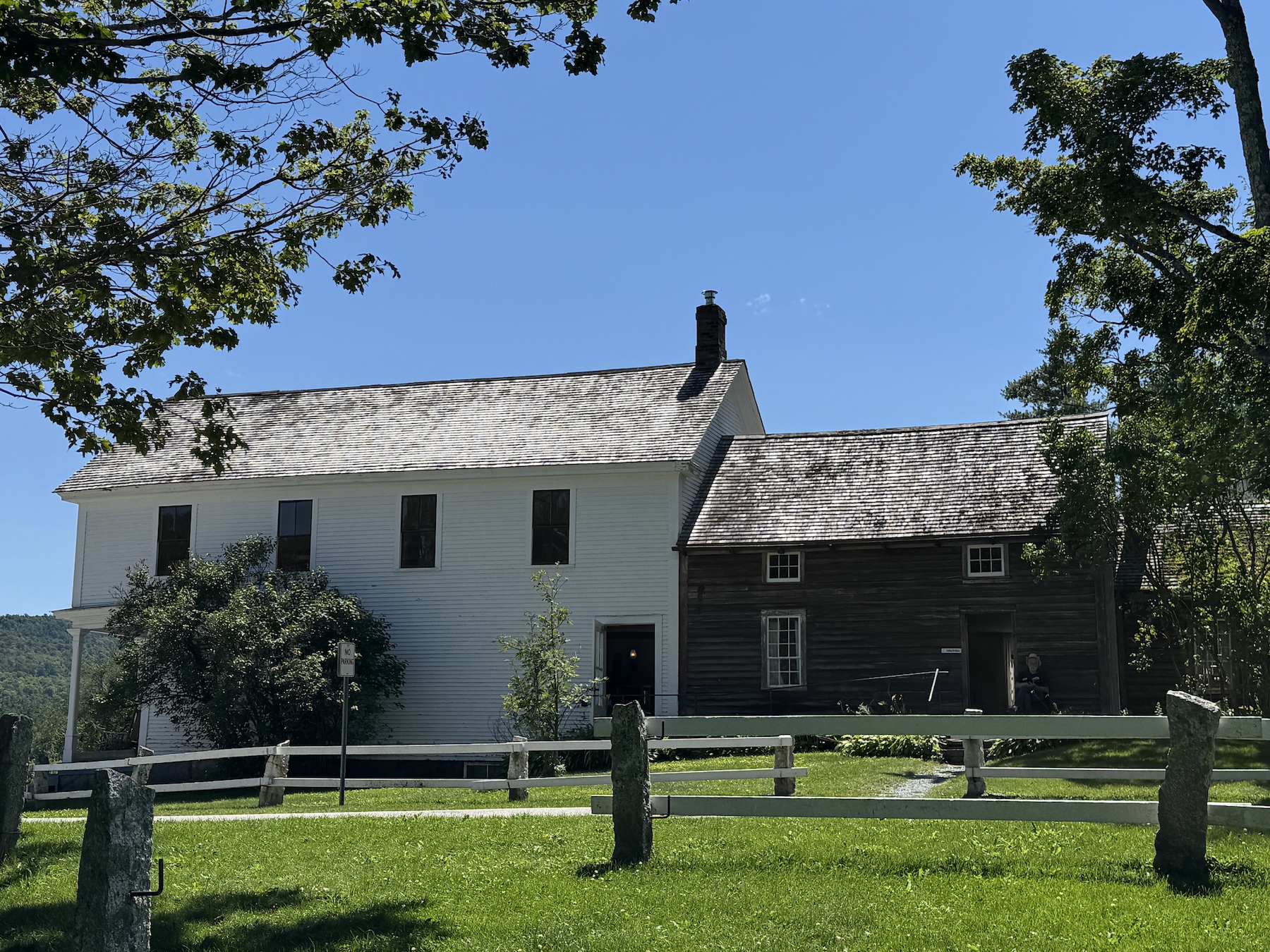
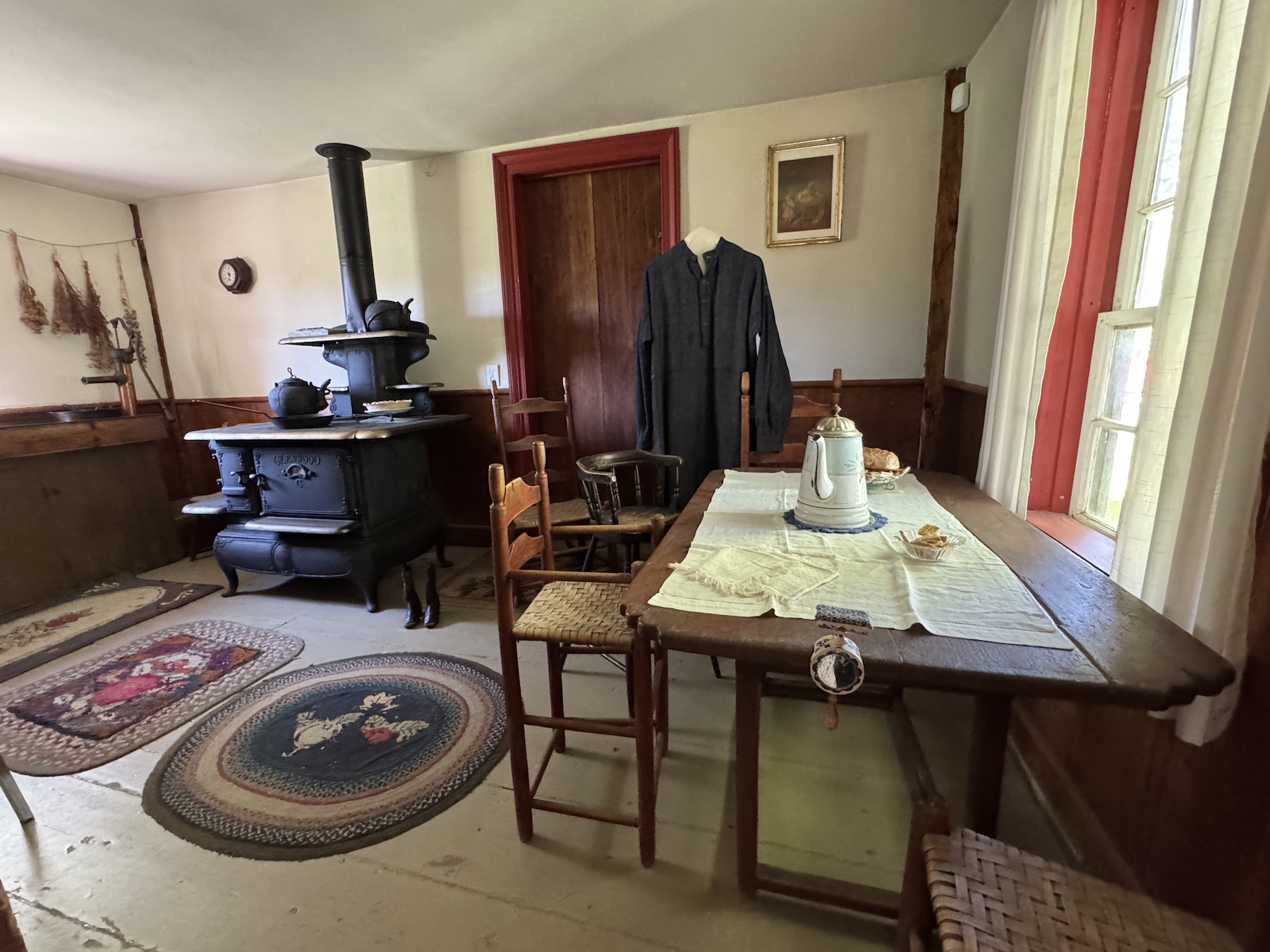
Calvin Coolidge Birthplace, essentially a small one-bedroom apartment, which is attached to the village’s general store. Vermont restored the birthplace to its appearance in 1872, the year of Coolidge’s birth. Visitors see original furnishings donated by the Coolidge family. Coolidge’s father managed the attached store for some years, but the family, with two children in 1876, upgraded its digs by moving across the street to a home now known as:
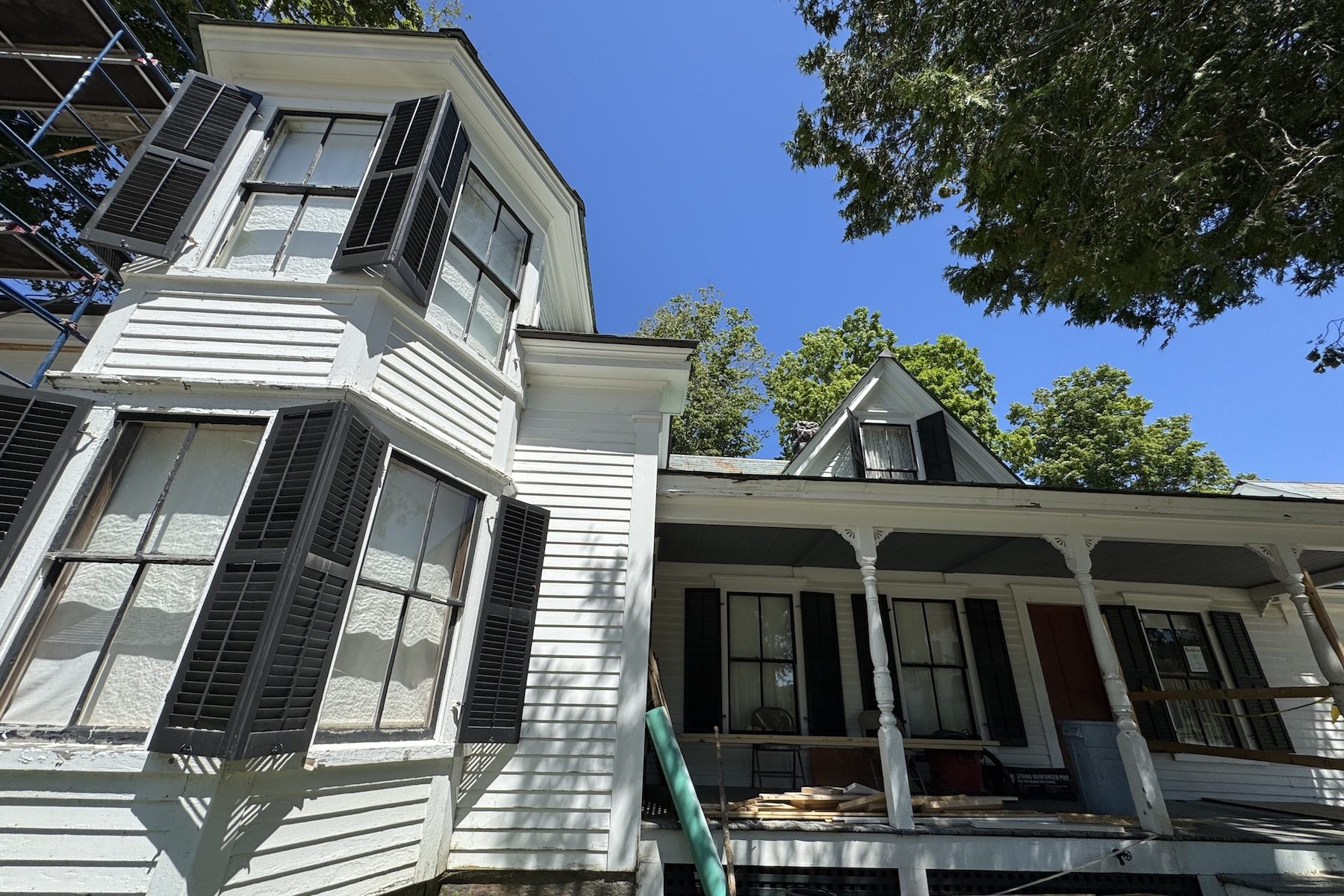
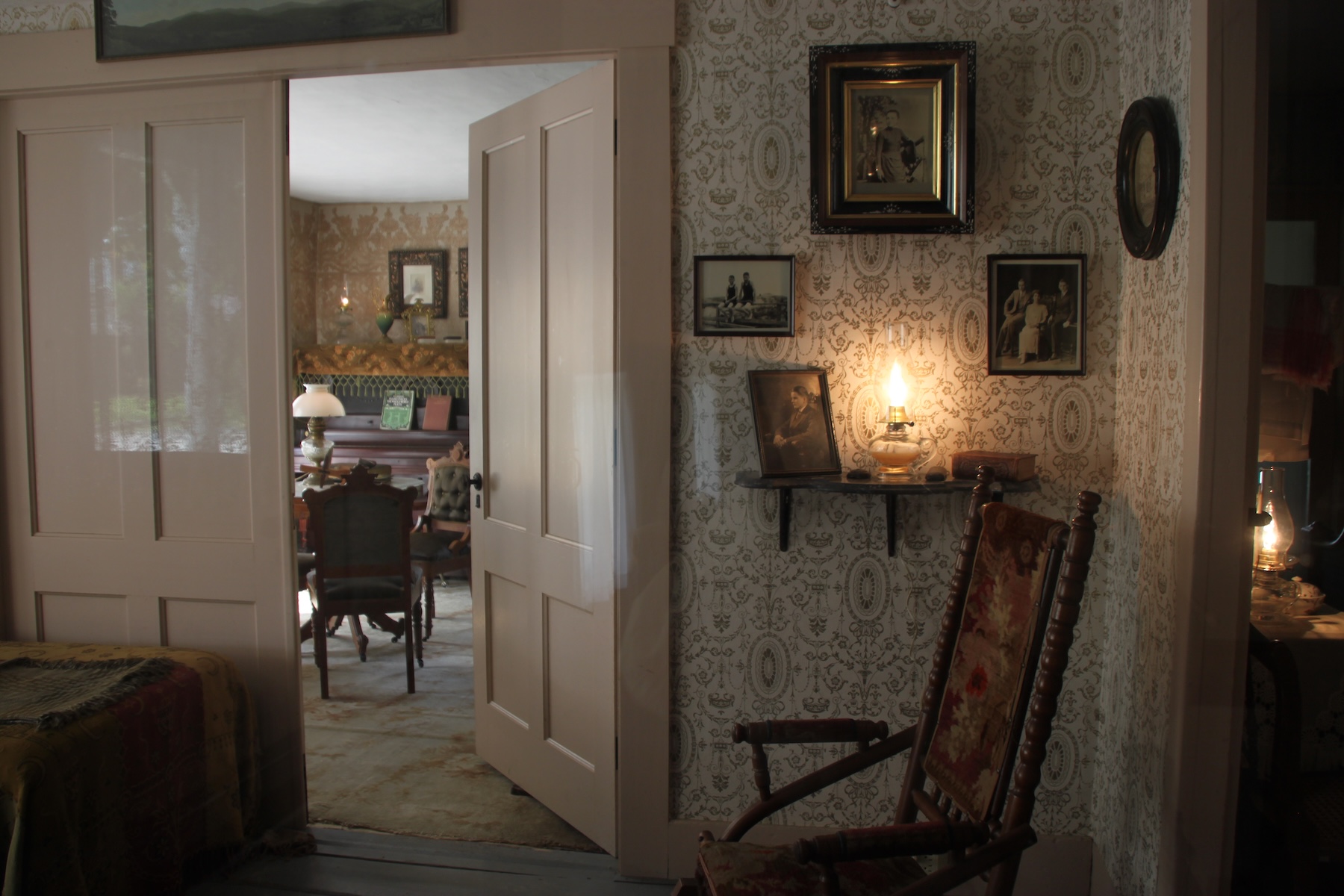
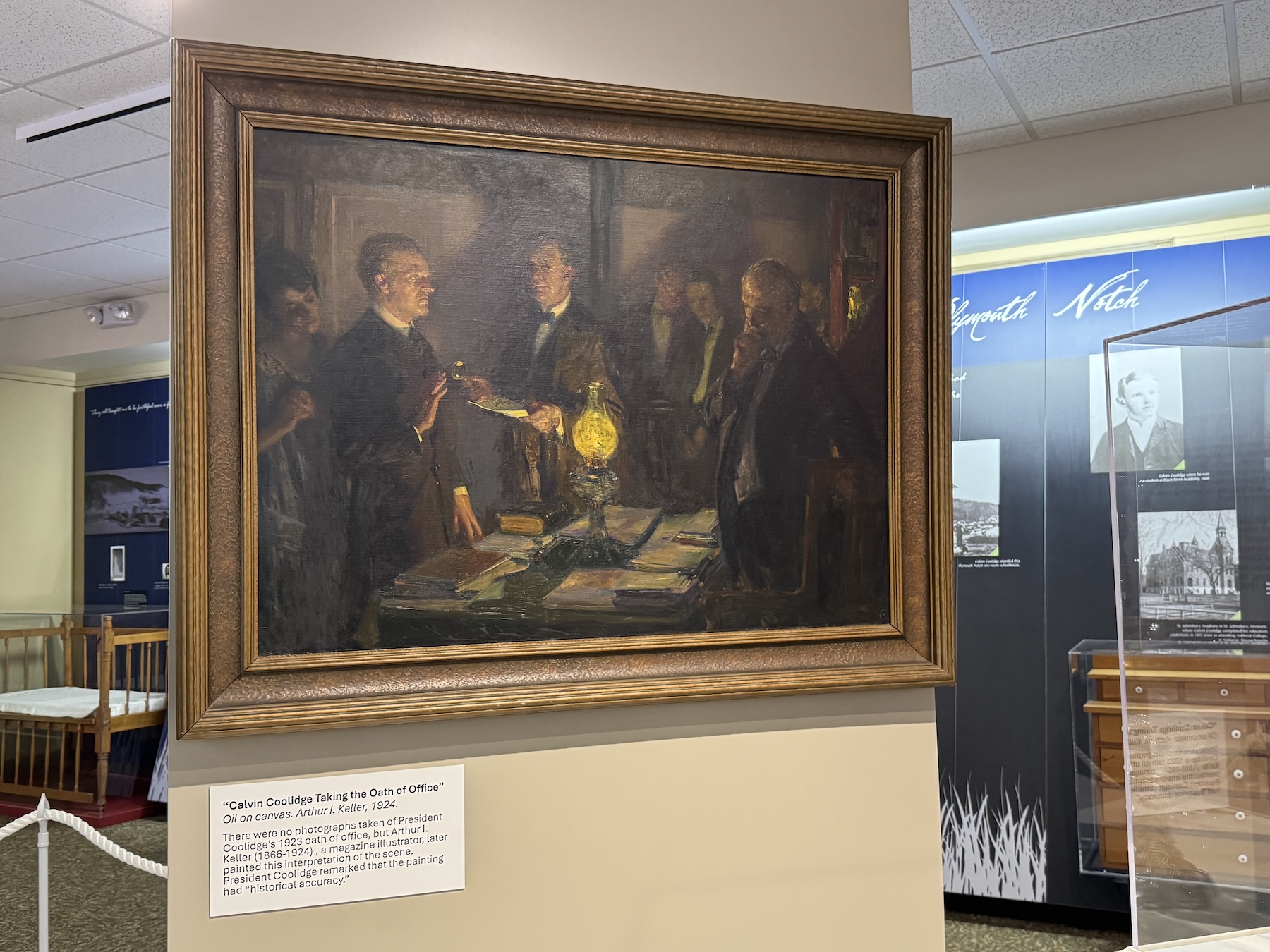
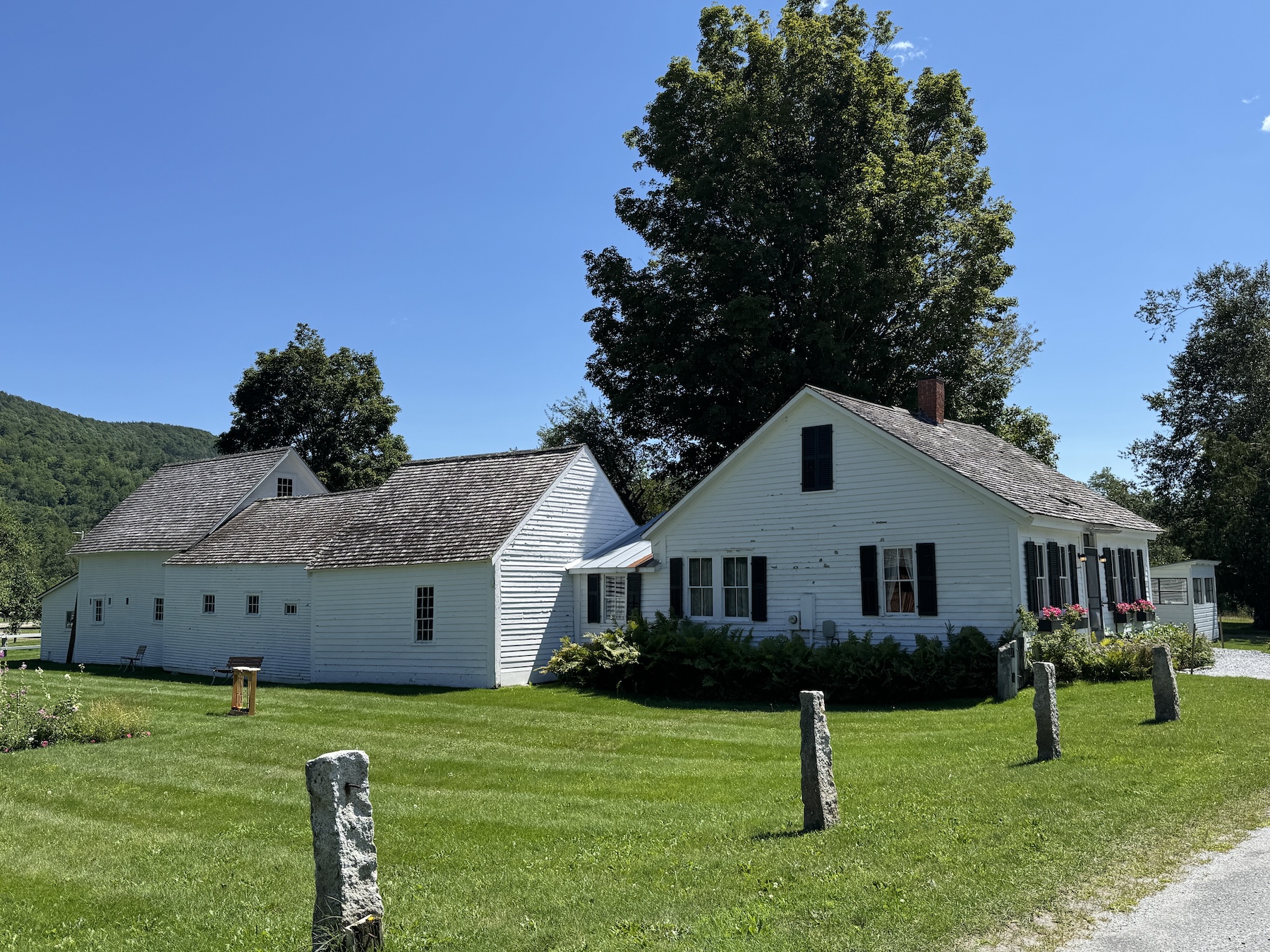
Coolidge Homestead, a wood frame house with bay windows and a rocking chair-ready porch. Vice President Coolidge was vacationing in the family home in summer 1923 when he learned of Harding’s death. Coolidge’s father, a notary public, administered the oath of office to his son. Coolidge’s son and daughter-in-law later gifted the house and furnishings to Vermont, and the state maintains its 1923 appearance.
Note: Due to essential preservation work, this house is closed for the 2026 season but will reopen next year.
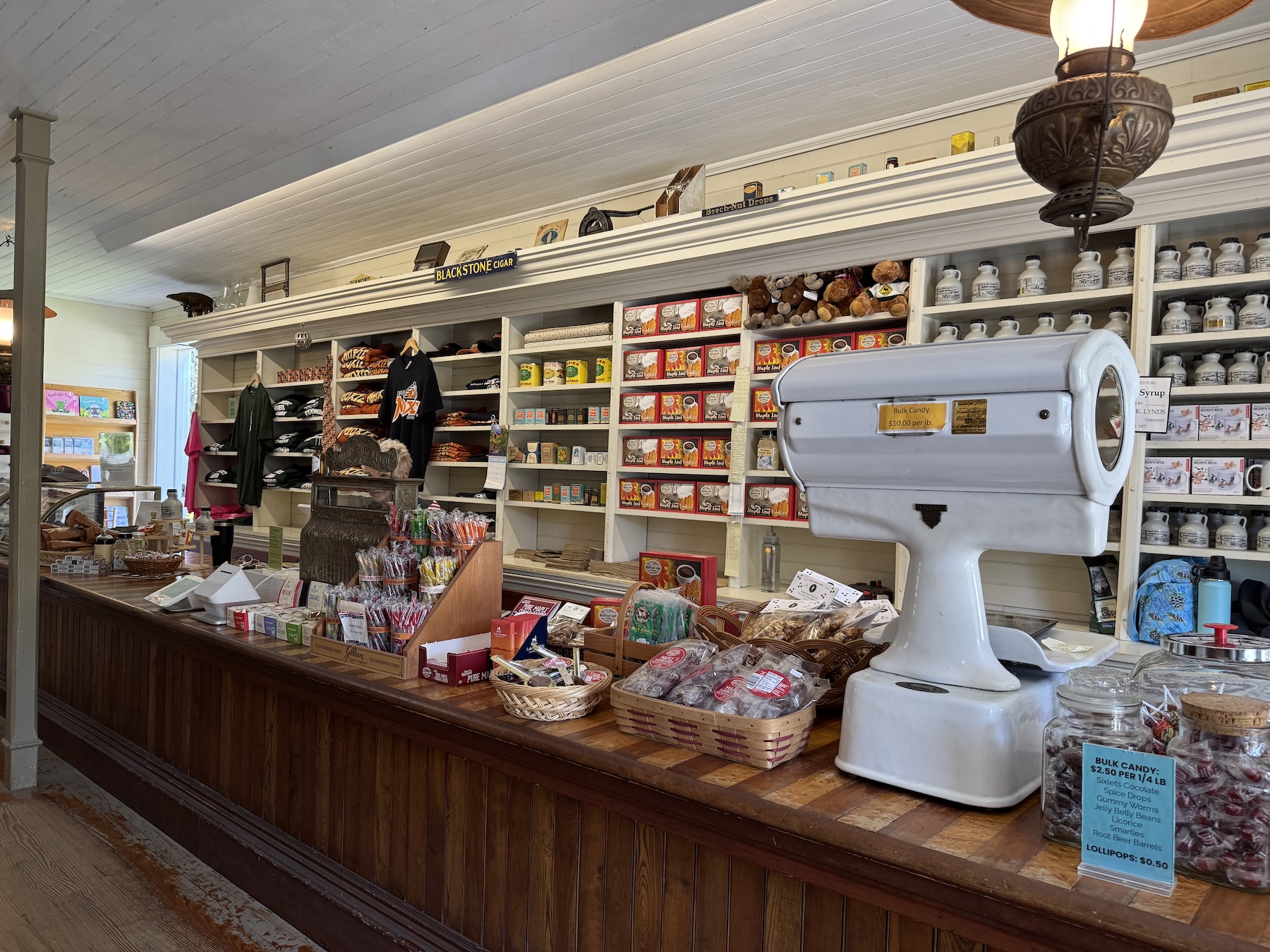
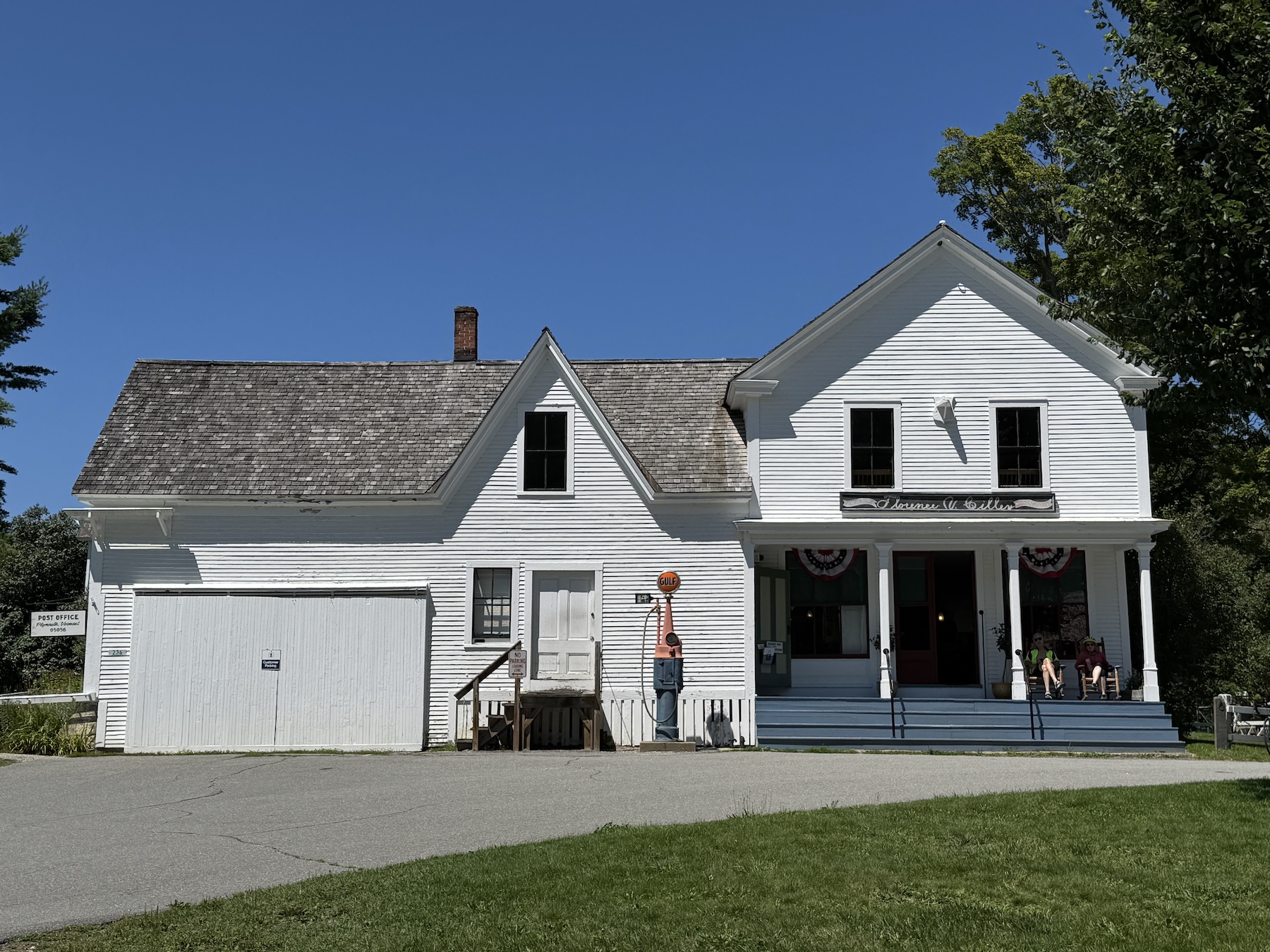
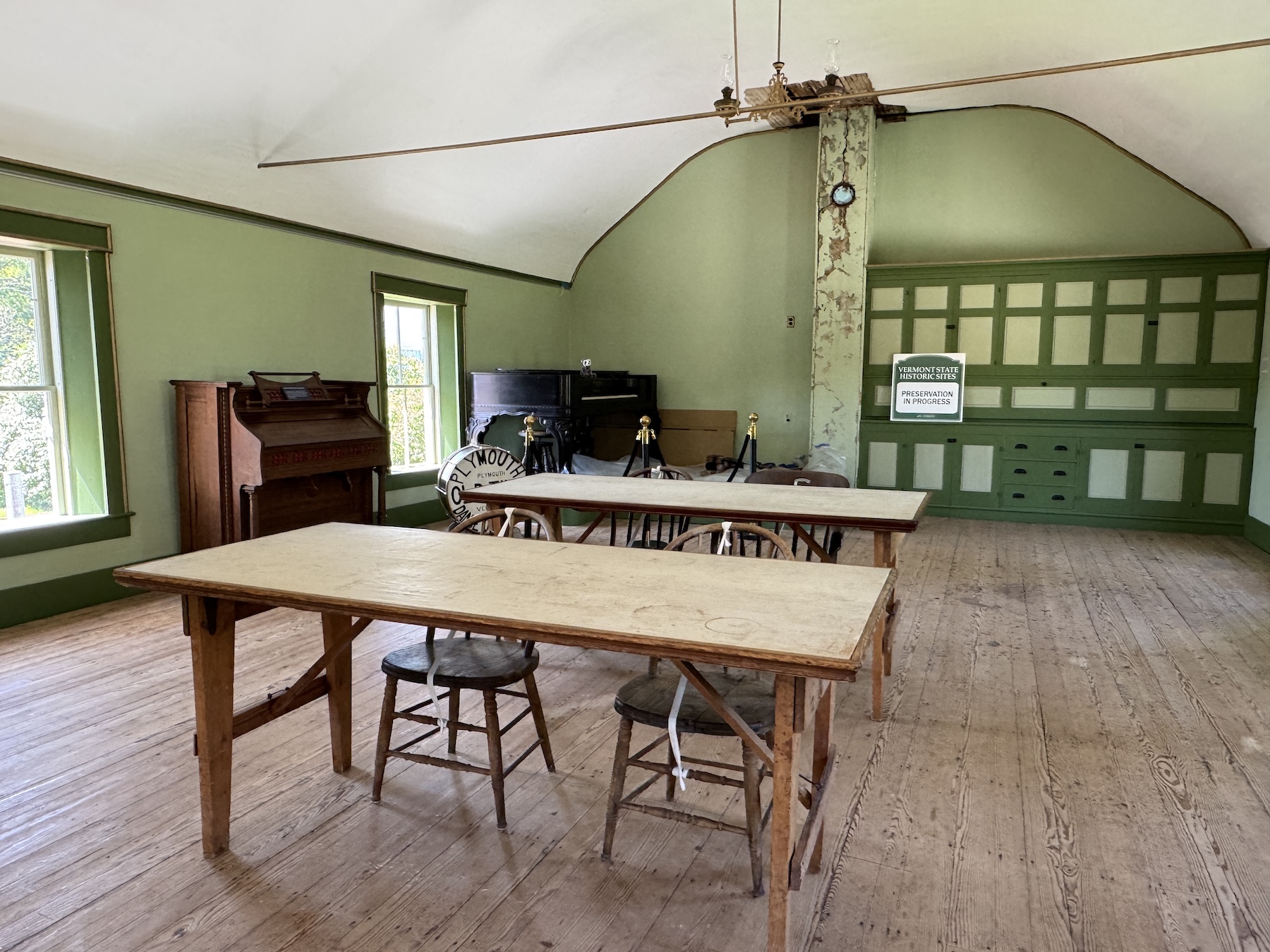
Florence Cilley General Store, Coolidge Hall and Plymouth Post Office. All three are part of the same 1850s building that houses the Calvin Coolidge Birthplace. Today, the store is stocked with modern goodies for tourists while, fittingly, conveying an old-timey feel. Florence Cilley operated the business from 1917 to 1945.
Coolidge Hall, above the store, was a gathering site for weekly dances and family reunions. But in 1924 it became the Summer White House. Furnishings include desks made for Coolidge plus musical instruments of the Plymouth Old-Time Dance Orchestra. The post office operated in a corner in the general store until its 1976 relocation to the adjacent former carriage barn.
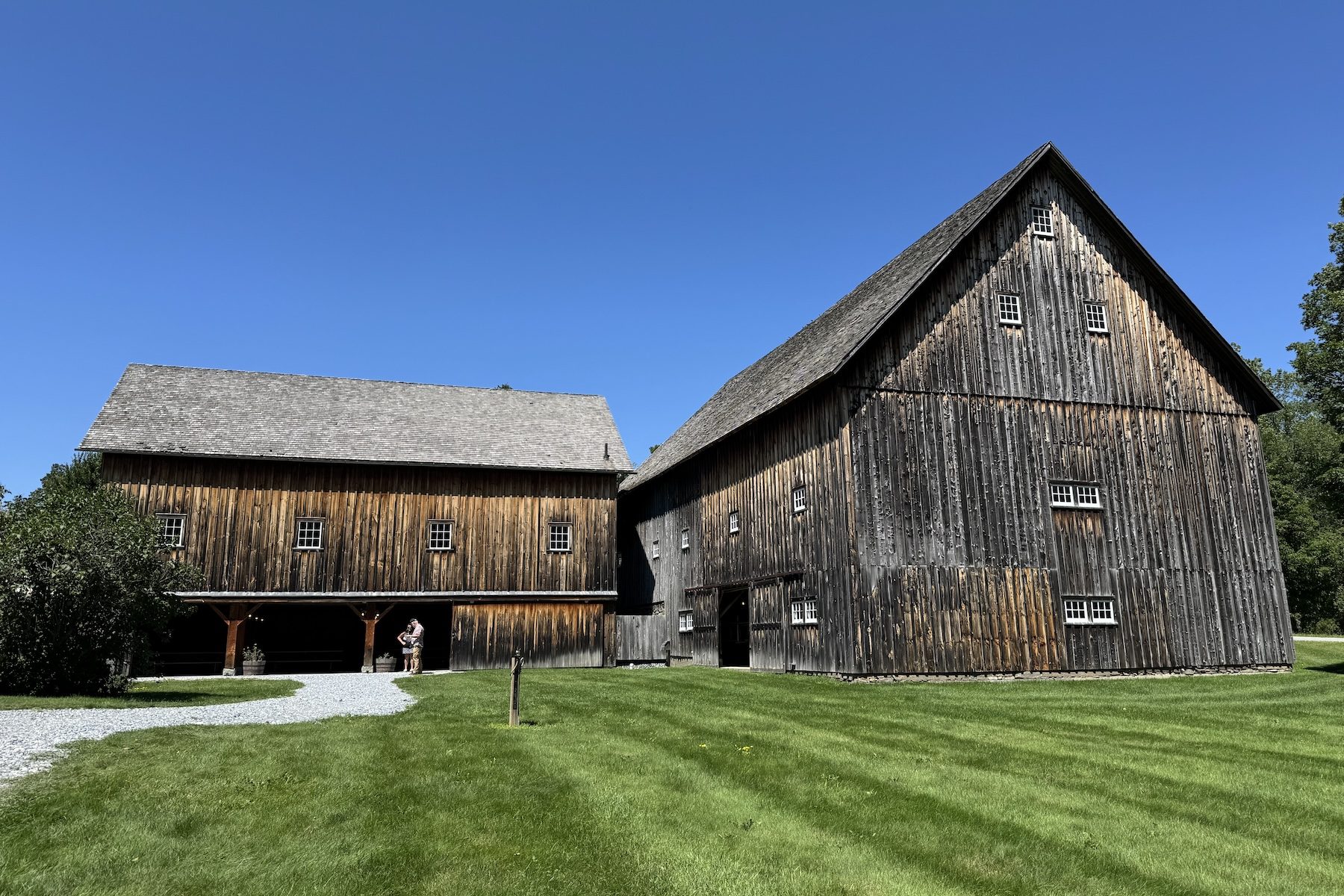
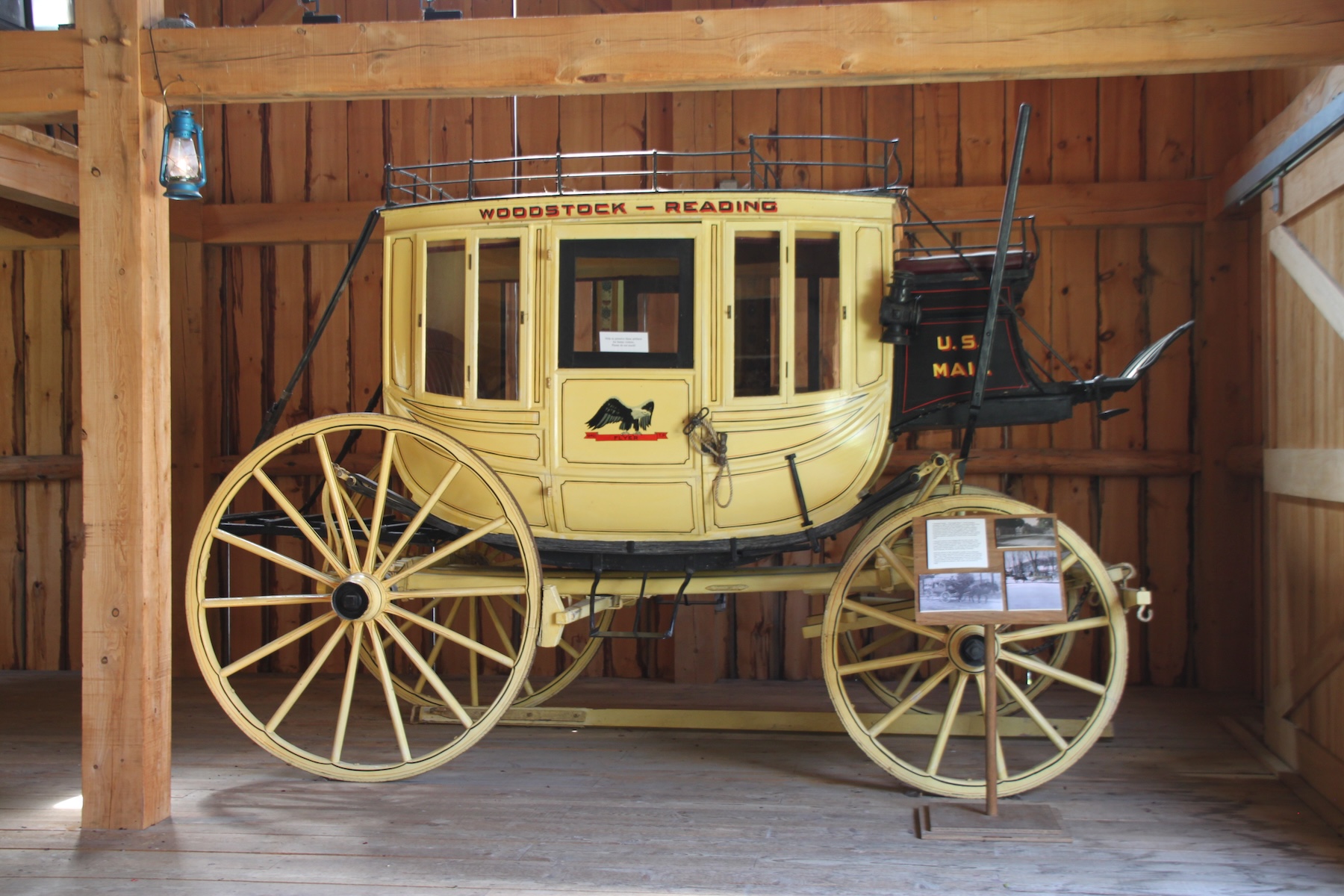
Wilder Barns, featuring exteriors of vertical unpainted pine boards. These are banked barns, meaning they were built on the side of a slope for easy entry at two levels. The larger barn, dating from c. 1875, accommodated dairy cows on the main level, with hay stored above that and other livestock at the bottom level. Today, its exhibits feature typical farm equipment for the turn of the 20th century, including equipment associated with maple syrup production. The smaller barn, rebuilt in 2003 to replicate a c. 1875 barn that was knocked down in the mid-20th century, accommodated horses. Today, it houses an exhibit of mostly horse-drawn vehicles. Indoor picnic tables are on the lower level of the horse barn.
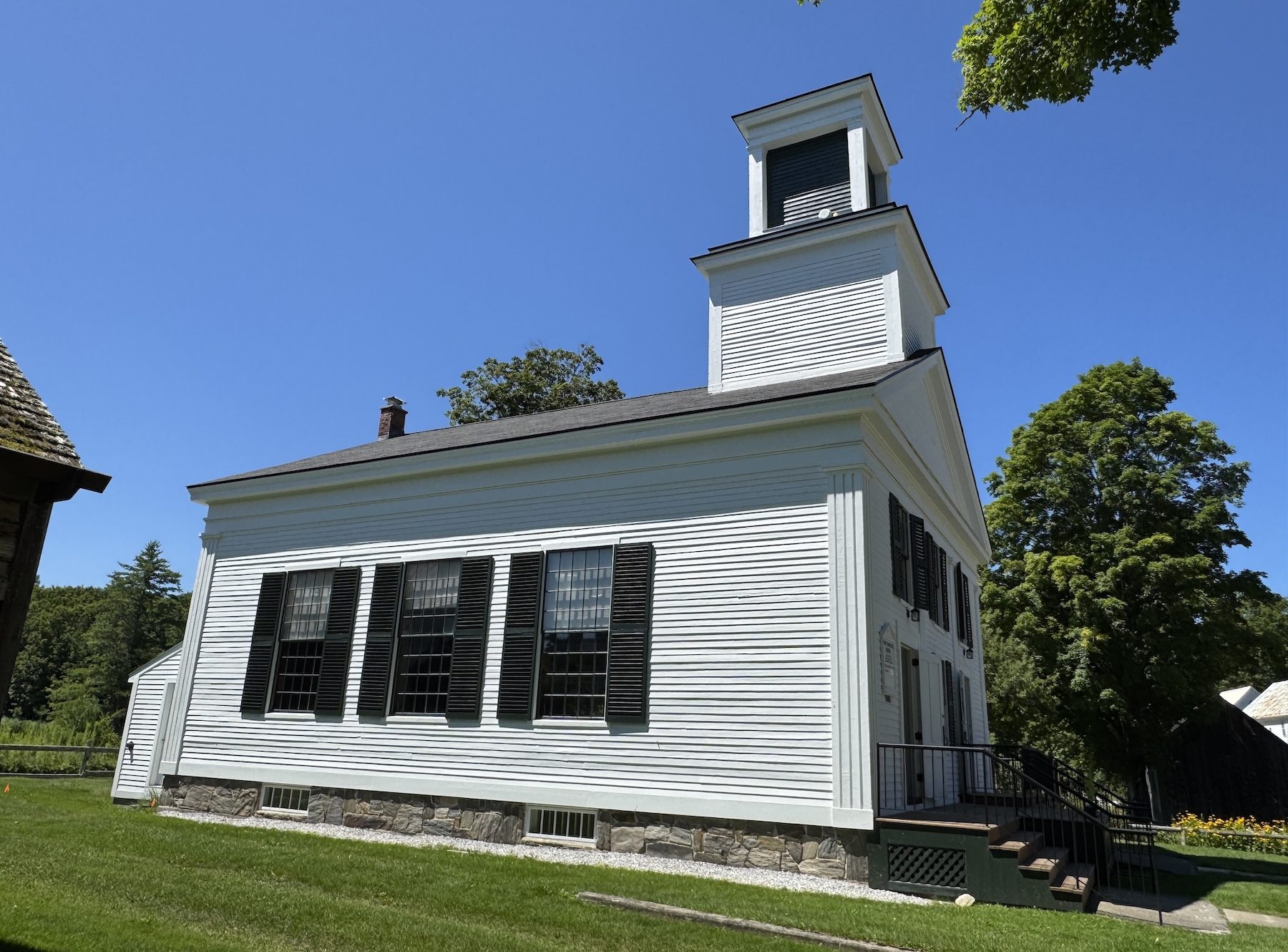
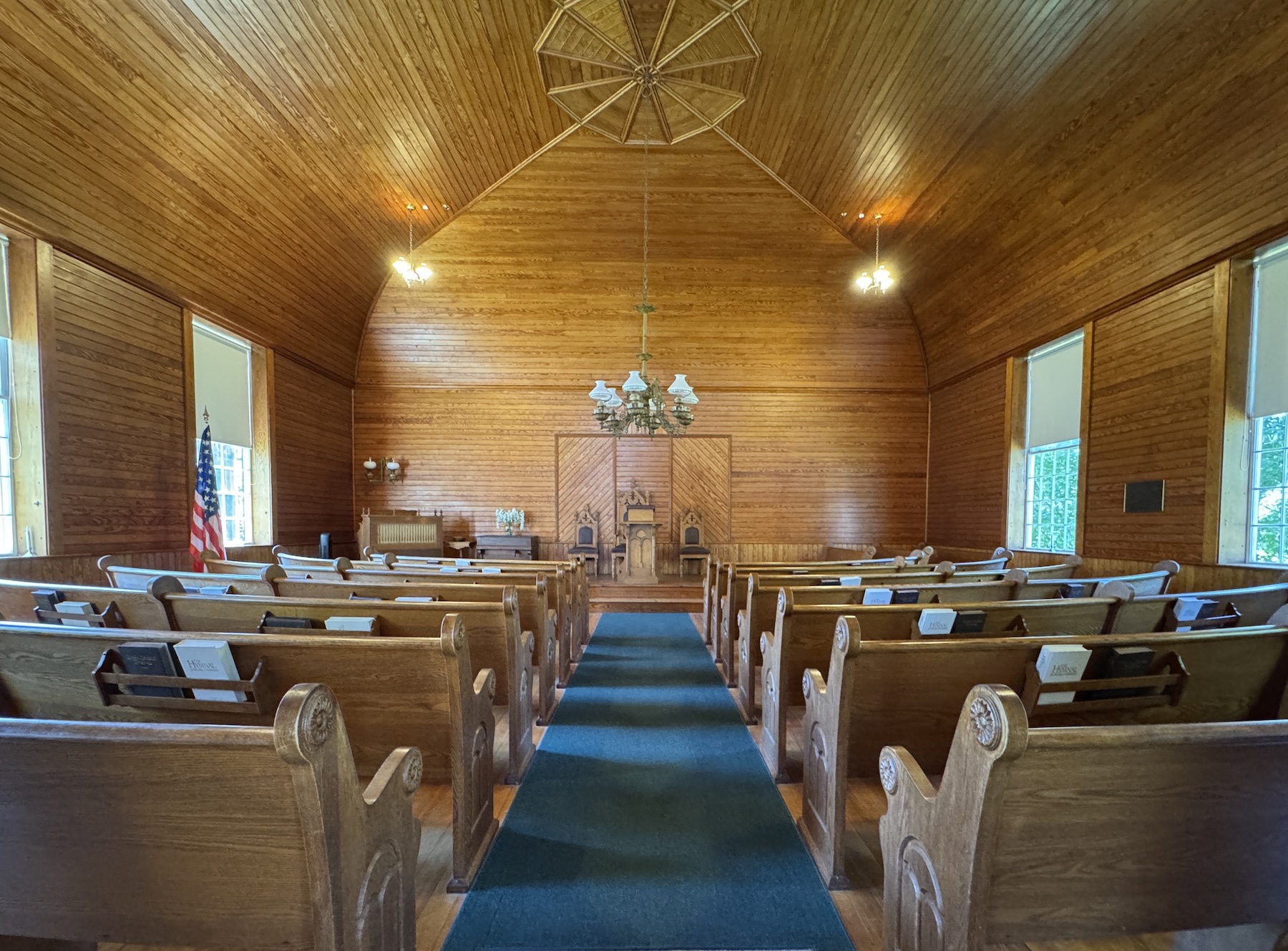
The 1840 Union Christian Church and the One-Room Schoolhouse. Originally dedicated for Congregationalists, this church was where the Coolidges attended services. The interior was redesigned in the 1890s in Carpenter Gothic style, using lots of local hard pine. Today, the inactive church is owned by a foundation. The white 1890 wood frame schoolhouse replaced the stone school, on the same site, that Coolidge attended.
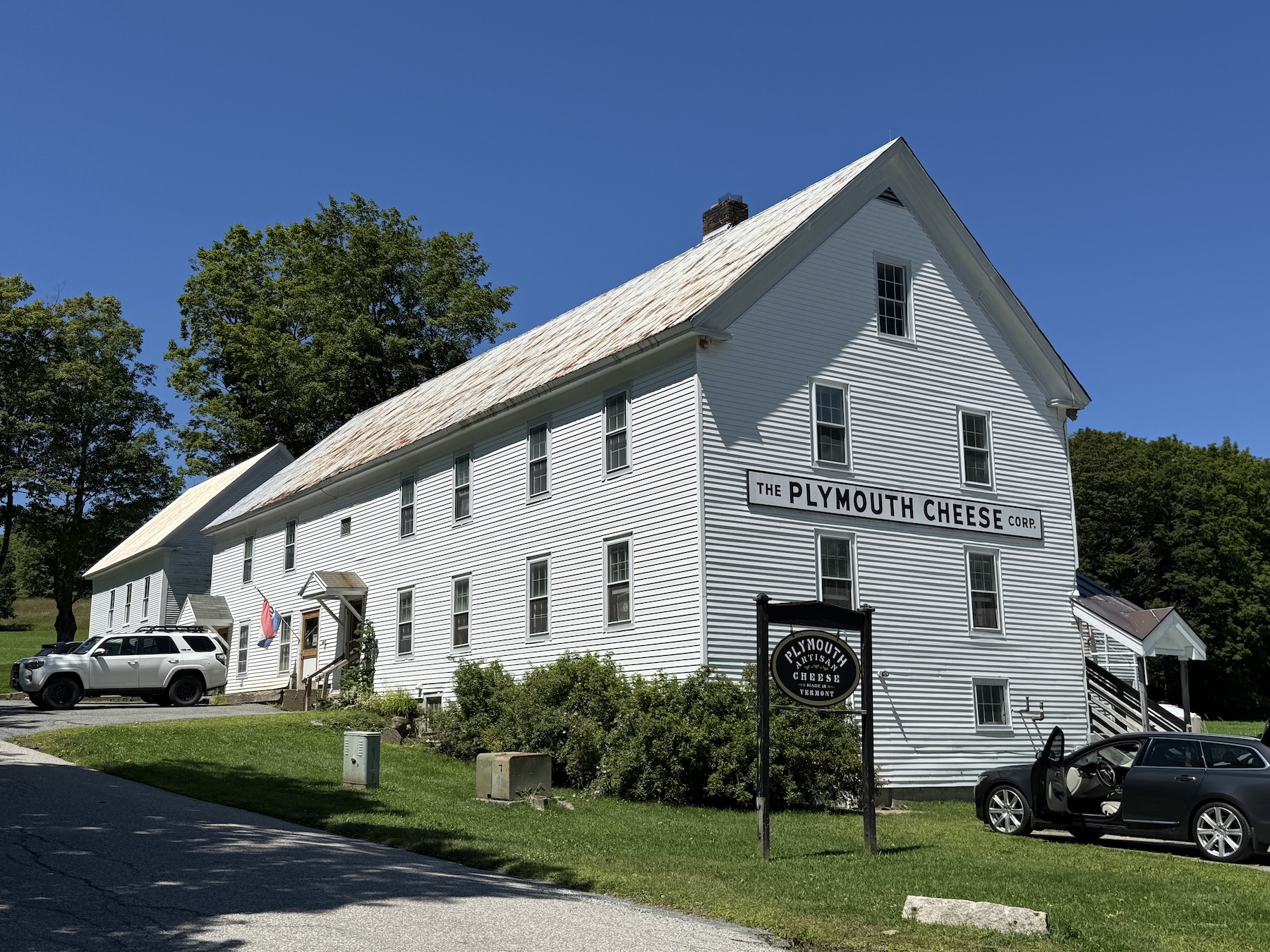
Plymouth Cheese Factory, founded in 1890 by Coolidge’s father and four partners. Vermont bought the factory from Coolidge’s son and, today, an independent cheesemaker, Plymouth Artisan Cheese, rents the main floor to make cheese using the factory’s 1890s cheddar recipe. Visitors can sample and buy — and head upstairs for an exhibit that displays original 19th century cheesemaking equipment.
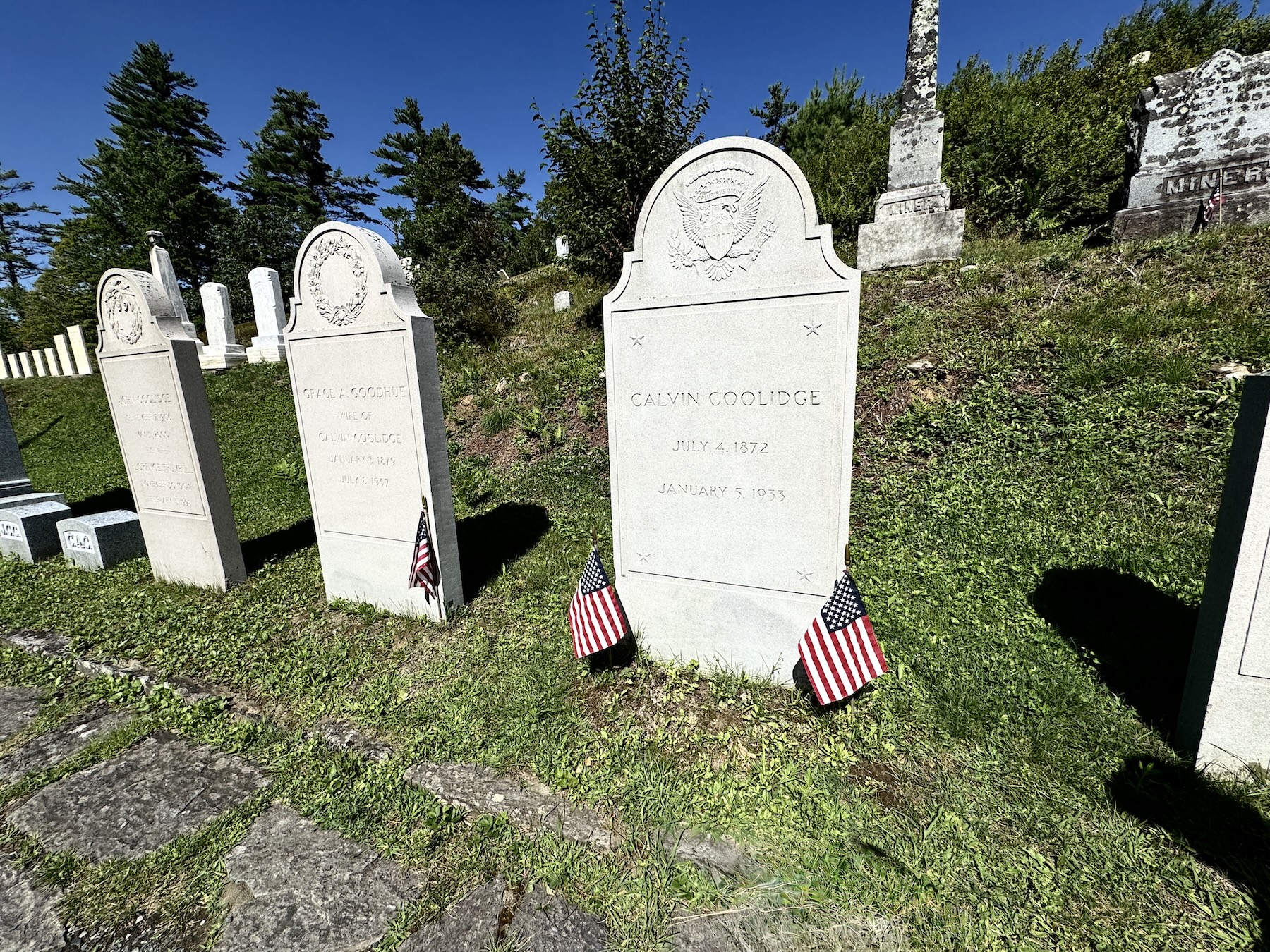
Plymouth Cemetery, burial site for Calvin Coolidge plus six other Coolidge generations. The cemetery, owned by the town of Plymouth and dating from the 18th century, is accessible via a very short drive, or even a walk, from the birthplace. The former president’s white stone marker is strikingly simple, matching those of other family members.
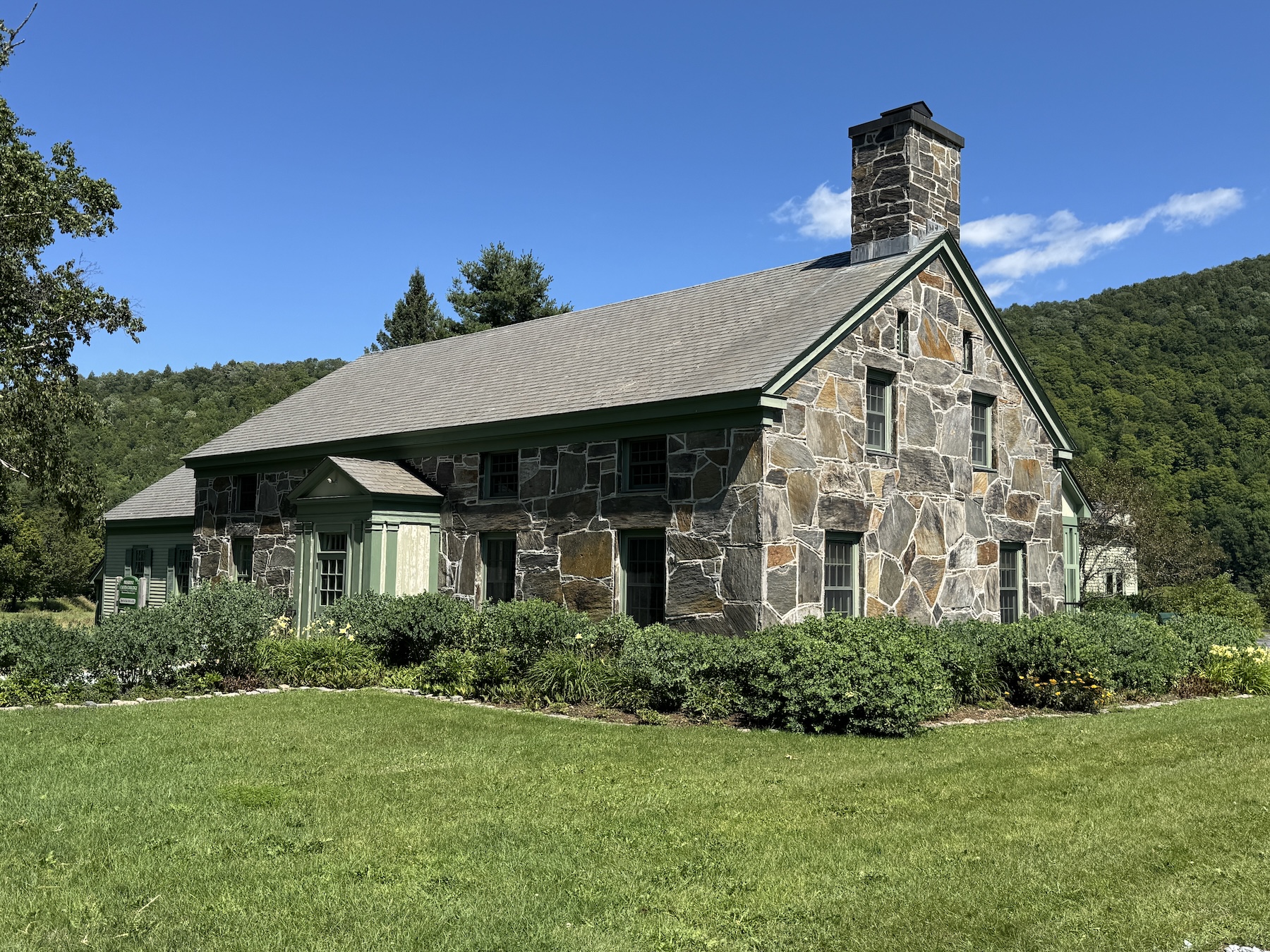
Coolidge Museum and Education Center, the main entrance to all of the above, opened in 2010. The facility includes a living room-style setting for viewing a 19-minute film about Coolidge and his times. Additionally, a permanent exhibit, called “Two Words: The Life and Legacy of Calvin Coolidge,” uses the president’s words, relevant artifacts and interactive media to expand on the story of the rural Vermonter who became president.
A temporary exhibit, called “That Is Final: The Revolutionary-Era Ideals That Shaped Calvin Coolidge” and on view through October 2027, focuses on the 150th anniversary commemorations of the American Revolution and the ways the revolutionary ideals influenced Coolidge.
The title’s use of “That Is Final” is a nod to Coolidge’s 1926 remarks celebrating the Declaration of Independence. Part of that speech reads as follows: “If all men are created equal, that is final. If they are endowed with inalienable rights, that is final. If governments derive their just powers from the consent of the governed, that is final. No advance, no progress can be made beyond these propositions. If anyone wishes to deny their truth or their soundness, the only direction in which he can proceed historically is not forward, but backward toward the time when there was no equality, no rights of the individual, no rule of the people.”
Planning visits
The President Calvin Coolidge Historic Site is centrally located in Vermont. Plymouth Notch is one of several hamlets that are part of the larger Plymouth Township. The combined population of all the Plymouth villages is around 650.
The designated Coolidge location encompasses the former center of Plymouth Notch — though not all of the hamlet.
Except for the church and cemetery, Vermont owns the site, and the state’s Division for Historic Preservation manages the visitor operation. The site has been open 10 a.m. to 5 p.m. Tuesday through Sunday from mid-May this year, but as of Sept. 21 through Oct. 25, it will be open daily to accommodate the large number of motorcoach tours that come to town when autumn colors are in their prime.
Vermont employs site interpreters, generally encountered at Coolidge’s birthplace and sometimes in the barns. Next season, with the Coolidge Homestead reopened to visitors, the interpreters will lead scheduled tours of the grounds, tours to be included with the price of entry.
Nadine Godwin is a New York-based freelance travel writer. She is the former editor in chief and current contributor to the trade paper, Travel Weekly; editorial director of BestTripChoices.com, and author of “Travia: The Ultimate Book of Travel Trivia.” All of the photos are by Nadine Godwin unless otherwise indicated.
Featured Photo: The President Calvin Coolidge Historic Site, located at the center of Plymouth Notch, Vt., seen during autumn leaf peeping season. The white building at left is the combination grocery store, community hall and post office. The presidential birthplace is attached at the back but not visible. The orange building is the 1830 Wilder House, the childhood home of President Coolidge’s mother. The unpainted buildings at right are the Wilder Barns. Photo credit: Vermont Division for Historic Preservation.