
A museum experience is mostly predicated on the art it houses inside and the related art encounters it facilitates. Naturally, the design of that “housing” edifice is quite significant, characterizing a simple visit in many layers, from the direct physical one (access, navigation, lighting) to more subjective personal and contextual nuances (references, site relationship, proportions).
Long before visitors encounter the art, M+ announces itself through its architecture. Standing along Victoria Harbour in an area that just 20 years ago used to be a seaport and is now the happening WestK, or West Kowloon Cultural District, the museum feels distinctly contemporary and somehow timeless, – impossible to guess by its looks around when it was built, its volumetry entirely at ease within Hong Kong’s skyline, as if it had always been there.
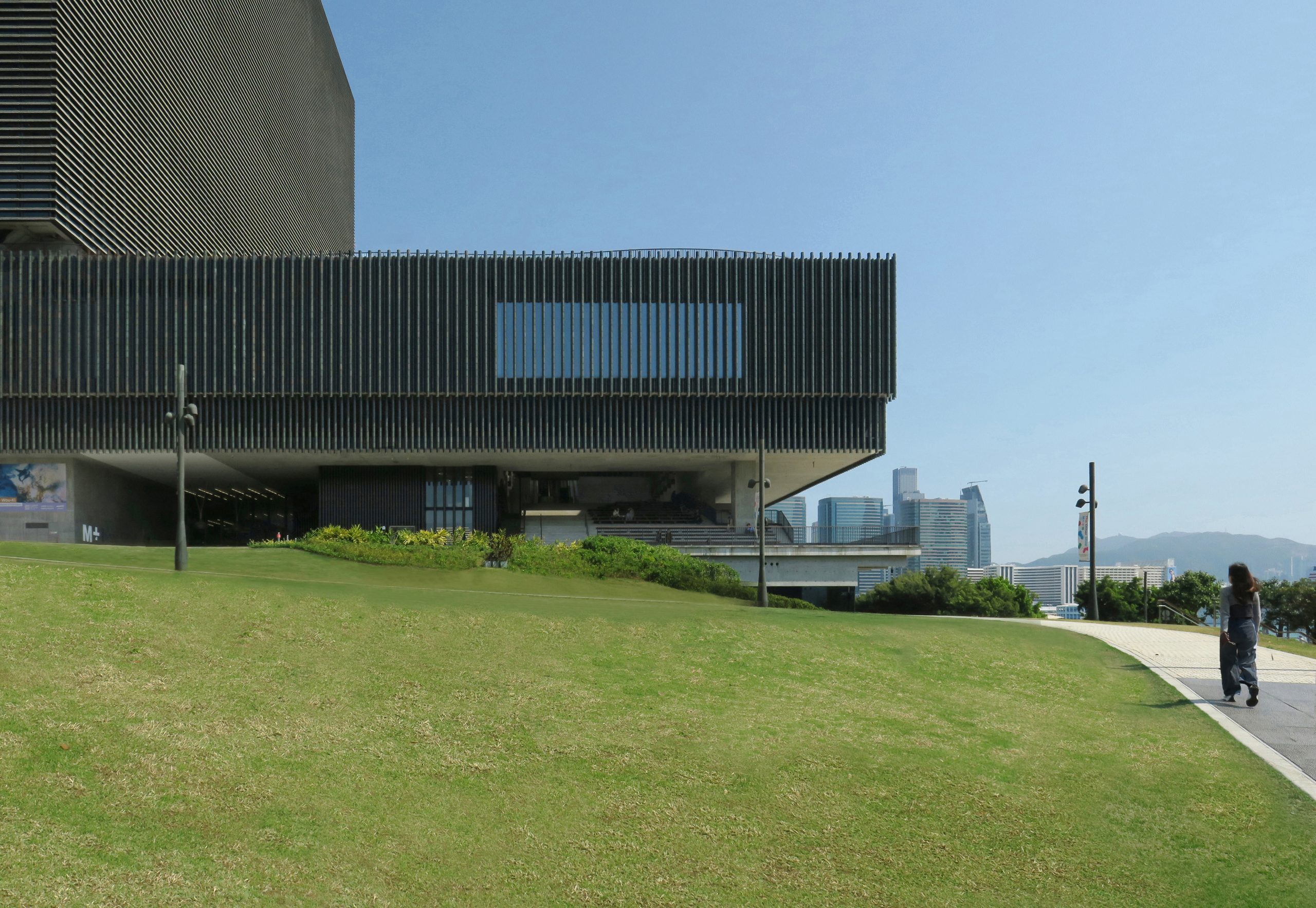
Designed by Herzog & de Meuron in collaboration with TFP Farrells and Arup, the building doesn’t compete with the city’s dramatic skyline. Instead, its long horizontal form responds to the surrounding forest of towers, while the vertical tower above it has become a landmark visible from across the harbour.
For Suhanya Raffel, the museum’s director and a passionate architecture connoisseur, the building is much more than a shell for the museum’s collection. “The architecture of the building has been central to shaping the museum’s identity” she states. Sensitive to the relevance and defining role of architecture as it relates to the museum’s concept, Raffel describes it as “the most encompassing design object within our collection”, an idea that becomes easy to appreciate while moving through its galleries. The architecture quietly shapes the visitor experience, creating spaces that feel as carefully considered as the exhibitions they contain. And that is no easy task, considering that the “+” part of the museum’s name comes from it not being just a museum, but a cultural hub, the institution self-contained campus including a three-screen cinema Moving Image Center, research and learning facilities, a public roof garden, and of course the museum’s 33 galleries. All this hovering above busy lines of the Hong Kong’s Mass Transit Railway (MTR).
“This beautiful piece of hardware enables our programming and connects deeply with the city”. That relationship between the city, architecture and programming is perhaps best illustrated below ground. The existing MTR tunnels running beneath the site forced the architects to rethink the building’s foundations, ending up with some additional usable space at the basement level. They decided then to rather than conceal this engineering challenge transformed it into one of the museum’s most distinctive galleries, aptly called “Found Space”, an intimate setting for temporary exhibits.
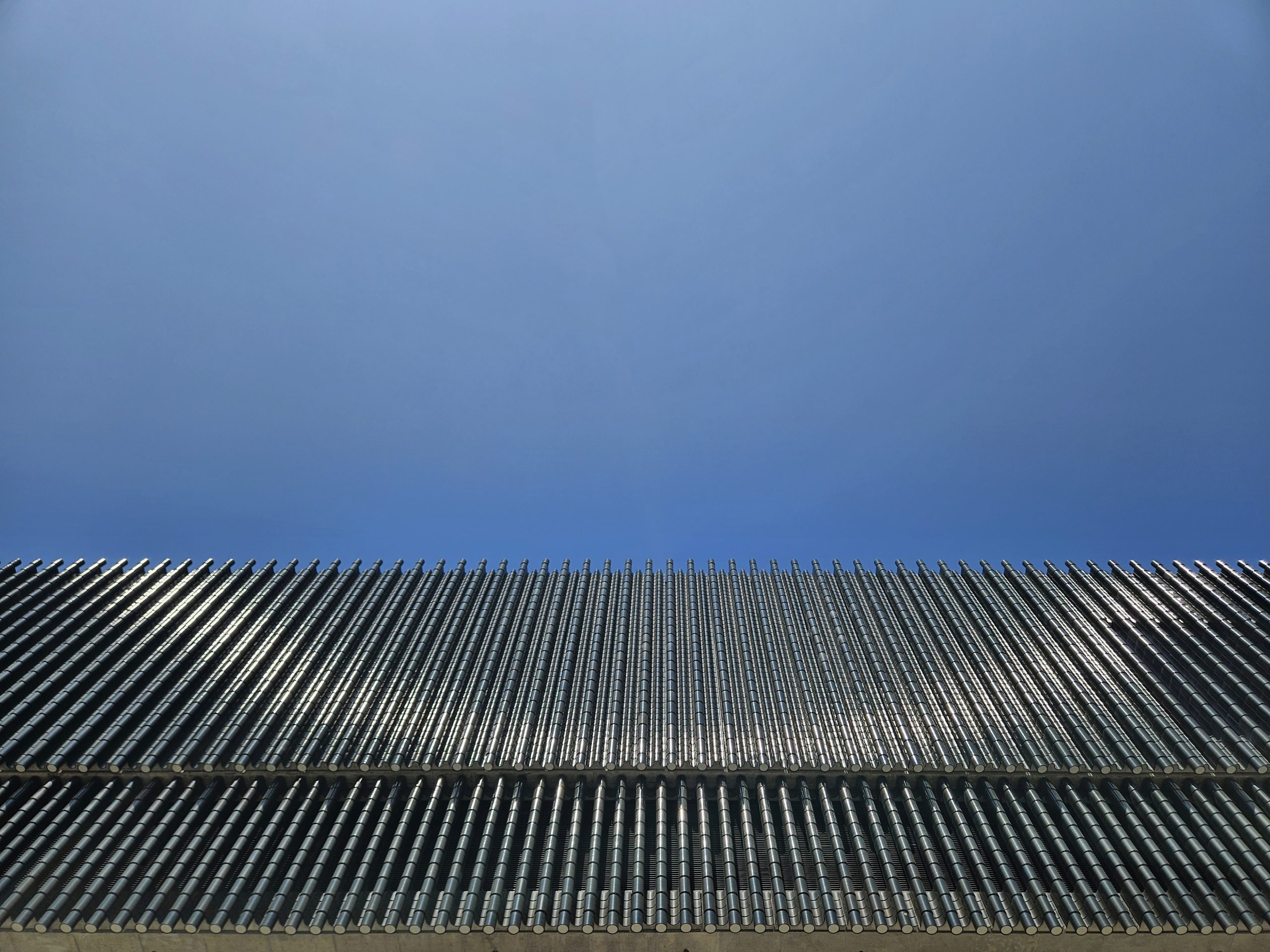
The building’s exterior was opportunity for the architects to connect the museum to the city. First by using vertical, tube like, forest-green glazed terracotta tiles, inspired by bamboo, in reference to a material deeply rooted in local tradition, while at the same time standing in counterpoint to the city’s glass and steel towers. As the daylight changes gliding over these tiles, so does the appearance of the facade, going from a sombre tone to a subtle of olive-green shades, reflecting the shifting light and weather throughout the day.
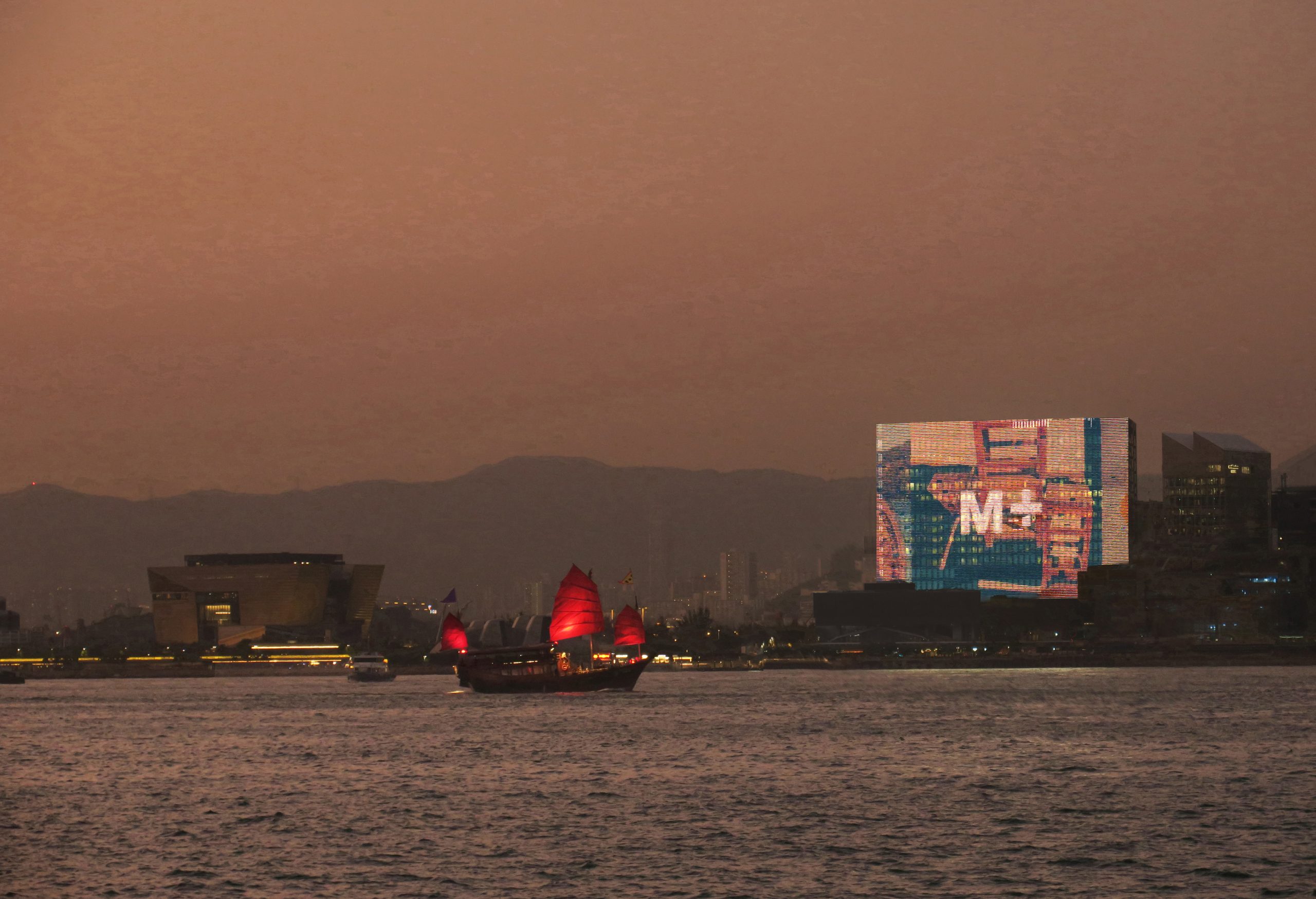
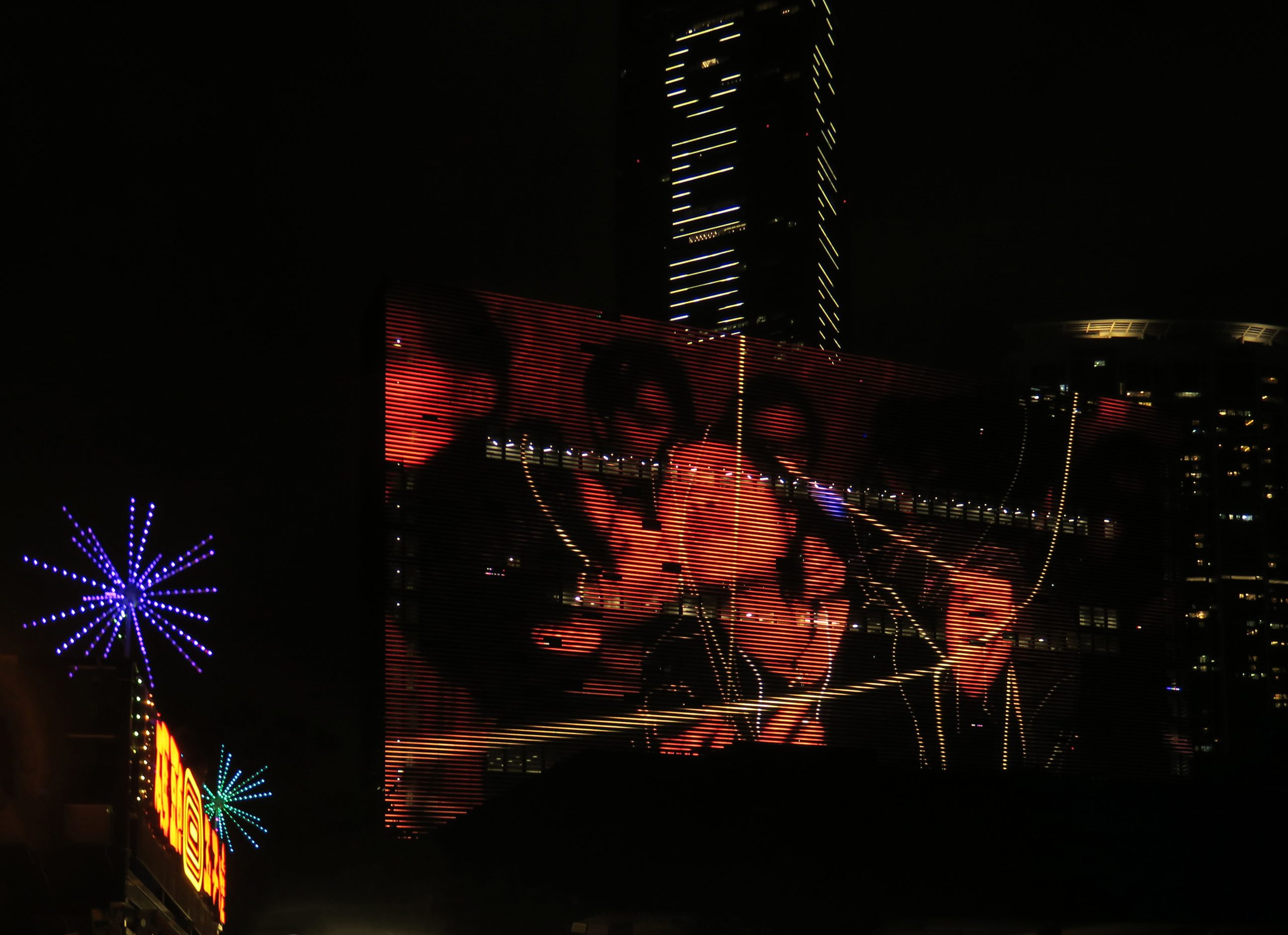
And then there’s the now iconic LED façade. LEDs are as prevalent and emblematic in Hong Kong as neon signage once was for glitzy Las Vegas. But here, on the most visible façade, facing Victoria Harbor, the architects took that element to a whole other level, giving it meaningful purpose as a platform to show specially commissioned video and film art in a massive public scale and presenting images of works from the museum’s collection. Easily seen across the Harbor, that screen, 213 feet metres high and 360 metres wide, featuring more than 5000 LED tubes (making it one of the largest LED screens in the world), perfectly integrates technology and architecture for public programming. “Through a carefully curated mix of screenings, the M+ Facade offers moments of play, humour, poetry, intellectual reflection, and meditative contemplation to thousands of onlookers, extending the museum’s reach into the urban landscape and making visual culture accessible to audiences across Victoria Harbour and Hong Kong Island, reaching even people who may never enter the museum”, says Doryun Chong, the museum’s Artistic Director and Chief Curator.
With its stated mission of “collecting, exhibiting, and interpreting visual art, design and architecture, moving image, and Hong Kong visual culture”, the museum is quite ambitious in its scope and proactive dedication to being a “nexus for researching and presenting contemporary visual culture, inspiring thought and curiosity”. And it has indeed been accomplishing that quite brilliantly since it opened in 2021, attracting millions of visitors every year and becoming a major cultural reference. Not surprisingly, the M+ now has established partnerships with the Museum of Modern Art in New York City, the Centre Pompidou, Paris. And furthering its commitment to being not just an exhibit and collecting institution, the museum just launched the M+ Academy, an initiative dedicated to professional development for cultural leaders in Asia.”
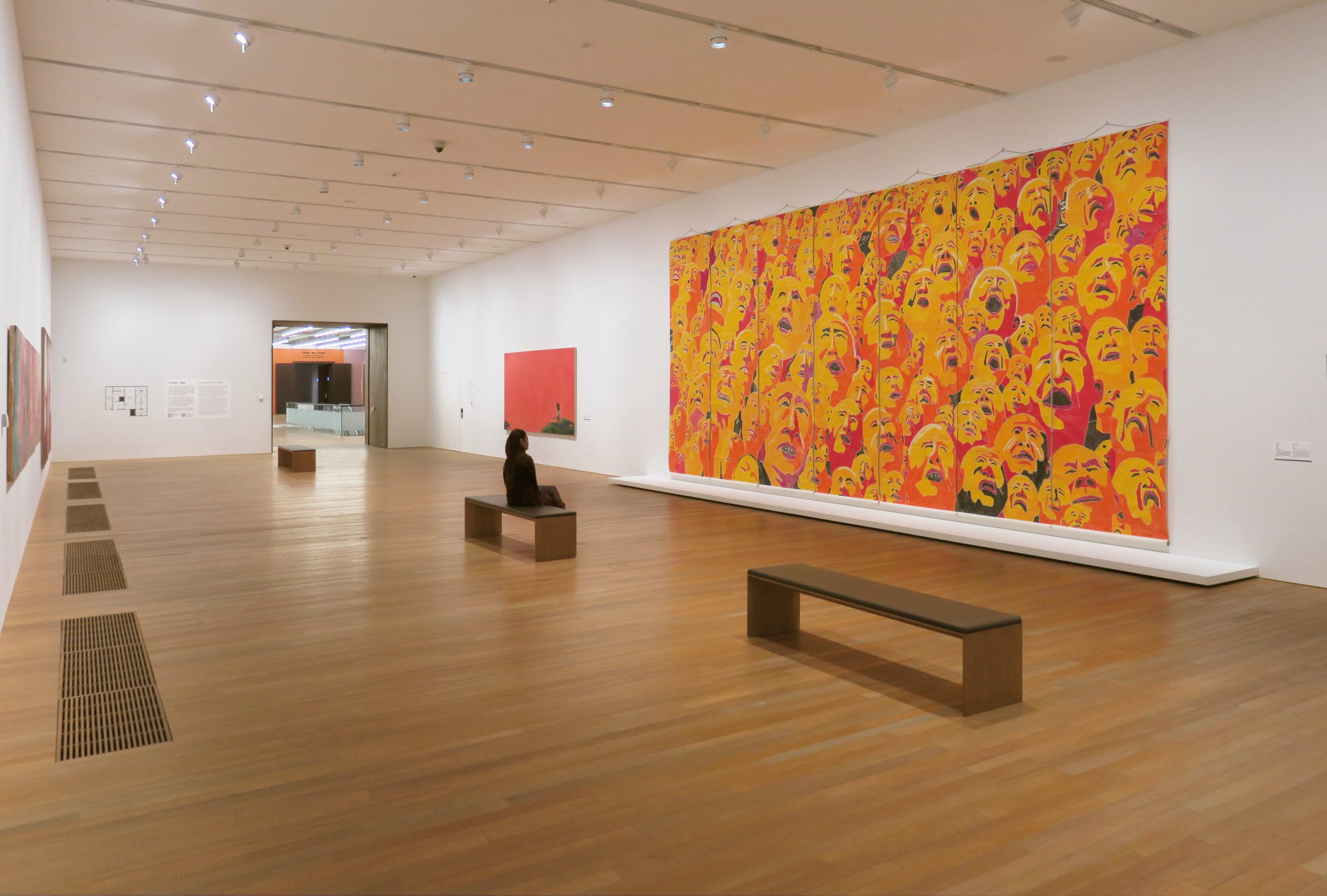
At the heart of the M+ is of course the art. Among M+’s defining collection strengths is the Sigg Collection, widely recognised as the world’s most comprehensive collection of Chinese contemporary art, with over 1500 pieces from 1972 to 2012. Donated by Dr Uli Sigg, a renown Swiss businessman and art collector, it documents four decades of remarkable artistic and social transformation in China’s Reform and Opening period. “It is an exceptional record of how contemporary art was born in the wake of the end of the Cultural Revolution and the subsequent reform and open-door policy of the People’s Republic of China and evolved through the rapid transformation of a society undergoing urbanisation—capturing both China’s internal shifts and its changing relationship with the world”, comments Chong. “Spanning painting, printmaking, sculpture, performance, photography, and digital art, the Sigg Collection sits within the broader M+ Collections, extending across Hong Kong, the Chinese Mainland, East Asia, South and Southeast Asia, beyond Asia, and Asian diasporas in the West”, explains Chong. “And the collection continues to evolve through new conversations across cultures and disciplines. Guided by research and curatorial scholarship, M+ presents its exhibitions in ways that encourage discussion, learning, and discovery while maintaining the highest standards of professional integrity”. Highlights of that collection include works by Yue Minjun, Wang Guangyi, Ai Weiwei, Fang Lijum, Ding Yi, Geng Jianyi, Gu Wenda, Huang Yongping, Xu Bing, Xiaogang, and Liu Wei among many others.
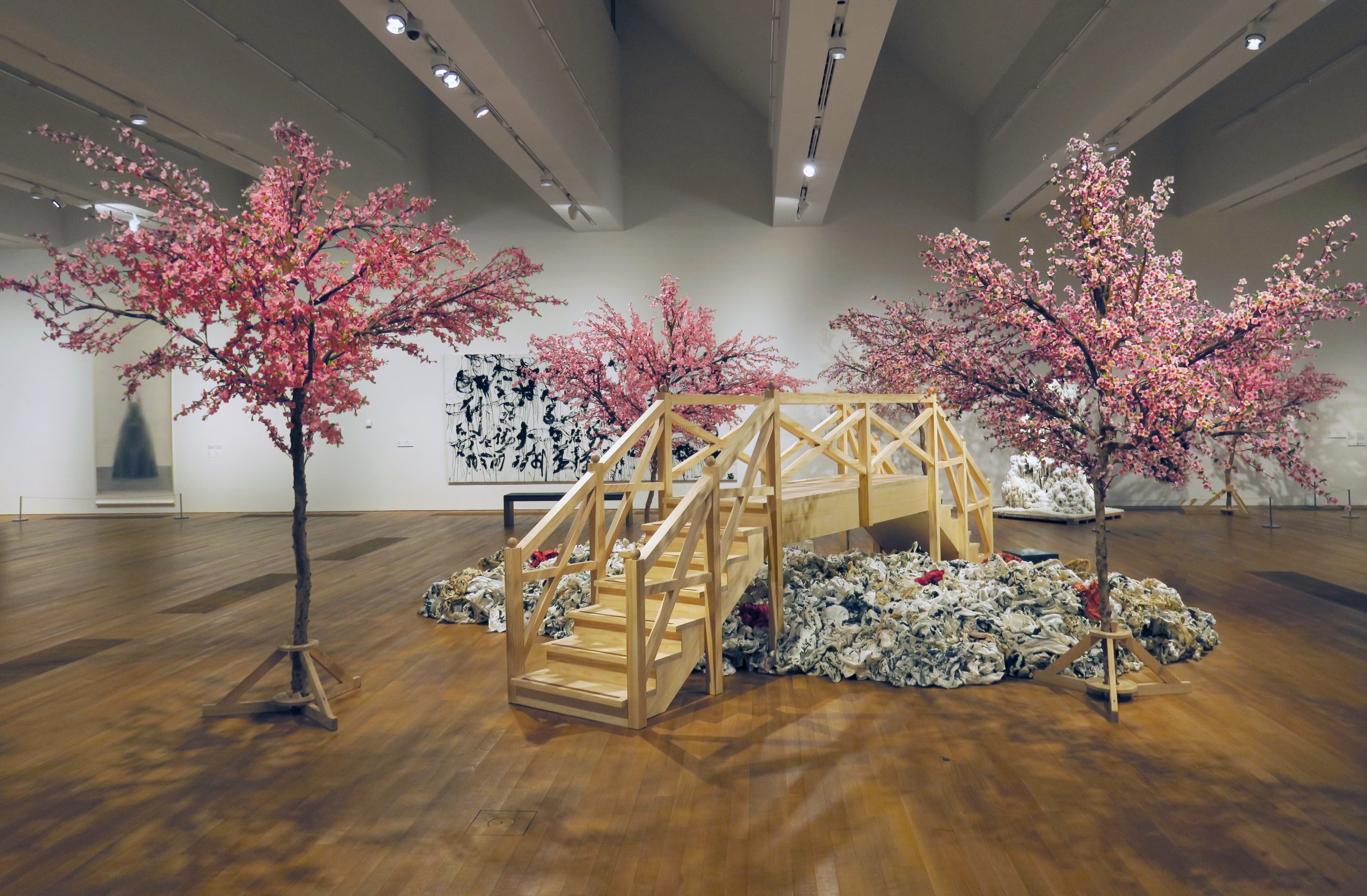
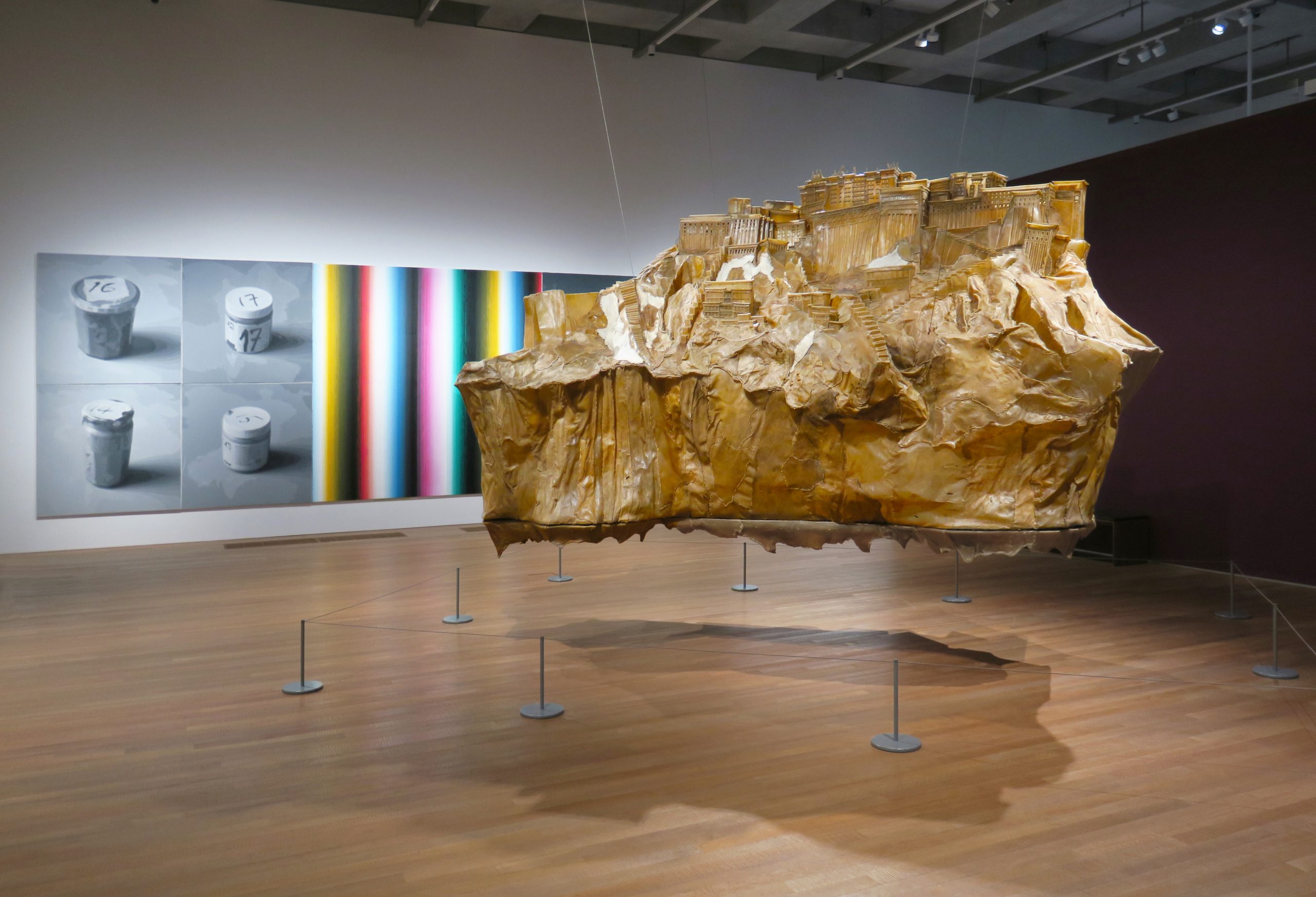
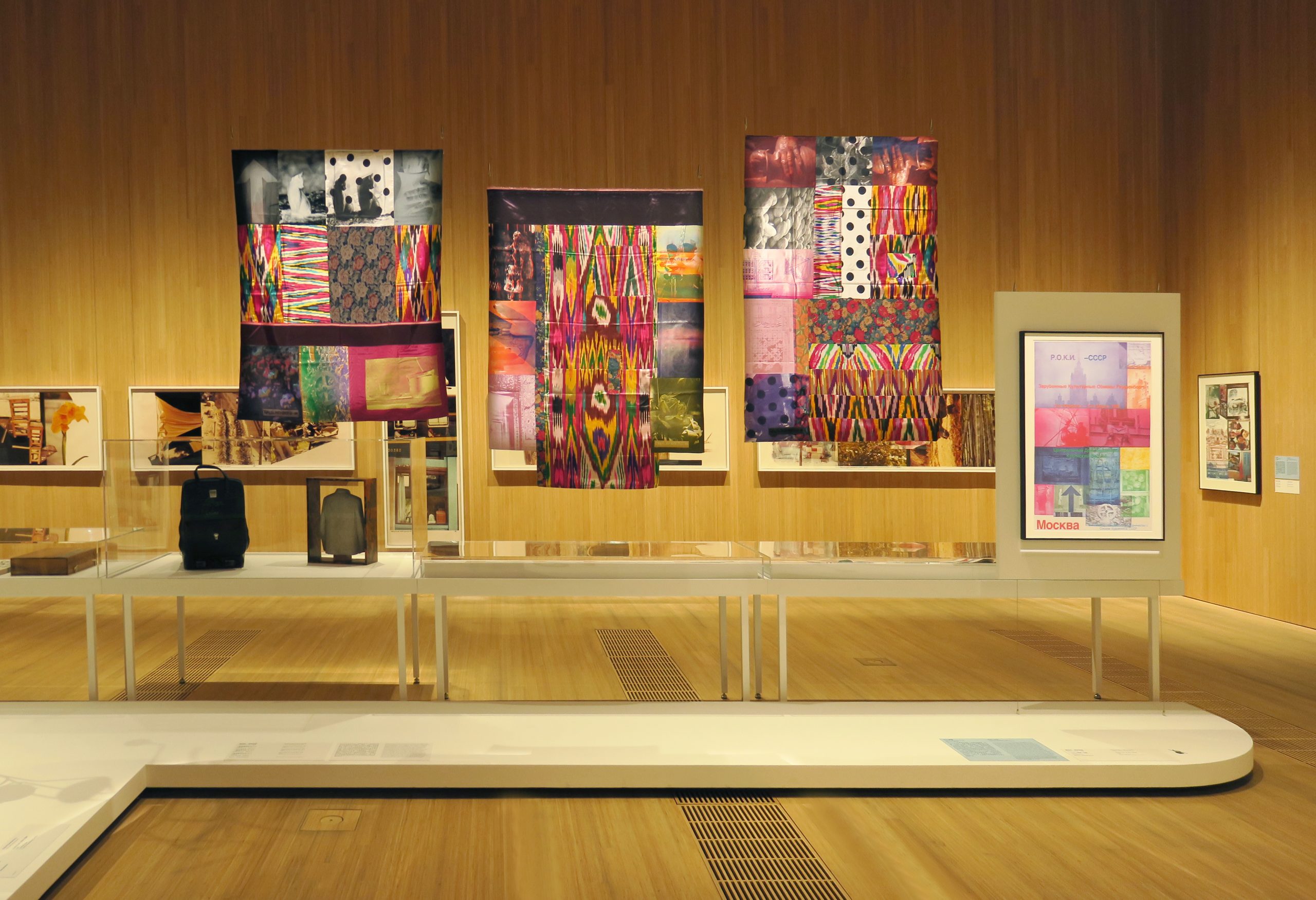
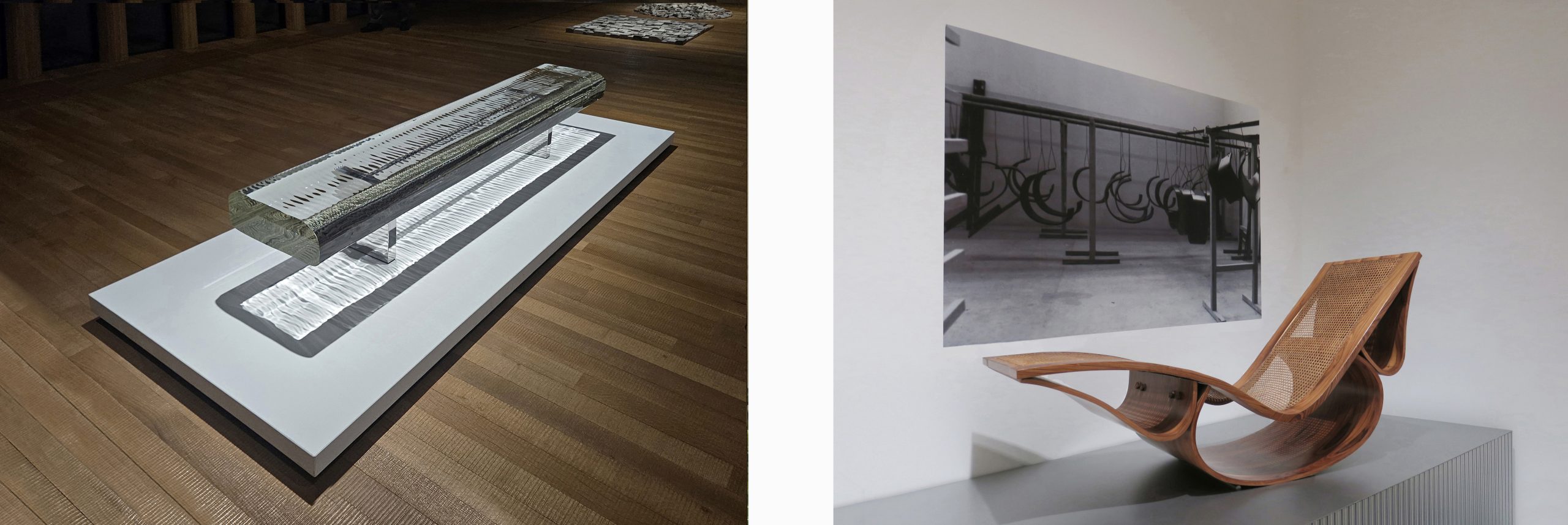
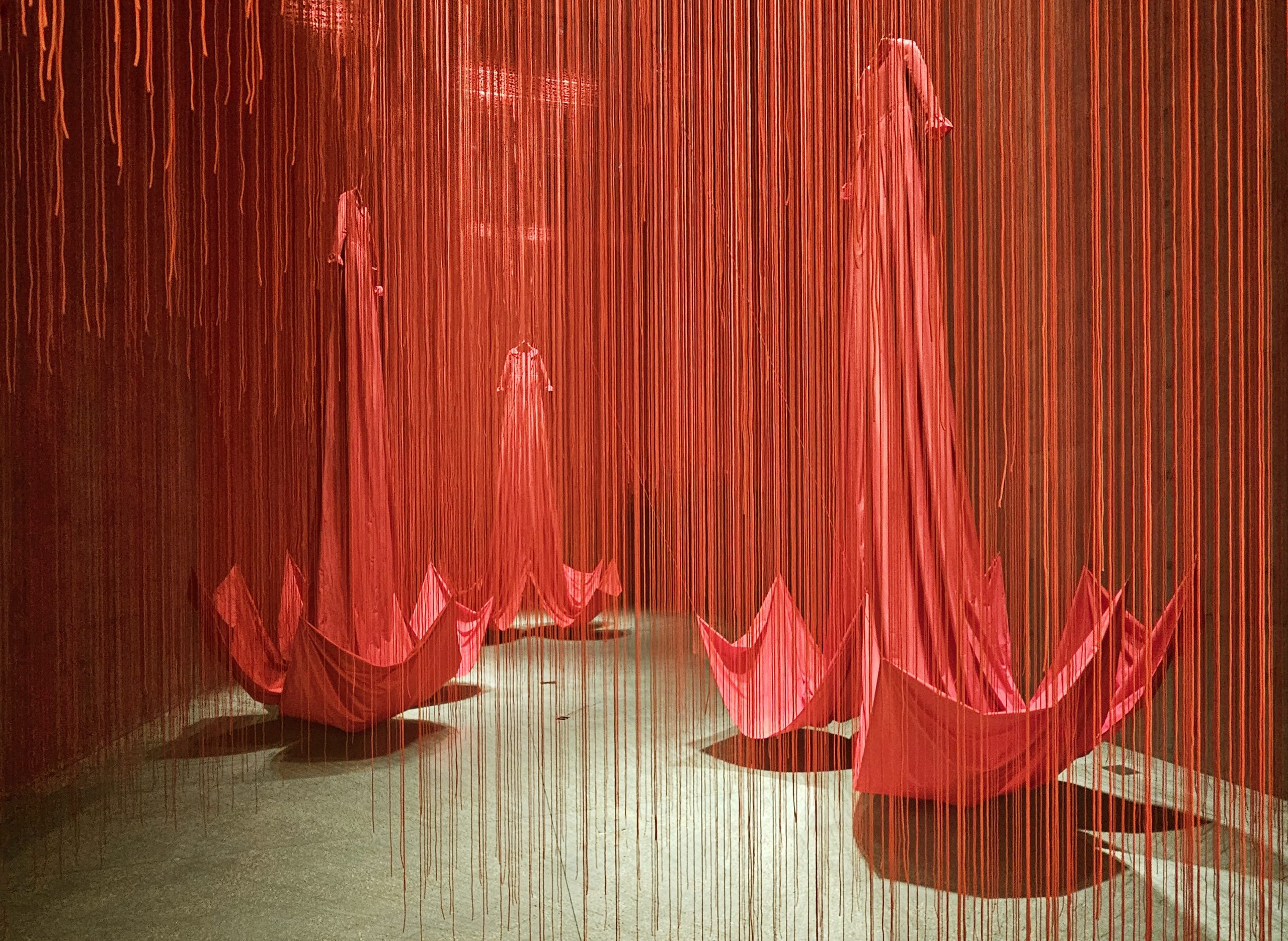
Beyond the Sigg Collection, the museum also has a vast collection of works by international artists such as Tomie Ohtake, Gabriel Orozco, Lygia Clark, Niki de Saint Phalle, Vivan Sundaram, Robert Rauschenberg, Nicolas Party, Tracey Moffatt, Martin Parr. And given that design and architecture are also a focus of the collection, one can also find works by Zaha Hadid, I.M.Pei, Sou Fujimoto, Paul Rudolph, Gaetano Pesce, Le Corbusier, Isamu Noguchi, Raj Rawal, Geoffrey Bawa, Kisho Kurokawa and Shiro Kuramata. Commenting on the collection’s scope, Raffel emphasizes the importance of both the regional and local context, explaining that the goal is “to build a collection that looks at the world from an Asian perspective, filtering global developments in contemporary visual culture through what is relevant to the city’s place in the world.”
Regarding the challenge of displaying politically or culturally sensitive in Hong Kong’s evolving institutional environment, Chong clarifies: “M+ is a global museum developed with a robust, curator-led approach to exhibition and collection development, based on research and academic rigour. As a museum of visual culture dedicated to twentieth- and twenty-first-century visual culture, we observe and research the most significant visual culture phenomenon and expressions, as all museums do”. Asked about the criteria for additions to the museum’s collection, he replied: “Through a rigorous process of curatorial selection, works and objects deemed historically, intellectually, and culturally important enter the M+ Collections and programming. Like any global museum, it is the role of M+ to ensure that our collections and exhibitions are presented in a relevant and appropriate manner to stimulate discussion, debate, learning, knowledge and pleasure. We will continue to maintain the highest level of professional integrity”.
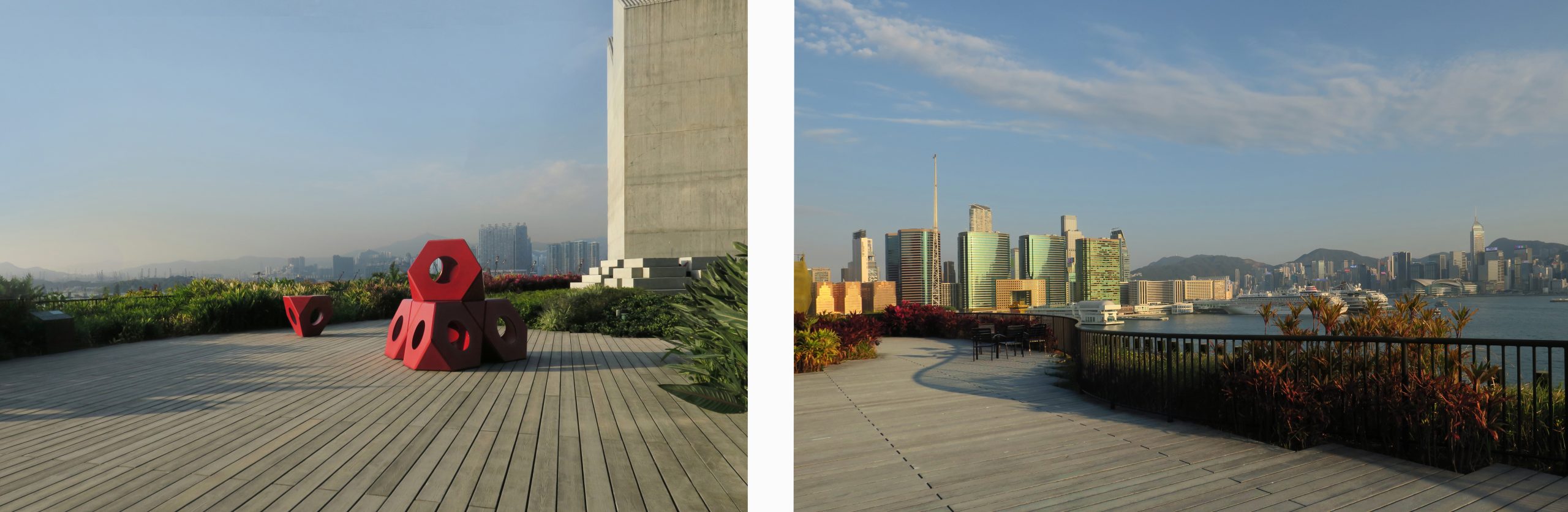
Topping of (quite literally) the museum experience is the Roof Garden. There, amidst a lush garden, children and adults can interact, play and climb sculptures by Isamu Noguchi, or simply sit down at the terraced area and enjoy a quiet moment contemplating the amazing vistas. The scenery makes for a perfect ending to the museum visit and in a way bringing the experience of the building full circle back to the connection with the city.
To celebrate its 5th anniversary this year M+ is organizing the exhibit Herzog & de Meuron: In Focus showcasing museum’s principal architects, Herzog & de Meuron “evolving vision over the last two decades”. On view will be models, prototypes, sketches and archival items donated to the museum’s collection by the architects. “M+ holds a special place in our practice, and this exhibition allows us to share the thinking behind some of our most important work in China, not only as finished buildings, but as a process shaped by research, materials, dialogue, and the realities of place”, states Jacques Herzog.
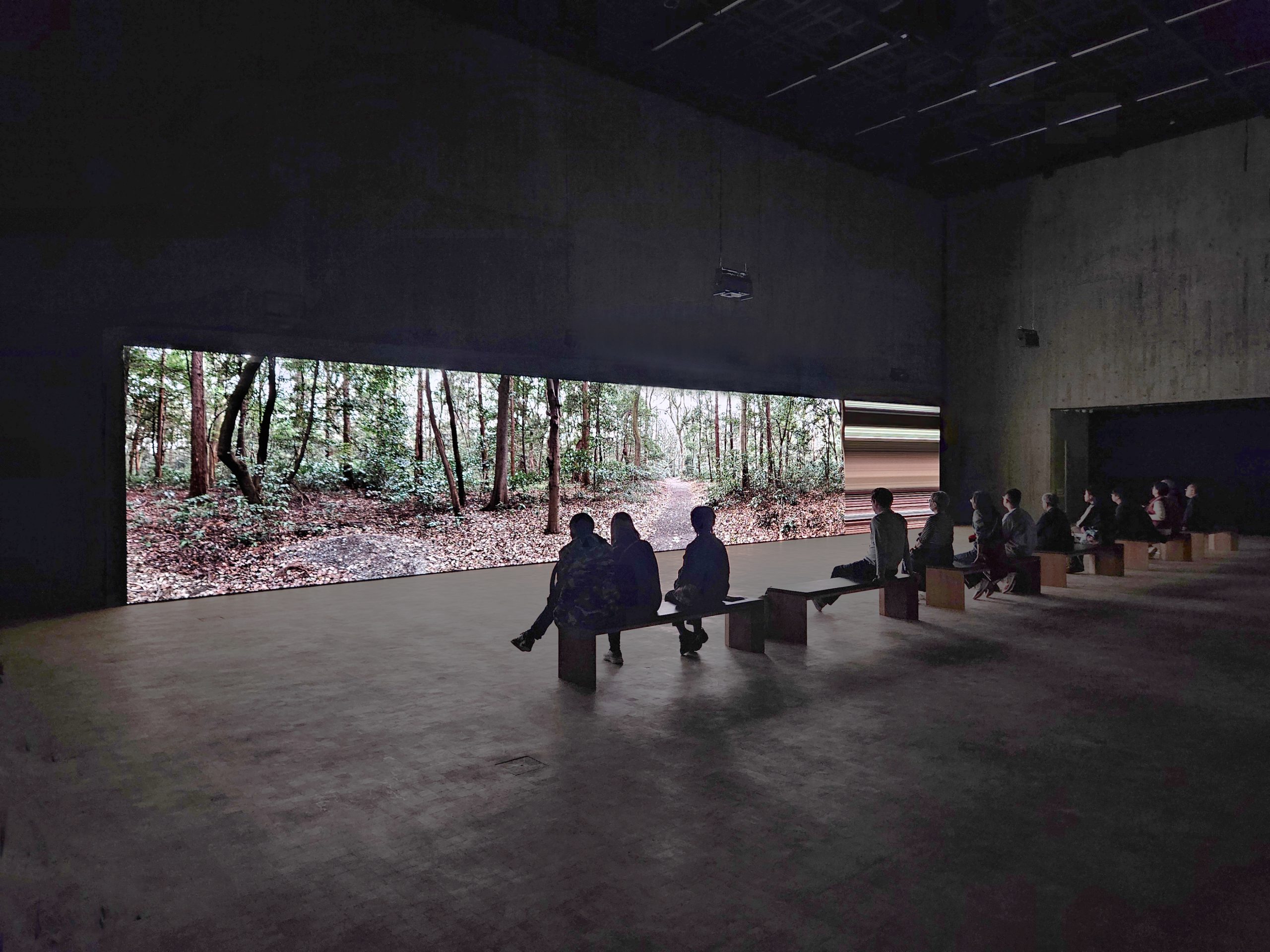
But as much as the architecture may define M+’s silhouette on the Hong Kong waterfront and the art exhibited be its main mission, it is the people, the visitors, who give the museum its character. The design creates plenty of public areas accessible even when the museum is closed so throughout the day, people move easily throughout its floors and galleries, and between the museum and the waterfront promenade. Some spend hours exploring the exhibitions, while others gather to enjoy the harbour views, meet friends or simply linger enjoying the open public spaces. The museum has become part of the rhythm of everyday life, blurring the line between cultural institution and civic gathering place. It becomes clear that M+ has grown into far more than an architectural landmark or art institution. It is a place where contemporary art, design, architecture, and everyday life naturally intersect.
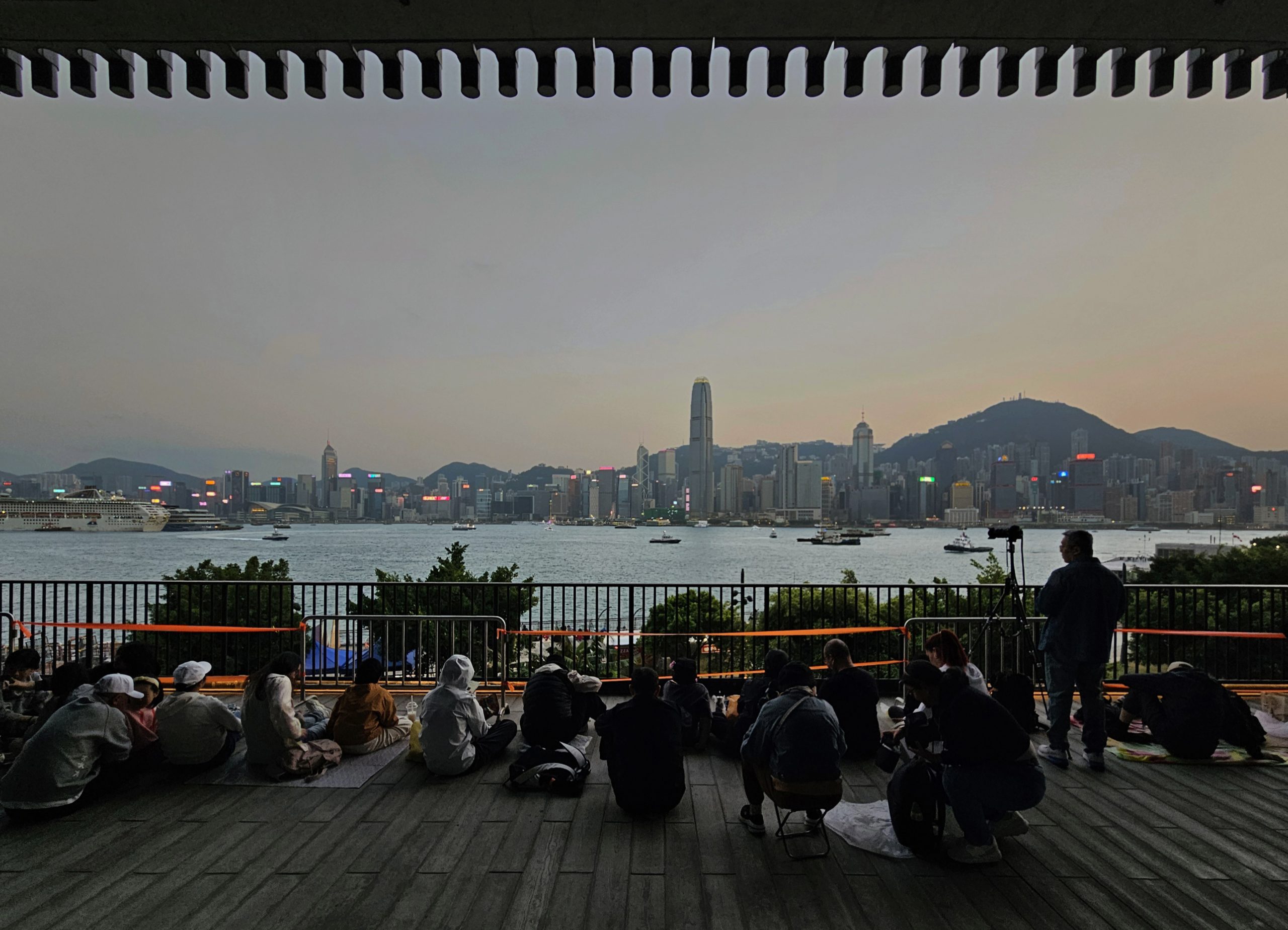
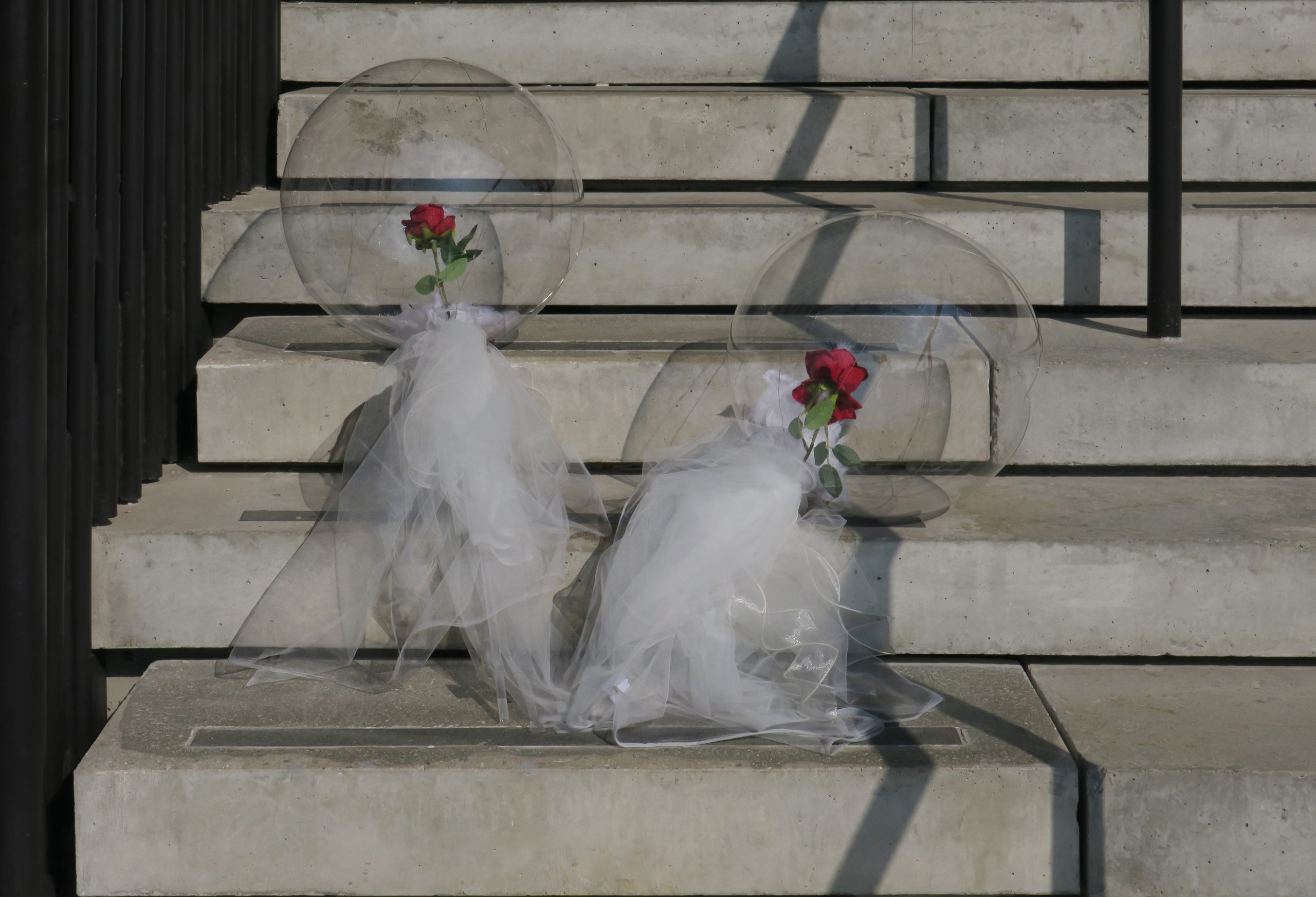
Attesting to this genius loci quality the museum brought to WestK, Raffel states: “The building is not merely contextual—it is integral to how M+ defines itself. It is also the community that truly brings the museum to life. People wander casually, take wedding photos, or celebrate personal milestones in the spaces alongside exhibitions. Seeing the building used in this way convinces me that we have succeeded in integrating the museum’s design with the social fabric of the city”.
By Jimmy McKenzie, a freelance writer, and Paul Clemence. Paul is an artist, award winning photographer, writer, curator, and he explores the cross sections of design, art and architecture.