
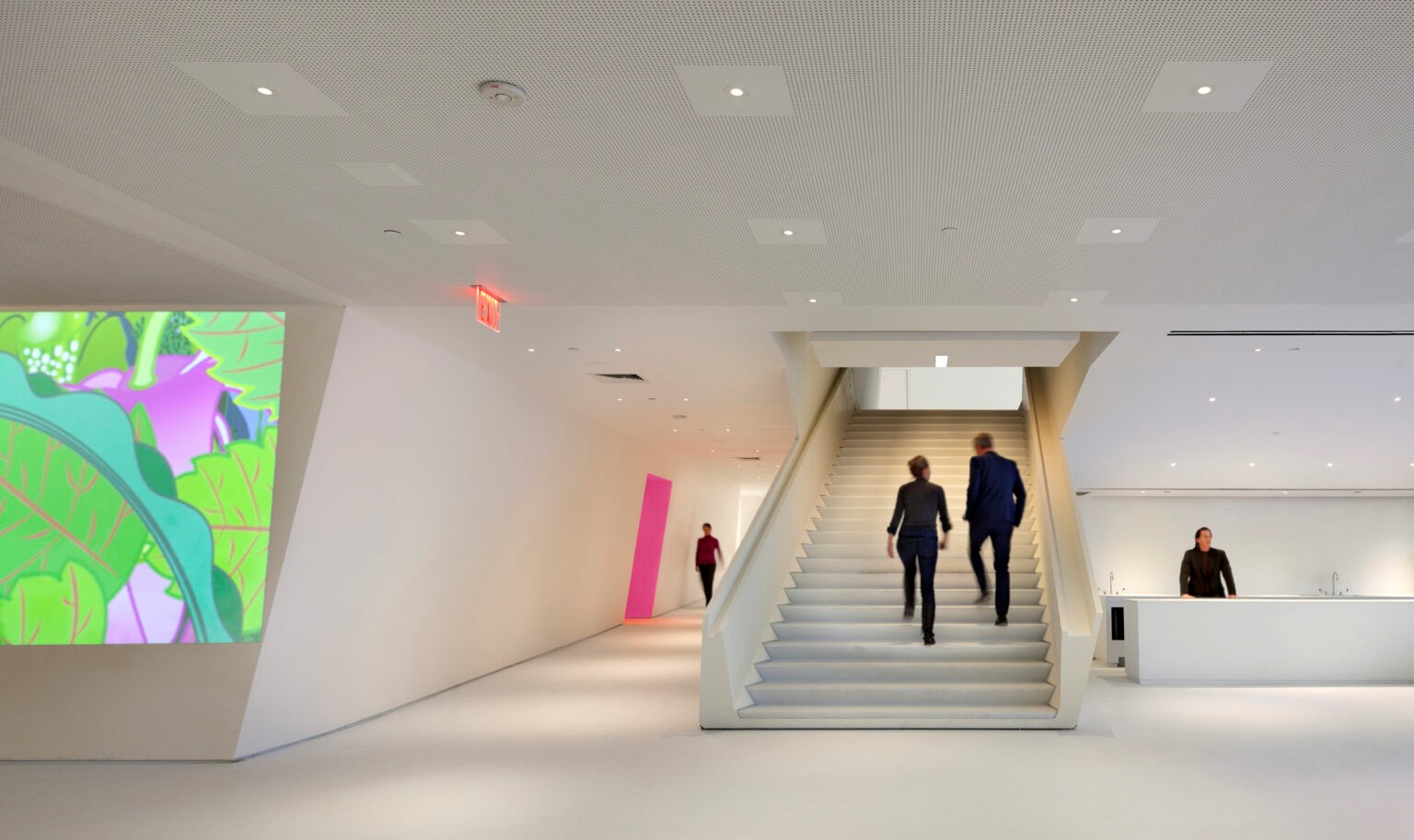
Dinosaurs, dandies and digital interactive programs characterize many of New York City’s museums; however, step into the stunning and bold Museum of the Moving Image (MoMI) to experience another universe. Hardly an overnight sensation; for almost 40 years, MoMI has emerged as a beacon of cultural change in Astoria, Queens and New York City. It is the only museum of its kind in the nation.
Engage here in cutting edge technologies like AI, robotics and virtual reality at the newly-opened MoMI LAB. A free, artist-led co-creation space where visitors will be greeted by Sparky, the robotic pet, and can be guided by museum educators who demonstrate, answer pressing questions, and explain how these technologies are transforming our daily lives.
Naturally, MoMI presents film screenings: from the Marx Brothers to propaganda films during World War II; to live conversations with artists, directors, filmmakers, scholars, media educators, and other industry professionals.
MoMI’s online film magazine Reverse Shot and science and film resource Sloan Science & Film publish articles. while visitors have access to the museum’s collection of more than 140,000 objects; its Education department alone serves 70,000 students each year.
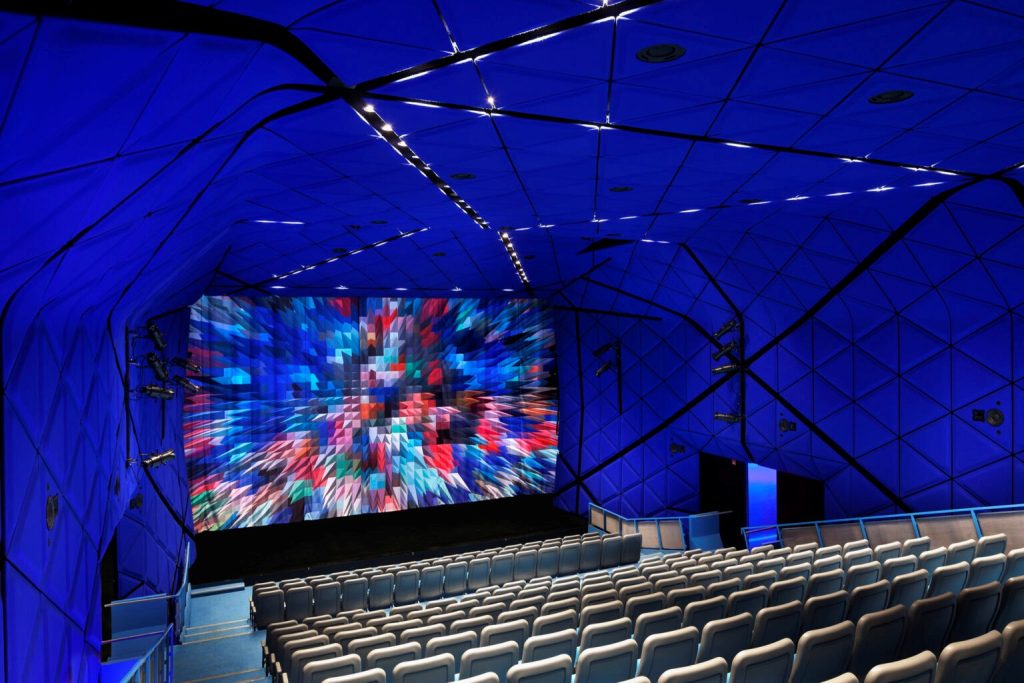
This is the only place on earth you can enter Tut’s Fever, a permanent feature and art installation created by Red Grooms and Lysiane Luong, an homage to the ornate, exotic picture palaces of the 1920s inspired by the tomb paintings they saw during a trip to Egypt, the walls, floor and seats of the theater are covered with hand-painted, Egyptian-style depictions of Hollywood royalty.
Silent screen star Theda Bara works the box office, Mae West stands behind the concessions stand, and Mickey Rooney is the usher. Rudolf Valentino, Elizabeth Taylor and many others grace the walls, and each slipcovered chair in the theater features an image of Rita Hayworth. Visitors can open a sarcophagus to find a sculpture of James Dean lying in his tomb, cigarette still dangling from his mouth. A selection of short films or classic movie serials are screened in Tut’s Fever.
MoMI is housed on the original 13-acre lot that once made up the legendary Astoria Studio — now operating as the Kaufman Astoria Studios –the most significant film and media production facility once known as Hollywood East between Los Angeles and London, today MoMI is a one-of-a-kind destination in the glittery constellation of what makes New York City tingle.
Originally built by Famous Players-Lasky—known as Paramount after 1927—as their East Coast production facility in 1920, the studio was the site of hundreds of silent and early sound era film productions.
The Paramount studio was taken over in 1942 by the U.S. Army to produce training films for WWII soldiers and renamed the Signal Corps Photographic Center.
MoMI now stands on what was once a four-story graveyard following the Army’s departure in 1970 when the site fell into disrepair: broken windows, bats flying in and out of those windows, in a word spooky.
During the dark and dim days of a bankrupt New York City, a pivotal event took place: Sidney Lumet produced the musical fantasy, The Wiz, with its massive Emerald City and dazzling Yellow Brick Road, an urban version of the classic starring Diana Ross and a very young Michael Jackson at the Astoria film studio at 35th Avenue and 36th Street, the current site of Kaufman Astoria Studios, which is right next door to MoMI.
That production became a touchstone for support from community leaders and trade unions that worked together with then-Deputy Borough President Claire Shulman to realize the site’s potential.
Many original buildings remain, including Building No. 1 — the monumental concrete structure on 35th Avenue which is a designated New York City landmark. It is still one of the largest operating sound stages in the world.
The next few decades would see the transformation of 35th Avenue (in Queens avenues run east to west; streets north to south) with light, sound, genius, eateries, the Frank Sinatra High School of the Arts and this world-class museum all within what has been designated as the Kaufman Astoria Studios in the National Register of Historic Places.
MoMI also experienced its own growth spurt and expanded with a $67 million renovation in 2011.
Recently, MoMI announced record attendance, with a total of 311,000 visitors in 2025. Not only does that figure exceed pre-pandemic numbers, but it also reflects a 105% increase from 2024 and a 147% increase from 2023. Free admission on Thursdays from 2-6 pm sees a floodgate of visitors – locals and out-of-towners.
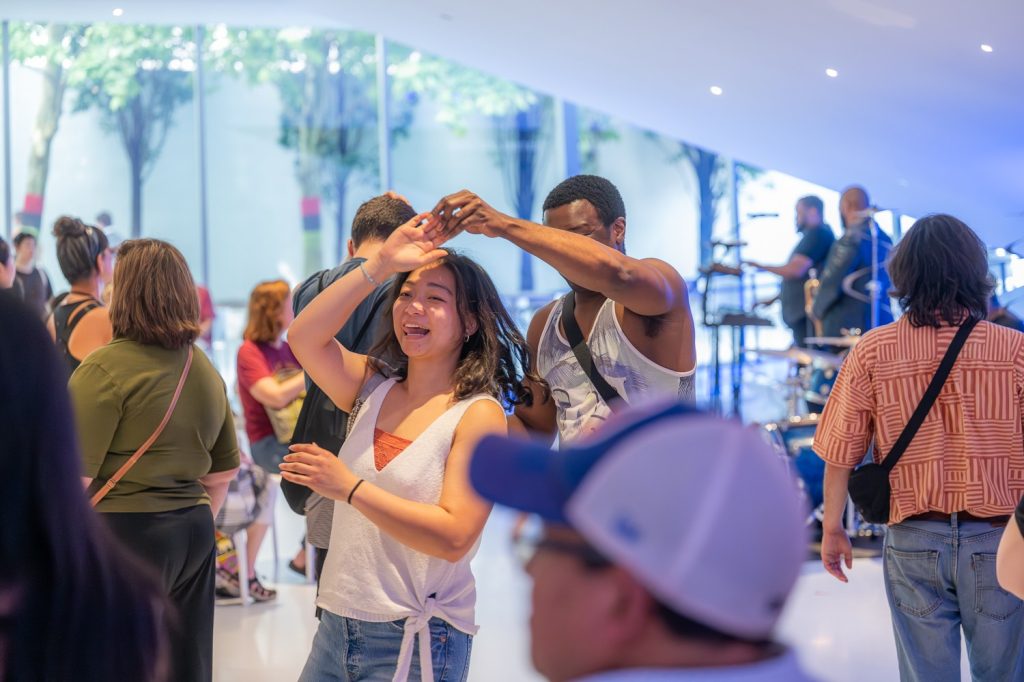
“These record numbers are a testament to what happens when a museum opens itself fully to its community,” said Aziz Isham, Executive Director of Museum of the Moving Image. “Over the past two years, we’ve focused on making MoMI a gathering place, a space where New Yorkers can see themselves reflected in the stories we tell, and where media and technology become tools for connection, creativity, and civic conversation.”
And it is no wonder, MoMI has reached out to world film festivals from the Hellenic Film Festival to the Queens World Film Festival, with two of its own homegrown festivals: the Marvels of Media Festival that recognizes the media work of autistic media-makers through film screenings, an exhibition, and in-depth panel discussions (the open call for the 2027 festival will open in the fall); and the First Look film festival, the Museum’s annual showcase of innovative international cinema, returning in spring 2027 with its 16th edition.
Says Rose Vincelli Gustine, who leads the curation of the Open Worlds series, MoMI’s year-round, free public platform that hosts yoga, block parties, and partners with local groups, such as the 31st Ave Open Streets, Malikah, Epicenter Media, The International Campaign for Tibet, Lewis Latimer House museum in Flushing, The Yoga Room, NYC Gaymers, Firelight Media, Ceres Food Film Festival, & many others.
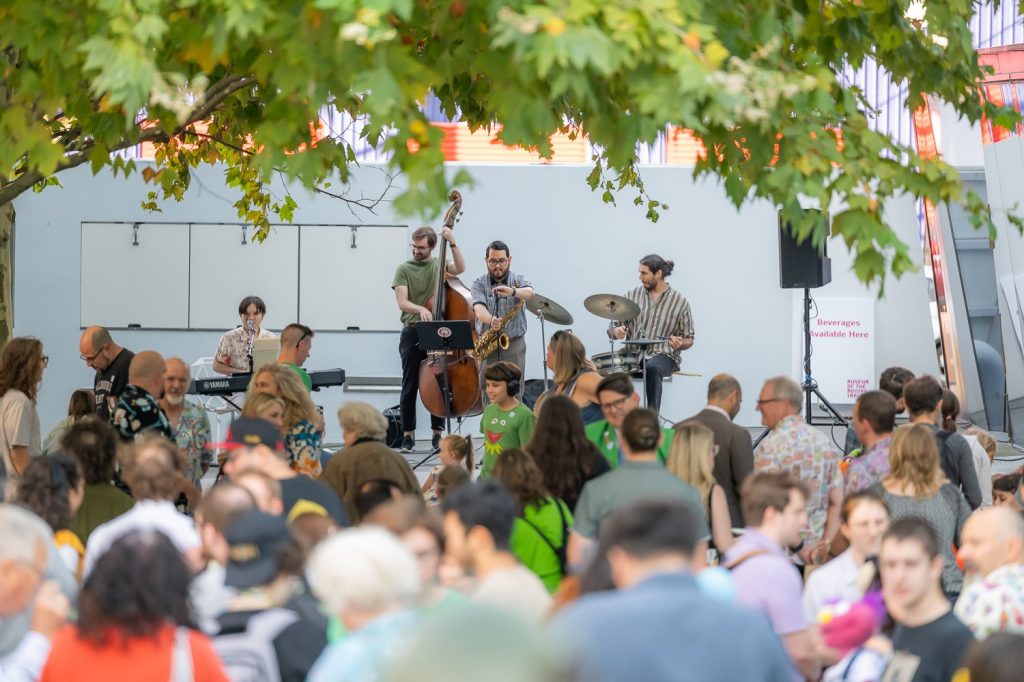
You won’t want to miss any of this, so cross the East River from glittery, seductive Manhattan; ride a subway car that careens out of the bowels of that city, and under the river rising magically onto an elevated track above the grinding traffic below.
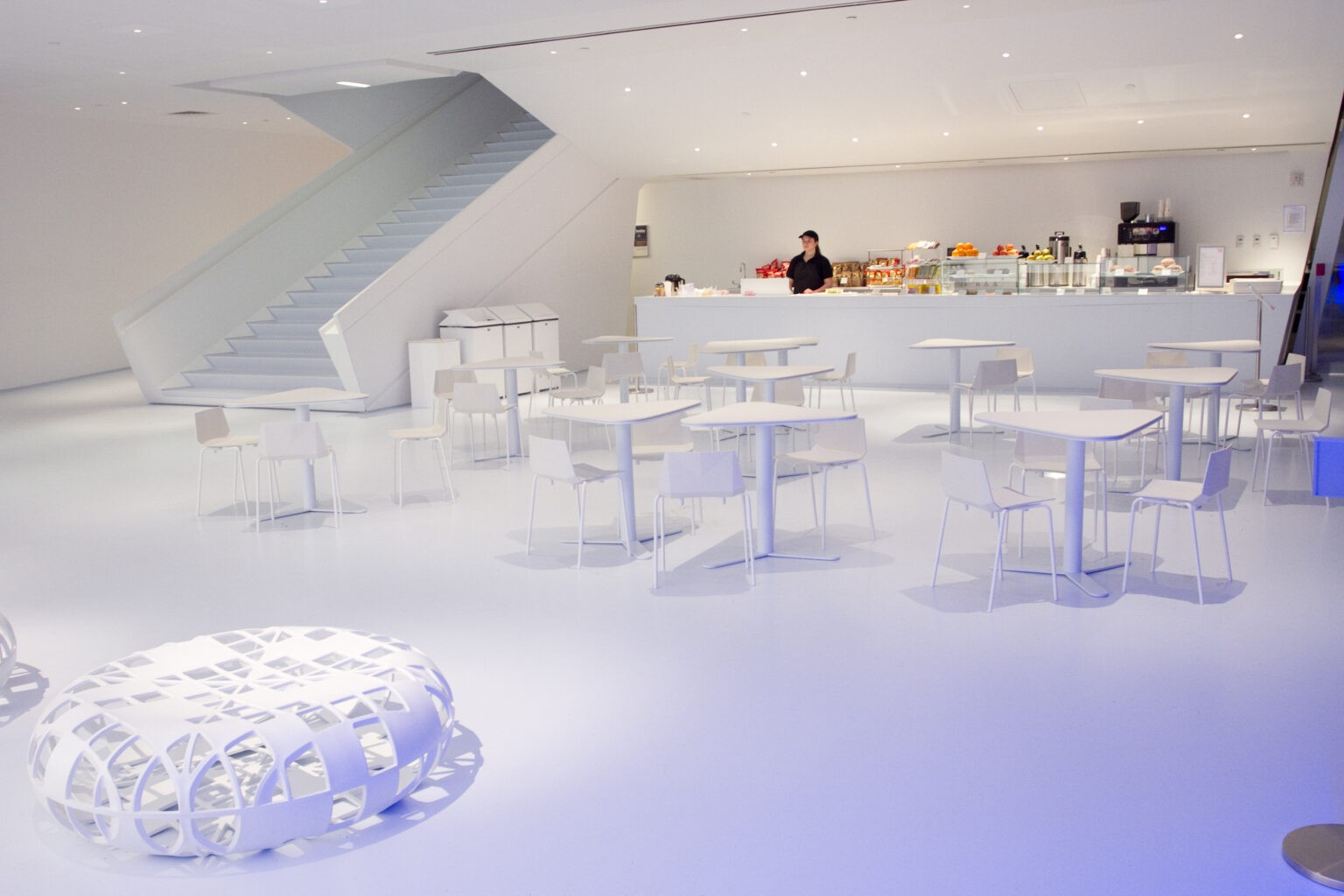
The journey will all have been worth it once you push those modern glass doors that give a long range view through the lobby to the café and garden – all of which is now open to to the public for free during museum hours.
Swing past the shop, front desk and scale the wide brilliant staircase as if you were entering the mothership in dare we say it? Flash Gordon that predates Star Trek, Star Wars, and the 2001 Space Odyssey, screened annually and maybe one of the most loved films at MoMI.
Or, take the elevators, as the museum is completely accessible, to the 2nd floor to immerse yourself in the permanent exhibit, “Behind the Screen” that features the back-story and recognizable props to blockbuster classics like Citizen Kane (1941), The Exorcist (1973), 2001 Space Odyssey (1961), Tootsie and wigs worn by stars: the mohawk doo Robert De Niro wore in Taxi Driver (1976), and Elizabeth Taylor’s from Cleopatra (1963). Not to mention about 100 glamorous studio shots of early stars and starlets.
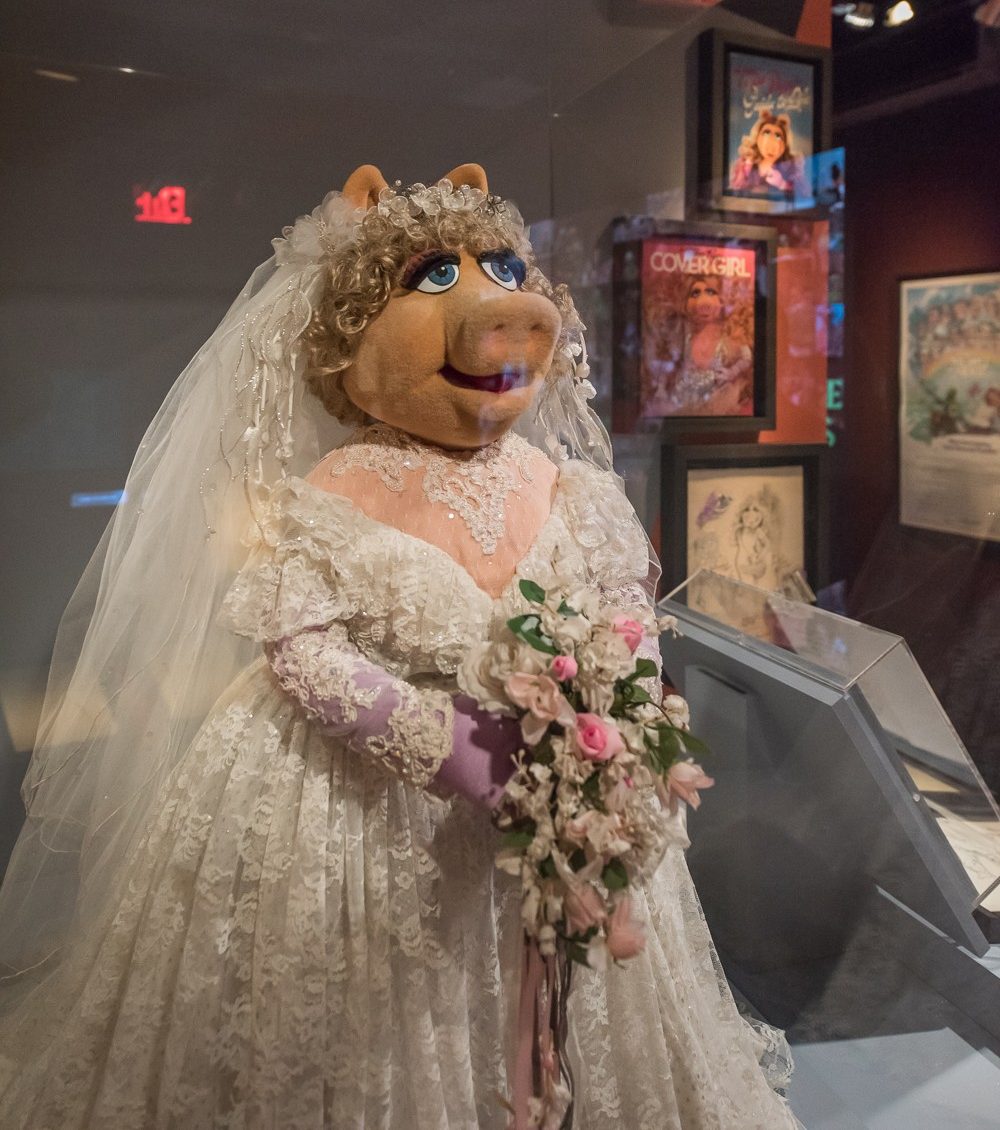
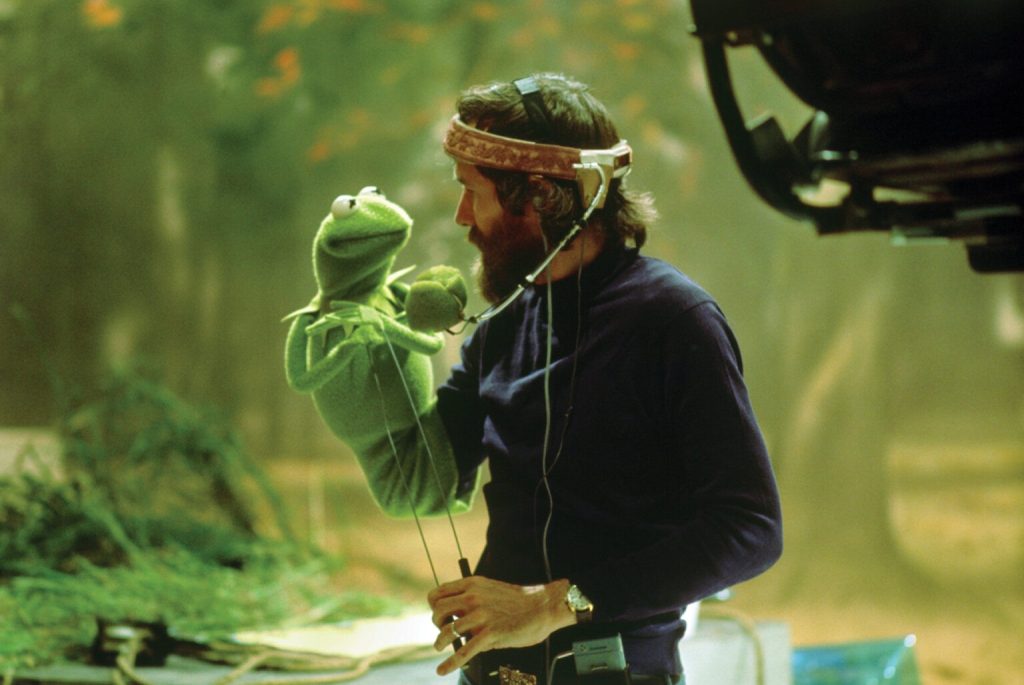
The world’s most loved characters live here, too: ET, Miss Piggy and Big Bird, the latter from the mind of Muppet-creator Jim Henson, which is worth anchoring any family visit to. His transformative impact on culture, is on view here you can be face-to-face with 50 beloved characters from the worlds of The Muppet Show, the Muppet movies, Sesame Street, and other productions released during his lifetime.
See clips from the earliest films like The Great Train Robbery to recording a sequence of your own movements to be printed out as a flipbook; record your own voice over dialogue from a film, following the same procedure actors use when dubbing, choose sound effects to match action flicks; add music to scenes from movies.
Just about everything is hands-on: from an introduction to the history of the moving image from 19th century optical toys to creating your own flipbooks on the spot, to creating your own video games inside the Game labs, editing and producing films.
There is no doubt anyone living in Queens, and more so in Astoria is incredibly proud to live side by side with MoMI and all it brings to the proverbial cultural table.
Director of the Queens Tourism Council Rob MacKay, who is in the business of promoting all of Queens had this to say: “MoMI manages to be local and international. It exhibits the best Jim Henson objects in the world. (I’m partial to Kermit the Frog.).”
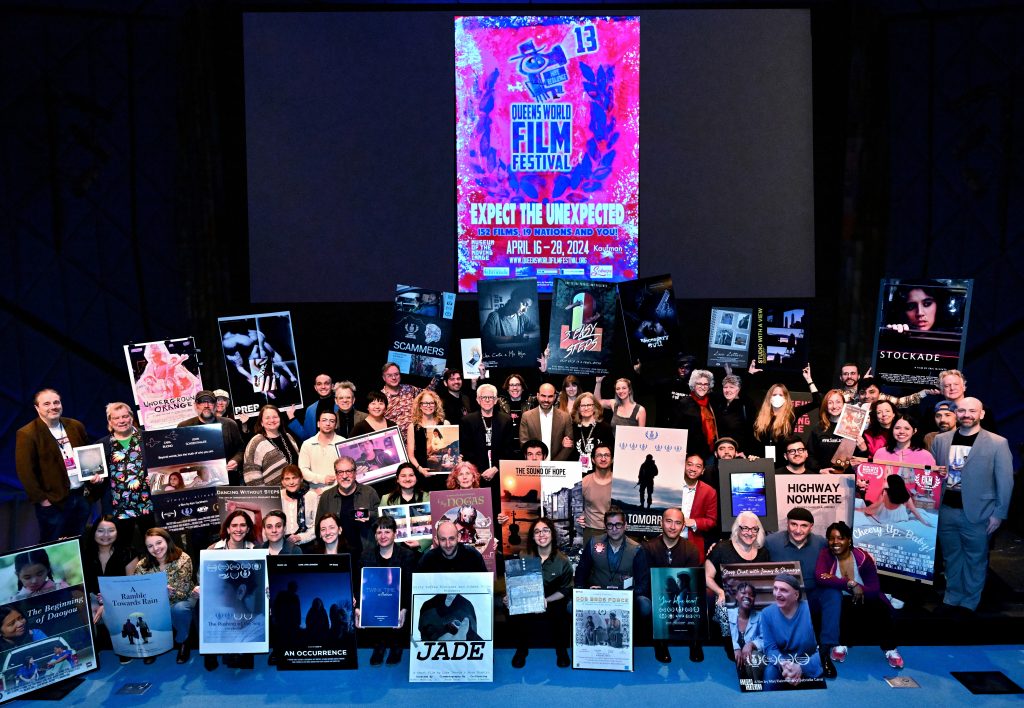
And it is no wonder MoMI hosts an array of film festivals: from the locally-loved Hellenic Film Festival to the Queens World Film Festival that has introduced early career filmmakers from 25 nations and seasoned professionals like Melvin Van Peebles, Julie Dash and Sandra Schulberg to The Marvels of Media Festival that recognizes the media work of autistic media-makers through film screenings, an exhibition, and in-depth panel discussions. The open call for the 2027 festival will open in the fall.
Katha Cato, Founding Executive Director of the Queens World Film Festival recalls the first time she walked into the Redstone Theater in 2012, “I started crying. I was overwhelmed by the realization that we would be screening work in that beautiful space. We call MoMI the Cathedral.”
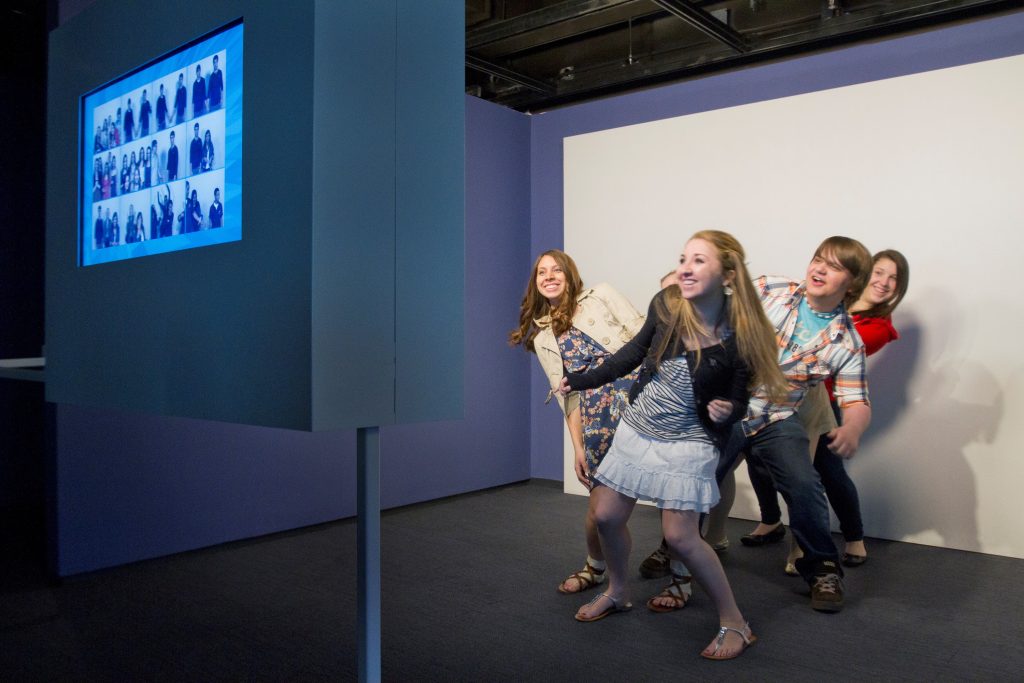
Get ready to be impressed: smile, 1, 2, 3 shoot!
Side Dish: Napoli Pizza & Pasta is an unpretentious and popular pizza-pasta trattoria on 33rd Street & 35th Avenue, about three blocks west of MOMI on 33-02 35 Avenue (and 33 Street). Bahari, two blocks north of MOMI on Broadway & 32nd Street serves up Greek classics; La Gata Golosa is a Colombian café/restaurant on the corner of Broadway & 31st Street (yes, under the elevated train you may have boarded to get to Astoria); Panera Bread serves soup, sandwiches, salads and is efficient and reliable and is located at 38-01 35 Avenue (and 38 Street). Sac’s Place offers Italian cuisine; has terrific wine list; and is a good place for a celebration at 35-11 35 Ave (at Kaufman Astoria Studios).
The Museum of the Moving Image (https://movingimage.org/) is open on Thursdays from 2 to 6 pm for free; Fridays from 2 to 8 pm and Saturday and Sunday from 11:00 am to 6:00 pm. It is open Monday, Sep 7 from 12 to 6 pm and Monday Oct 12 from 12 to 6 pm.
Photo Credit Top Photo: Photo by Peter Aaron/esto. Courtesy of Museum of the Moving Image.
By Maria Lisella, author of the newly-released At the Hour of Now and Thieves in the Family