
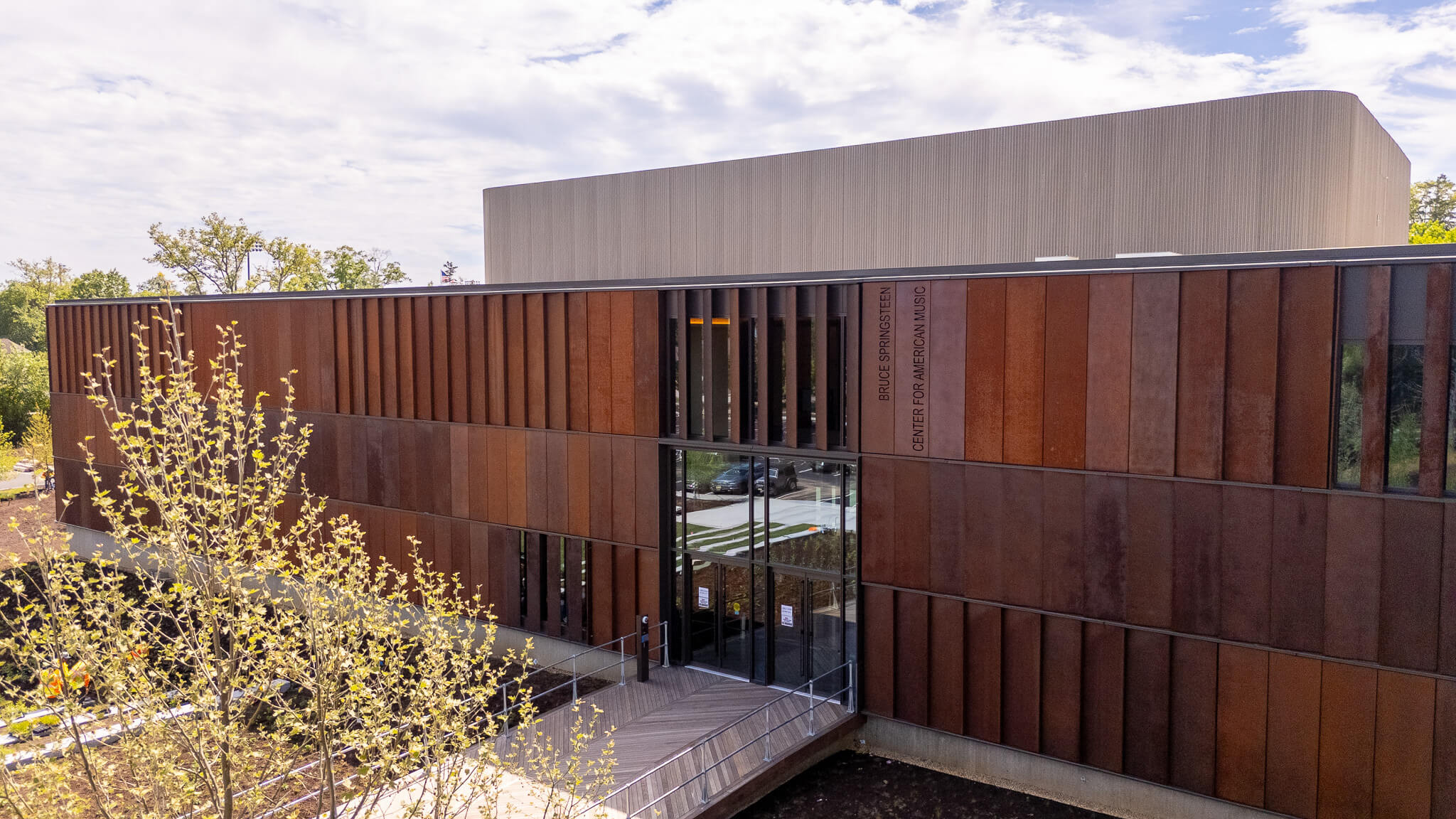
A sentence in an exhibit at the new Bruce Springsteen Center for American Music in New Jersey hints at the Center’s dual mission: “Bruce was shaped by legends, and his music has shaped others in turn.” Located on the campus of Monmouth University in Long Branch on Springsteen’s beloved Jersey Shore, an hour’s drive south of New York City, the Center preserves the archives of the Jersey-born global rock icon and presents an entertaining feast of memorabilia and information for both fans and newcomers to his music. Springsteen, though, did not want the institution to be all about him. “I always looked at myself as a small link in a very big chain” (PBS NewsHour, July 2026), he has often said. The Center’s other core role is to explore America’s rich, varied musical traditions and educate students, professionals, and the public about them.
The Center’s roots date back to 2001 and a fan-driven campaign to gather Springsteen memorabilia. Originally housed in the Asbury Park Public Library in the Shore town where the young Springsteen often performed, the growing Bruce Springsteen Special Collection moved in 2011 to nearby Monmouth University—another place Springsteen performed—and was formally gifted to it in 2017. The same year, Springsteen and the university began a partnership that made the university the official repository of his written works and artifacts. It established a nonprofit institution, then called the Bruce Springsteen Archives & Center for American Music, that includes all genres of American music. The institution has its own leadership team and governance. Bob Santelli, music historian and former GRAMMY Museum Executive Director, joined the Center as Executive Director in 2022, and in 2023 plans to build a permanent home for the collection were announced. The new 30,000-square-foot, $50 million building opened to the public in June 2026 after a series of concerts.
Exploring the Center
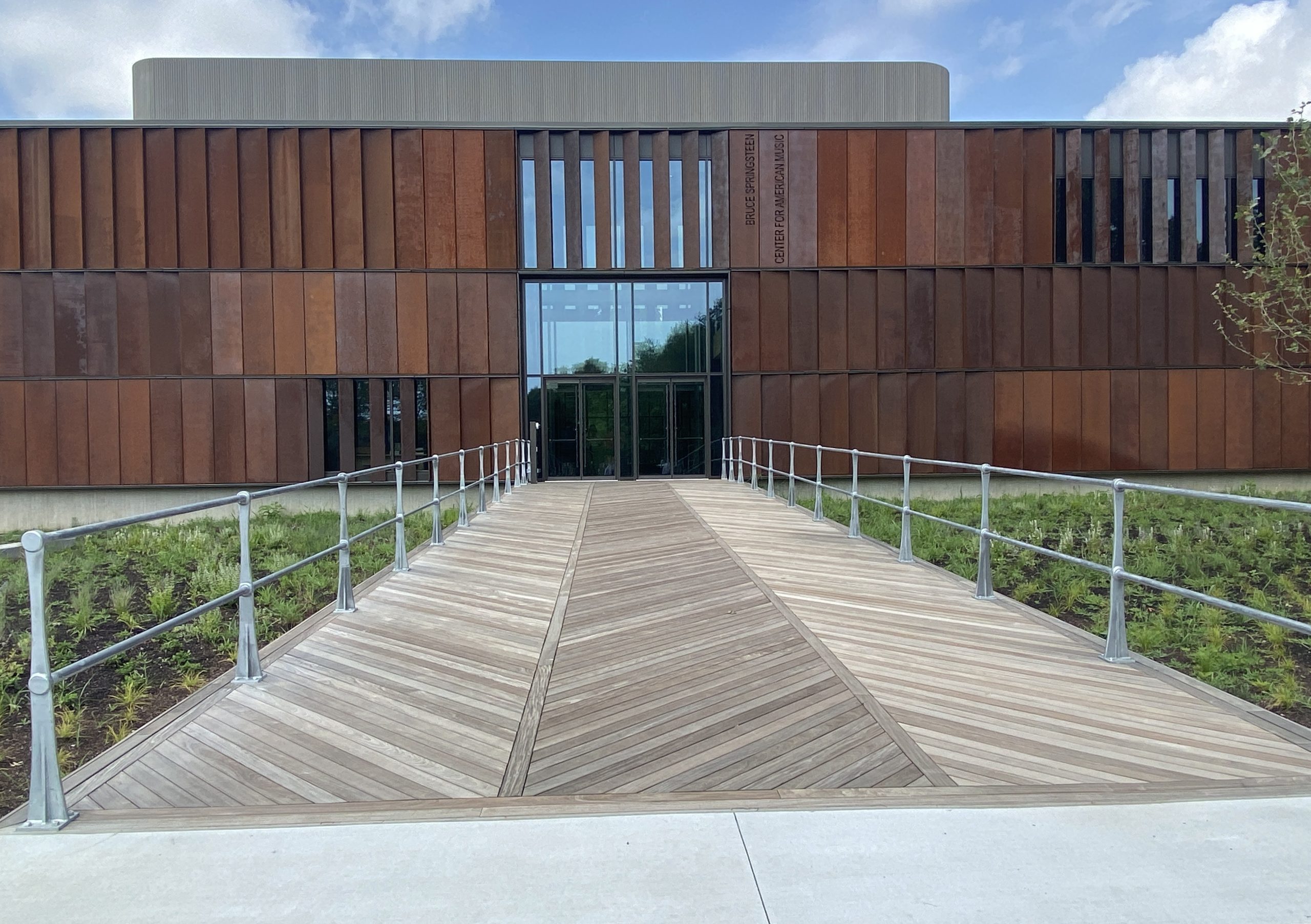
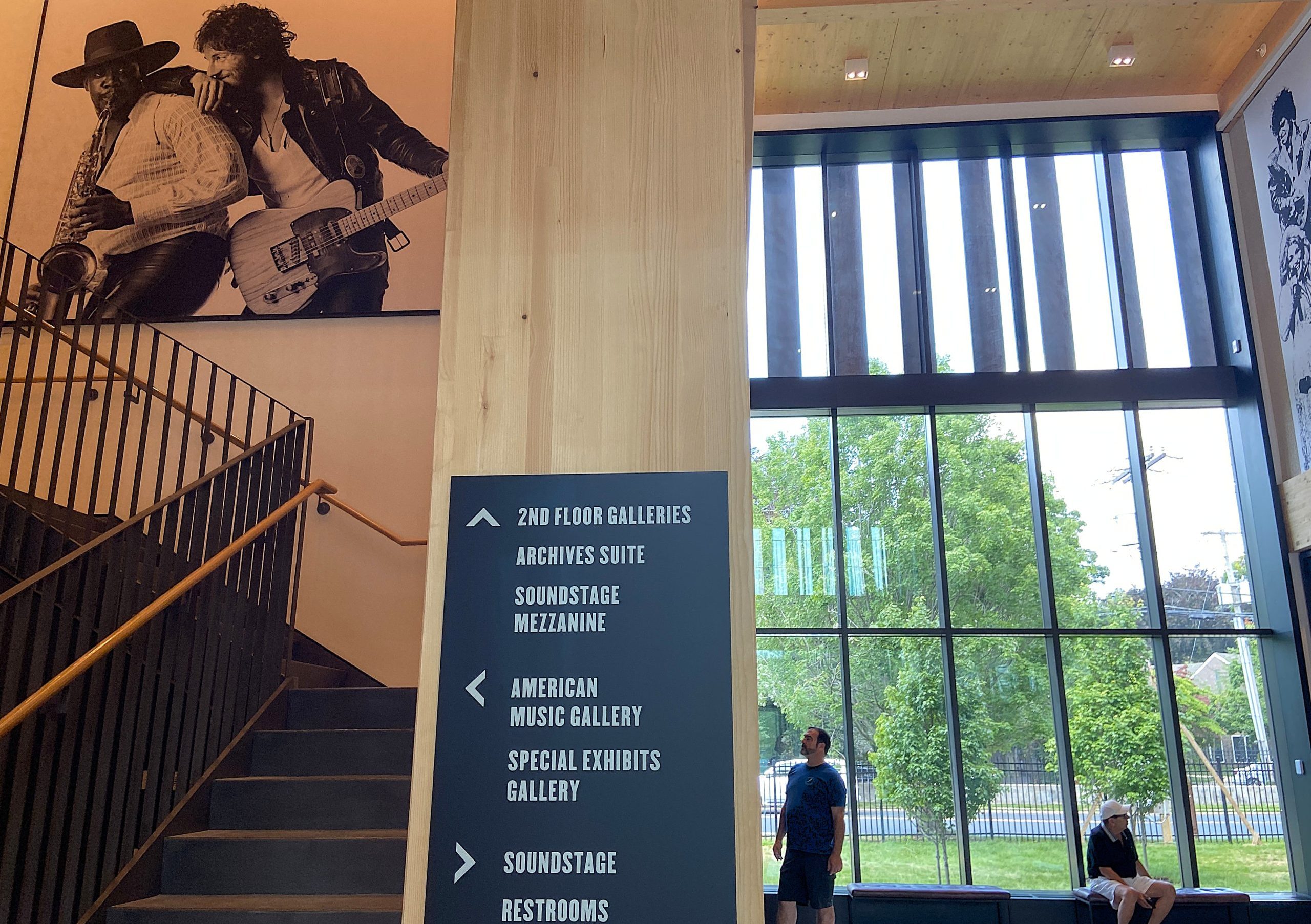
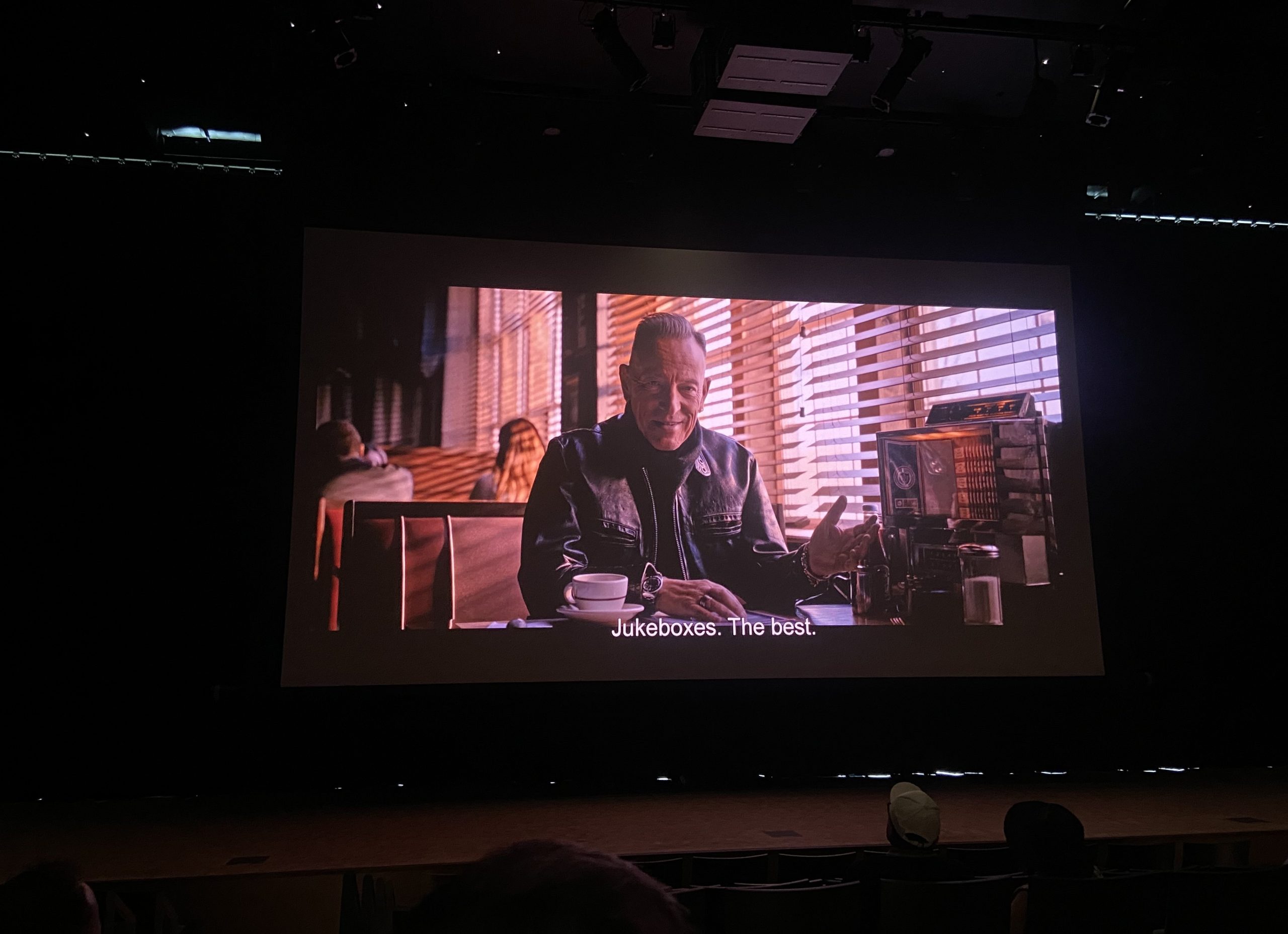
Weathered steel panels on the CookFox-designed building recall New Jersey’s industrial heritage, and an elevated wooden Shore-style boardwalk—a nice touch—leads to the entrance. Once inside the airy, two-story lobby, visitors (advance reservations to the Center are recommended) should view the excellent 25-minute film The Ties That Bind: Bruce Springsteen’s American Music Journey, by Thom Zimny, in the 240-seat Soundstage. Springsteen, now 76, narrates this music-filled overview covering his early life and the many genres and artists that have influenced him over the decades, such as Elvis, Roy Orbison, and Chuck Berry. He is shown sitting in a diner with a jukebox, a device he sees as a symbol of Americans’ diverse, shared music catalog.
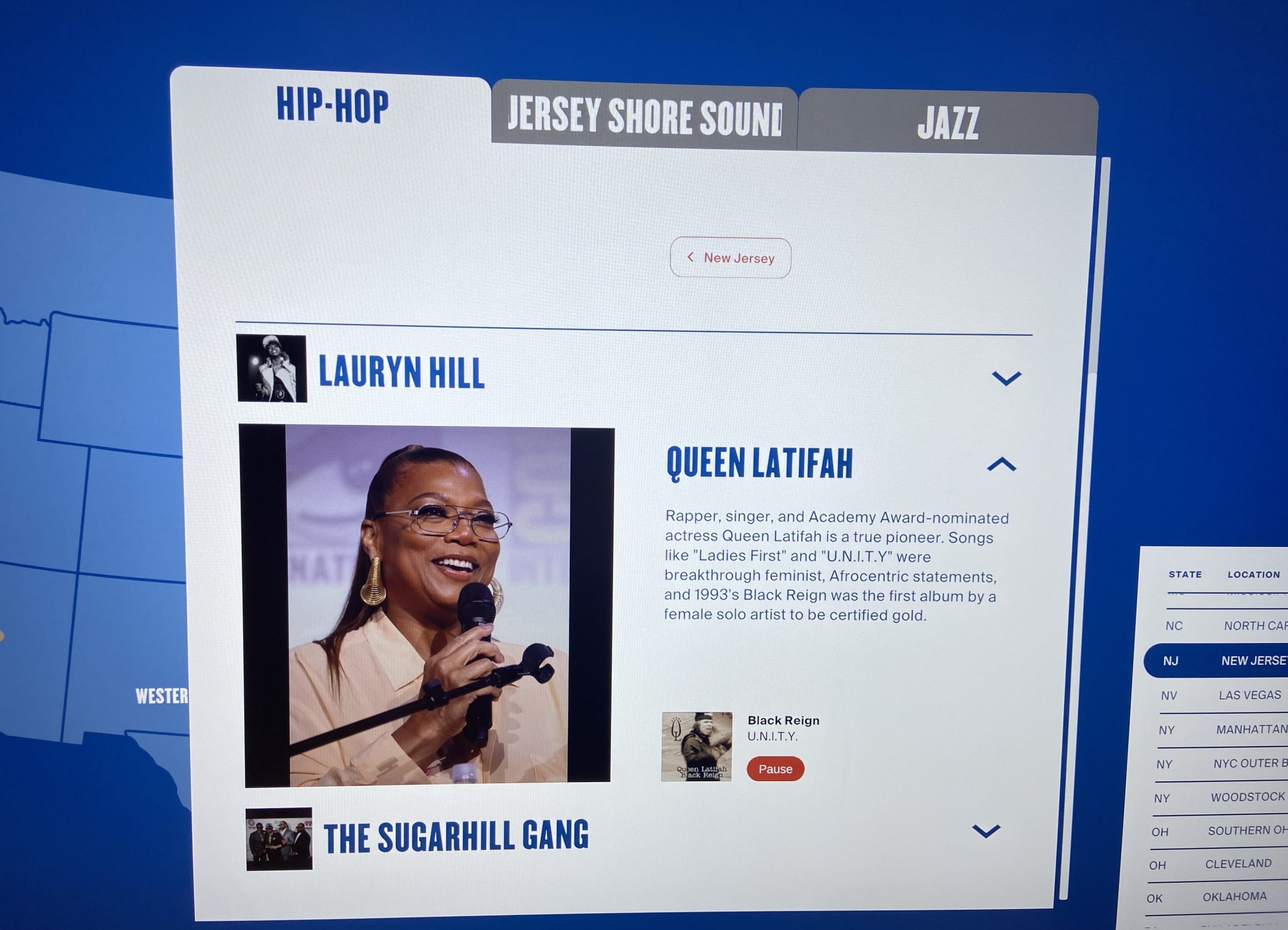
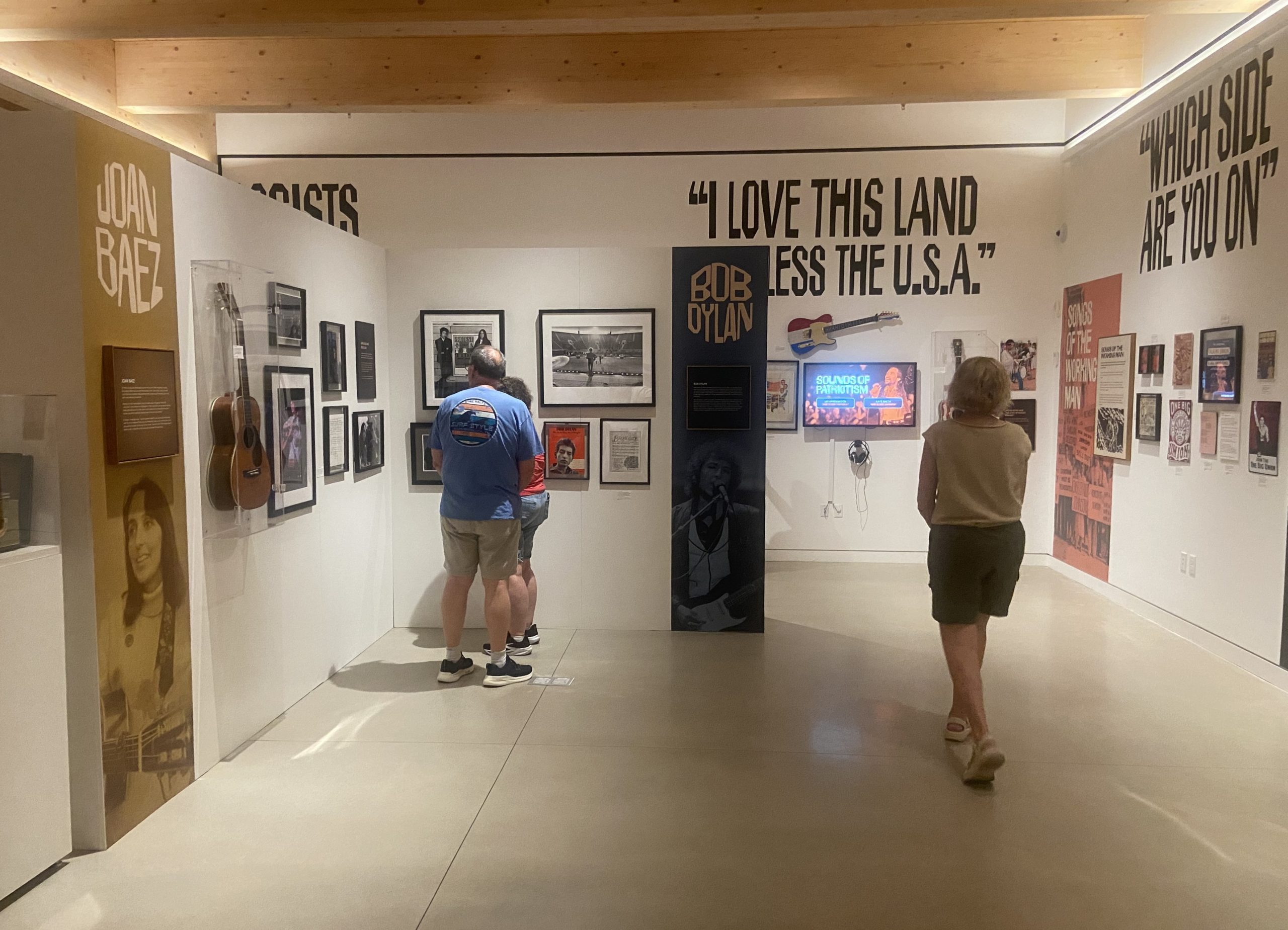
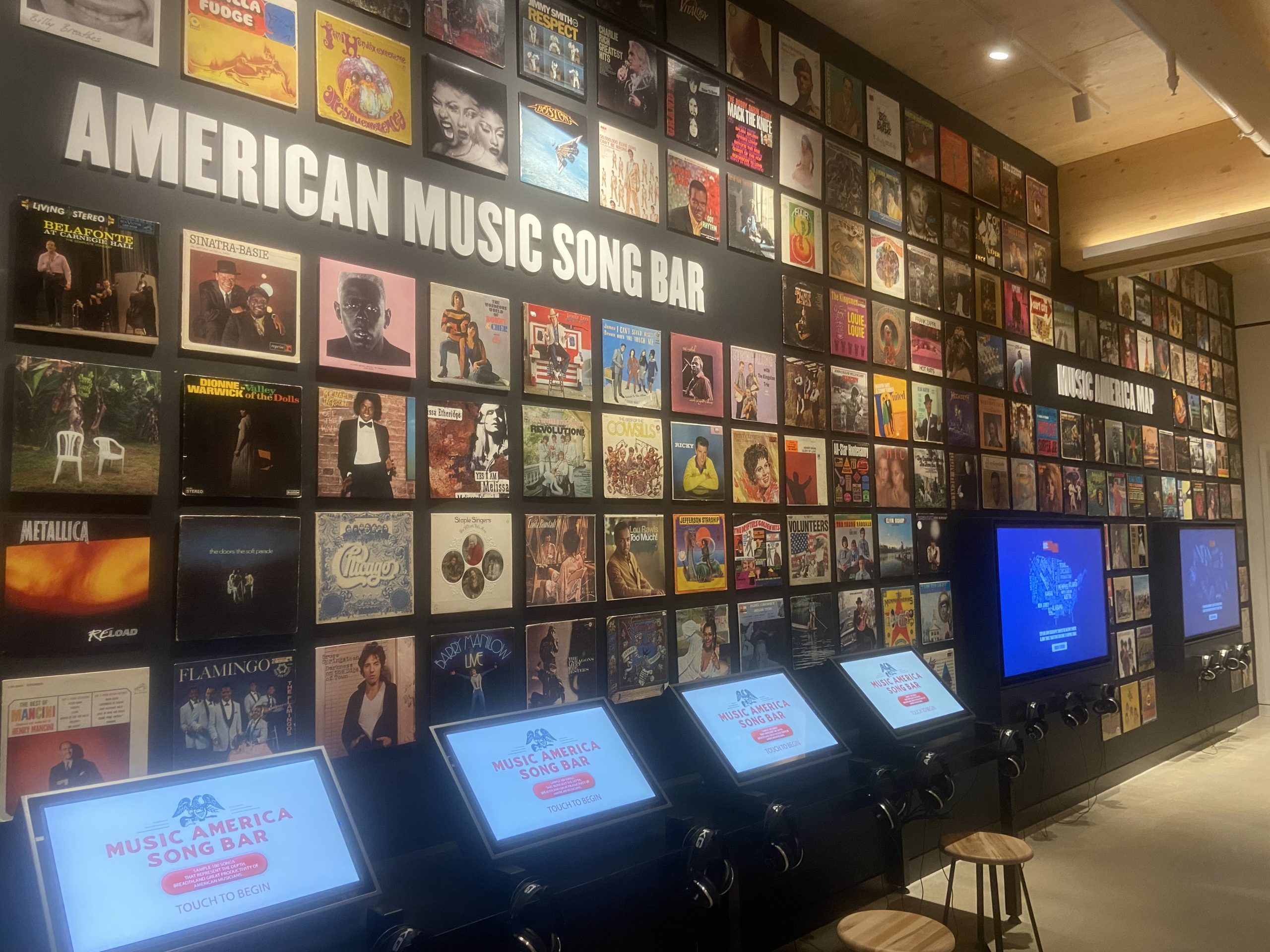
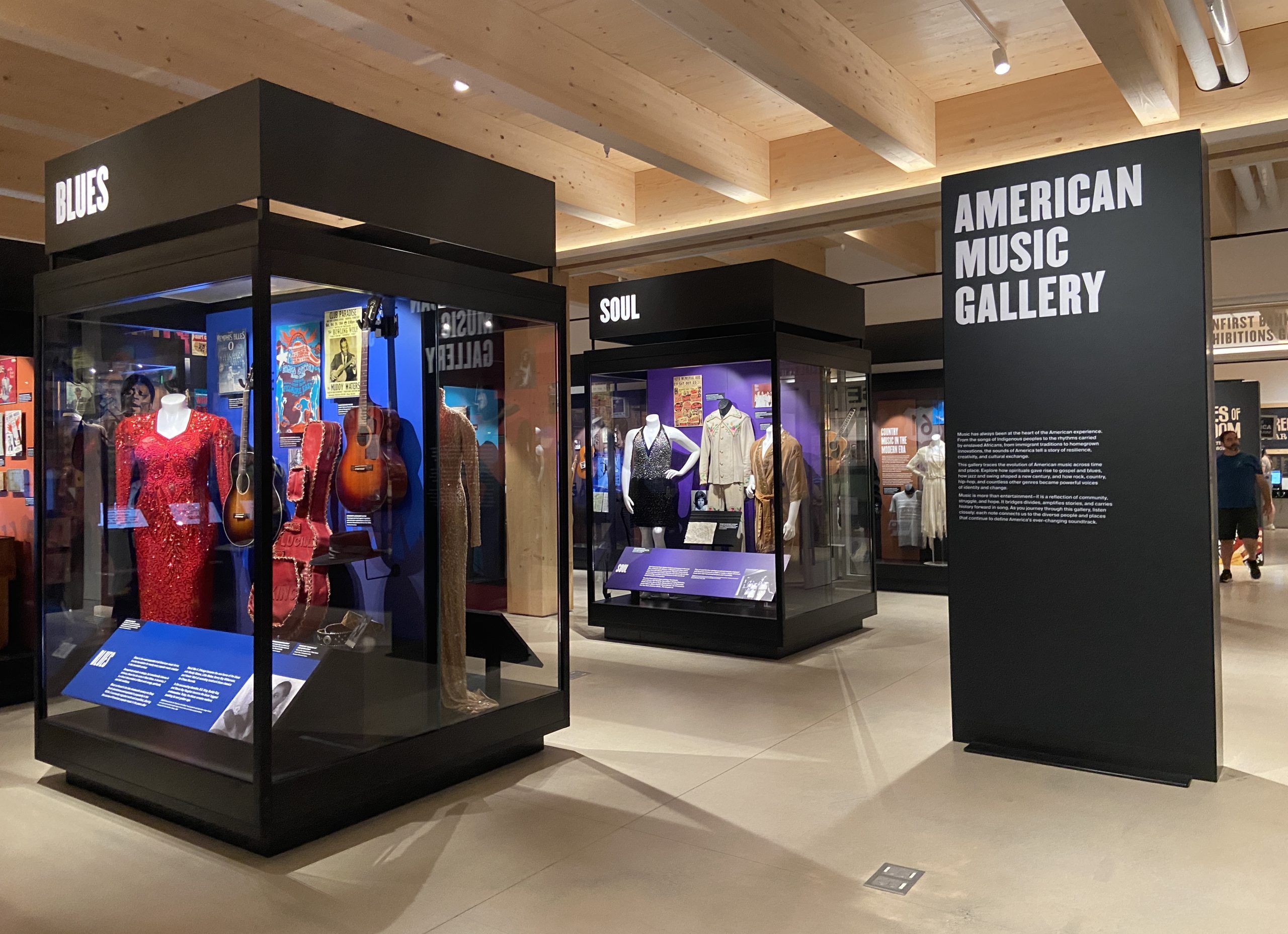
That catalog is explored in the heart of the first floor, the 2,200-square foot American Music Gallery. Well-labeled display cases present what Bob Santelli has called “snapshots” of genres and themes in American music over the centuries, including the music of Indigenous peoples, sacred music, blues, jazz, rock, country music, hip-hop, and other genres. The cases hold memorabilia such as clothing, correspondence, and instruments, some from the Center’s 48,000-item collection and some from lenders. Here and throughout the museum, more than a dozen well-done interactive experiences allow visitors to hear music at stations like the Music America Map and the Song Bar. In another first-floor gallery, the Center’s inaugural special exhibition “Chimes of Freedom: Protest, Patriotism, and the Power of Song” shows how protest music has been integral to American democracy, from Revolutionary War tunes to Bob Dylan’s songs to Springsteen’s 2026 “Streets of Minneapolis.”
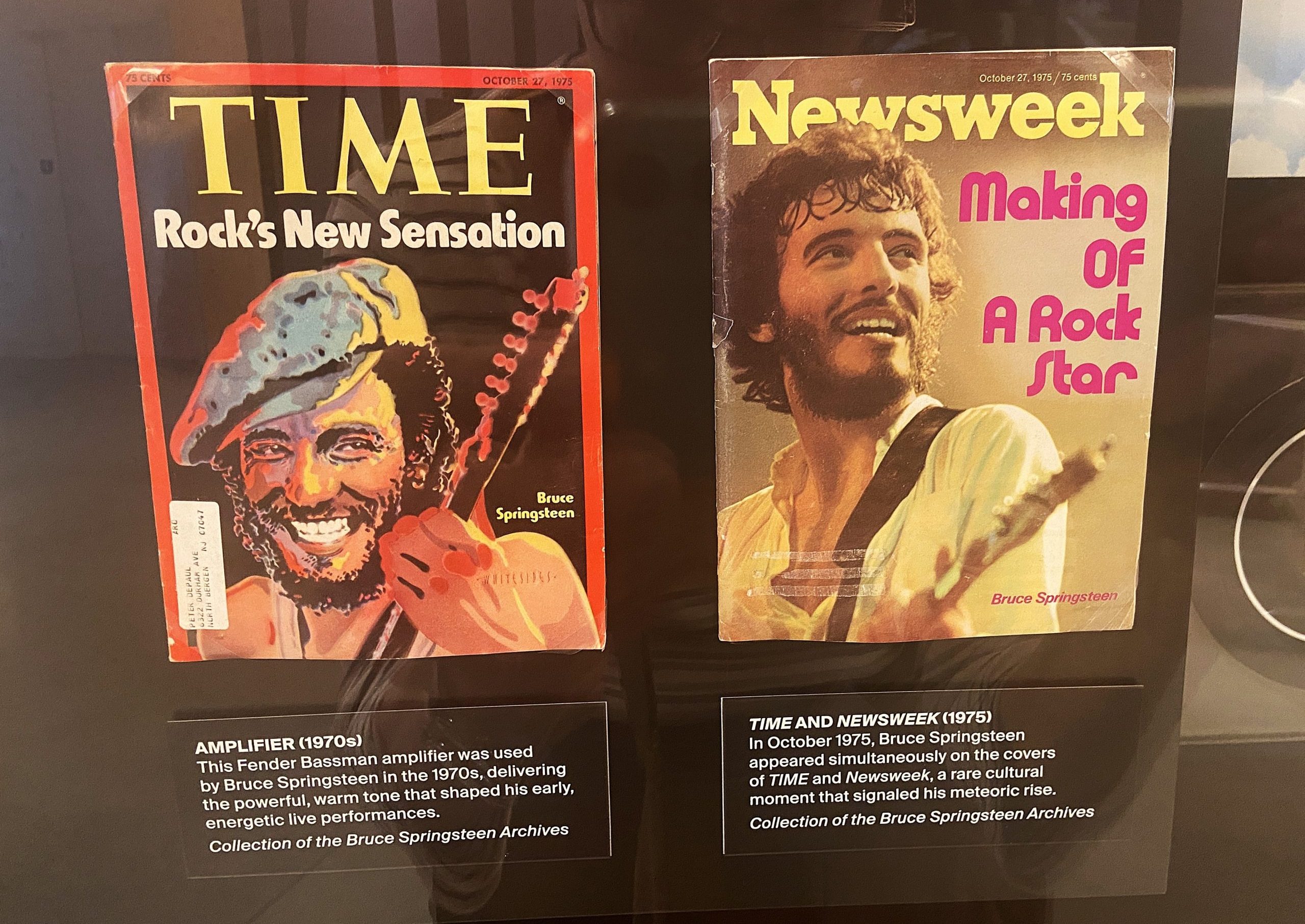
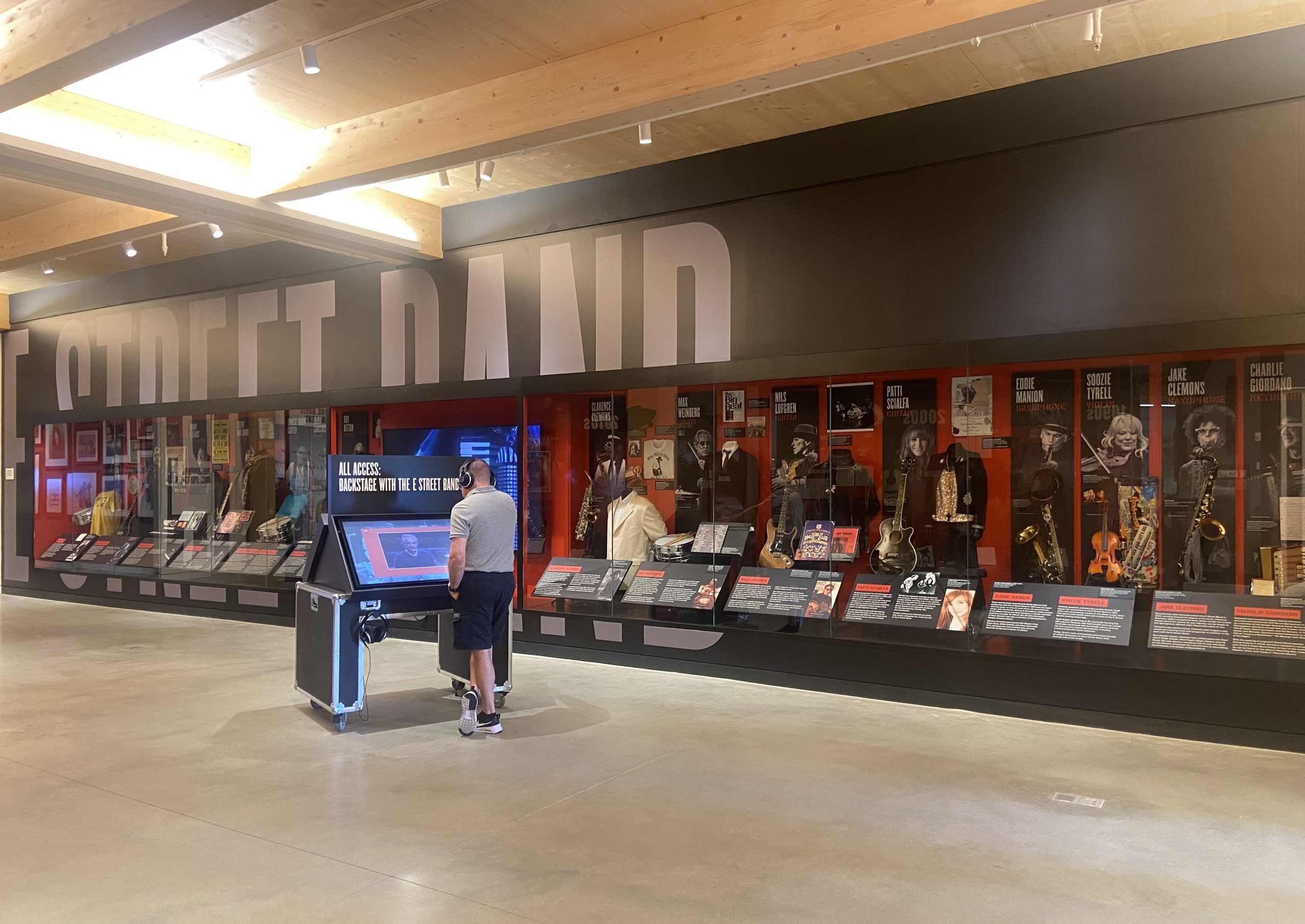
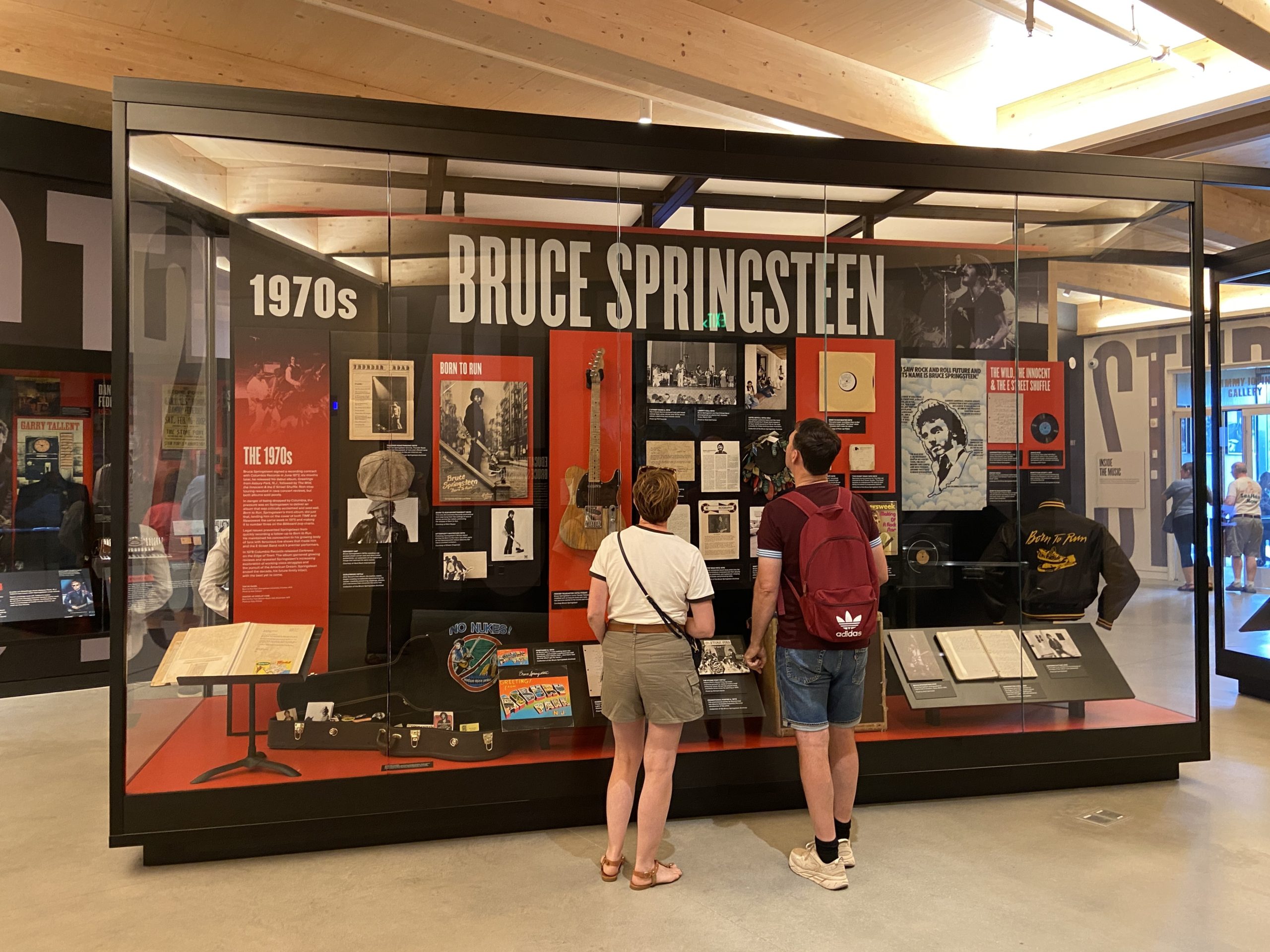
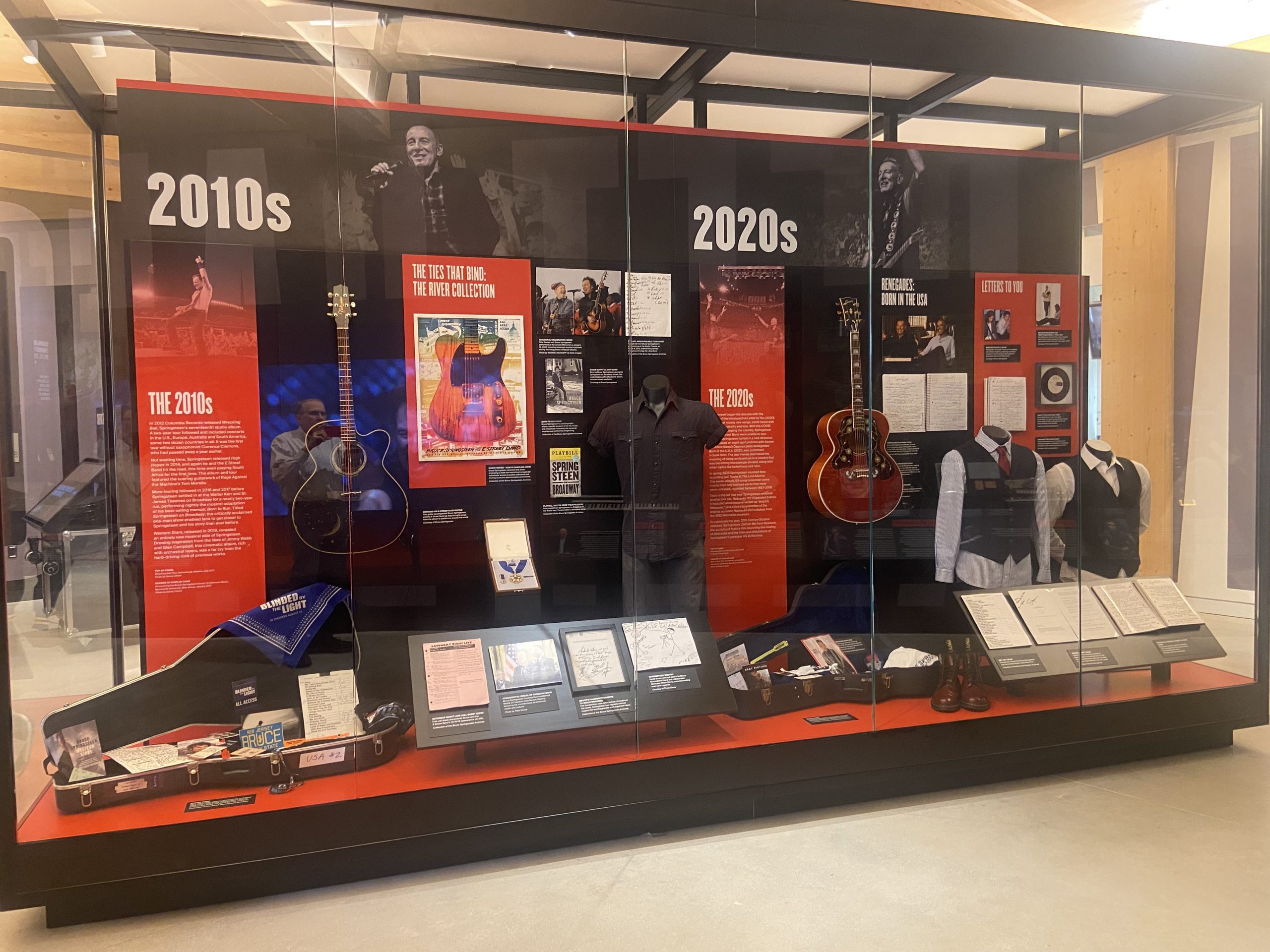
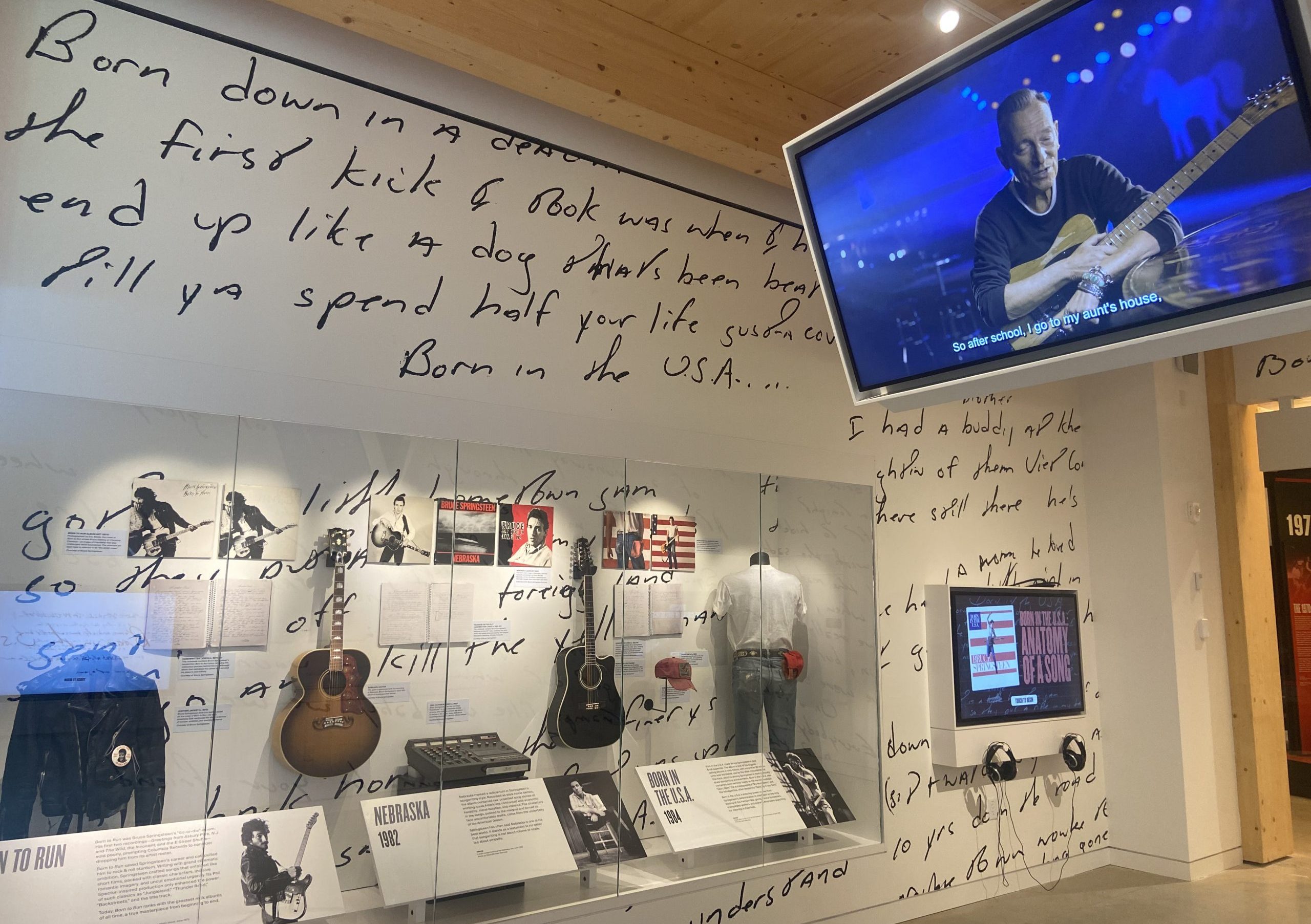
Springsteen and the E Street Band take center stage on the museum’s second floor, which also holds the archives (visitors can get a tiny taste of these). To cover Springsteen’s career achievements to date, among them winning 20 Grammy Awards and an Academy Award, selling 140 million records (70 million of these in the United States), and releasing 21 studio albums, the displays take a decade-by-decade look. The 1970s case, for example, the decade of Springsteen’s breakthrough album Born to Run, has photos of Springsteen, guitars, album covers, clothing items, and a poster of Springsteen with Jon Landau’s words from a 1974 article, “I saw rock & roll future and its name is Bruce Springsteen.”
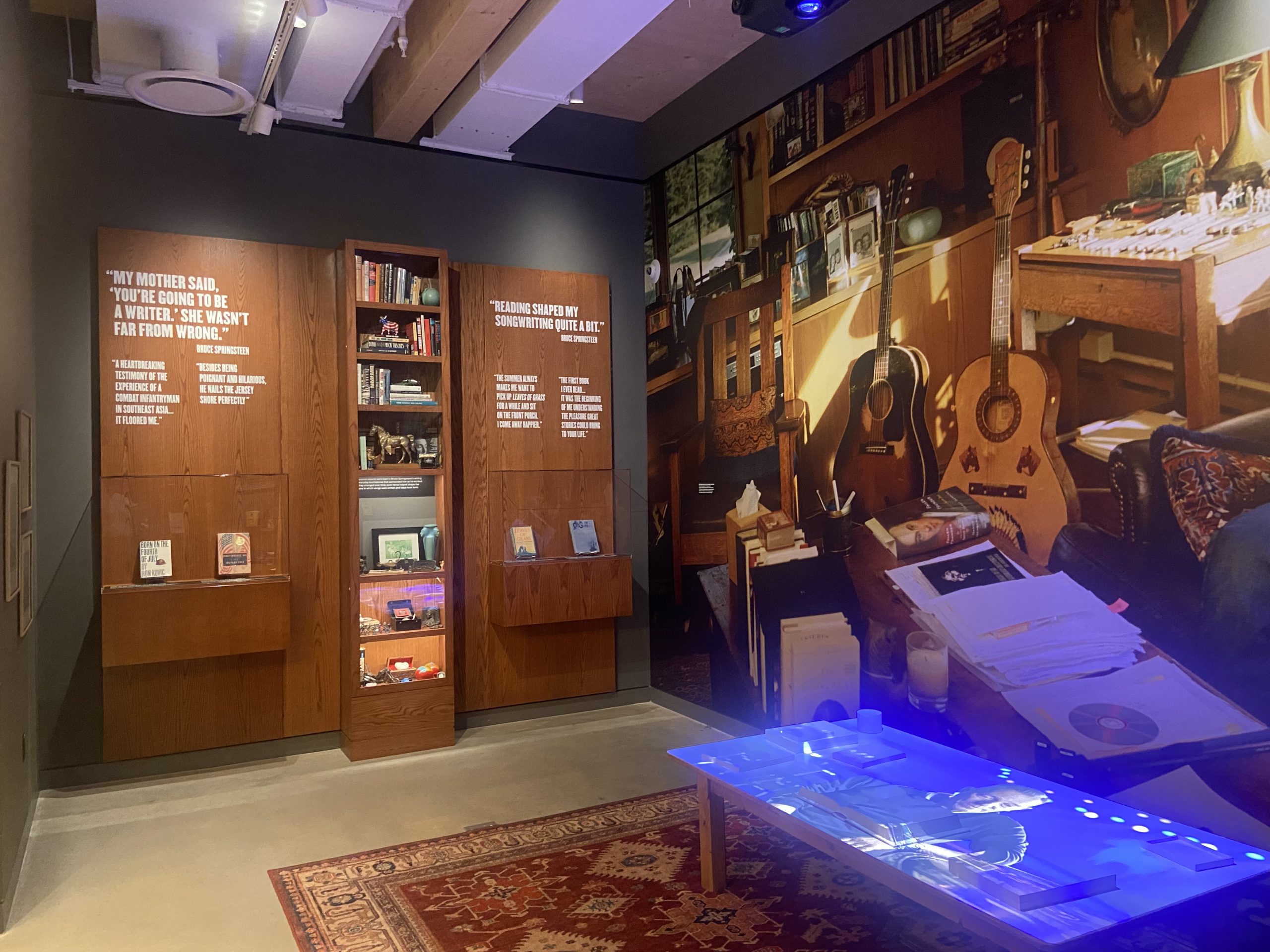
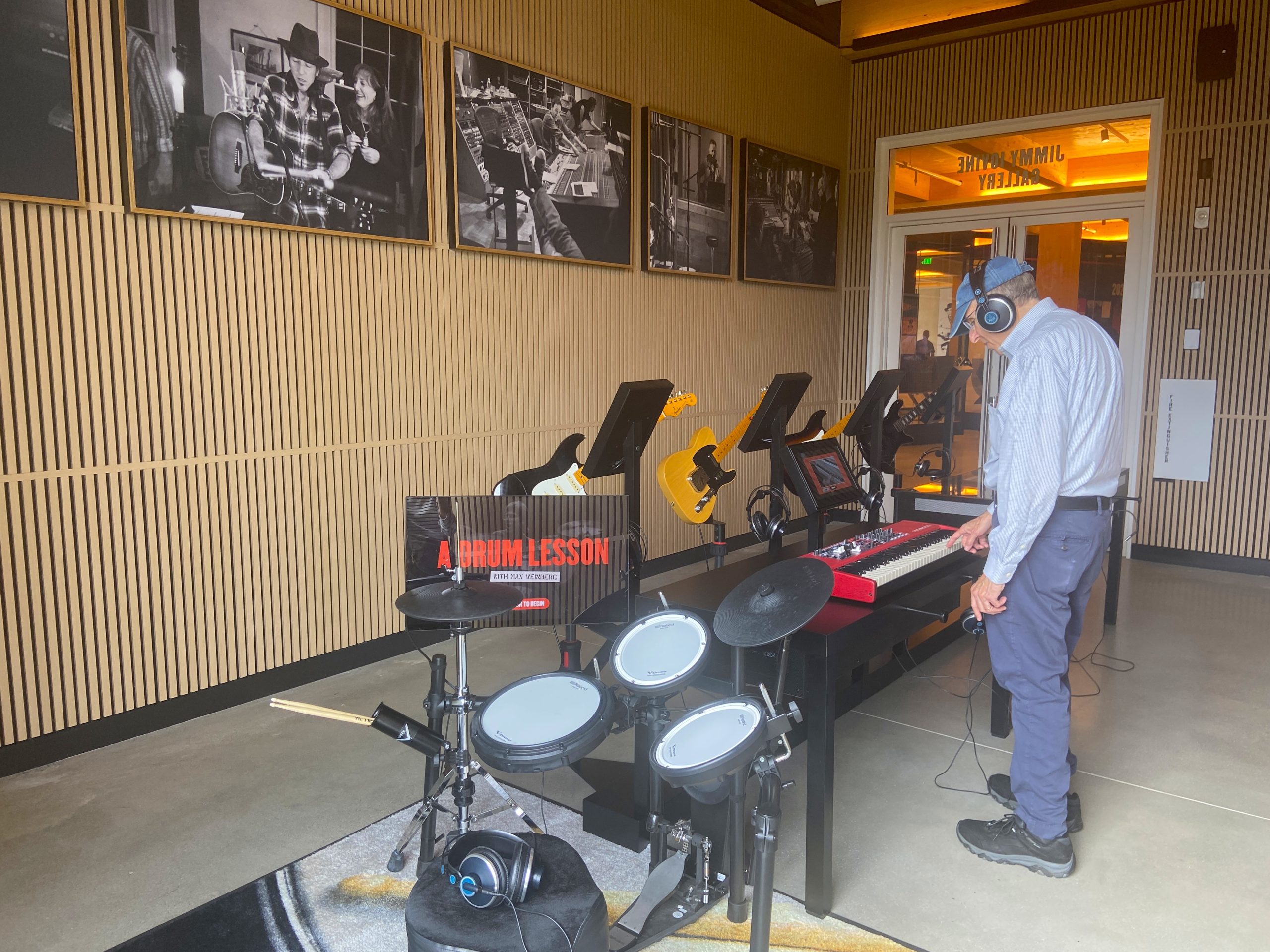
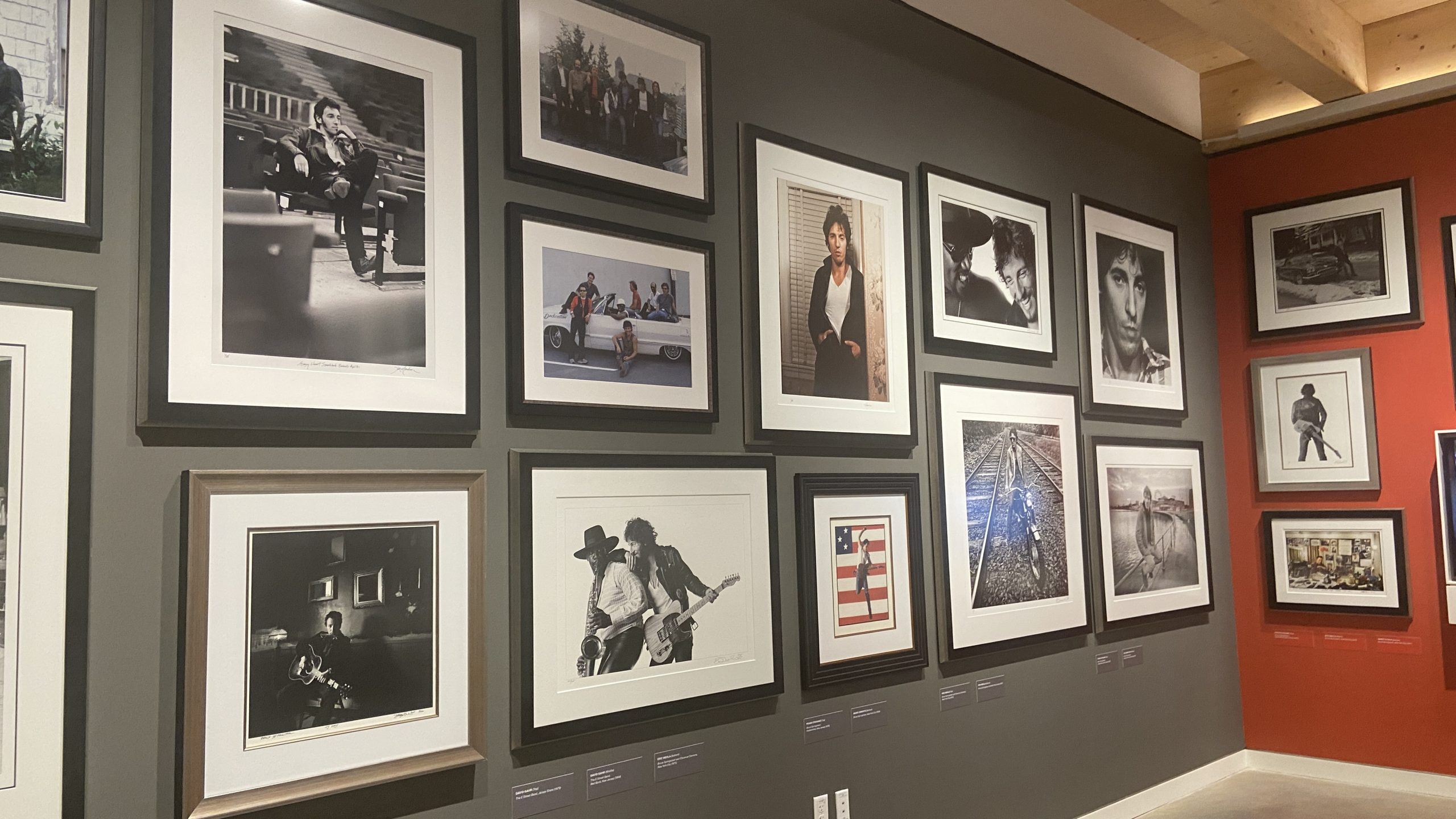
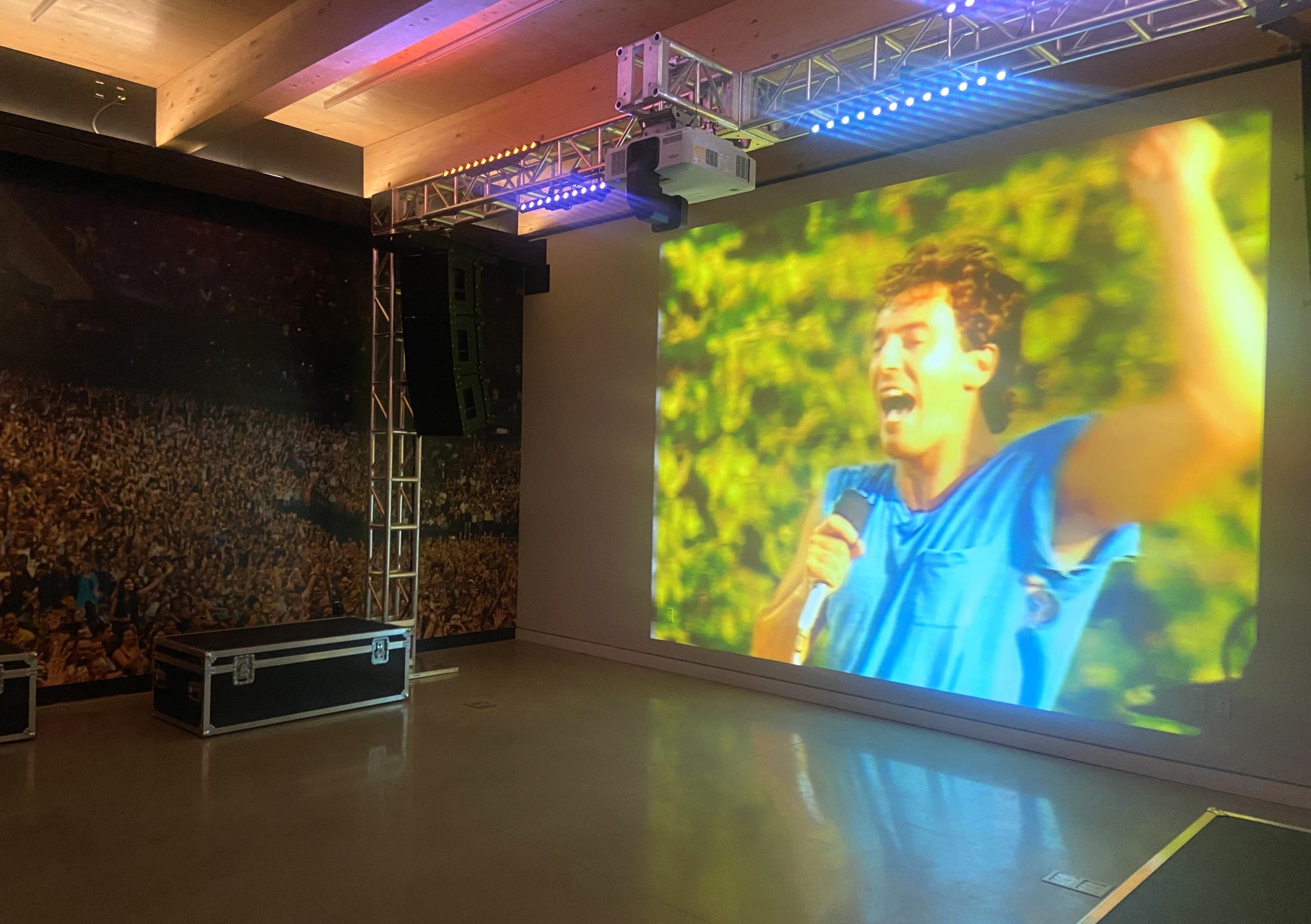
It’s fun to study the memorabilia, and the In-Concert Room adds another dimension, showing footage from some live concerts to convey Springsteen’s raw performing energy and his songwriting subjects: the challenges of working-class life, the American dream and reality, and people’s everyday struggles and personal relationships. (His music videos are powerful too: here’s the official video of “Dancing in the Dark,” the first single released from the 1984 album Born in the U.S.A.) Also on the floor is a reproduction of Springsteen’s former living room with information about his songwriting and the books he reads. A separate room with blown-up, handwritten lyrics on the walls offers other insights into his songwriting, and notable photographs of Springsteen fill another exhibit. One long wall on this floor is packed with memorabilia and information about E Street Band members. If all this inspires visitors, they should head to the In-Studio Room. Besides rare recording equipment and photos, the room has digital and physical stations where people try out guitars, drums, and a keyboard.
Music Education and Outreach
Education for all ages about music’s cultural impact is central to the Center’s mission, even beyond its roles as a working archive for researchers and a resource for Monmouth University’s students and professors. Already in the works are themed in-school programs for K–12 students such as assemblies and field trip opportunities. (In honor of the Center’s opening, fees will be waived during the 2026–27 school year.) Topics range from the “Chimes of Freedom” exhibit to 21st-century careers in music. The Center also partners with TeachRock, a nonprofit founded by Stevie Van Zandt of the E Street Band, to distribute free music-driven, curriculum-related material.
Offerings for the public continue to be developed and include an outdoor summer concert series featuring local musicians, virtual programs called Conversations with Our Curator, and a virtual Tuesday Night Record Club—like a book club, but with albums. The Center can arrange speakers and programs for organizations such as libraries, museums, and community groups on a variety of music-related topics.
Since 2023, the organization has sponsored the annual American Music Honors, recognizing iconic artists from all genres who are known for their creative integrity, artistic excellence, and “longstanding commitment to the value of music in our national narrative.”
And on to Asbury Park
After a Center visit, you may find that, as the Jersey Shore anthem declares, “I Don’t Want to Go Home” (by Stevie Van Zandt: here’s the Southside Johnny and the Asbury Jukes version). If so, drive a mile east for a look at tiny 7½ West End Court (private home; no entry) in Long Branch, where Springsteen lived and wrote “Born to Run” and other songs for his album of that name. Another option is to make the five-mile drive south to Asbury Park, the Shore town associated with Springsteen, whose first album was Greetings from Asbury Park, N.J. The legendary Stone Pony, open since 1974, has hosted famous musicians including Springsteen; catch a show there or at another local club. Since the early 2000s, the once-gritty town has experienced a revival: you can stop by the shops, art galleries, and restaurants along Cookman Avenue downtown, enjoy the mile-long beach, or stroll the boardwalk (Ocean Avenue between Asbury and Sunset Avenues). Boardwalk murals by the Wooden Walls Public Art Project add a modern touch. Grab a bite along the way, and don’t miss the Silverball Retro Arcade with 150-plus vintage games like pinball and Skee-Ball. Hotels here include the Asbury Hotel and the Asbury Ocean Club.
Top Image: The Bruce Springsteen Center for American Music is on the campus of Monmouth University in Long Branch, New Jersey. Photo courtesy Monmouth University
Linda Cabasin is a travel editor and writer who covered the globe at Fodor’s before taking up the freelance life. She has lived in New Jersey long enough to consider herself a default Jersey girl. She is a writer for Fodor’s Philadelphia and a contributing editor at Fathom. Follow Linda on Instagram at @lcabasin.