
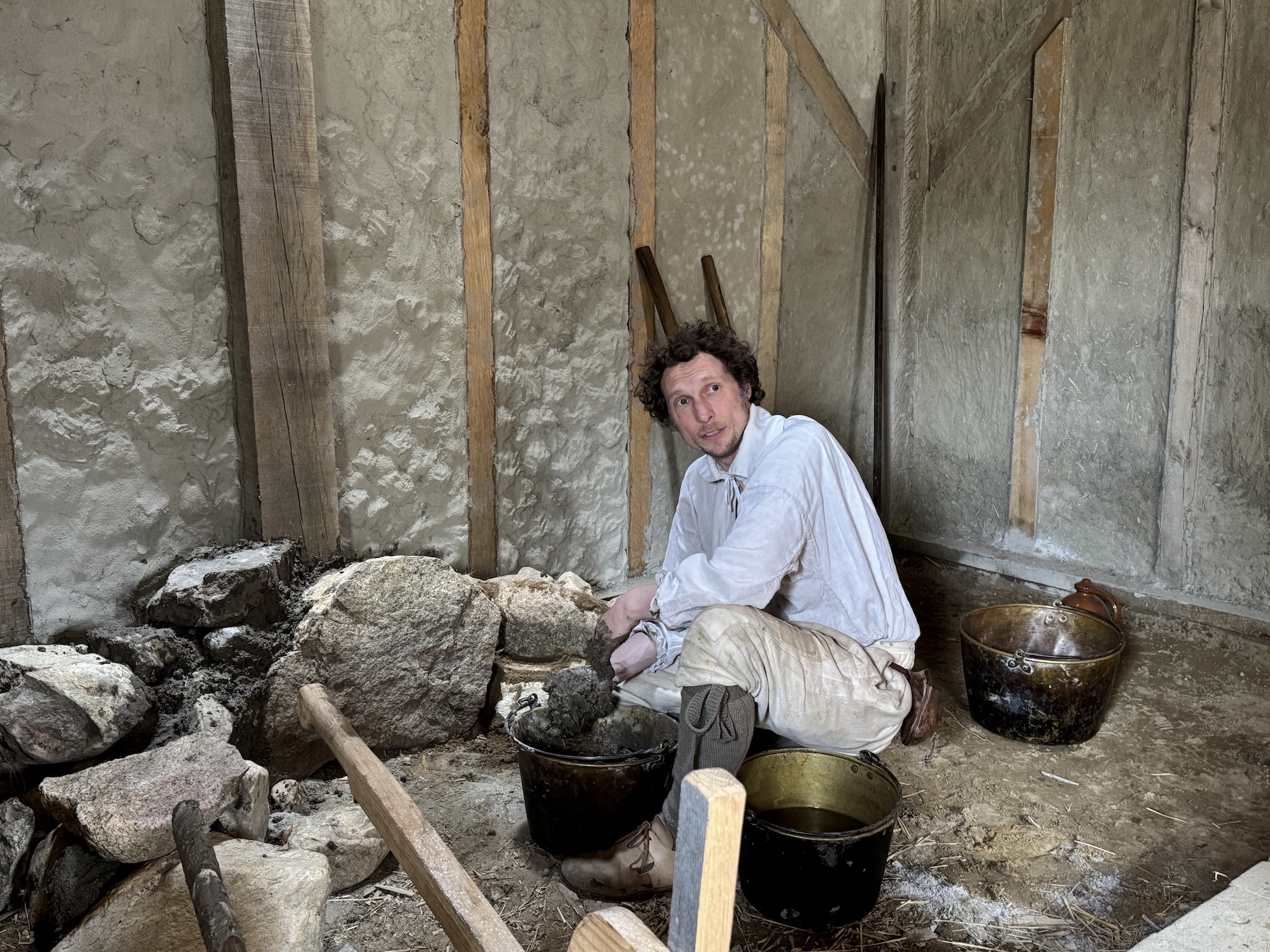
It’s 1627, and John Alden is building a hearth in his one-room home at the still-young village of Plymouth in what will later be part of Massachusetts. Although he’s working on his current home, he says he expects to move soon with his wife Priscilla and two toddlers to a plot some miles beyond Plymouth for access to more land.
The John Alden who speaks these lines — using word choices, phrases and intonations to suggest early 17th century English — is acting.
He is a player in an ambitious project launched in 1947 to educate the public about the Pilgrims’ way of life and their influence on America and the world.
What started with a fort and a couple of English cottages is now the Plimoth Patuxet Museums. It features a version of the original Plymouth Colony and a reconstructed Native American homesite of the same era.
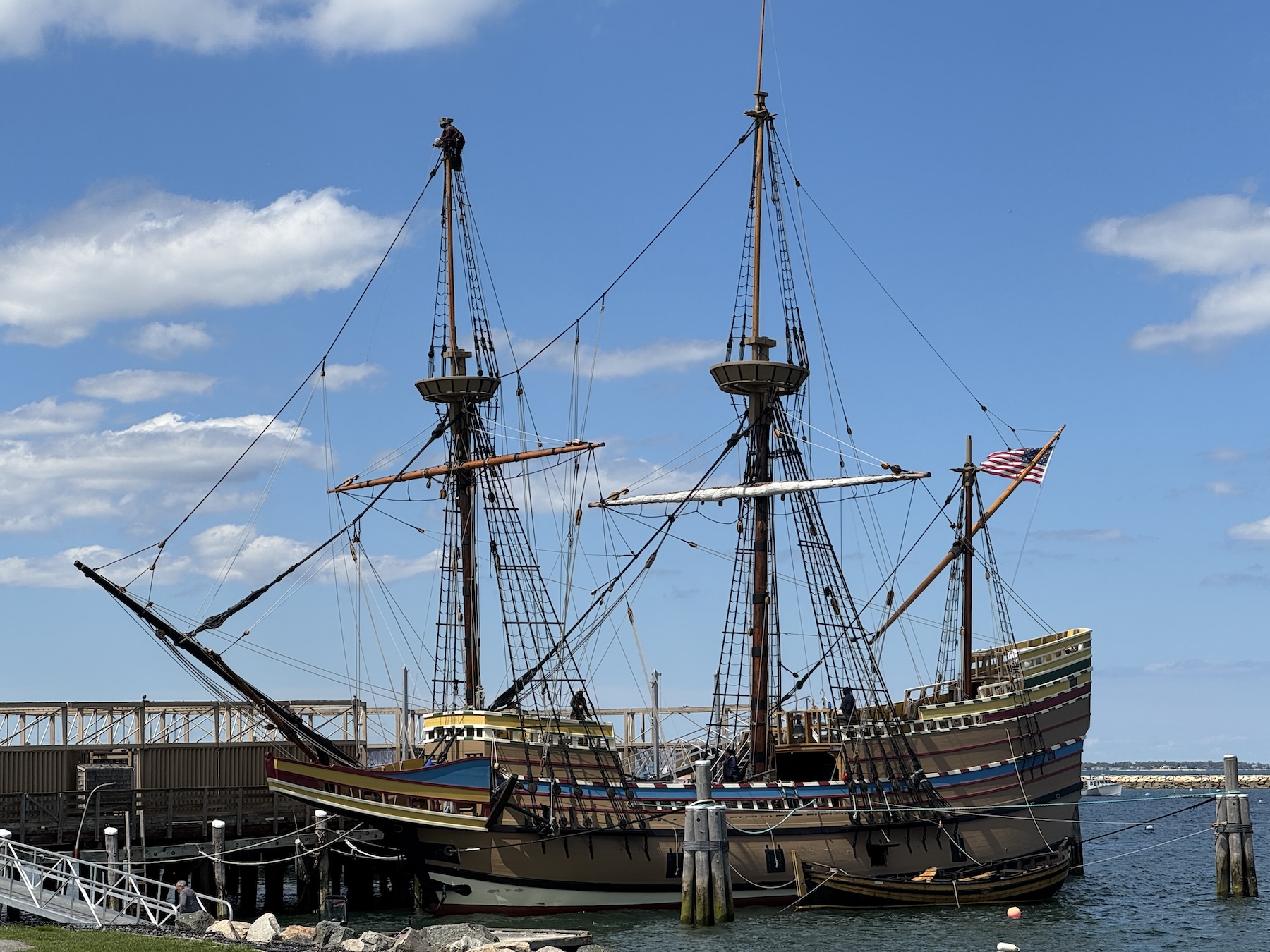
The museum also shows off a recreated 1636 grist mill and Mayflower II, a replica of the ship that brought the first Pilgrims to the New World in 1620.
Nearly 80 years on, deeply staffed with role players, interpreters and volunteers, Plimoth Patuxet is a top-rated open-air museum.
Visiting Plimoth Patuxet
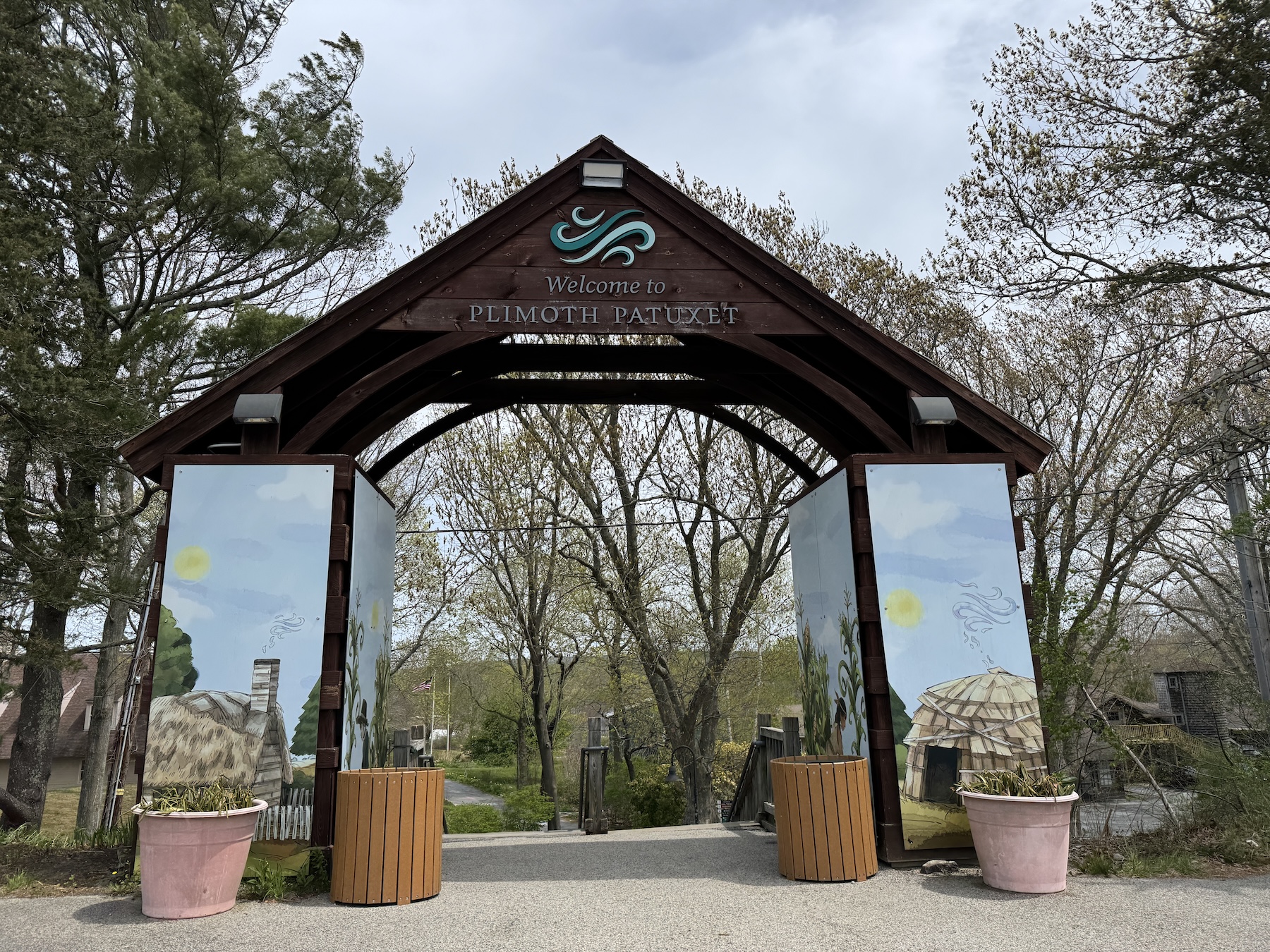
First, about the name: In the 17th century, the Pilgrims used several spellings for the name of their colony. Later generations settled on Plymouth, so museum creators opted for Plimoth in order to distinguish the museum from today’s city. Further, the Pilgrims settled on a former Native Wampanoag site, which was called Patuxet.
The museum components are in three locations, all in Plymouth. The largest site is the 130-acre main campus three miles south of city center, location of the two reconstructions — the English Village and Wampanoag winter home. There also are a visitor center, a craft center and other support buildings on site.
A short film at the visitor center provides background and introduces guests to the museum.
In more detail, the top attractions again are:
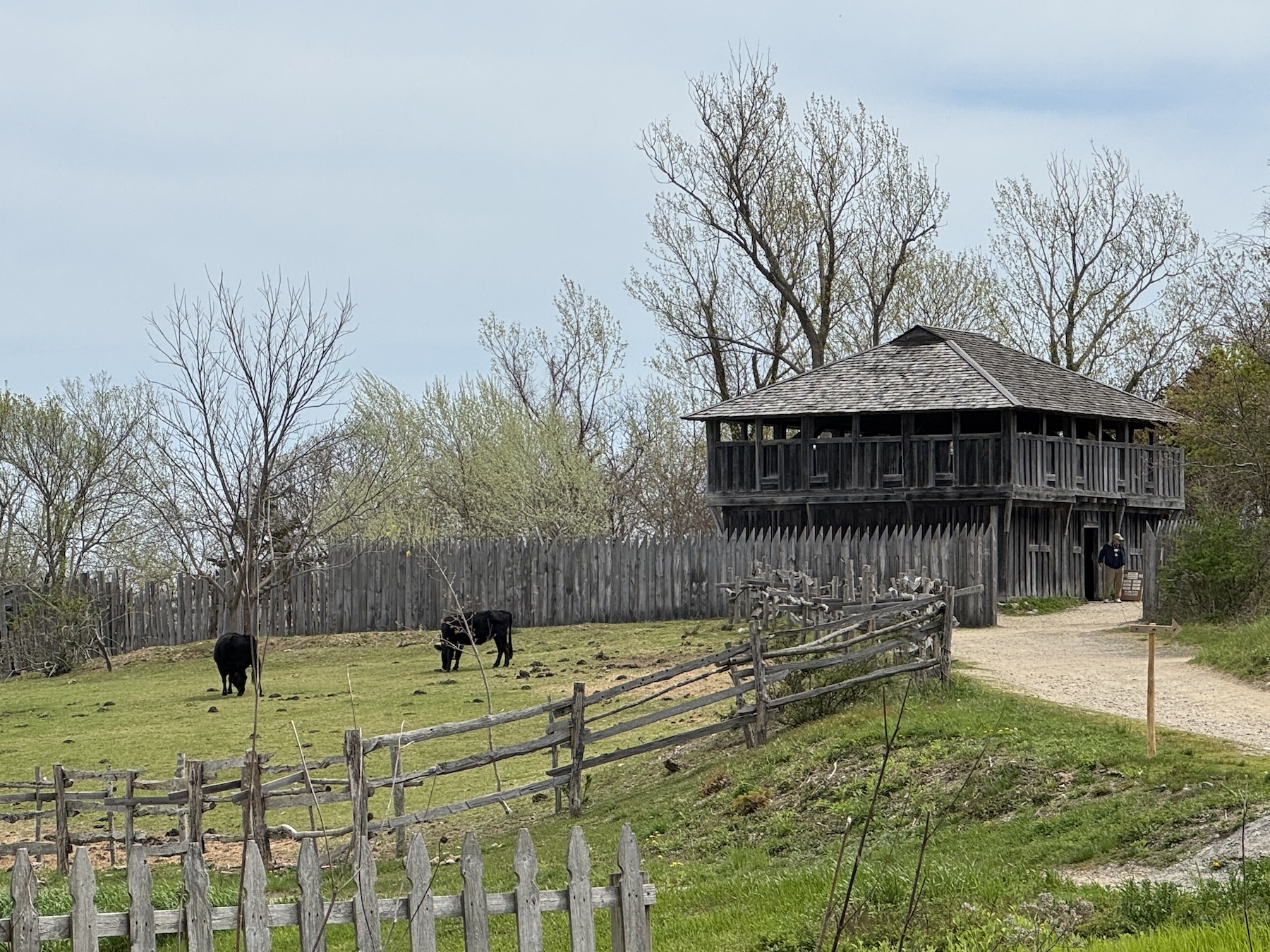
- The 17th Century English Village. The entry point here is a combination fort and meetinghouse, a two-story structure with cannons on the top level where defenders — and tourists — get the best general views of the village. A host is stationed at the fort/meetinghouse to answer questions, make suggestions and oversee hourly introductory presentations.
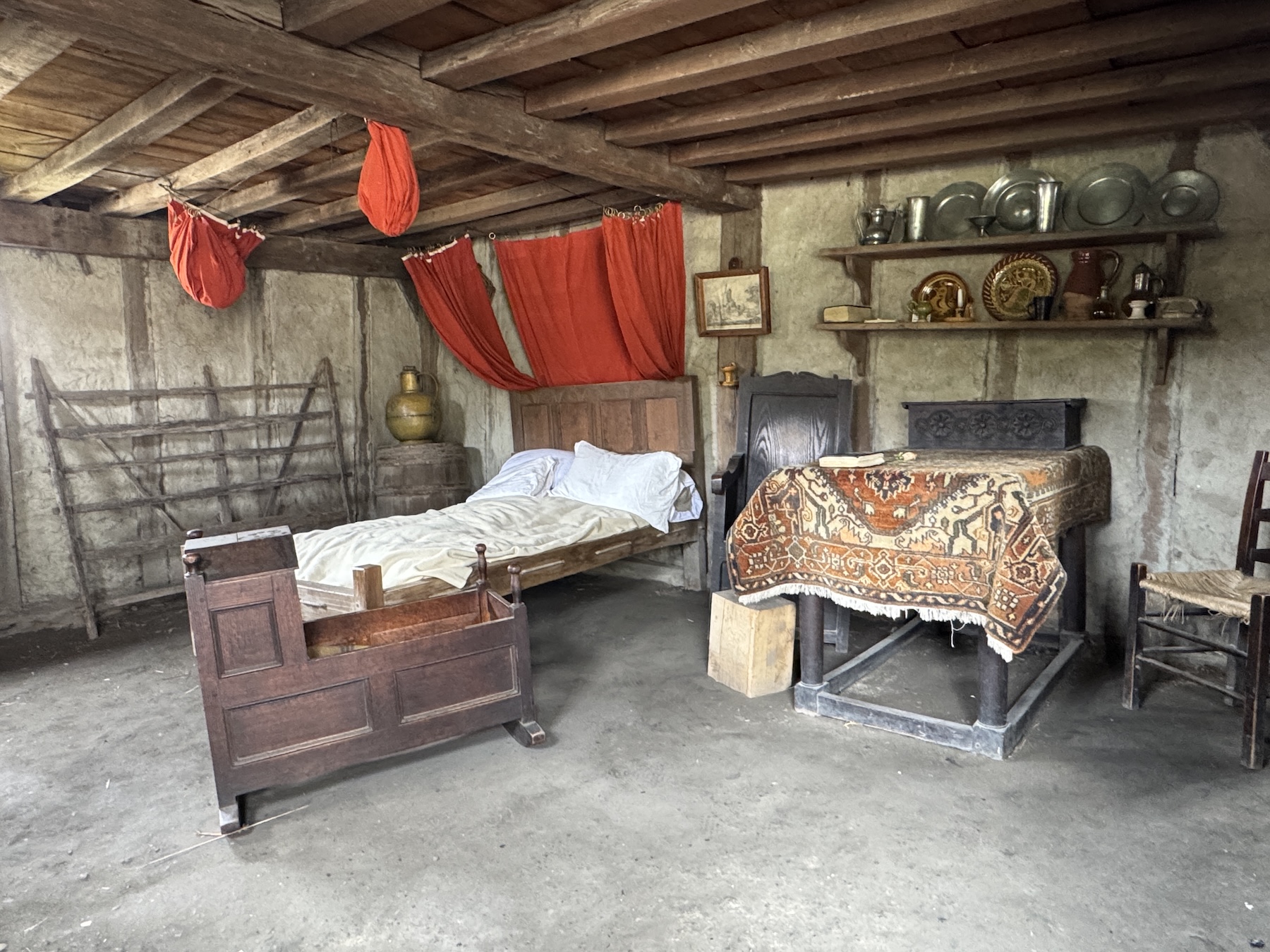
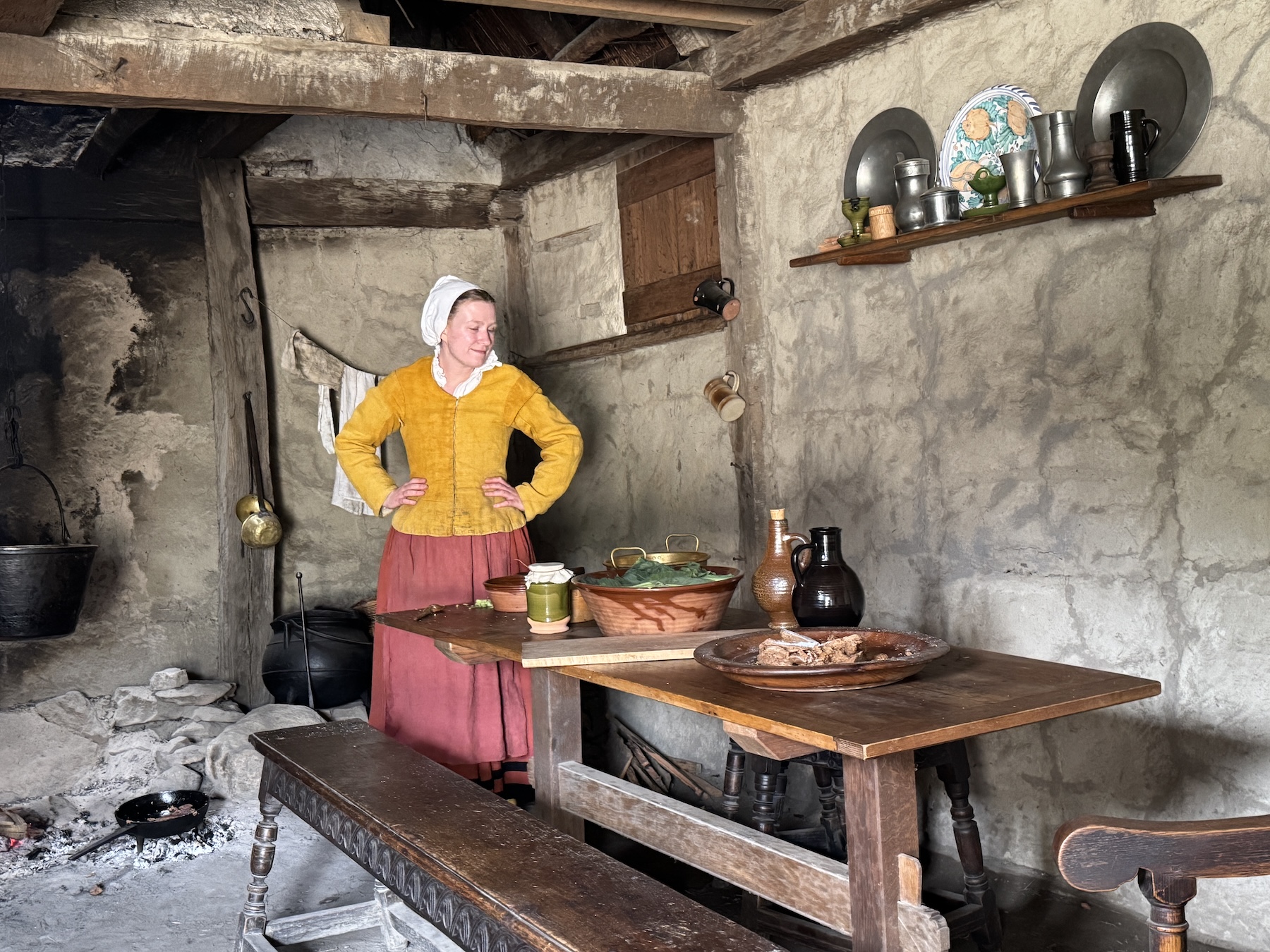
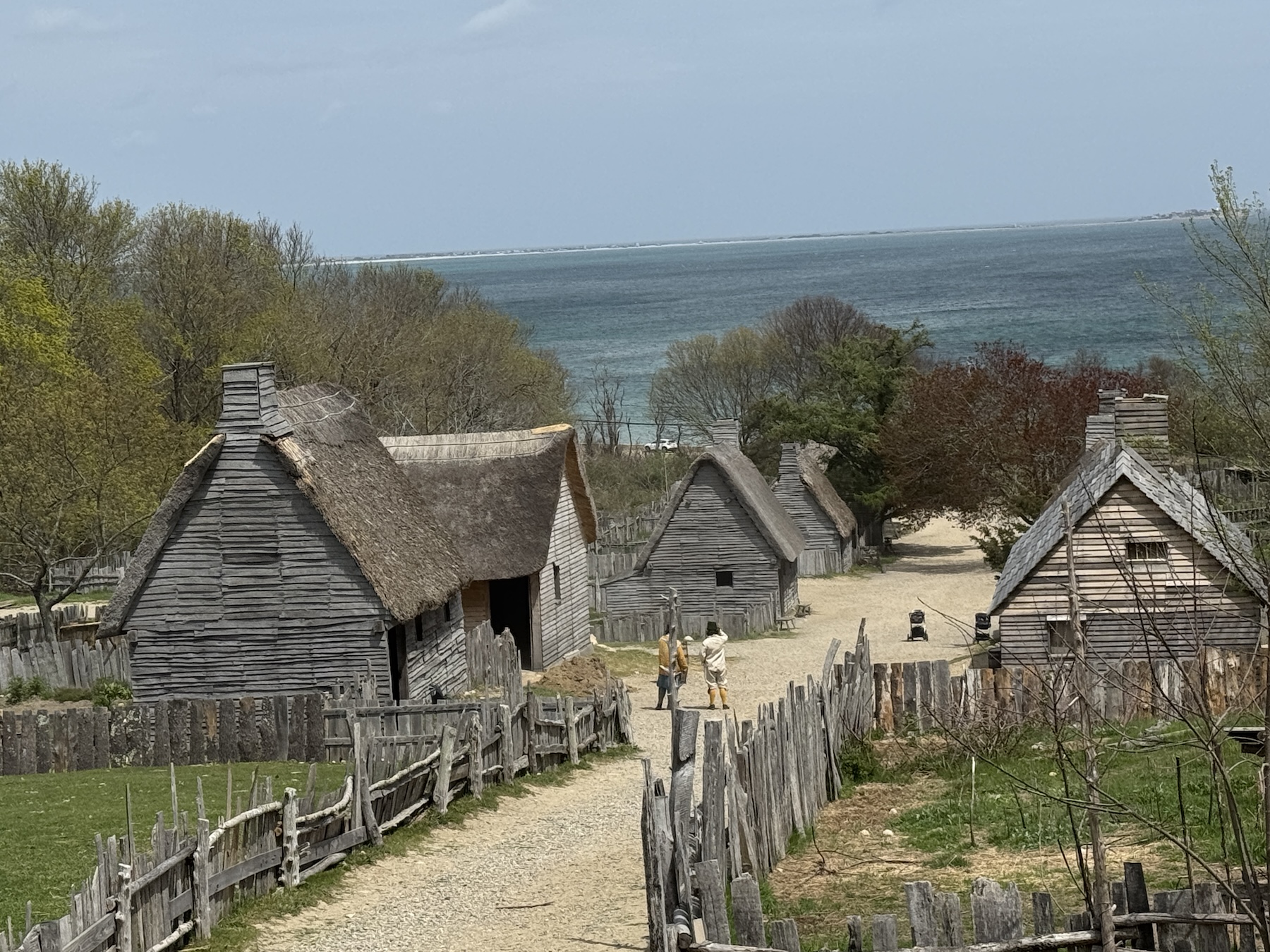
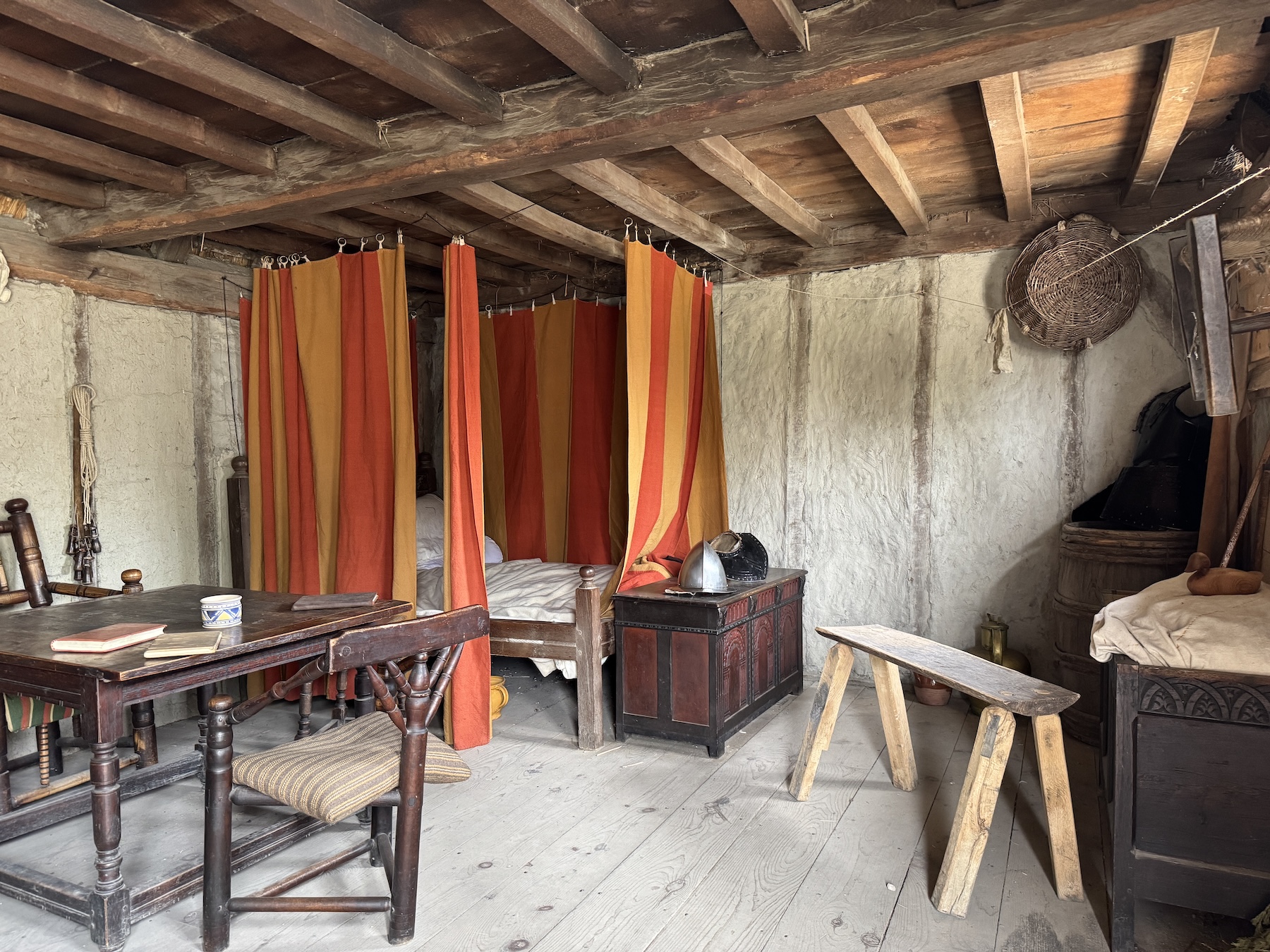
The village itself is 10 houses and a storehouse on either side of a single street, each timber-framed and constructed based on 17th century methods. However, because of wear and tear, two houses (Alden and Winslow) were rebuilt this year, but with invisible 21st century underpinnings to provide more staying power. The Winslow House will be completed by end of season. The rebuilt Alden House and all others are furnished in a style appropriate to the Pilgrim era. Most have low wooden ceilings with lofts above.
Visitors can walk into any house and, in some, will find costumed role players, known here as public history performers. Each is playing the part of a specific Pilgrim and always interacting with visitors as if it really were 1627.
The houses have gardens, planted with foods reflecting life 400 years ago; a few examples of heritage livestock breeds can be seen, too.
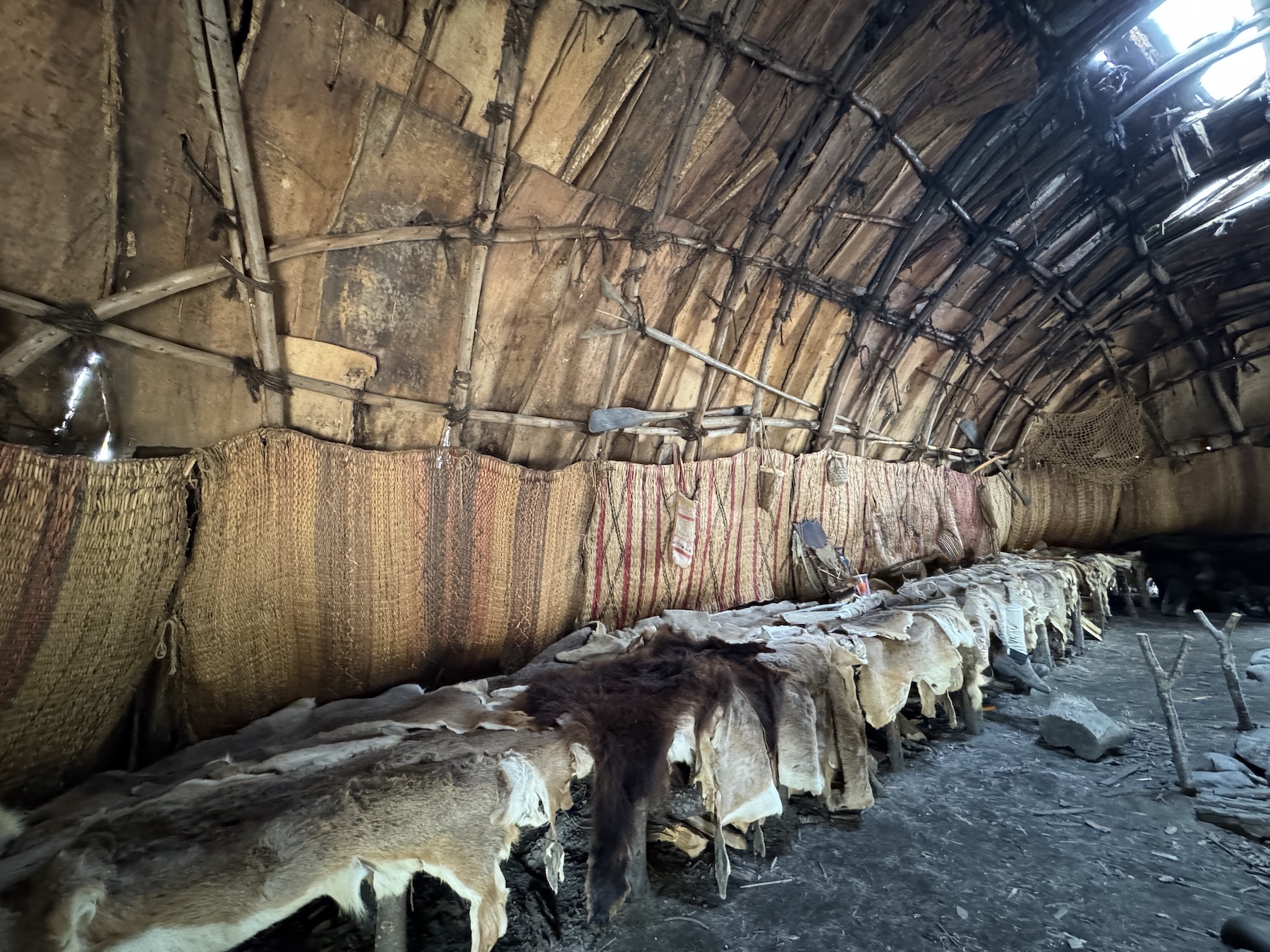
- The Historic Patuxet Homesite. This site illustrates a traditional winter home for the Native Americans who lived in the Plymouth area when the Pilgrims arrived. Visitors see the wetu, a large enclosed living space, plus outdoor spaces for gardening and cooking, and for making dugouts and other material goods.
Native Americans — most of them Wampanoag — welcome visitors here. Although wearing traditional clothing, they are not re-enactors — their title is Indigenous public history educator. They help visitors better understand what they are seeing.
The wetu, for example, is a dome-shaped structure made with young saplings, covered in bark, then insulated with mats of woven reeds. The walls are lined with sleeping platforms covered with stacks of animal furs. At this building’s heart are three fire pits, but there could be more, depending on the building’s size and the number of families in residence.
As to the dugout, or mishoon, it is made from a single tree trunk with fire as the main tool. The Wampanoag used fire to bring a trunk down, then used fire, with scrapers, to gut the trunk. The largest mishoon could accommodate 40 rowers.
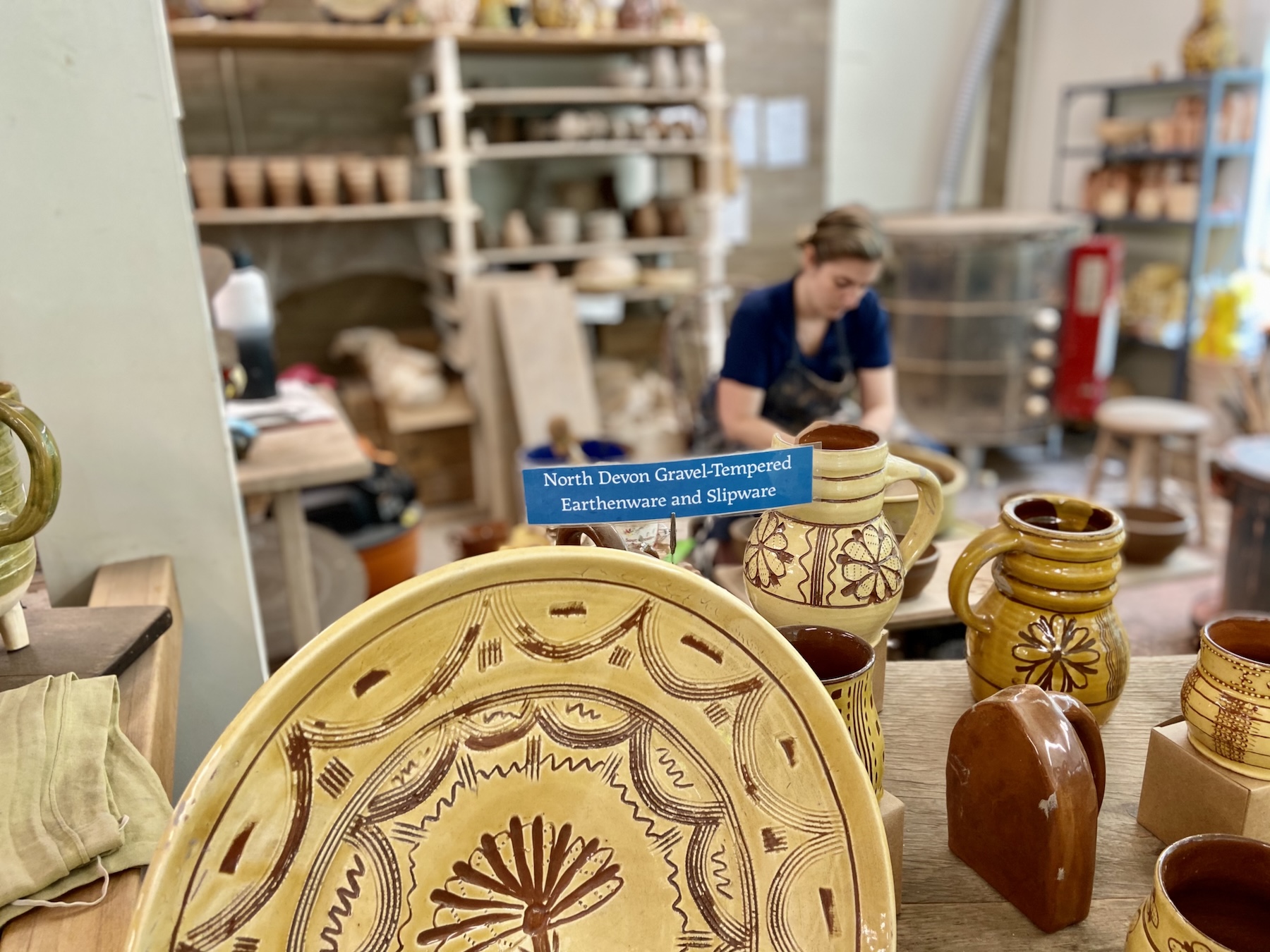
The visitor center — formally, the Henry Hornblower II Visitor Center named for the Plimoth Patuxet founder — also houses the Plentiful Cafe. Its menu includes a lot of turkey plus choices like succotash inspired by traditional Native American foods. At the separate craft center, visitors may see artisans recreating 17th century pottery and can shop for pottery, textiles and other mementos.
In historic Plymouth
The final two elements of Plimoth Patuxet are in the heart of historic Plymouth. Interpreters are on hand at each to offer explanations and answer questions.
- Mayflower II, now on the National Register of Historic Places. A full-scale replica built in England, the 106-foot-long ship provides a graphic demonstration of what the 1620 Mayflower’s 102 passengers and crew experienced. On the main deck, see the commander’s cabin, crew housing and other points of interest, but it is the tween deck where all passengers, their animals and selected possessions were jammed together for the voyage. The cargo hold, accommodating other personal possessions plus supplies for the crossing, is visible from the tween deck. The ship’s jaunty appearance, with a bit of color on the bow and stern, belies the hardships.
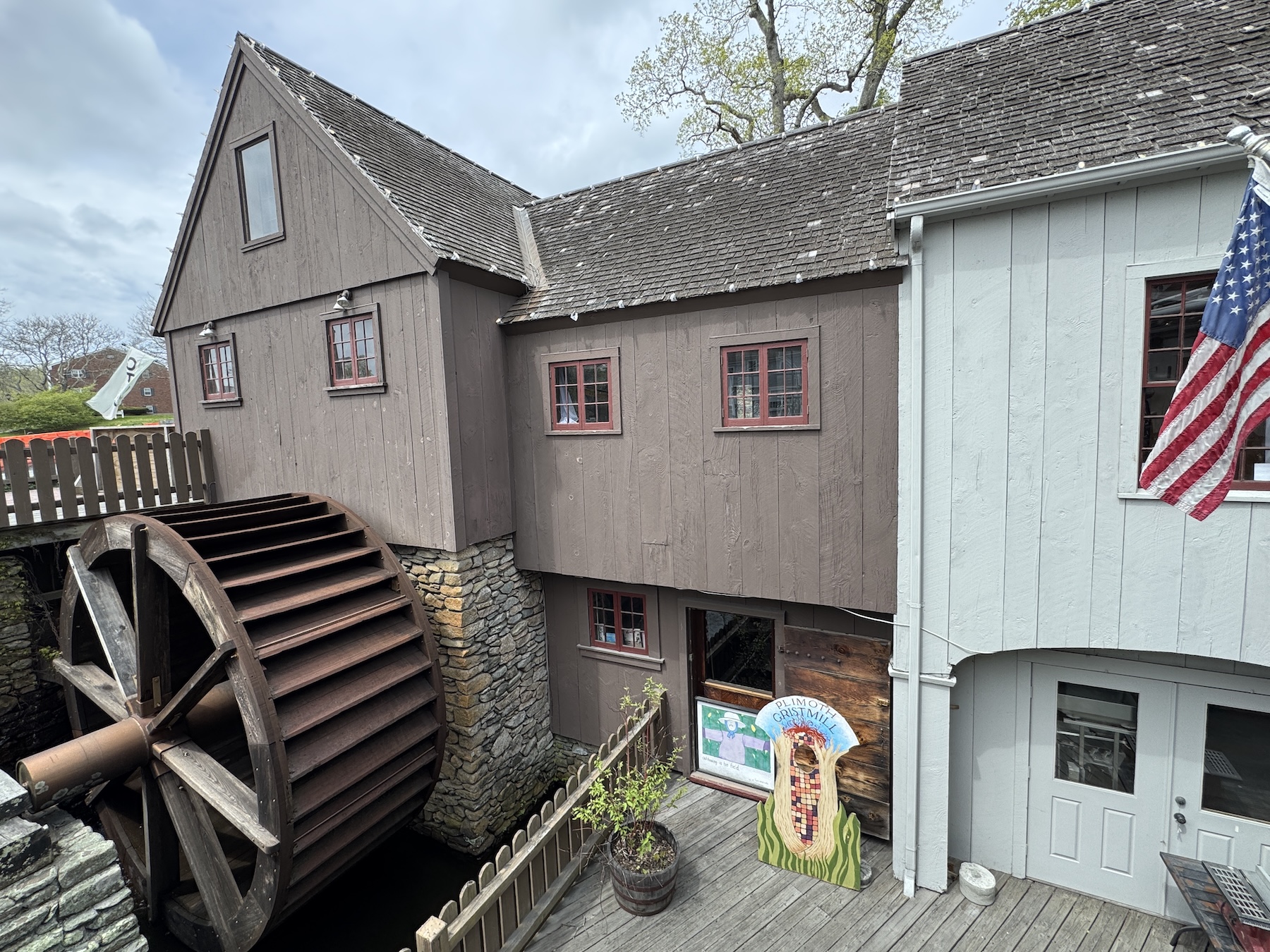
- Plimoth Grist Mill. This is a reconstructed 1636 mill, rebuilt where it originally stood on Plymouth’s Town Brook. It’s also a working mill, and the setup allows visitors to get a good look at the working parts, such as 200-year-old millstones — and buy freshly ground grains.
Activities
Plimoth Patuxet is well known for its meal events, which occur in November and are billed as harvest feasts and Thanksgiving events — and for which one must make reservations. Cynthia Rubin wrote about the well-known Thanksgiving feasts in Side of Culture’s October 2021 issue. As a not-for-profit educational institution, the museum offers programs for educators and students, including teaching toolkits, homework help, field trip options and educational sessions delivered online.
The Plymouth Colony significantly preceded the Declaration of Independence, but, in a nod to that document’s 250th anniversary this year, the museum has scheduled talks at the main campus focused on Plymouth in the Revolutionary War era. There are two talks, set for 11:15 a.m. and 3:15 p.m. Tuesday through Saturday offered through this season; one talk gets into stories of Mayflower descendants who fought on opposite sides. Find more details at the visitor center activity board.
The museum is open daily from mid-March through the Sunday after Thanksgiving. Mayflower II is generally available throughout the season, but will be absent this July 11-16, to participate in Sail Boston.
Side dish
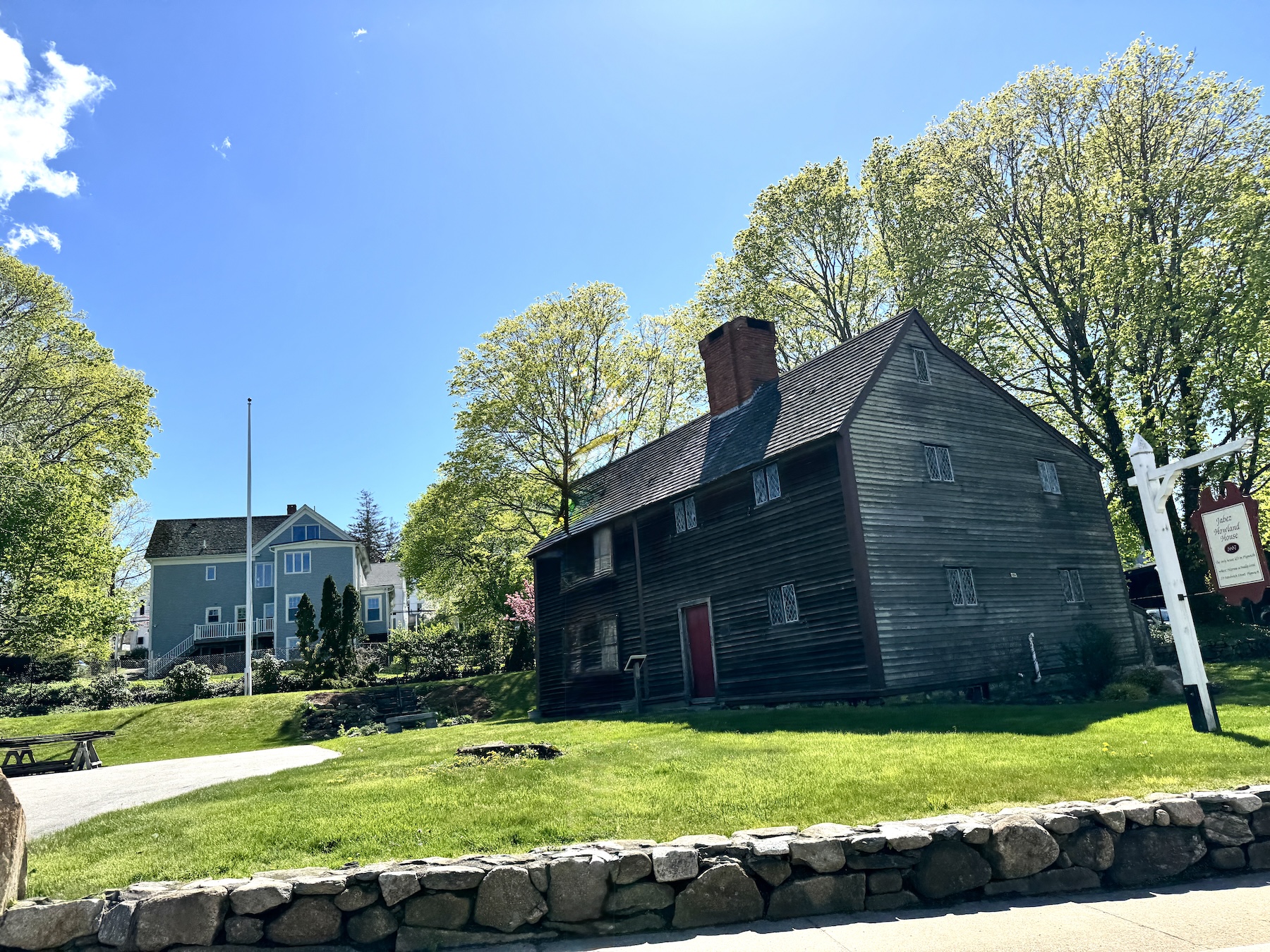
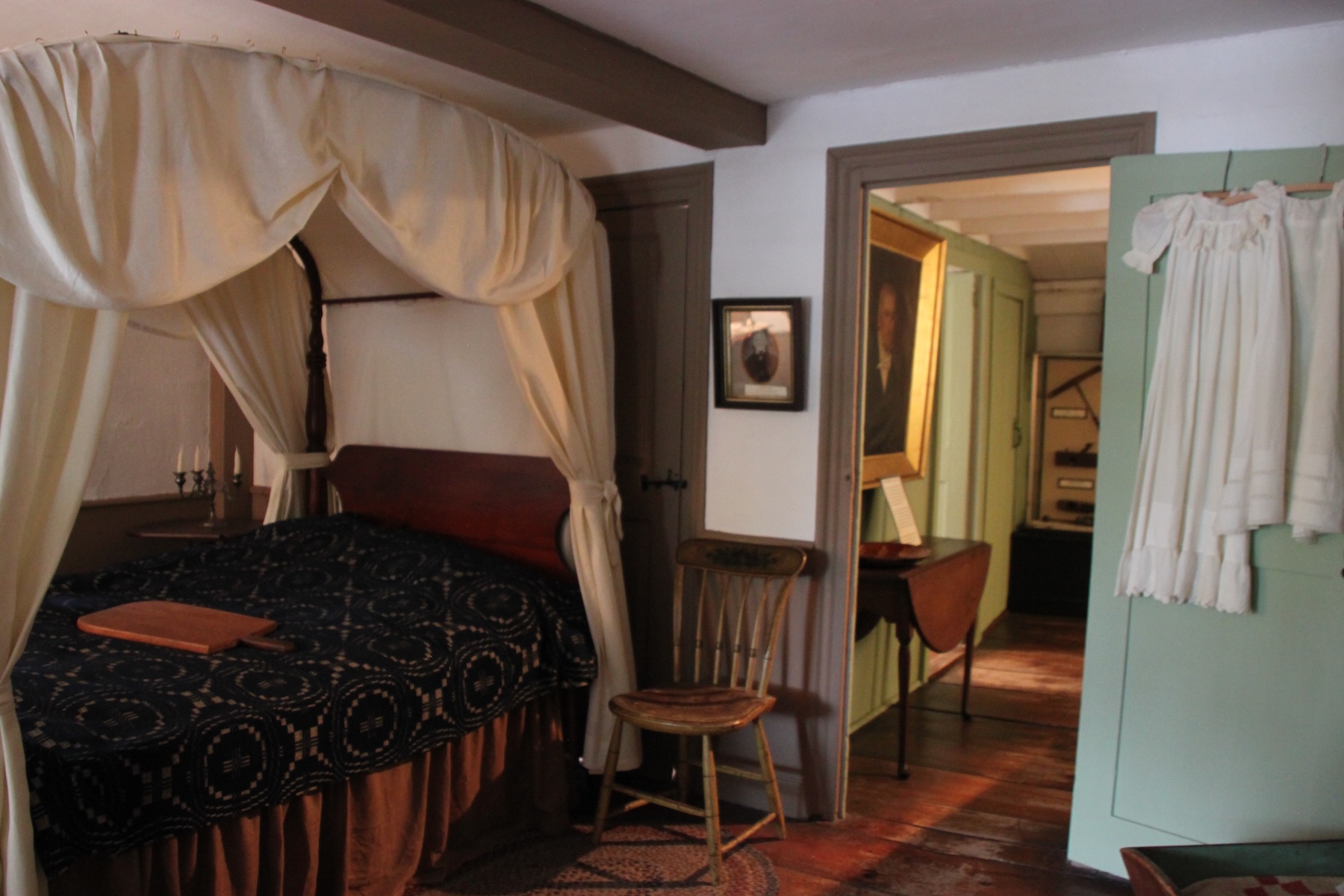
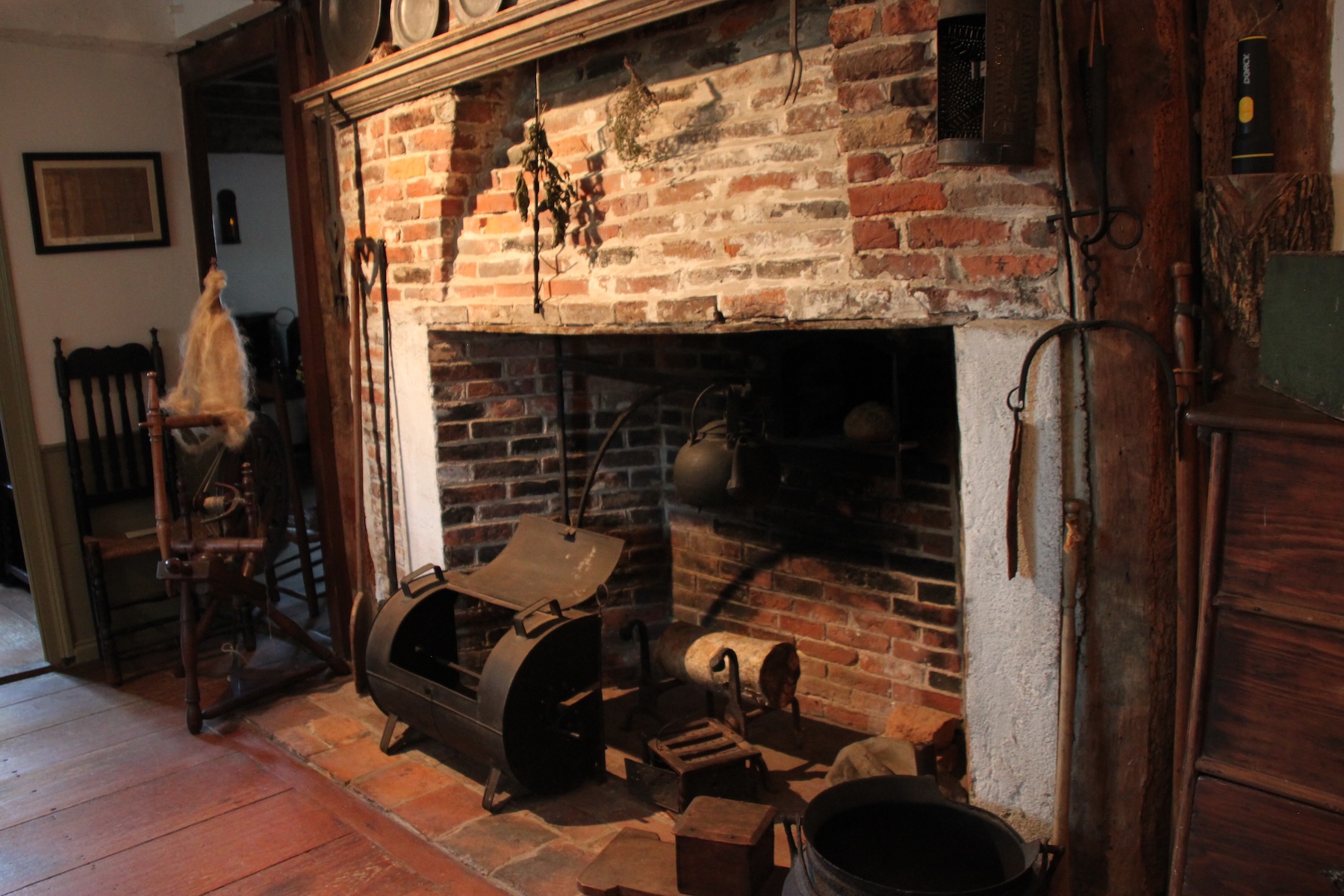
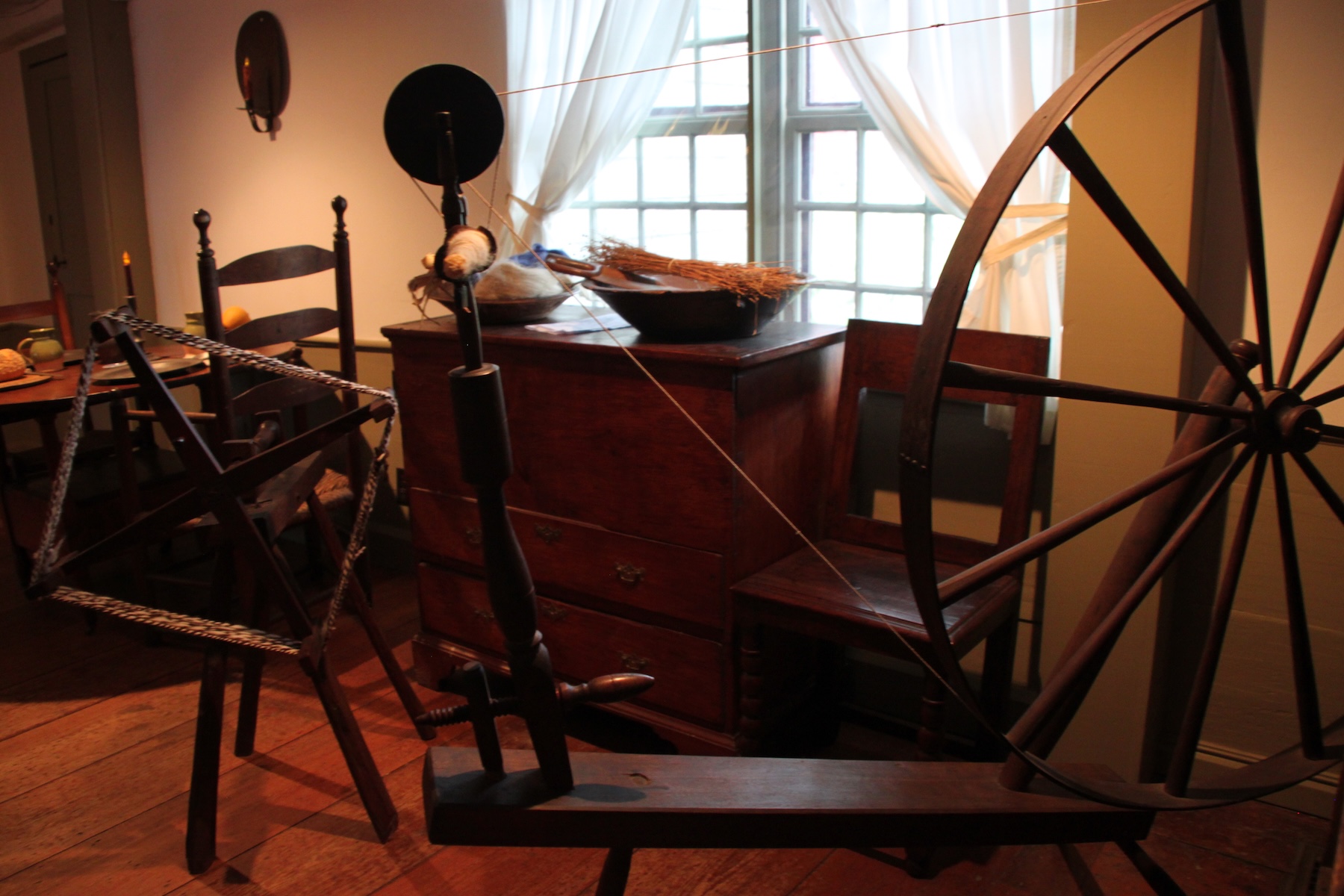
The Jabez Howland House, built in 1667, is the only surviving Plymouth home where a Mayflower passenger lived. In fact, two did — John and Elizabeth Howland. Jabez was their son. At the two-story home, open mid-June through October, costumed interpreters provide information-packed tours. The house is on the National Register of Historic Places.
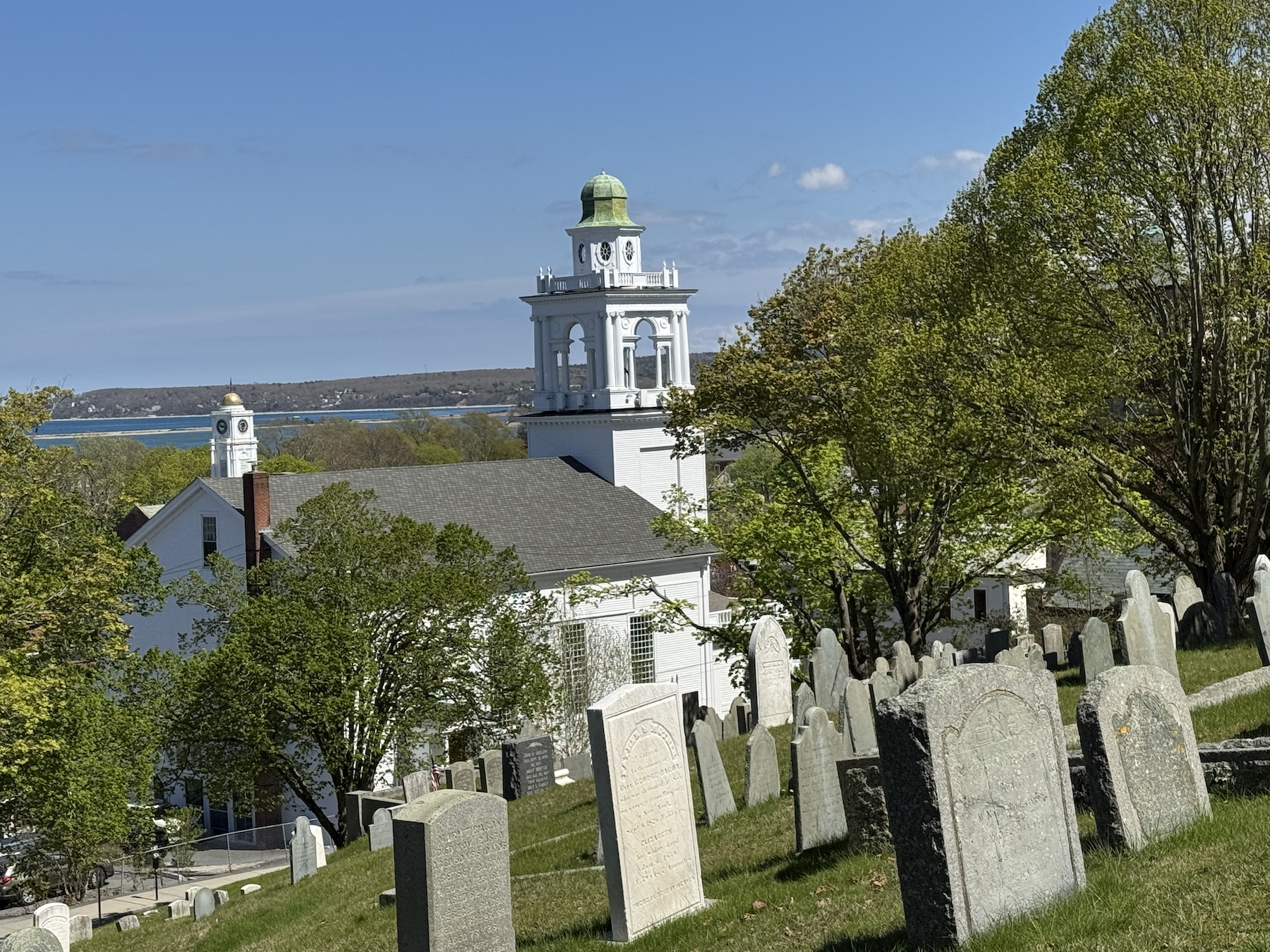
The same designation applies to Burial Hill Cemetery, where a few Mayflower passengers are buried, most notably Gov. William Bradford. Other family names on stones clearly indicate Mayflower descendants. The cemetery sits on a hill, with stones arrayed in somewhat helter-skelter fashion amid trees, and with nice views.
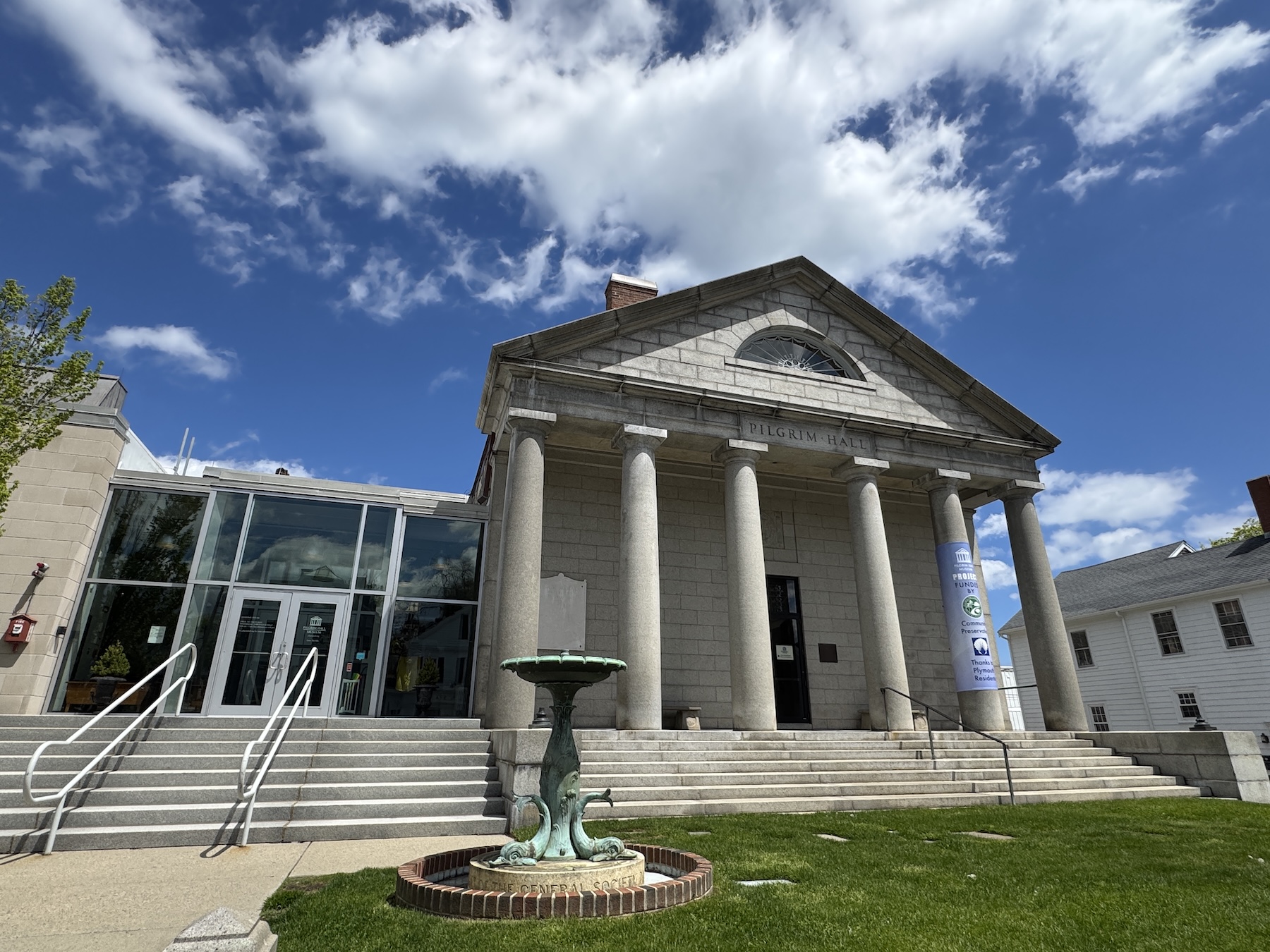
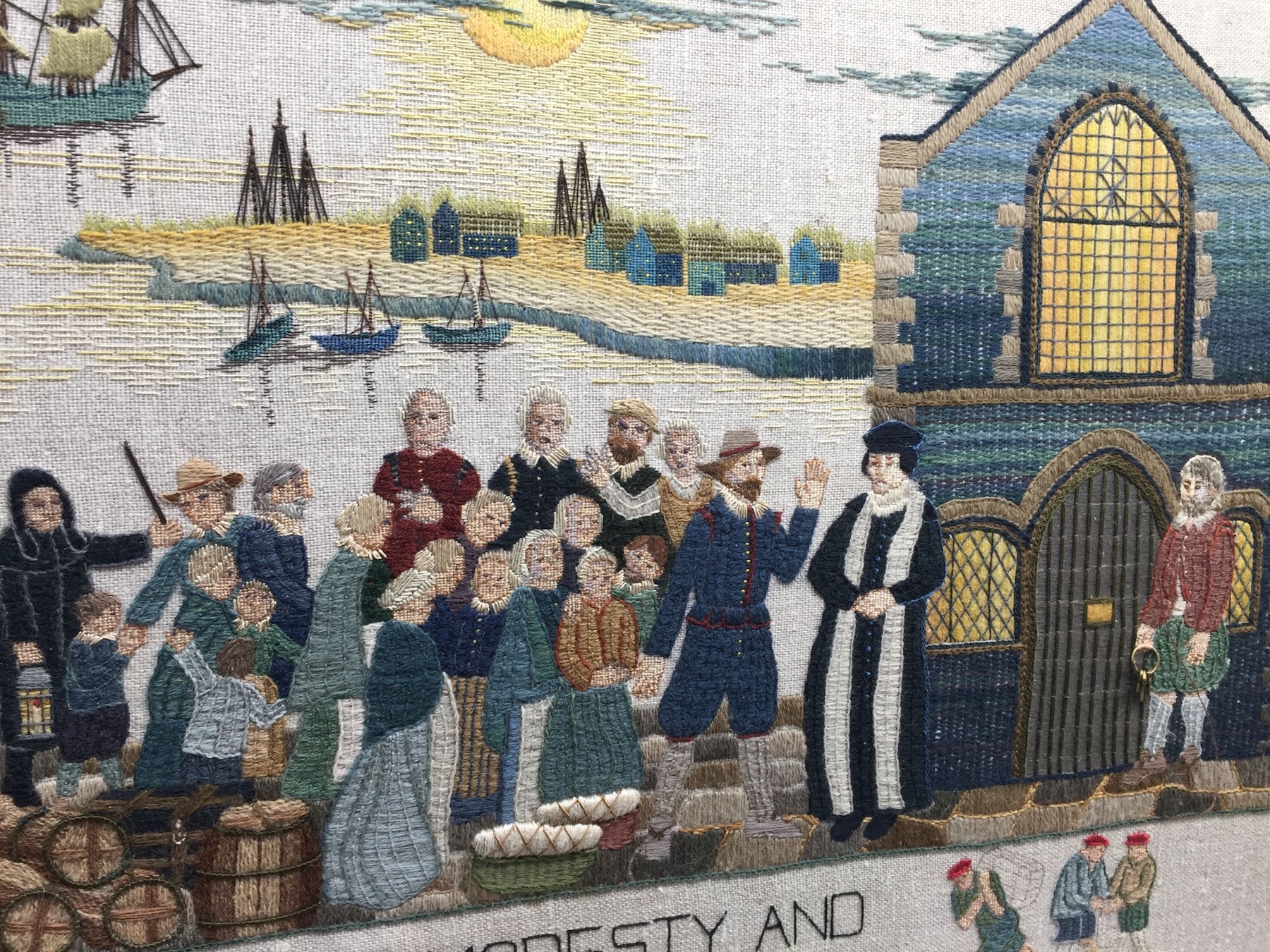
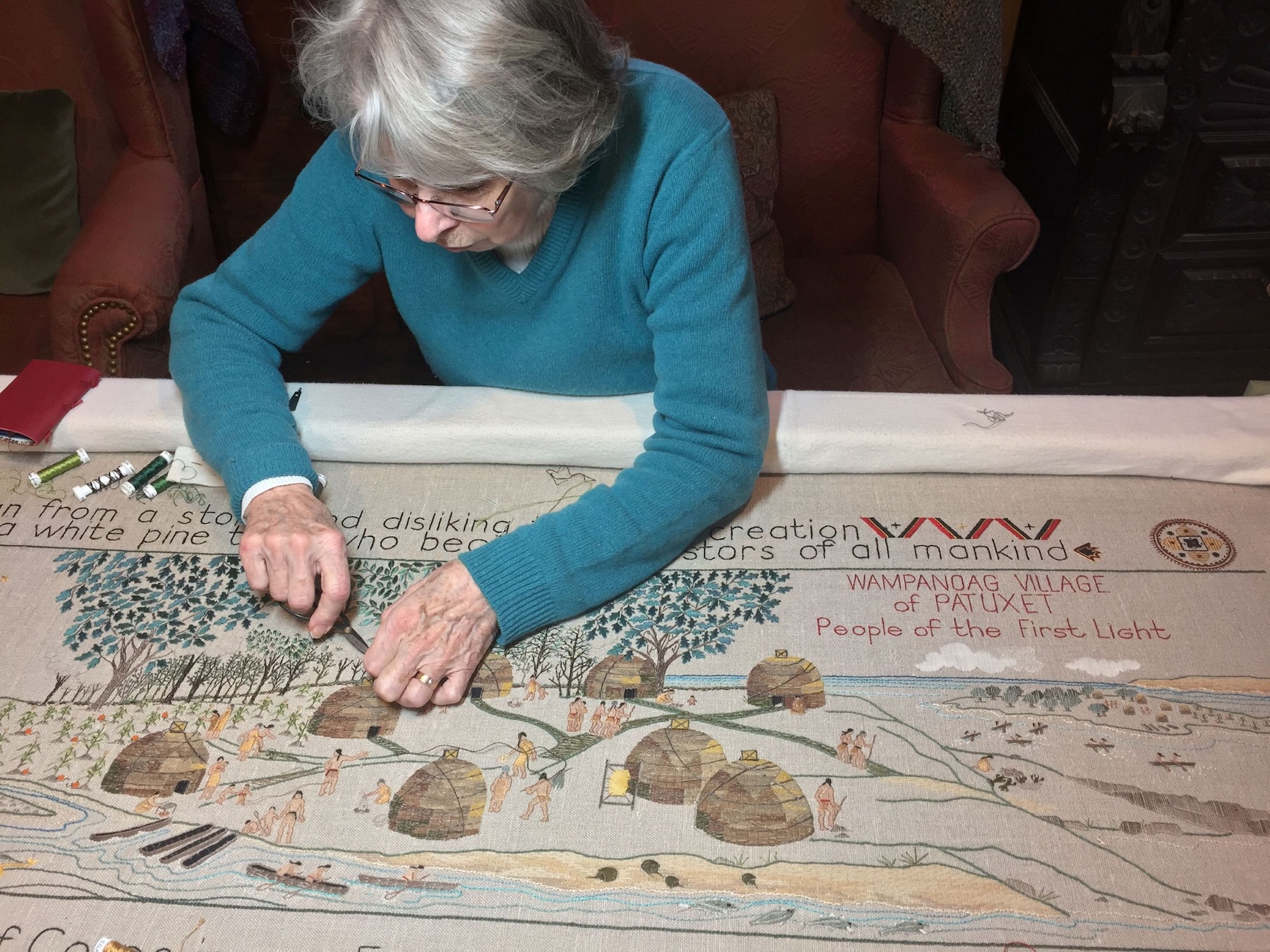
Pilgrim Hill Museum, opened in 1824, displays a collection of artifacts connected to the lives of Pilgrims and the Wampanoag — and it is now displaying two panels of an unfinished tapestry. Formally entitled ©“Pilgrim Hall Museum’s The Plymouth Tapestry,” it is the work of artist Elizabeth Creeden and several volunteer embroiderers. Upon completion in 2028, it will have 20 panels illustrating the stories of the Pilgrims and Wampanoag, and their earliest interactions.
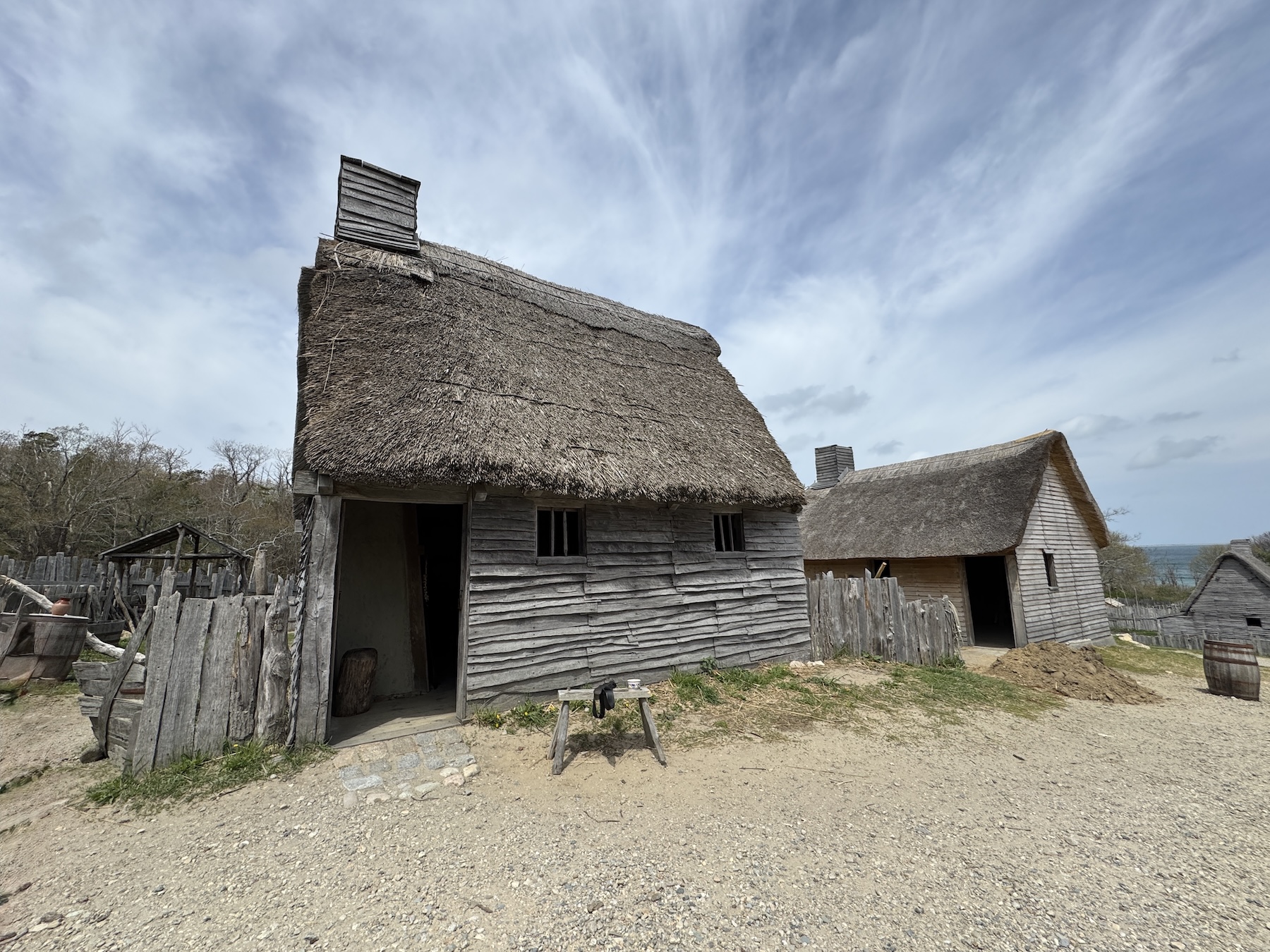
Top Photo: Overview of the street in the reconstructed 17th Century English Village at the Plimoth Patuxet Museums. Photo taken from the second floor of the village’s fort/meetinghouse.
For more on Pilgrims, the Wampanoag and Thanksgiving traditions, see https://sideofculture.com/2021/10/a-taste-of-history-plimoth-patuxet-museums-in-plymouth-massachusetts/
By Nadine Godwin who is a New York-based freelance travel writer. She is the former editor in chief and current contributor to the trade paper, Travel Weekly; editorial director of BestTripChoices.com, and author of “Travia: The Ultimate Book of Travel Trivia.” All of the photos are also by Nadine Godwin unless otherwise indicated.