
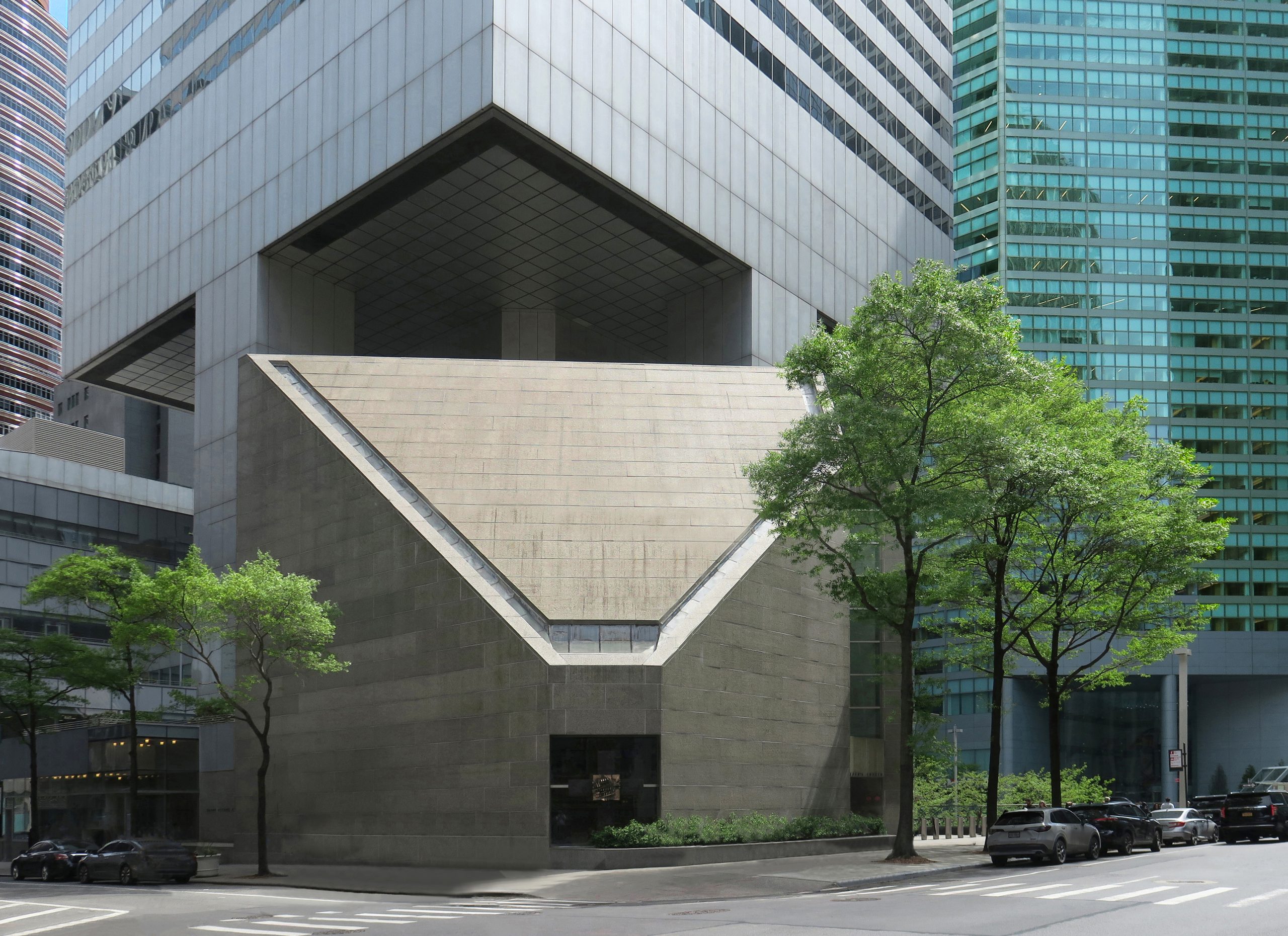
Midtown Manhattan is undoubtably one of the main global business centers, with the de rigueur massive skyline of such centers and nonstop crowded streets. Unbound ambition and drive fill the air. However tucked amidst all the soaring high rises of financial power sits a peaceful refuge that combines art, design and spirituality to offer a respite to the city’s insatiable hustle and bustle: the Saint Peter’s Church.
Built in the mid-70s and situated under one of New York City’s most iconic buildings, the Citicorp Center, the historic church occupies exactly same site that it had in the past, thanks to an agreement with that financial institution described once as “ecumenically joining God and mammon to the benefit of both.” The church building is by architects Hugh Stubbins and Easley Hamner, who also conceived the tower, and follows the tower’s bold, simple geometry, but brought to a pedestrian scale, which makes it more inviting than monumental statement.
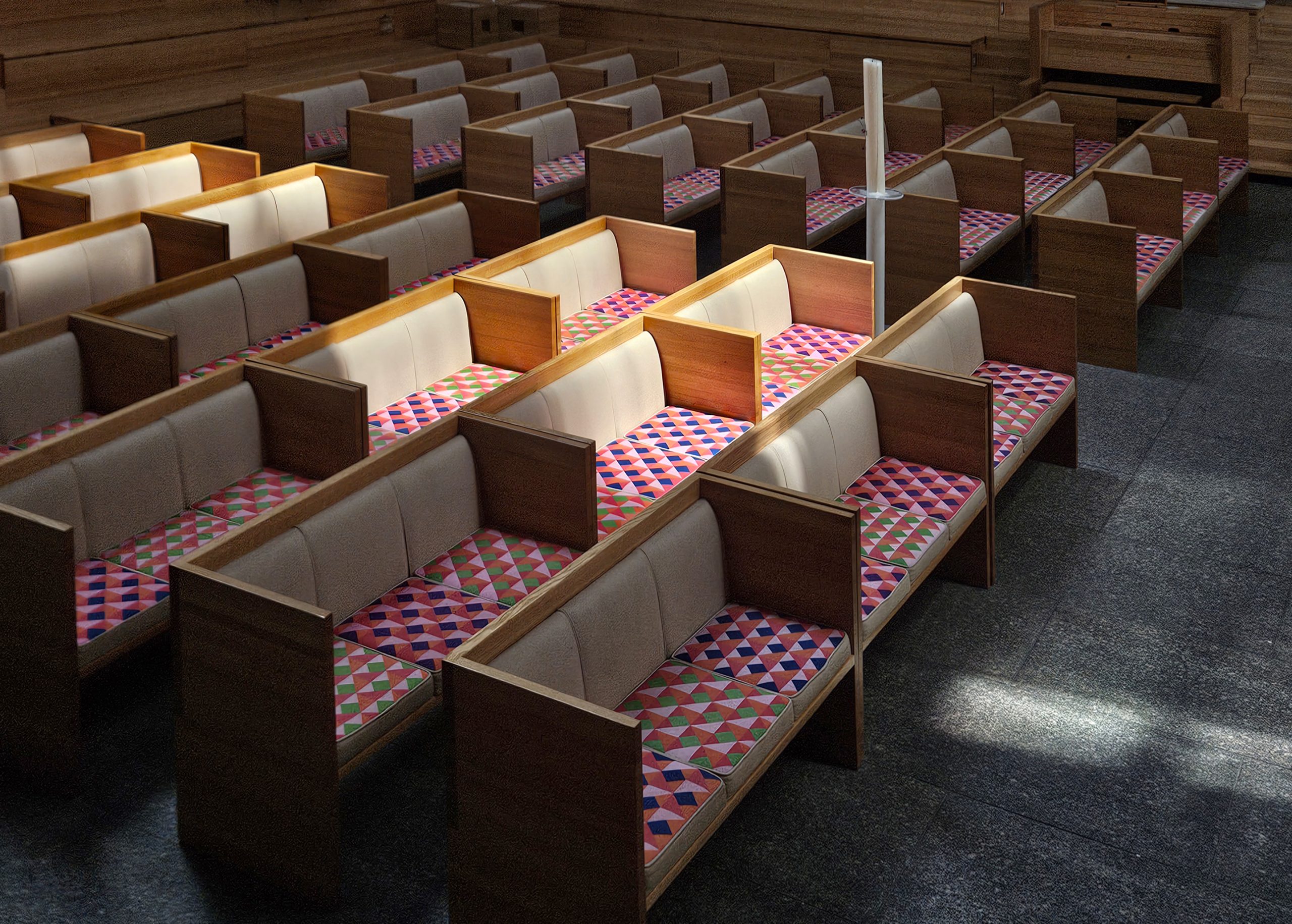
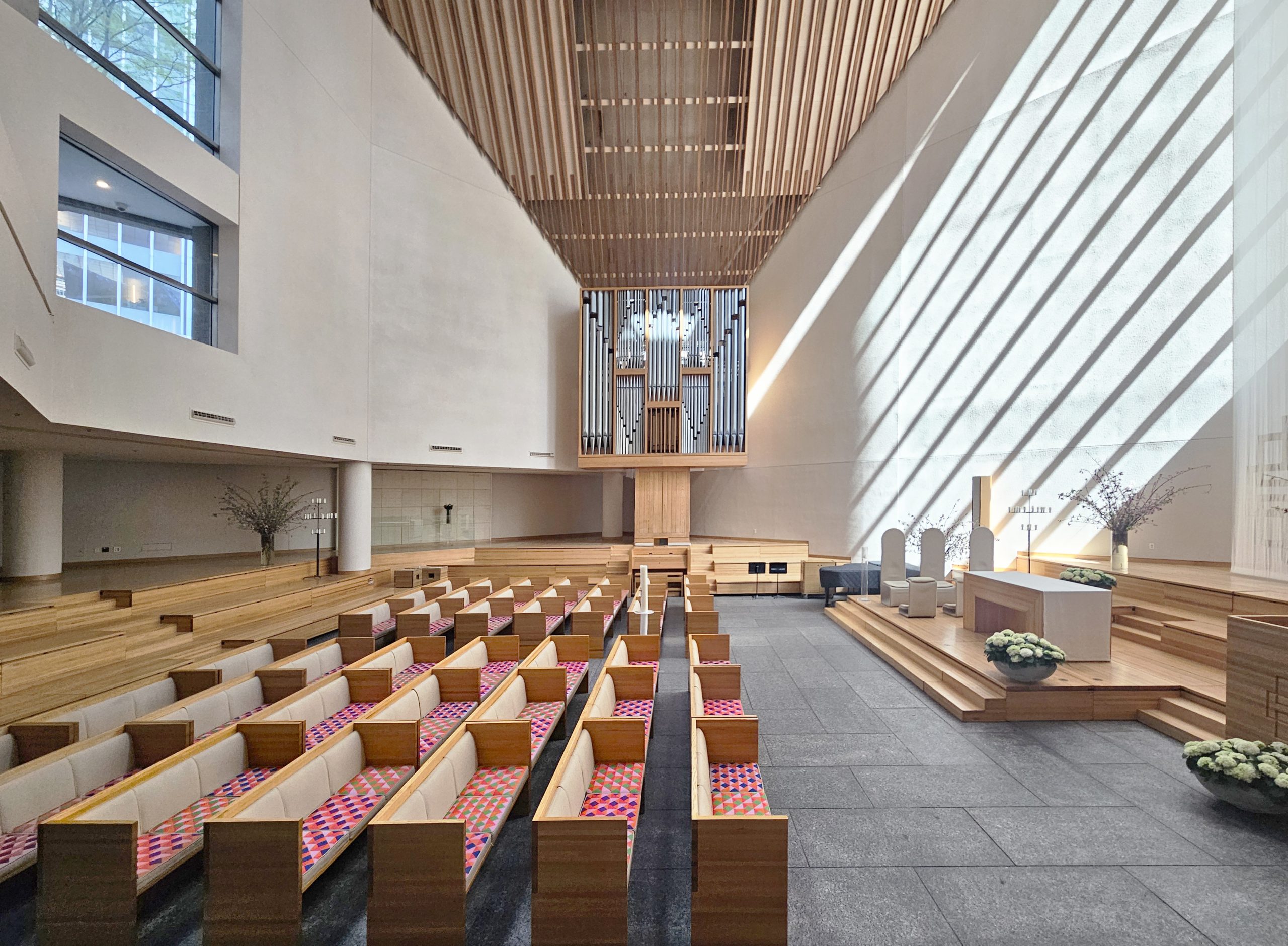
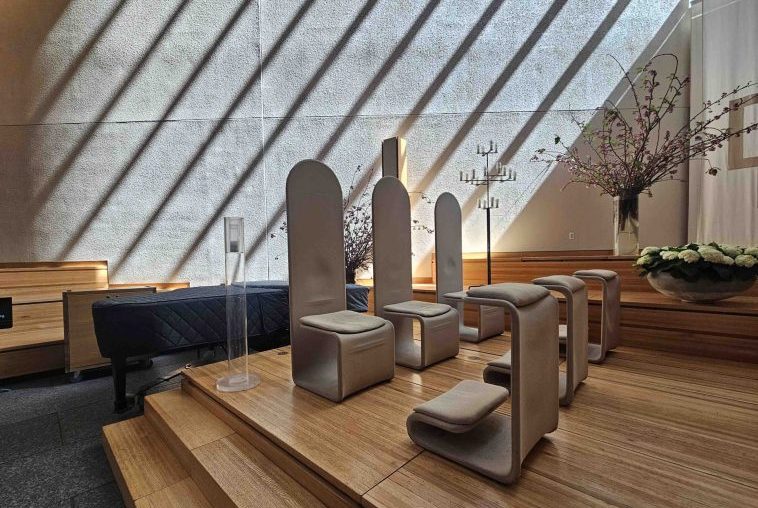
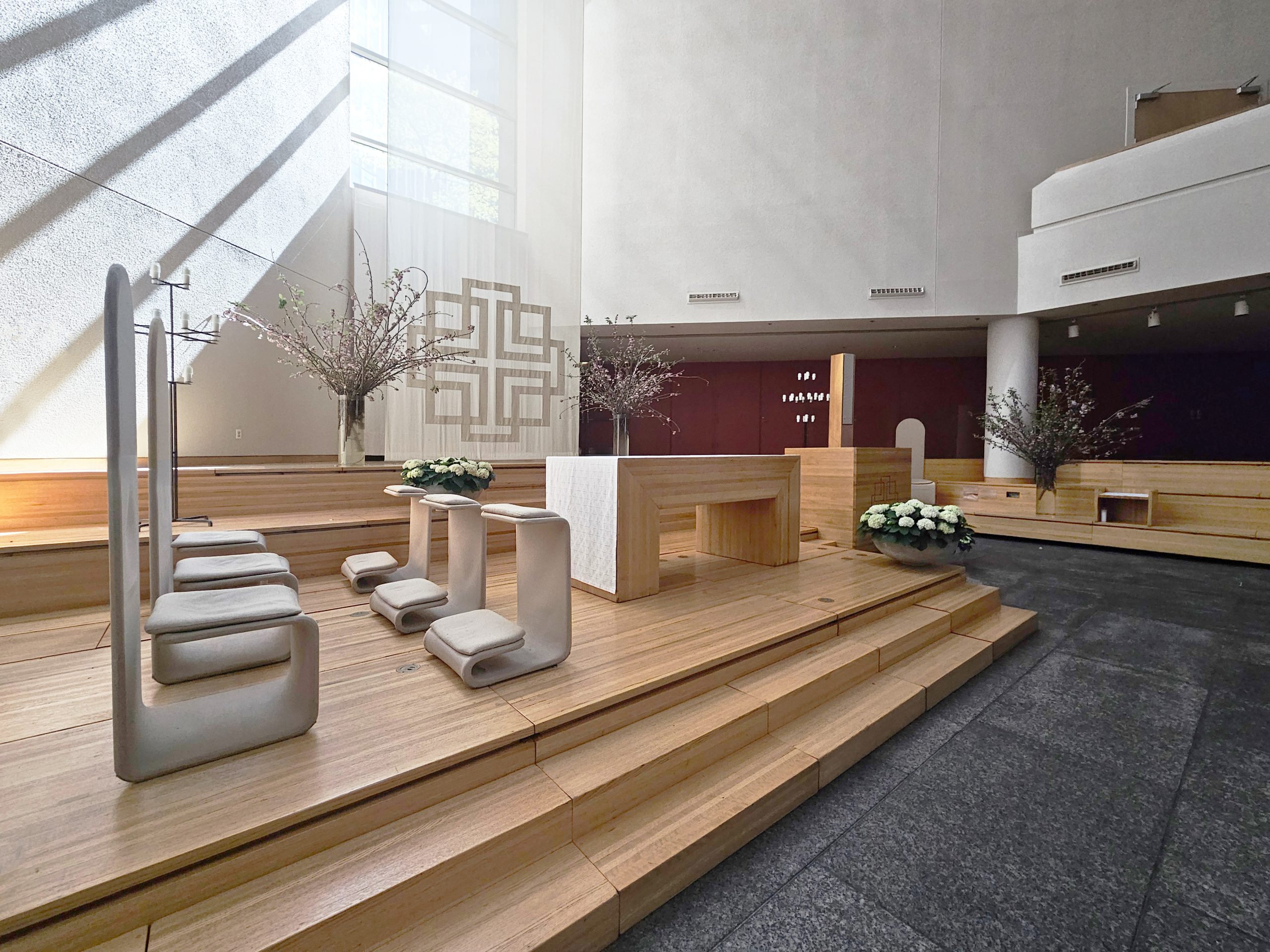
To keep the church interiors in line with this modern aesthetic, the designers Lella and Massimo Vignelli, were selected. Known for their sophisticated yet very pragmatic design sense, the Vignellis were a perfect choice to create the coherent environment desired by the church to express its openness to the times. The late Italian duo proceeded on their task according to the “total design” philosophy, designing everything from the interiors to the baptismal basin, the sterling silver liturgical objects, altar, to signage, seating and even the organ. For the pews, the Vignellis adapted the scale and color palette of their famous Saratoga sofa, and added to it an intricate, colorful geometric textile meant to emulate the dramatic color effect of traditional stained glass commonly found in churches. The Vignellis goal was that the space be flexible enough in its function and as neutral as possible so that it would serve the many functions and variety of public that Saint Peters does. Once completed, the project was such an expression of the Vignellis design vision that they would go on to consider this their most important project.
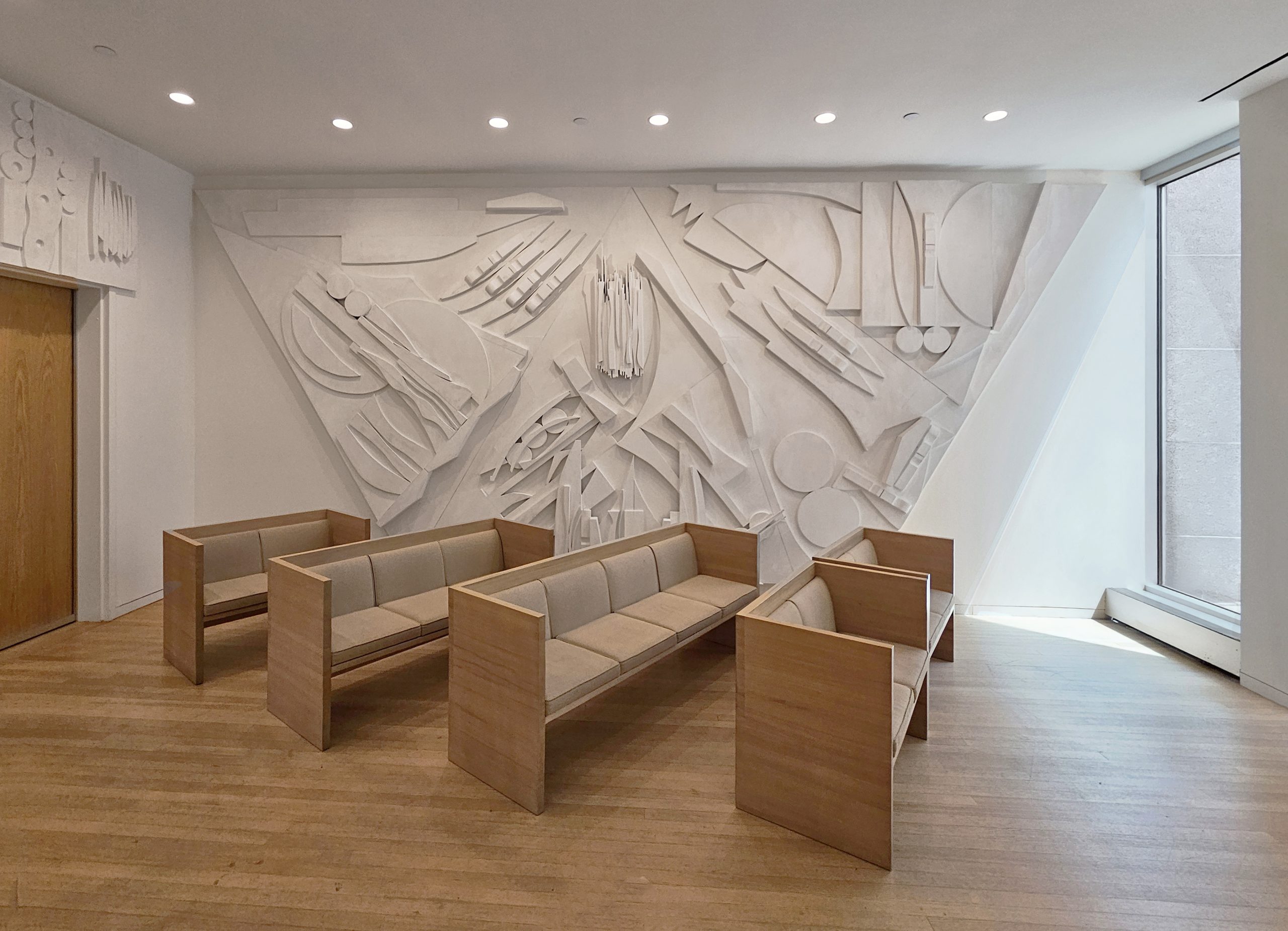
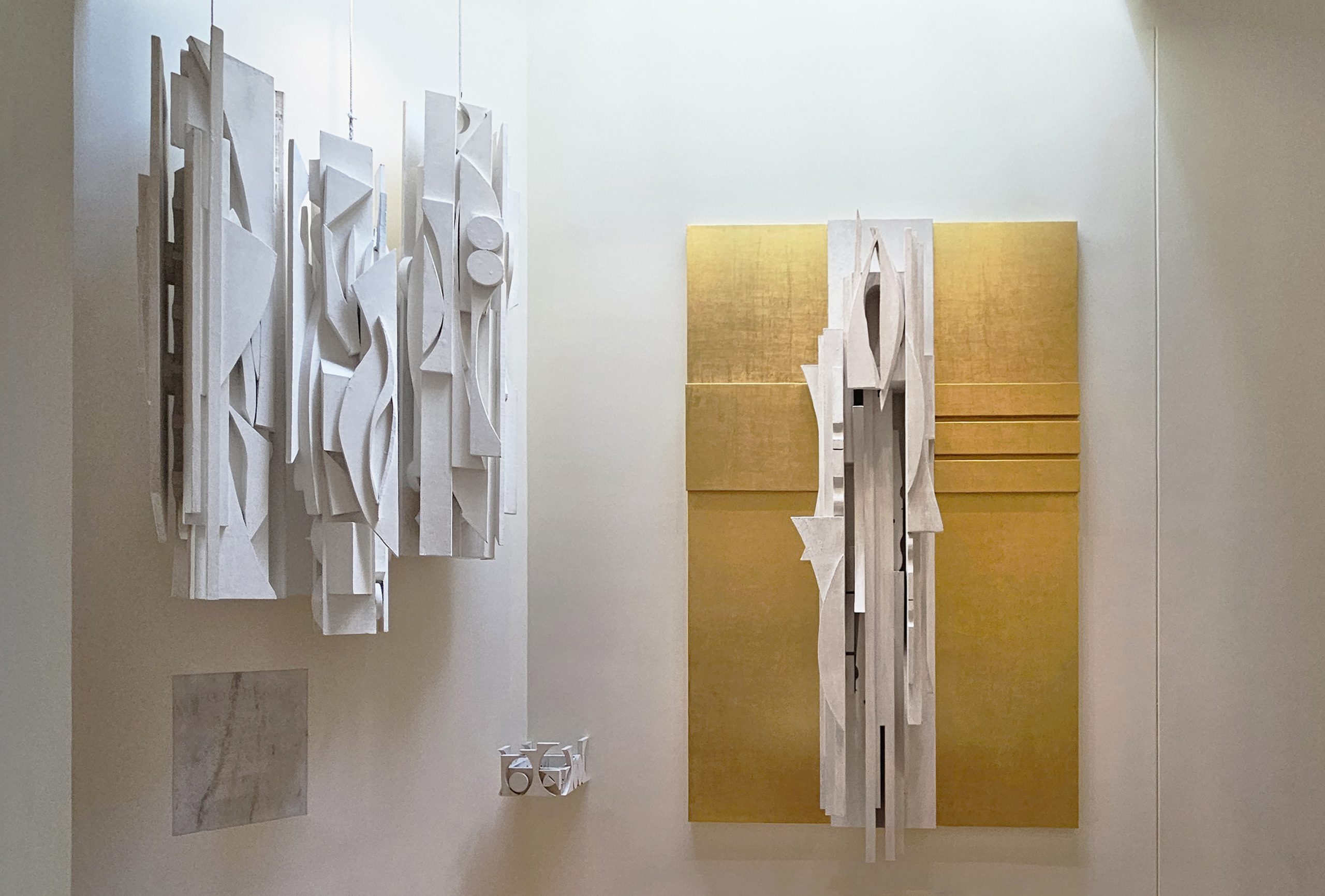
Keeping up with that Gesamtkunstwerk theme, artist Louise Nevelson was commissioned to create a chapel within the Saint Peter’s complex. Nevelson developed what is called a “sculptural environment” blending reference to her Jewish background with Christian iconography. The Chapel of the Good Shepherd, as it was named, features nine wall sculptures with a few gold accents here and there, lit by one single vertical window, the space is a symphony of whites that create a unique play of light that calls for as much of a meditative and as an inspirational state. Truly a testament to Nevelson’s belief on the transcendental power of abstraction, the artist saw her creation as an “oasis of silence”.
To bring life to such a special place, in 1976 “The Arts and Architecture Conservancy” was established at Saint Peter’s, a non-religious, non-profit organization to spearhead the church’s many cultural initiatives, including art exhibits, concerts, theater, and preservation. Community outreach, connecting with people, whether faithful or not, being of course the main point of the institution.
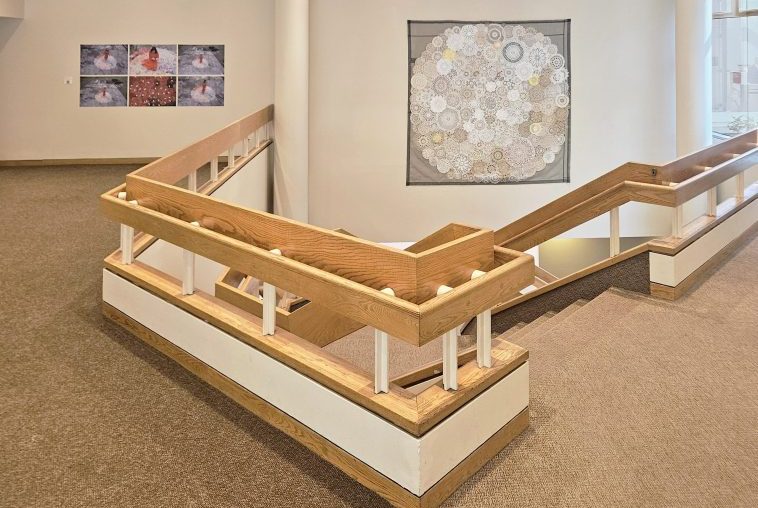
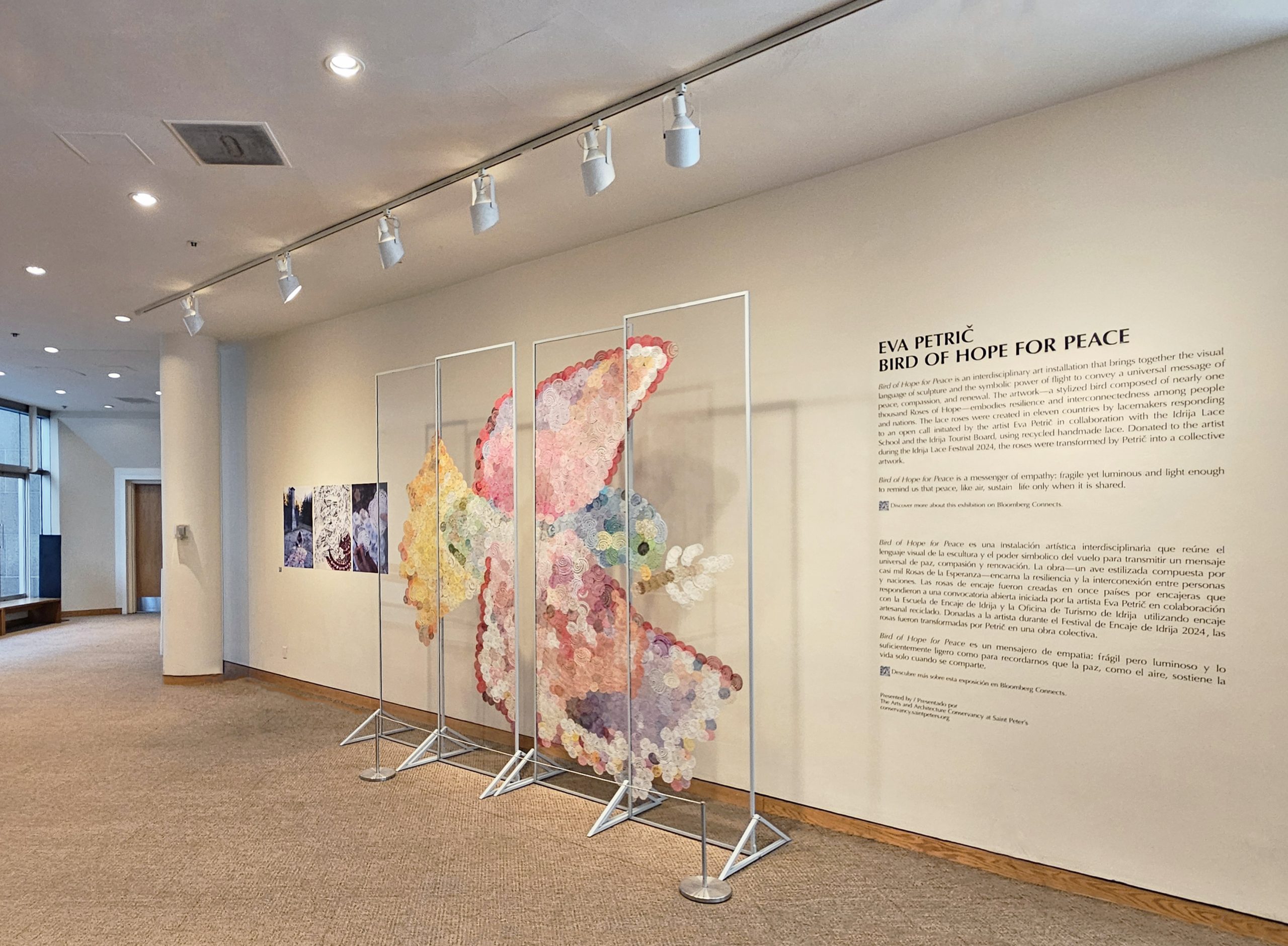
The church’s music program is as varied as the city itself, including jazz, classical and diverse folk music. With generous gallery space, the Conservancy organizes rotating art exhibits. This program started in the 1950s, when artist Elaine de Kooning began using the wall space of the original parish hall to curate art exhibits and, is considered one of the oldest and continuous such initiatives in the city. Showcasing an eclectic variety of artists, the exhibits are always thought-provoking, stimulating dialogue between artistic thinking and the broader public. One of the most recent exhibits was “Bird of Hope for Peace,” by multi disciplinarian artist Eva Petri?. Using recycled handmade lace to create roses by lacemakers all over the world, Petri? created a collective artwork that “embodies resilience and interconnectedness among people and nations”, making an: artistic statement about solidarity, connection, and the fragile possibility of peace.”
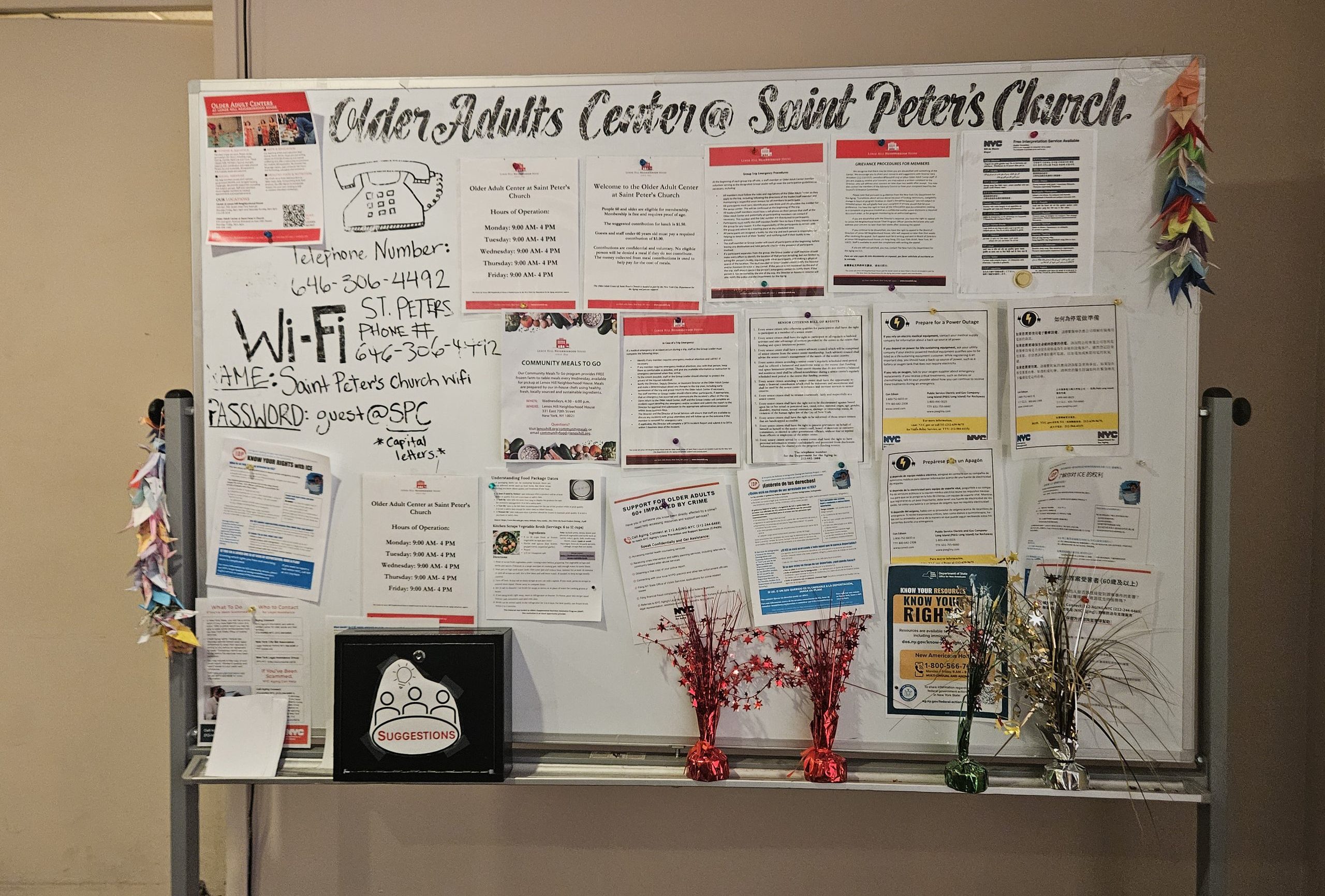
Beyond the cultural activities, Saint Peter’s has become so well known for, community outreach is a top priority. That outreach includes elderly support, meal programs, legal and immigration aid, and lectures and classes on various topics.
Now a landmarked building, Saint Peter’s is an example of the promising possibilities of connecting religion and culture in an open, contemporary way that goes past traditional preaching to bring spirituality and religion to a broader audience through a manner that is more relatable, less dogmatic, more inviting.
This article and all of the photos are by Paul Clemence. Paul is an artist, award winning photographer, writer, curator, and he explores the cross sections of design, art and architecture.