
In an urban area with a rich history of prominent cultural institutions like Basel, Switzerland, it could be challenging to find its footing and make a statement, but just outside Basel city proper, the Kunsthaus Baselland is responding to that quest by sticking to its original roots of being an art organization dedicated to serving its local artistic community.
“A central concept for me is to think of the Kunsthaus—and, by extension, any cultural institution—as a kind of special, enriching neighbor, one that is deeply invested in the local community in which it resides, supporting and bringing together residents, workers, students, and all others active in the area. For me, leading an art institution in a particular place means having a strong commitment to that place and to taking the needs and concerns of artists in that place, that city, that region, into account. And in doing so, tending to the needs and concerns of all those who are active in that environment”, explains Ines Goldbach, Director and Curator Kunsthaus Baselland. “We envision the Kunsthaus as a space where people can come together to experience art and engage with one another. It offers freely accessible areas as well as outreach and education programs tailored to different groups—children, families, schools, adults, people with disabilities”, Goldbach elaborates on the organization’s ambitious audience diversification focus.
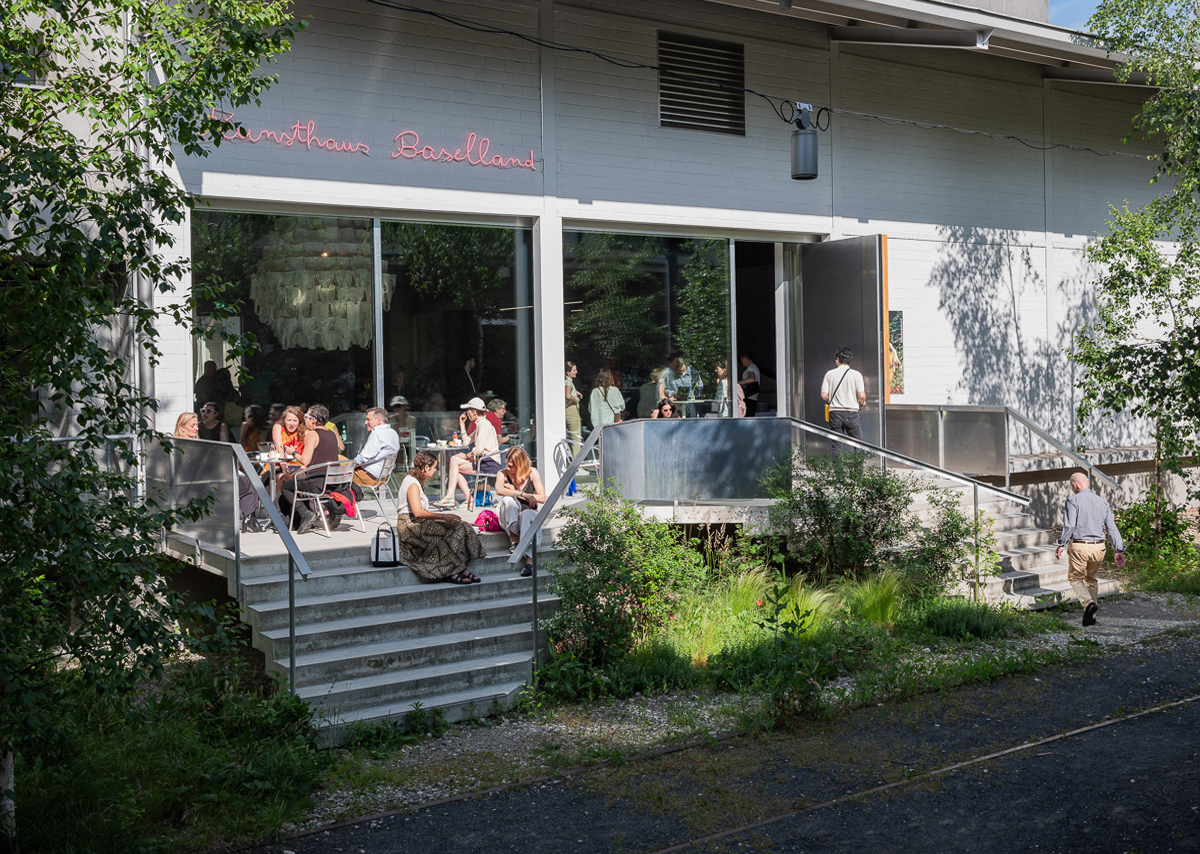
The privately-run, non-profit institution is mainly supported by the art association “Kunstverein Baselland“ that was founded by artists in 1944 to strengthen the regional artistic production and foster a community through its membership. Through the years, thanks to its exhibits, consistent programing and initiatives, the Kunsthaus asserted itself in its desired role of culture and community facilitator. Initially holding exhibits in a variety of locations, from school buildings to castles to former commercial spaces, and then in the late 1990’s moving into its own space in a former warehouse. Finally, since 2024, the institution moved into a new home with a location and architecture in perfect sincrony with its DNA. The new venue is not too far from the last one, but now more centrally located, right into the heart of the Dreispitz, a developing creative hub that inlcludes the close by Schaulager Foundation, the House of Electronics Arts, Basel Academy of Art and Design FHN and creatives offices like Herzog & de Meuron Architects and IART, an intercative architecture media company.
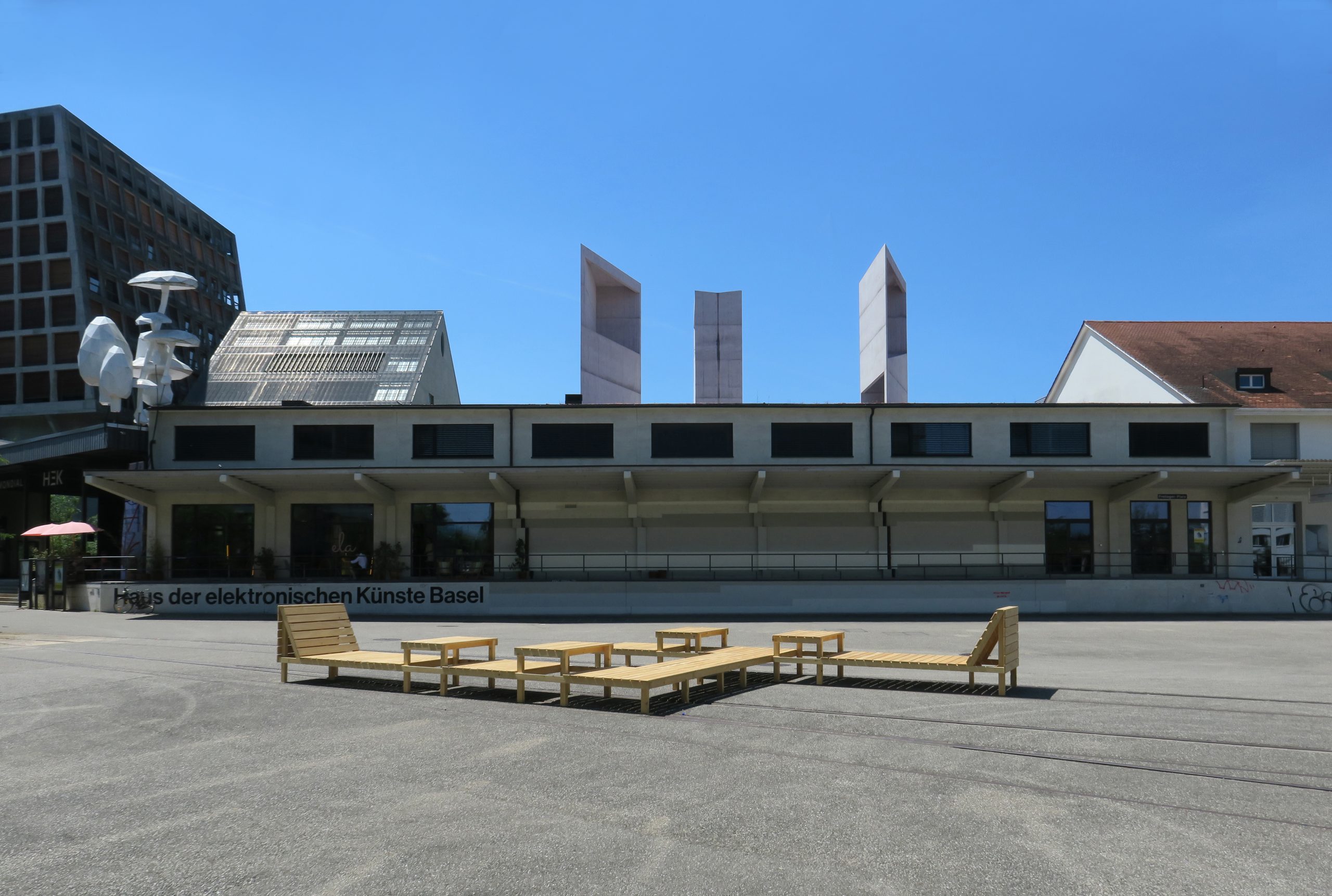
Again occupying a former wharehouse, but now with a sophisticated repurposing design that takes the Kunsthaus to a higher level more in sync with its mission and cultural status, without losing its inviting atmosphere. Designed by the local Basel office of Buchner Bründler, the architects transformed the former champagne storage building into a properly fitted art venue that is spacious and conducive to the art experience. “The concept is based on the idea of integrally preserving the old warehouse and creating a harmonious relationship with the built-in spatial structure”, states the architects website.
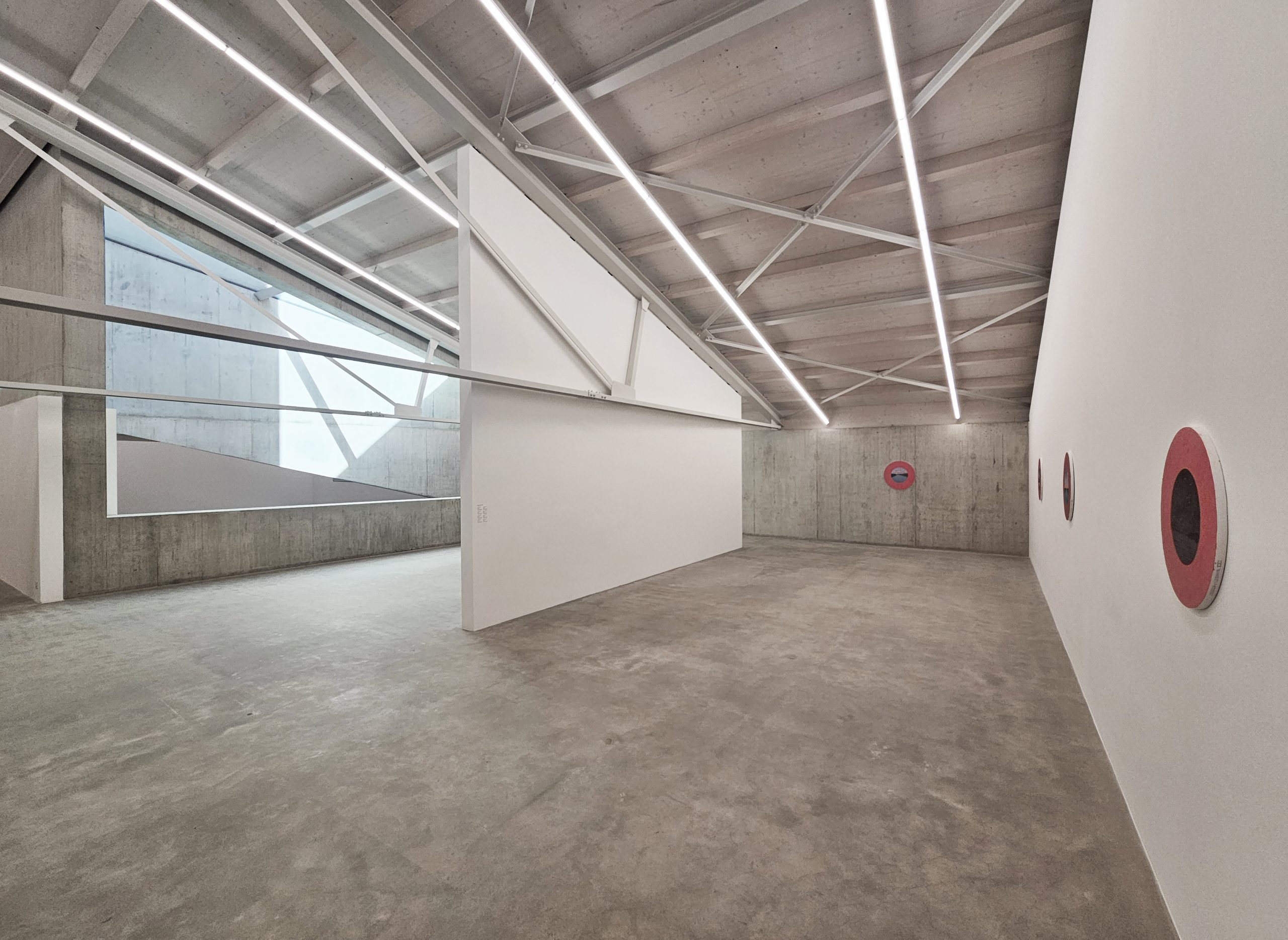
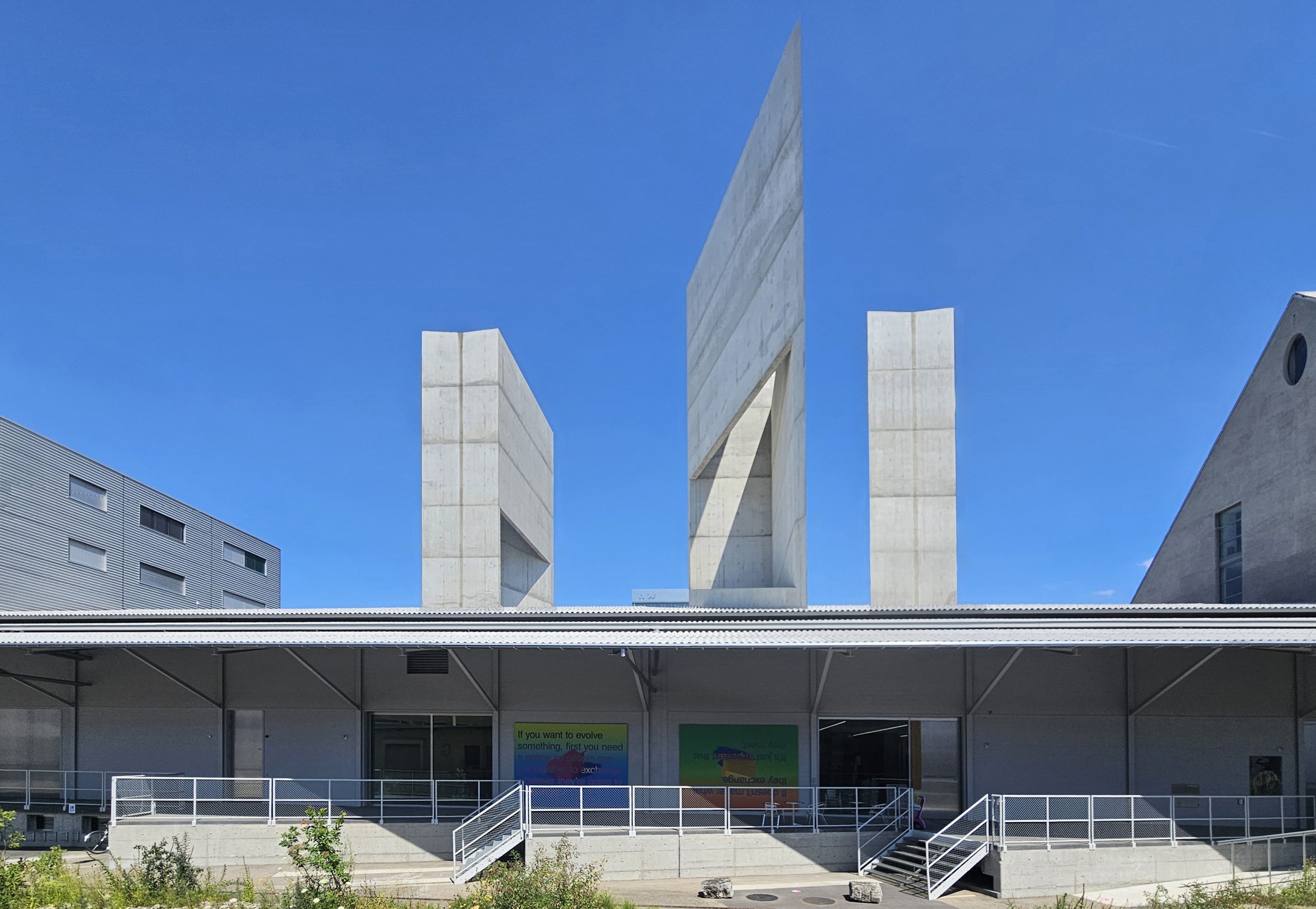
Part of how that harmony is achieved is by the use of light. Three prismatic light towers were inserted into the building, bathing the galleries with light and helping structure the interiors. Minimalist and geometric in design, with a Barragan-esque feel and elegance, these raw concrete towers give the building a unique and poetic sense of identity amidst a mostly industrial surrounding environment.
Explaining the curatorial filters for exhibits and artists being shown, Goldbach says: “An important criterion is the societal urgency of the topic; we focus on issues that we consider significant and that can offer artists from the tri-national region as well as from abroad meaningful impulses and, at the same time, the opportunity to create outstanding artistic works”. Goldback then goes on to emphasize the important role that archiecture plays: “We believe that the Kunsthaus should be a place that facilitates artists and art making without any architectural restrictions. The new building offers an ideal sustainable instrument”. Taking the trendy “site-specific” concept to whole other level, all artists invited to exhibit at the Kunsthaus are encouraged to use the spaces to make new works on site, or to bring existing works into a new context through new displays. “The relationship between space and artwork is equally essential, which often leads to inviting artists to produce new works on site or to adapt existing ones to the space in order to enable a powerful, sensory experience of art”.
This approach, combining contemporary relevance and artistic insight, was very much in display at the recent exhibit “Whispers from Tides and Forests” addressing our human relationship to Nature and all its implications. Featuring artists Caroline Bachmann, Johanna Calle, Lena Laguna Diel, Abi Palmer, Nohemí Pérez, Naufus Ramírez-Figueroa, Belén Rodríguez, Ana Silva, Julia Steiner, Surma, Liu Yujia featured works that “offer us a glimpse of the world, from South America to Europe, showing us turbulent places and themes of vulnerability and loss, but also trees, forest floors and their mushroom cultures, rivers and landscapes full of beauty, poetry and the future”. In spite of very defined individual characters, the works seemed to have a subtle quality that made for an interesting dialogue with the exposed concrete walls and natural light , and of course making a statement about the delicate, nuances dance between us humans and Nature.
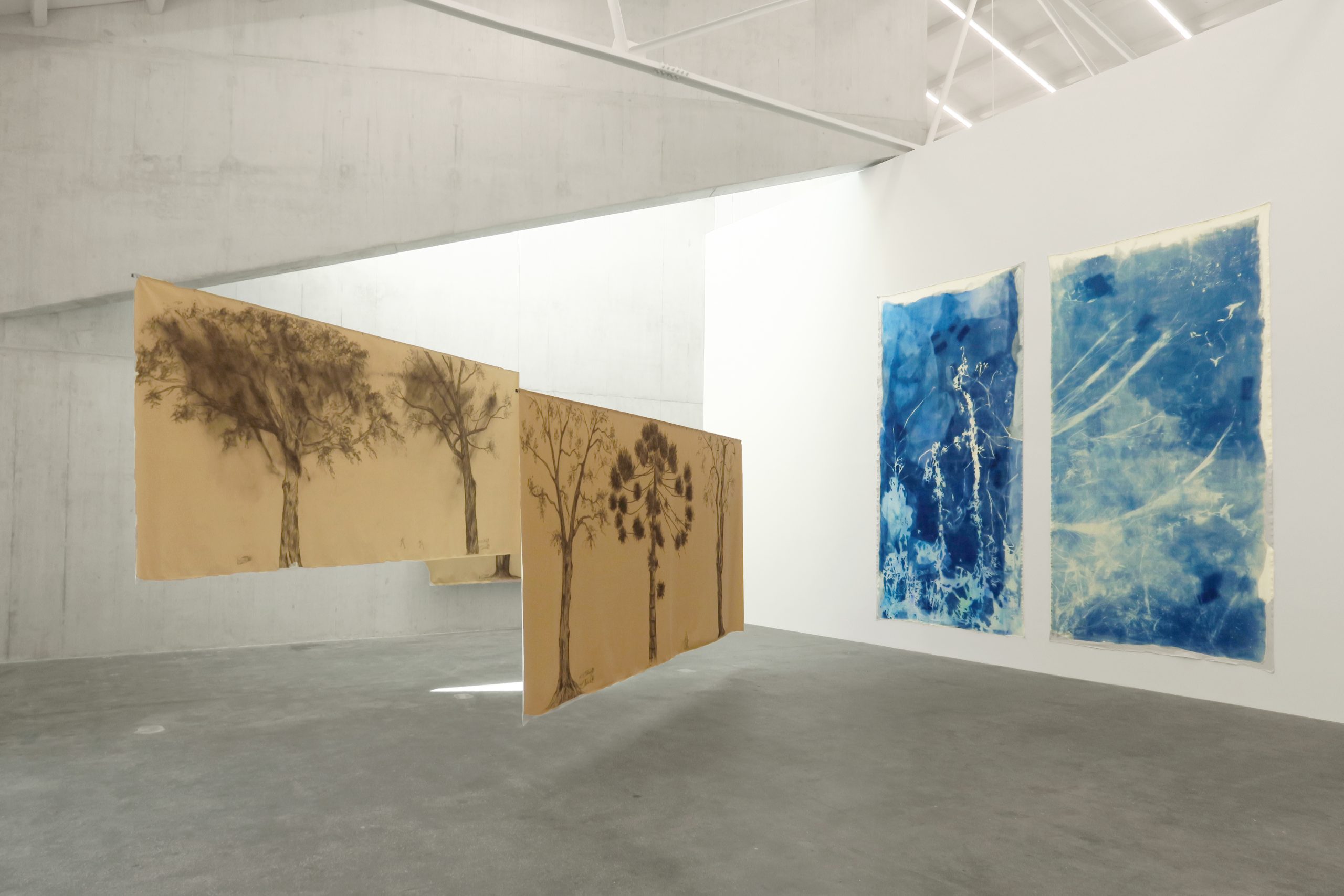
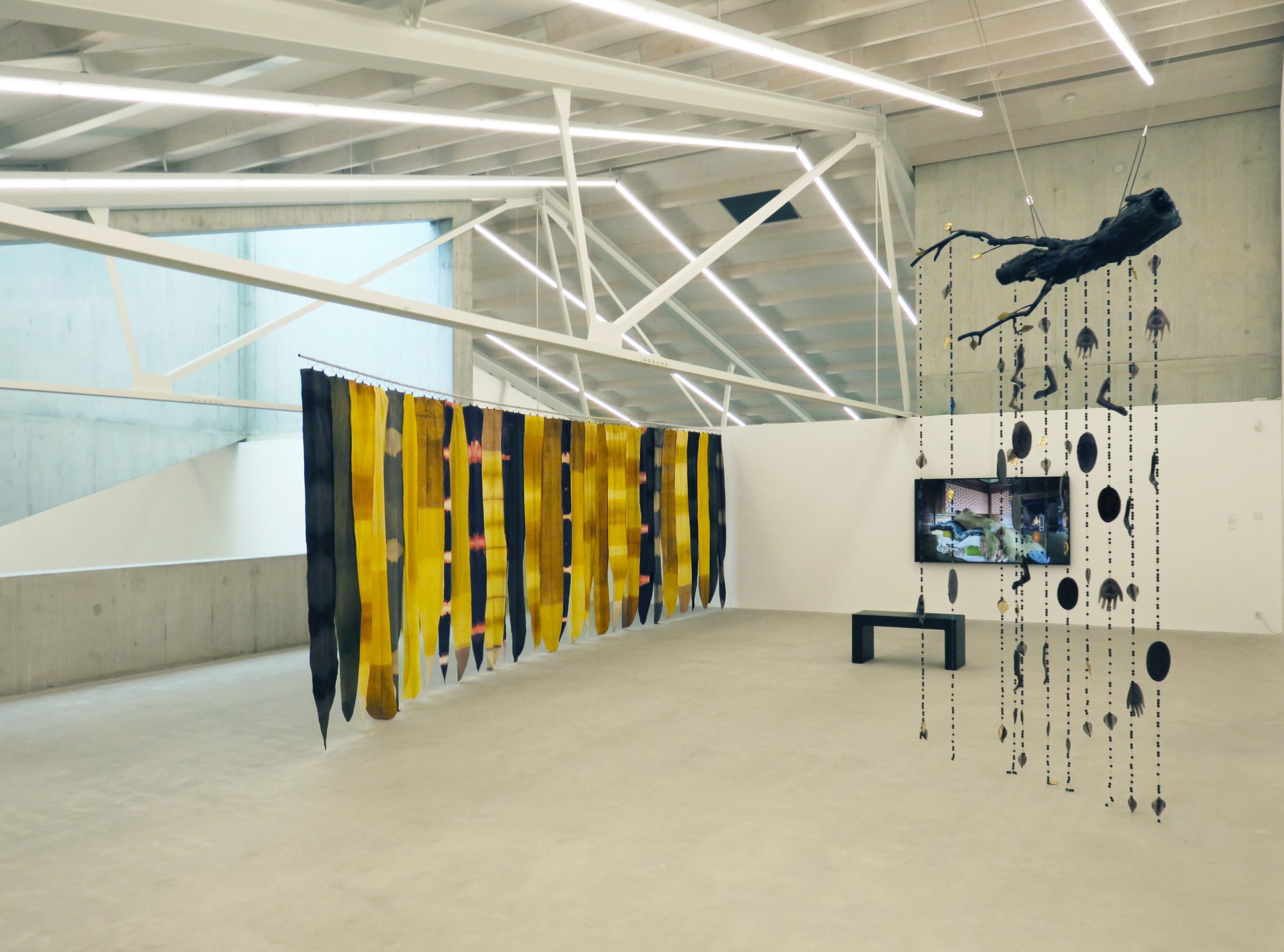
Now considered one of the leading institutions for contemporary art in the tri-national region ( the greater Basel metropolitan area bordering both France and Germany), the Kunsthaus Baselland has become recognized as a significant venue that consistently supports regional artistic production and at the same time enables internationally active artists, from different generations, to have their first solo exhibitions in Europe or Switzerland. Beyond the art exhibits, the Kunsthaus also keep a busy programming catering to its ever growing community, including concerts, a variety of art education classes and many special events.
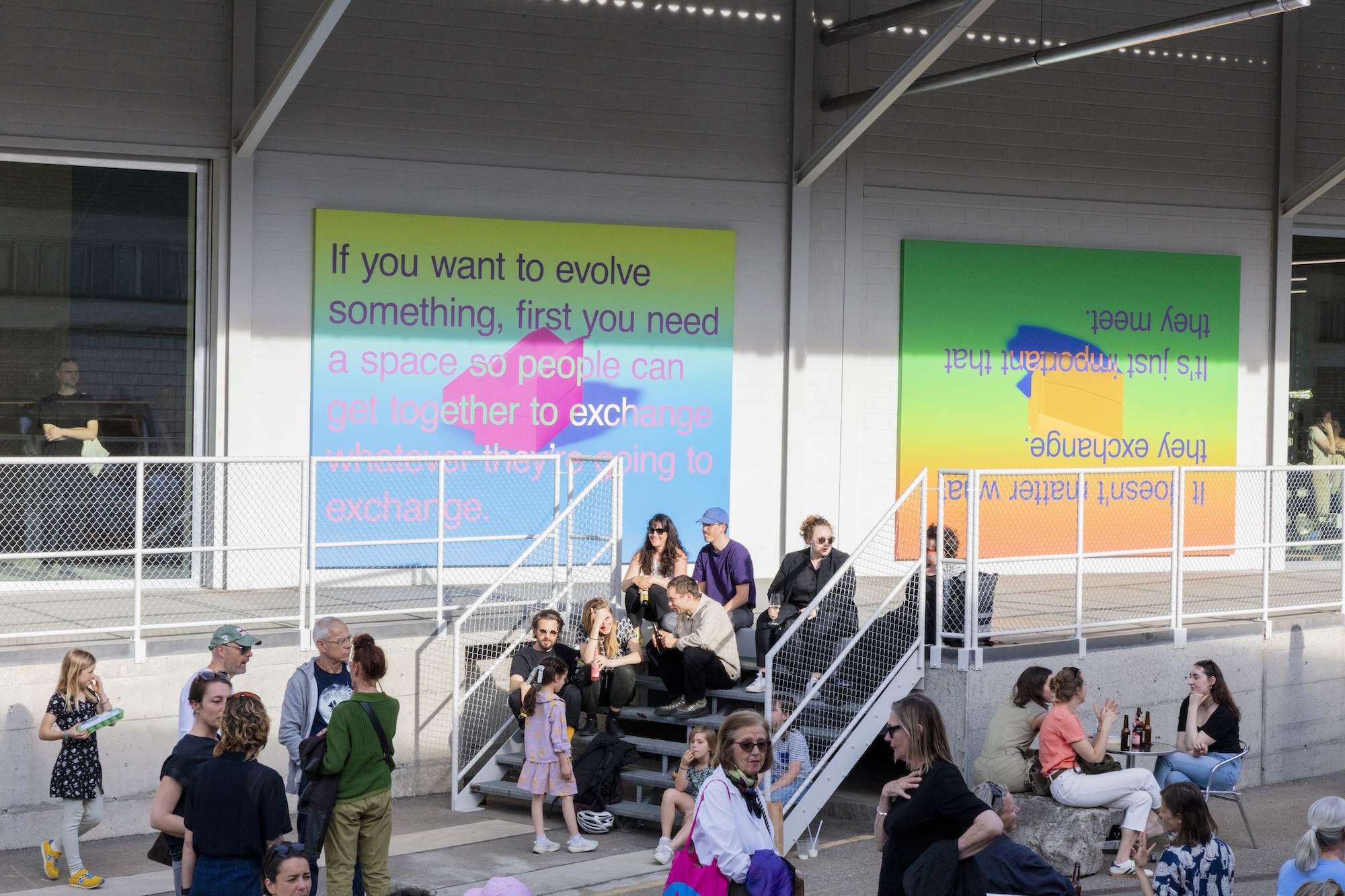
Asked to describe the mission of the Kunstaus, Goldbach perfectly summed up not just the institution’s goals, but also, it could be said, the expansive potential of Art and culture anywhere in enriching and empowering our lives:
“A statement by Nigerian-born artist Otobong Nkanga, “Care is a form of resistance,” has deeply resonated with me ever since I first encountered it in an exhibition some time ago. I believe that this sentiment should guide us, especially in the face of the severe social, political, and health crises of recent years. It underscores the importance of care not only for ourselves and every other individual, but also for what an art institution can and, in my opinion, should represent, namely a fundamental engagement with a place, continually enriched by the works and perspectives of local, national, and international artists. Also a commitment to nurturing the context in which it operates and caring for those who inhabit and work within it—transcending spaces, borders, and differing opinions and attitudes. In other words, to provide a free space.“ – Ines Goldbach, Director and Curator Kunsthaus Baselland.
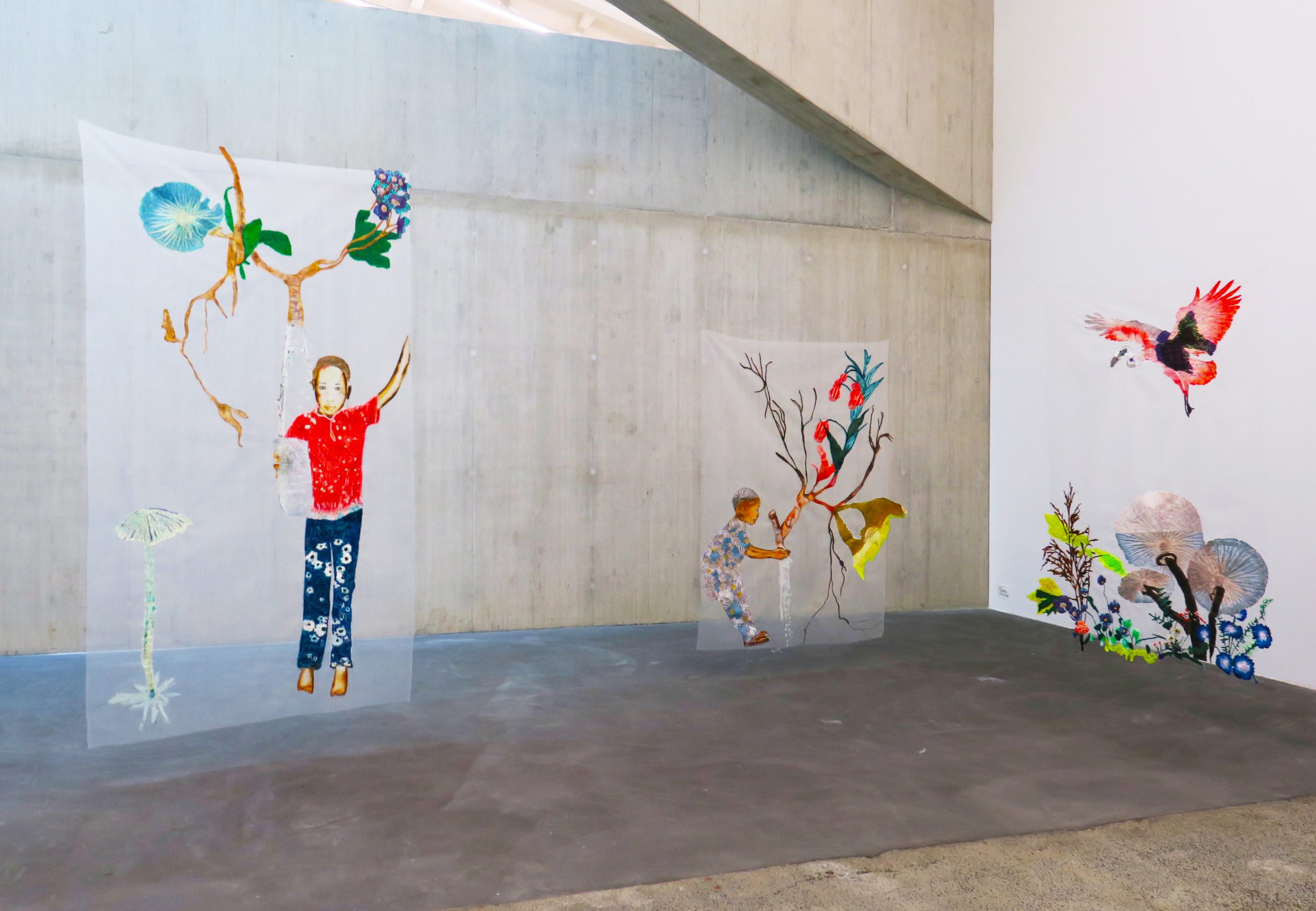
https://www.kunsthausbaselland.ch/en/
This article and all of the photos are by Paul Clemence. Paul is an artist, award winning photographer, writer, curator, and he explores the cross sections of design, art and architecture.