
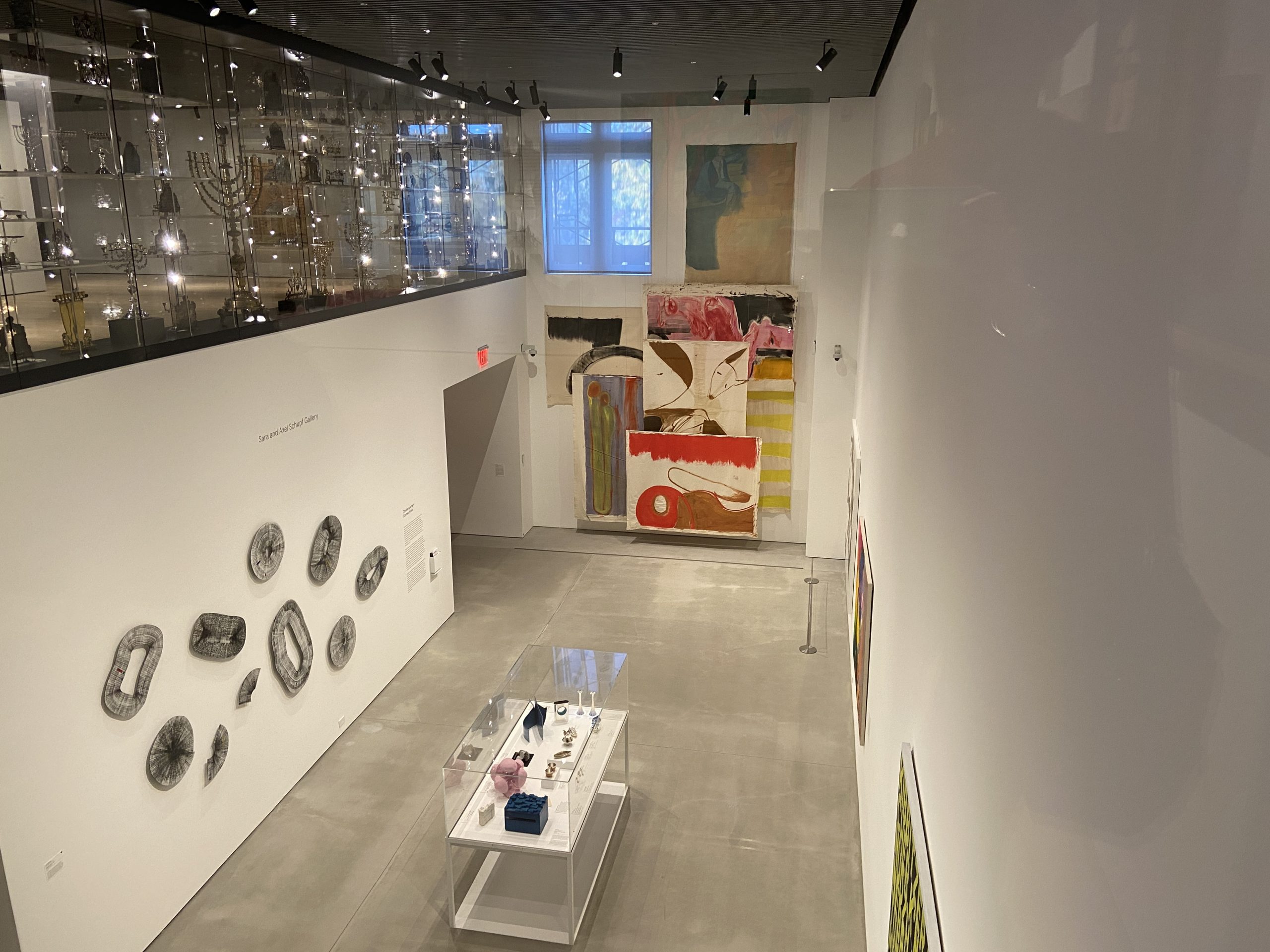
From the fourth floor of New York’s Jewish Museum, one view reveals a striking double-height space with rows of gleaming Hanukkah lamps above and a gallery of contemporary Jewish art below. Completed in October, it’s part of a renovation that includes the new ongoing exhibition “Identity, Culture, and Community: Stories from the Collection of the Jewish Museum” and the inauguration of the Pruzan Family Center for Learning. These spaces and exhibits, with their contrasts and surprises, reflect the museum’s commitment to reimagining museum education and how, as Director James S. Snyder said during a preview, “a culturally specific museum can lead the way in complex times.” An art museum, the Jewish Museum is dedicated to exploring more than 3,500 years of the global Jewish experience and advancing dialogue and understanding among people of all backgrounds. It’s also well-known for thought-provoking special exhibitions such as the current “Anish Kapoor: Early Works” (through February 1, 2026), and the upcoming “Joan Semmel: In the Flesh” (December 12, 2025–May 31, 2026).
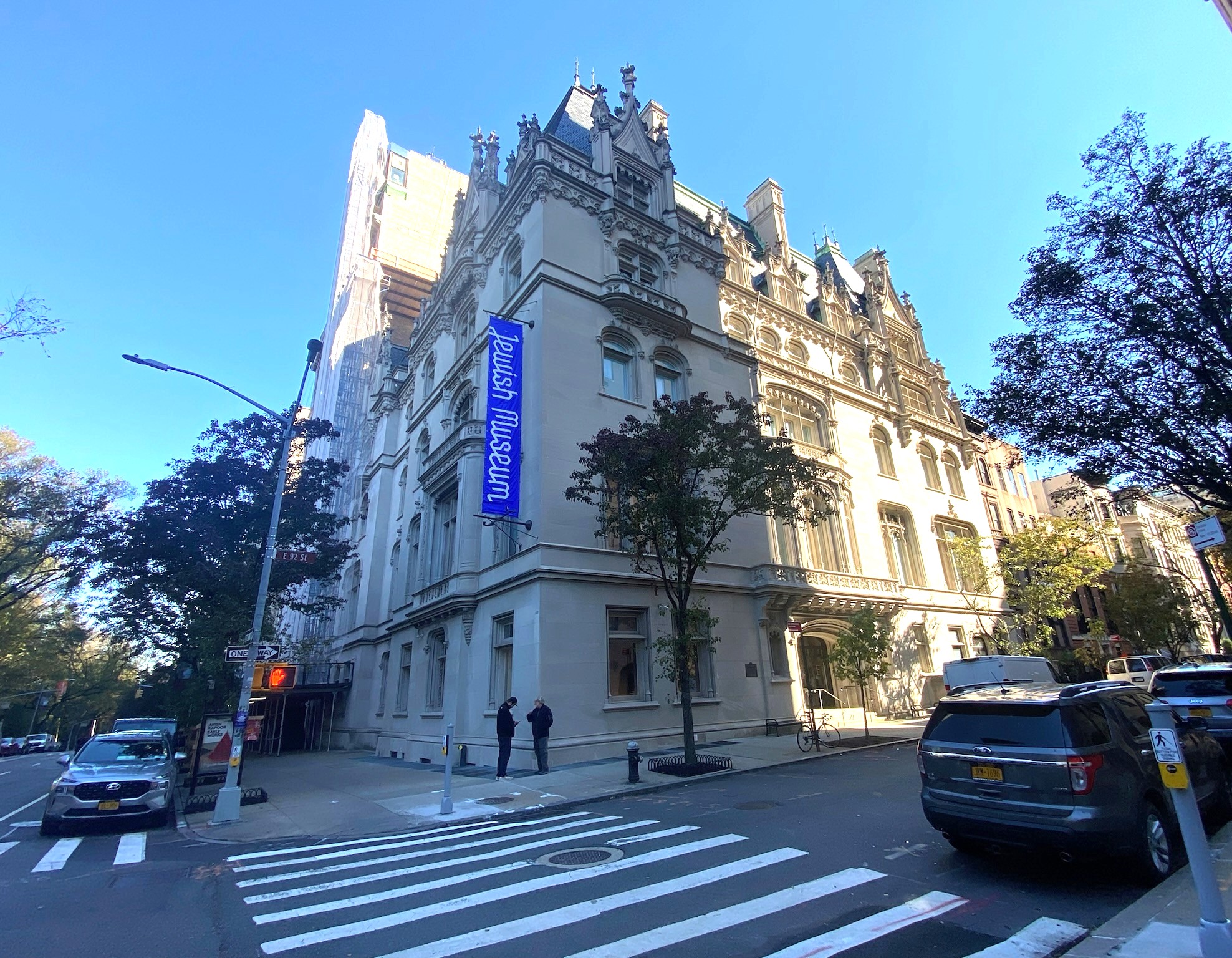
One of the world’s oldest Jewish museums was established in 1904 with Judge Mayer Sulzberger’s donation of twenty-six ceremonial objects to New York’s Jewish Theological Seminary. The collections now include more than 30,000 works, including 10,000 ceremonial objects, modern and contemporary art, examples of the decorative arts, broadcast media, and artifacts from ancient Israelite history. The museum opened in its current home, the neo-Gothic mansion of the Warburg family donated by Frieda Schiff Warburg, in 1947, and operates as a nonprofit with its own Board of Trustees and officers. A major addition designed by Kevin Roche in 1993 accommodated the growing collection and provided significant space for contemporary art (a museum strength) and public programming.
Exploring the Galleries
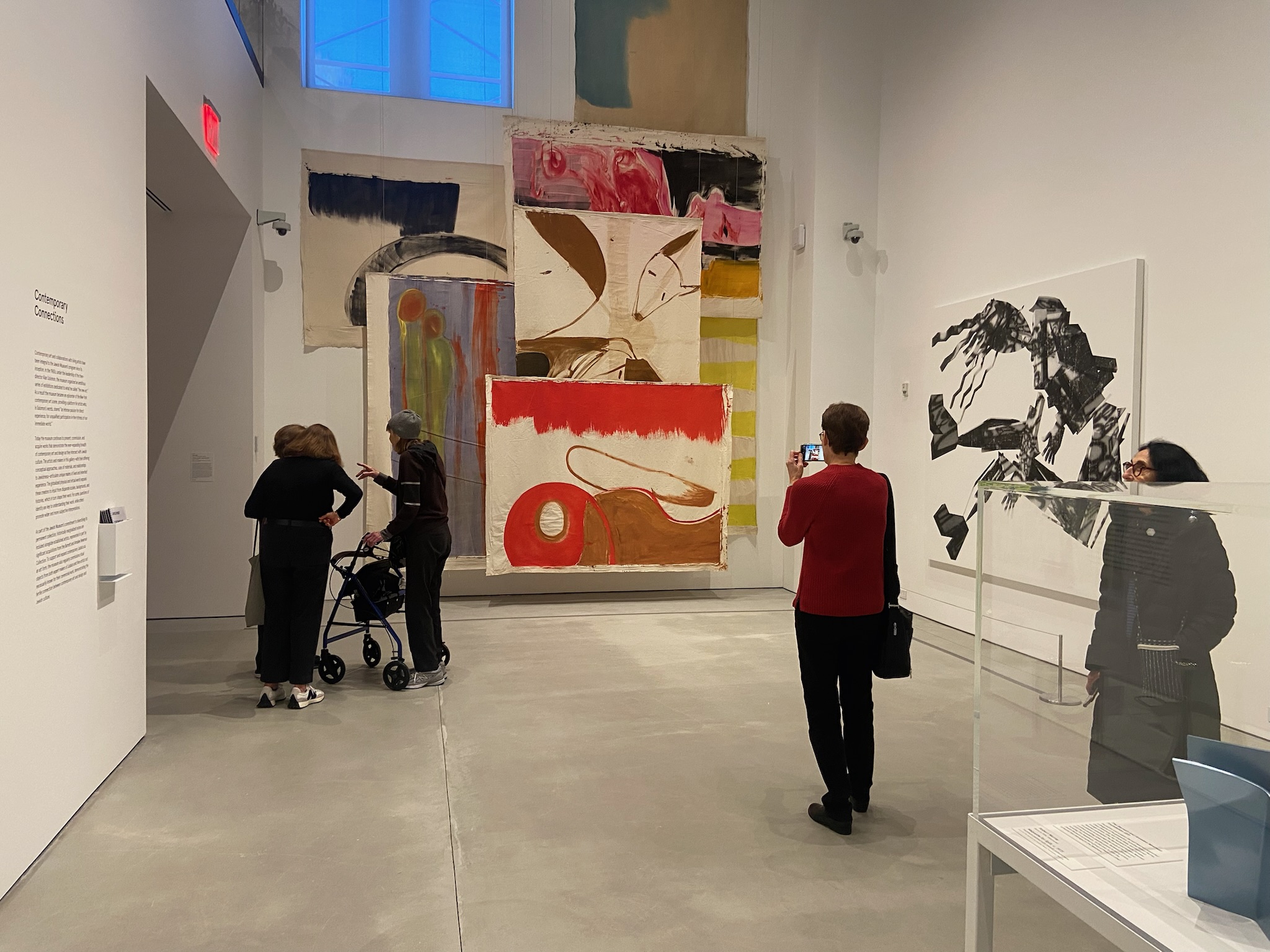
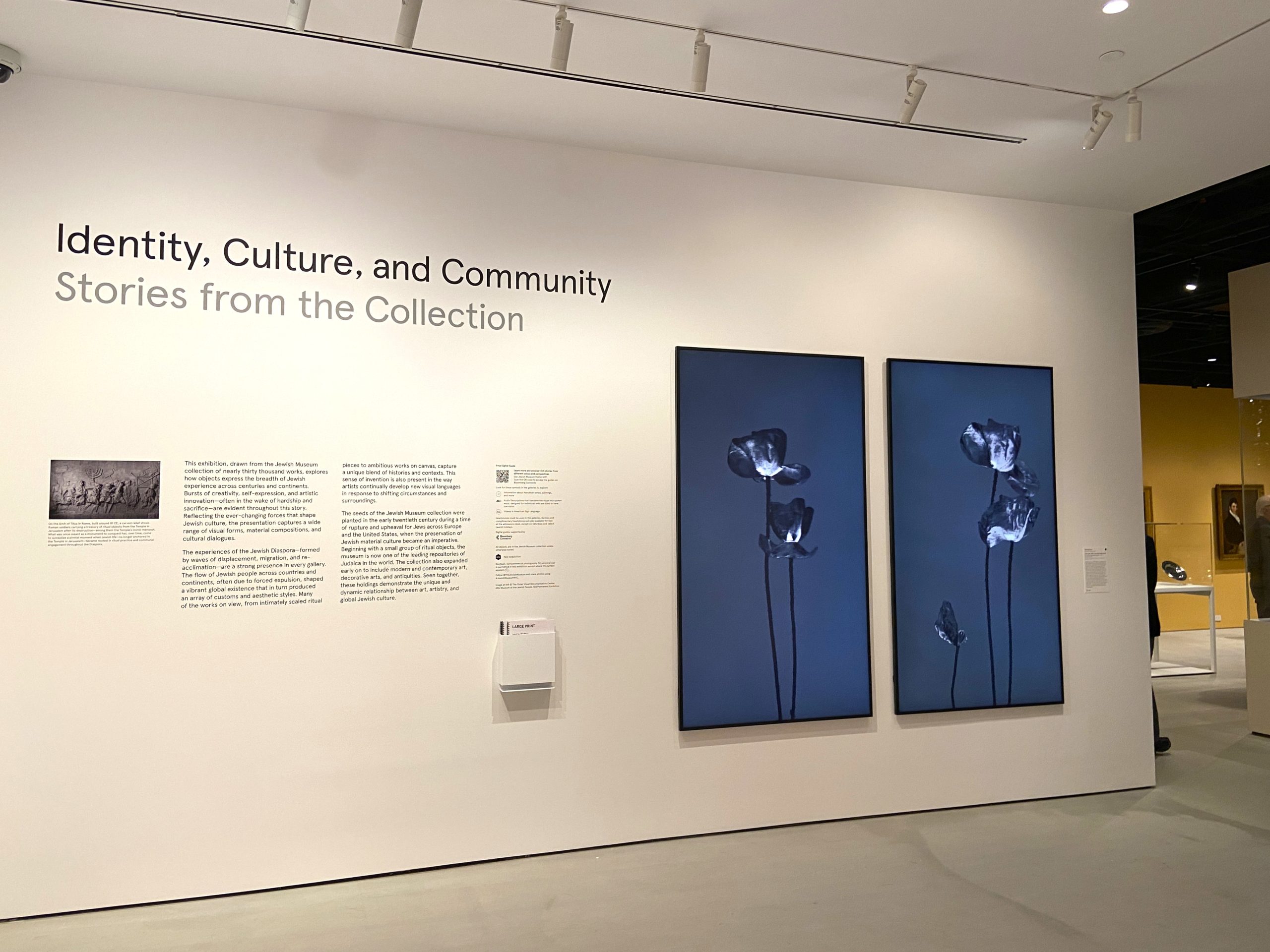
The more than 200 objects chosen for “Identity, Culture, and Community: Stories from the Jewish Museum” represent the range of Jewish experiences and interactions with other cultures around the world over more than three millennia. Filling the reconfigured third floor, its five broad thematic sections are roughly chronological: “Ritual and Community,” “Persecution and Remembrance,” “Post–World War II,” “Feminisms: Unveiling Voices,” and “Contemporary Connections.” In each section, excellent captions provide context for each work and tell engaging stories with appeal for all visitors.
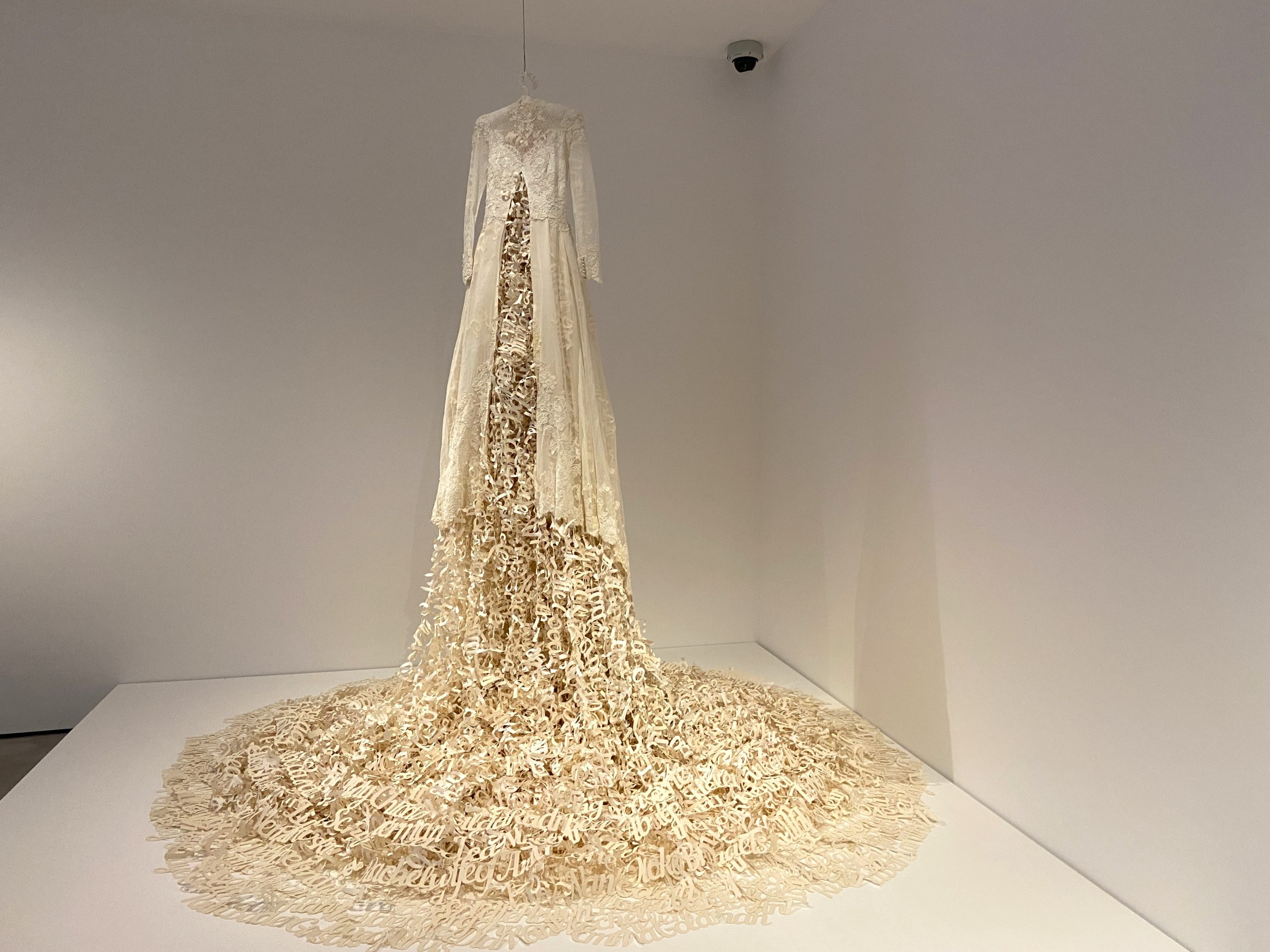
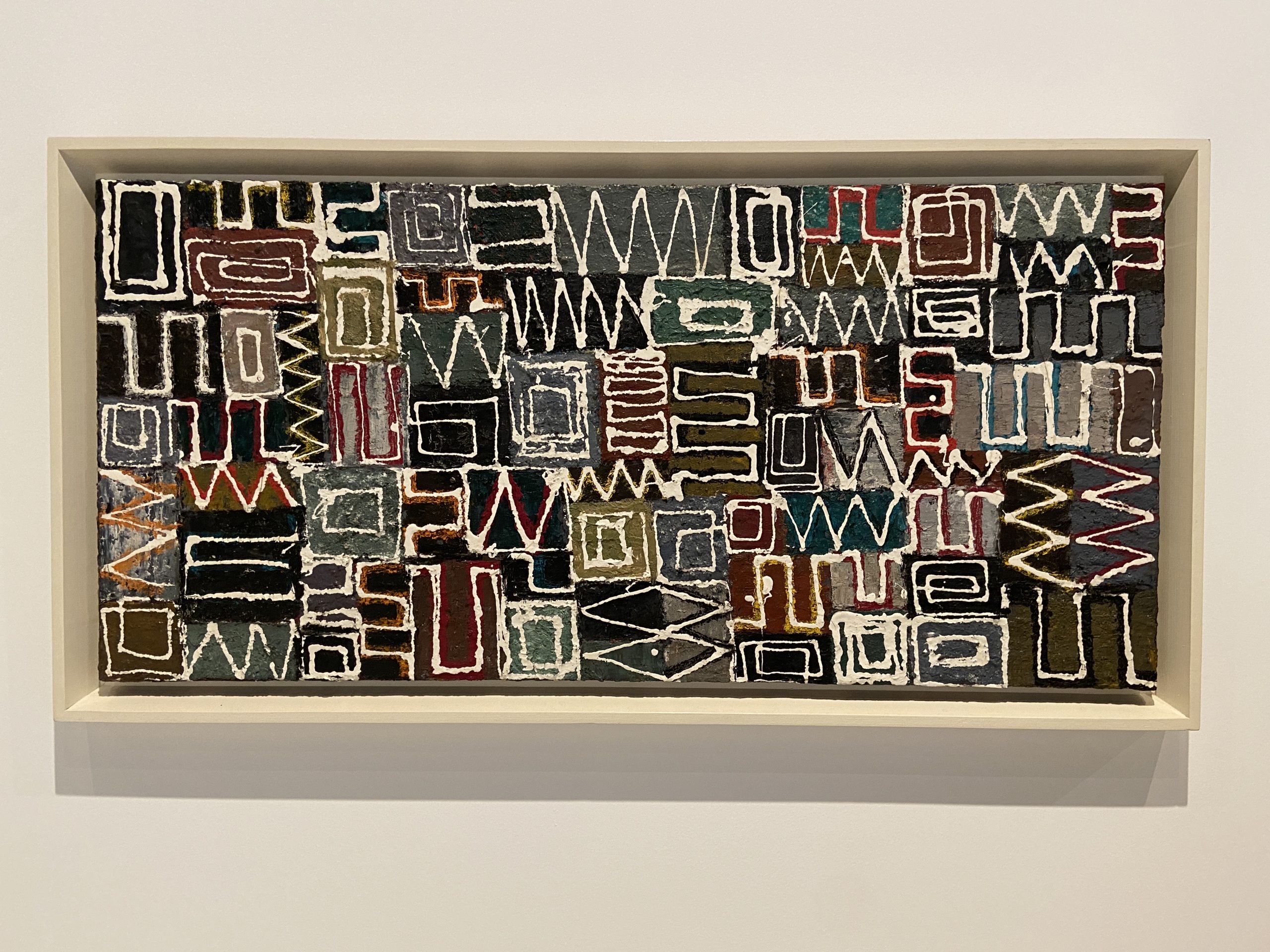
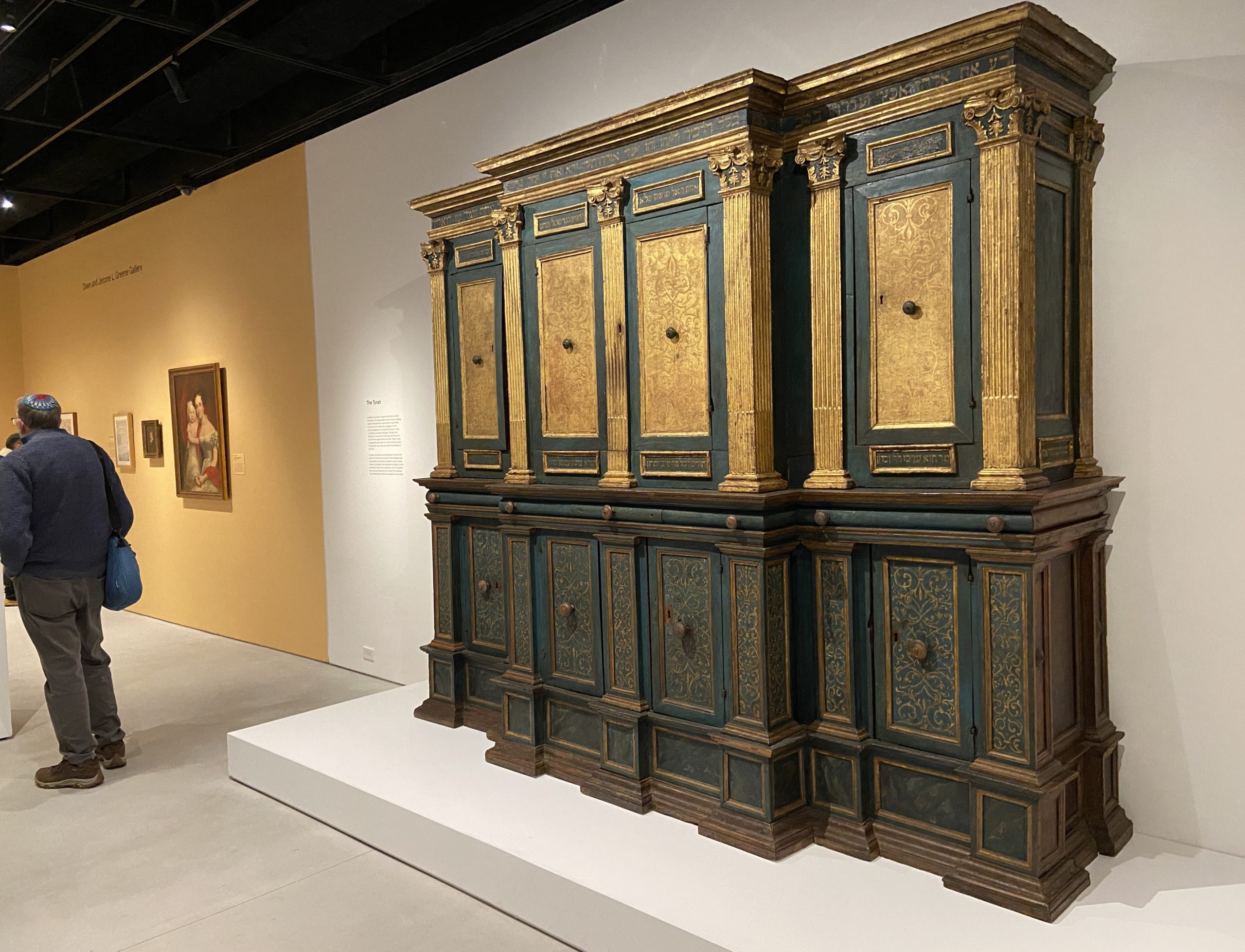
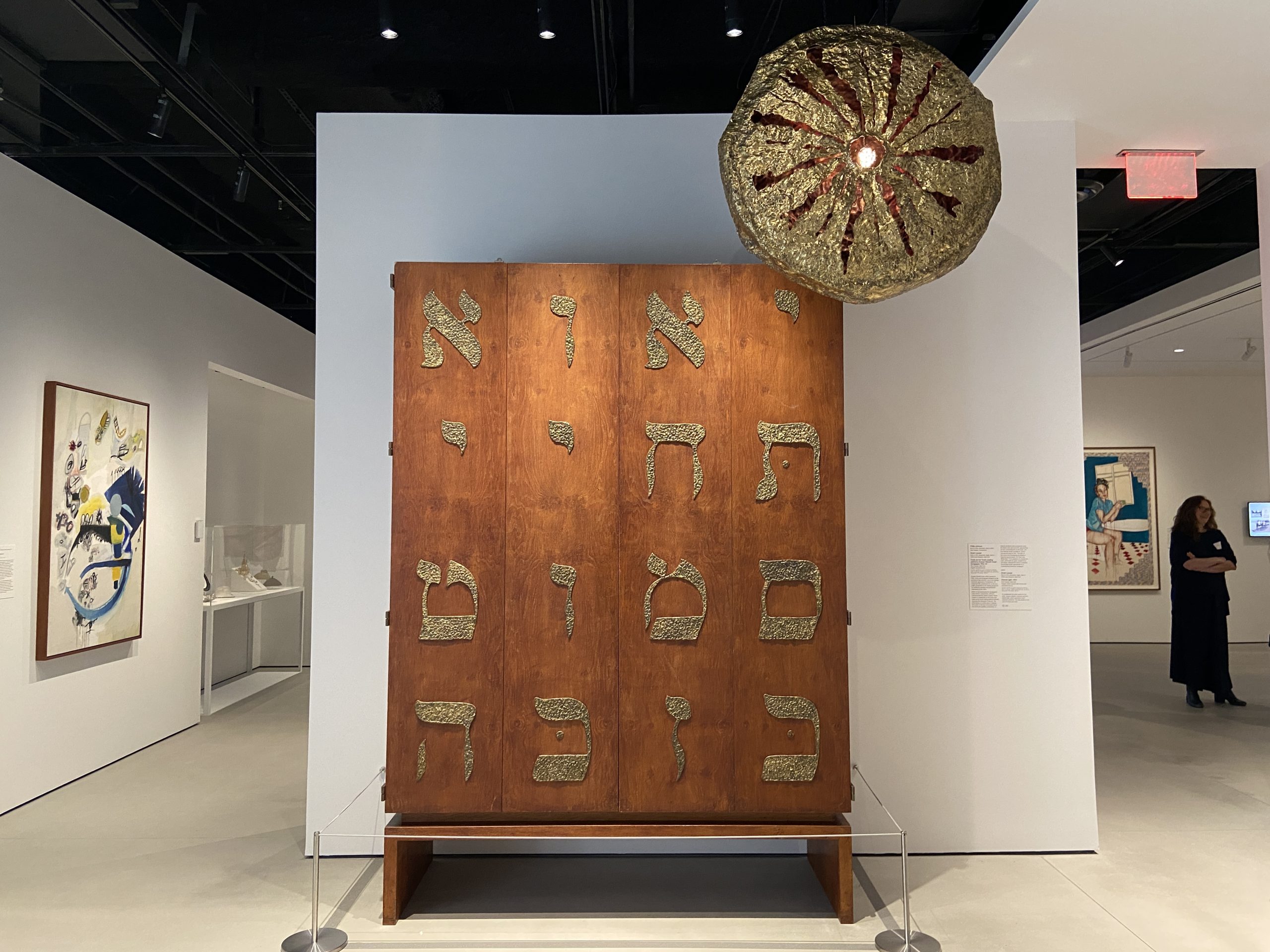
A few examples give a sense of the museum’s wide scope. In “Ritual and Community,” a beautiful teal-painted and gilded Torah ark from Urbino, Italy, is one of the few surviving pieces of Jewish ritual art from the Renaissance. A few galleries away is a stunning modern ark commissioned in the 1950s by architect Philip Johnson, who collaborated on it with Egyptian American sculptor Ibram Lassaw for a synagogue in Port Chester, New York. Johnson designed the synagogue for no fee as an apology for antisemitic statements and pro-fascist activity in the 1930s. Among the modern works by women on display is Lee Krasner’s untitled abstract painting from 1948, part of her “Little Images” series. Krasner related the work’s components to childhood memories of learning to write and read Hebrew. Andi LaVine Arnovitz’s 2023 sculpture “What We Bring” shows the artist’s wedding dress with 2,611 laser-cut names from the Jewish Women’s Archive website, alluding to the significance of Jewish women’s contributions. The exhibition displays a number of works recently acquired or donated, such as the oil paintings by Czech artist Gertrud Kauders, who died in the Majdanek death camp in 1942. They are part of a trove of over 700 works hidden in the walls of a house in Prague and, amazingly, discovered in 2018 during its demolition.
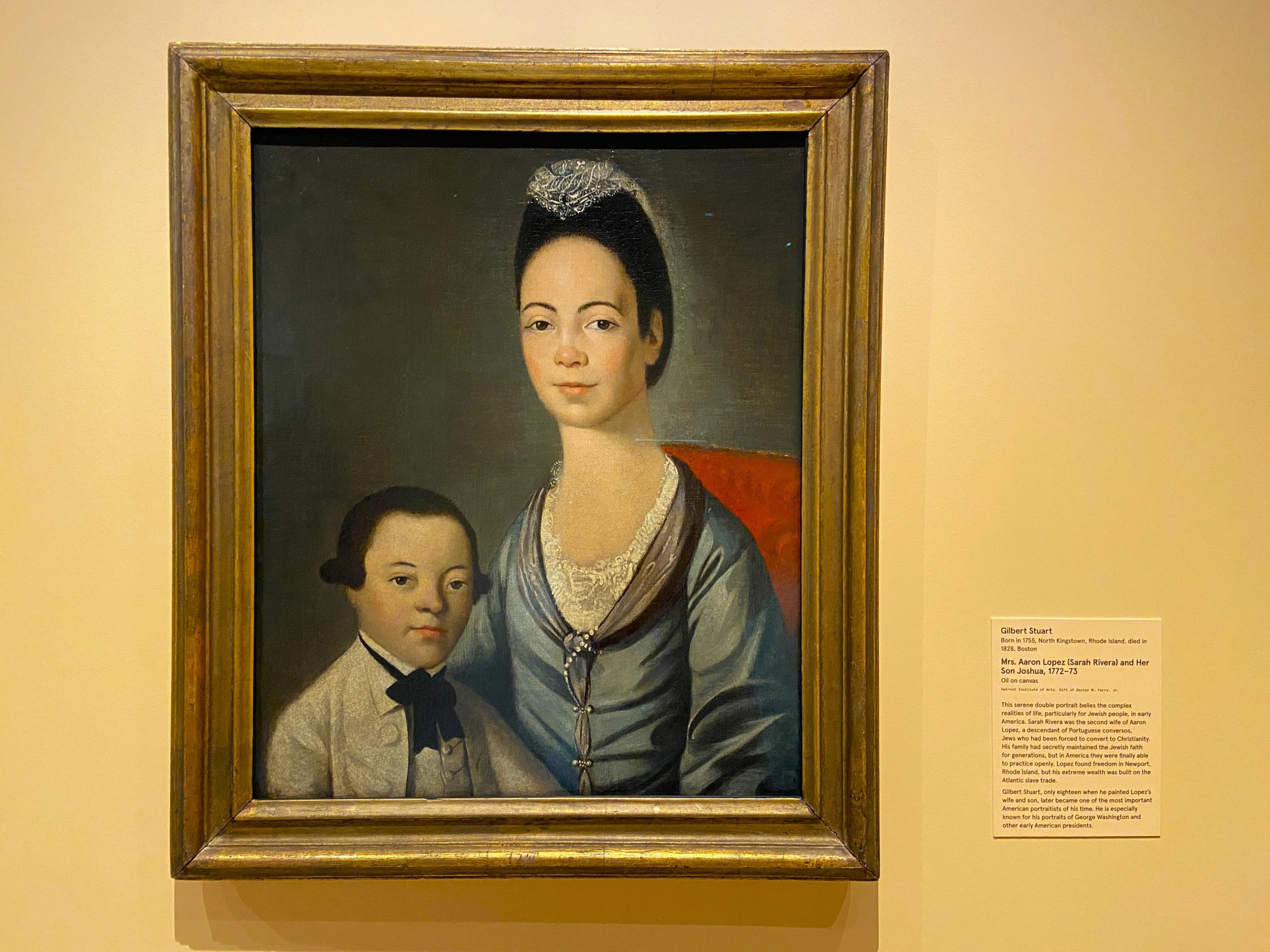
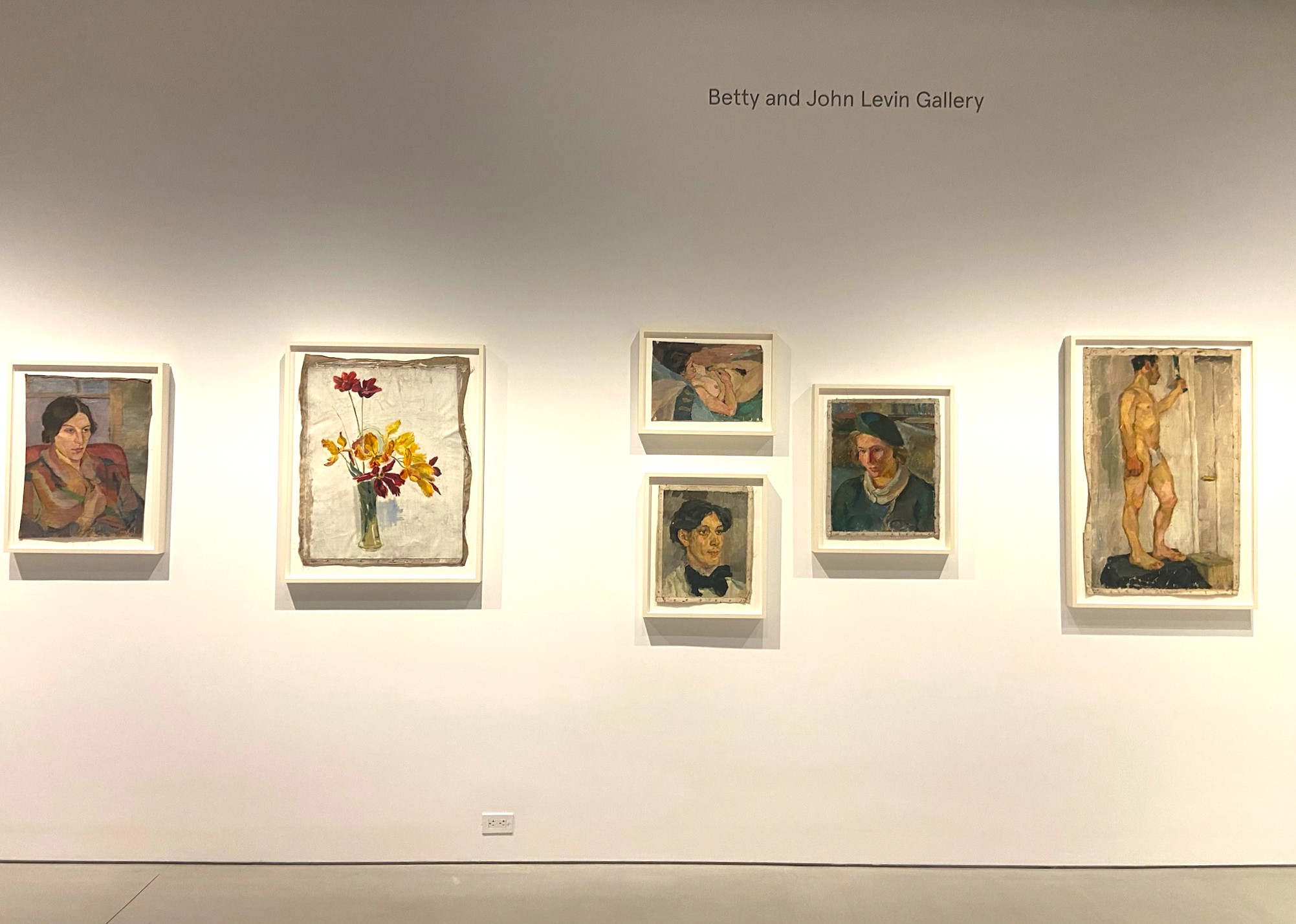
Four smaller changing exhibitions within “Identity, Culture, and Community” are equally varied, from “Togetherness,” a selection of photographs from different periods evoking common human experiences, to “Circa 1776: Jews in Colonial America,” with paintings, objects, and correspondence that convey how Jews seeking religious freedom played a role in the new nation’s early history.
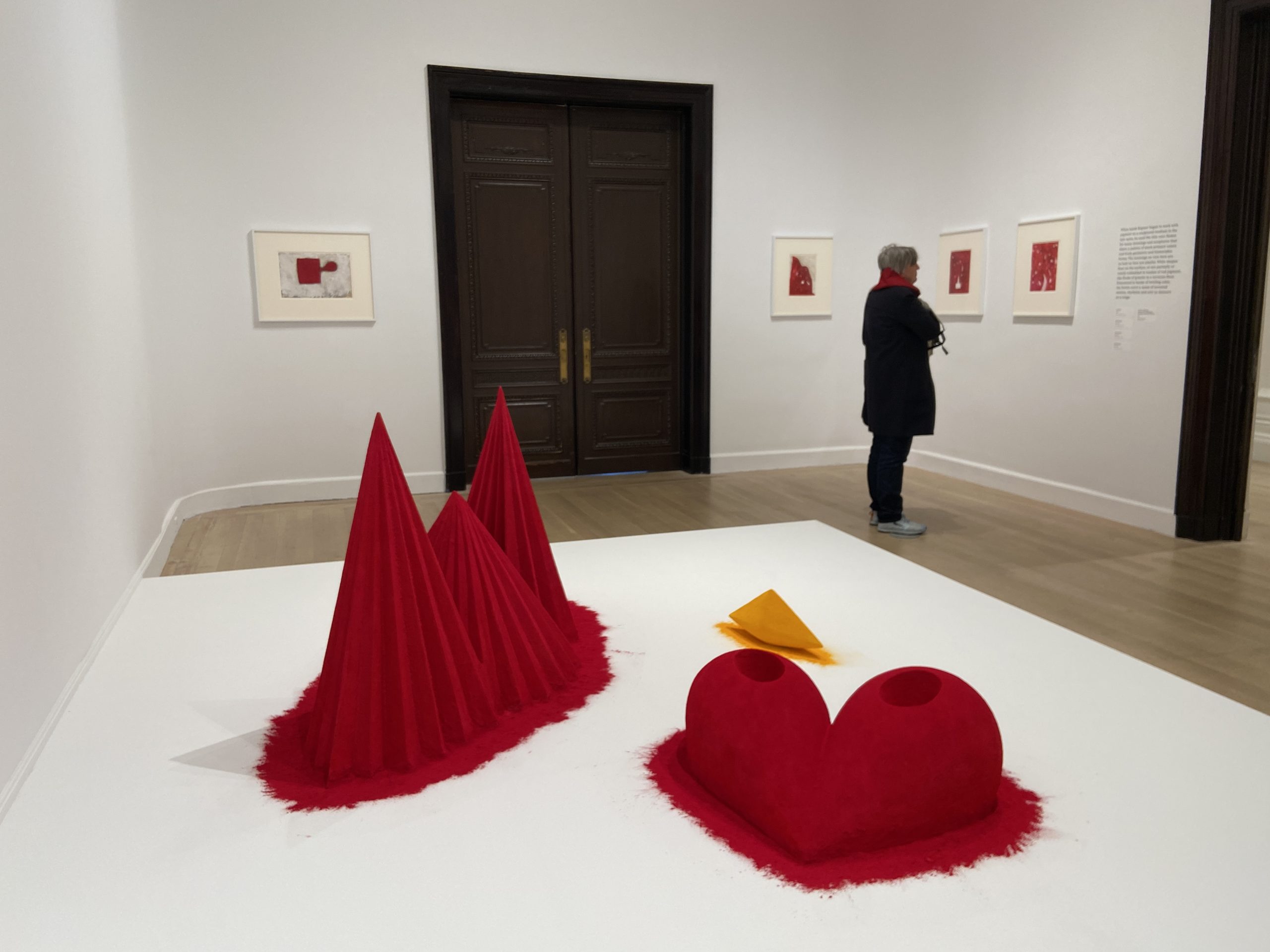
Galleries for changing exhibitions are on the museum’s first and second floors, with “Anish Kapoor: Early Works” currently on display. Born in India in 1954 to parents of Indian Hindu and Iraqi Jewish descent, Kapoor is known for large-scale sculptures like “Cloud Gate” (2006) in Chicago, but this show focuses on the 1970s and 1980s, with less often seen works on paper and abstract sculptures made of primary-color and black pigments. Opening December 12, “Joan Semmel: In the Flesh” will include the feminist artist’s self-images along with other works from the museum that relate to the body and autonomy.
The New Pruzan Family Center for Learning and Beyond
With the opening of the 7,000-square-foot Pruzan Family Center for Learning on its fourth floor, the museum expanded its public space by 25 percent, adding art galleries and facilities for education and art making to enhance its outreach. Currently, 30,000 to 40,000 adults and students participate in its programs annually. Any visitor, though, will be drawn to the Center’s magnificent display of 130 Hanukkah lamps (menorahs) both ancient and modern. Made in areas from Asia and Africa to the Americas, they were selected from the museum’s collection of more than a thousand. The lighting of the lamps during the winter holiday of Hanukkah has become a symbol of resilience and hope to Jews around the world.
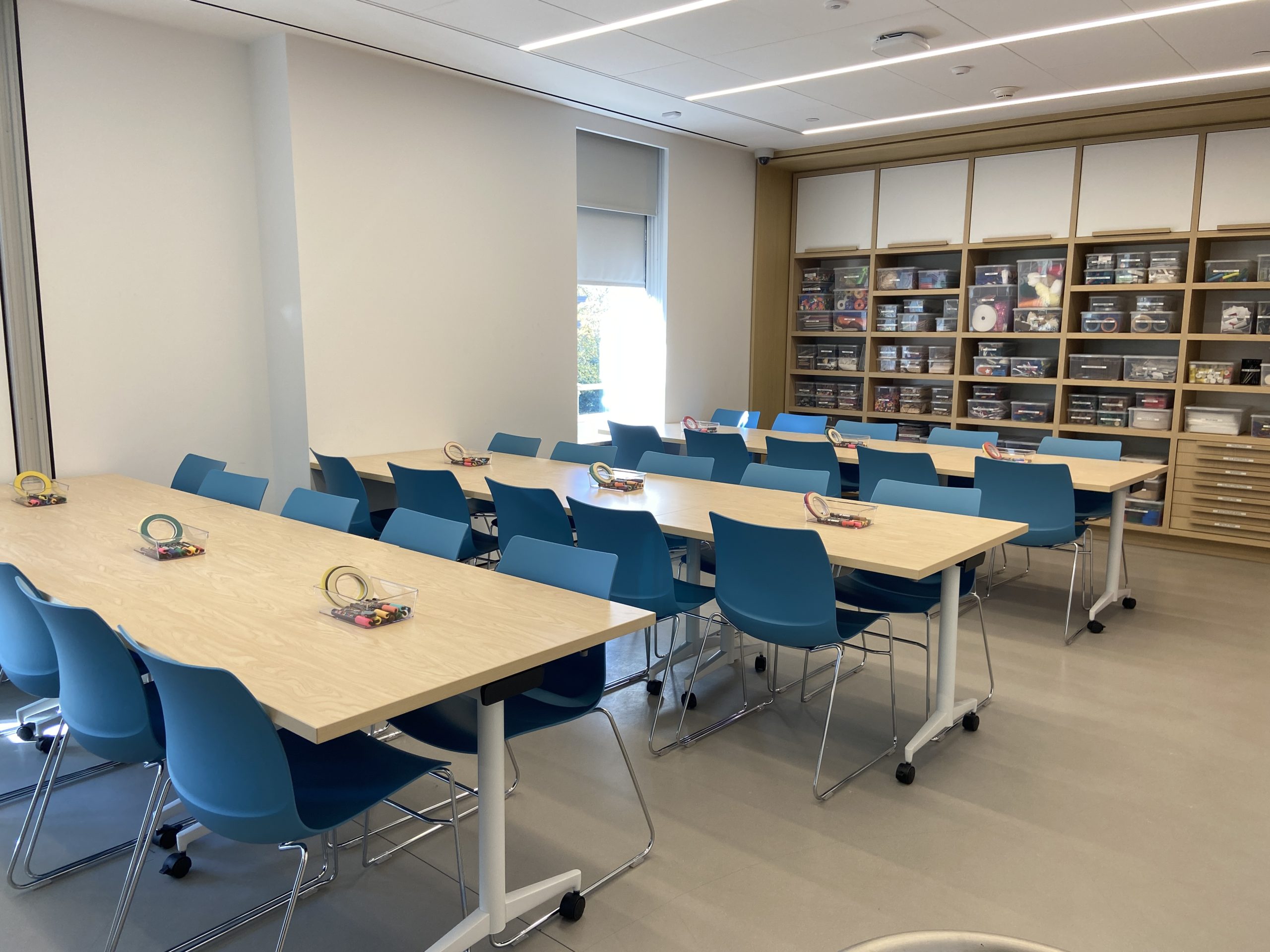
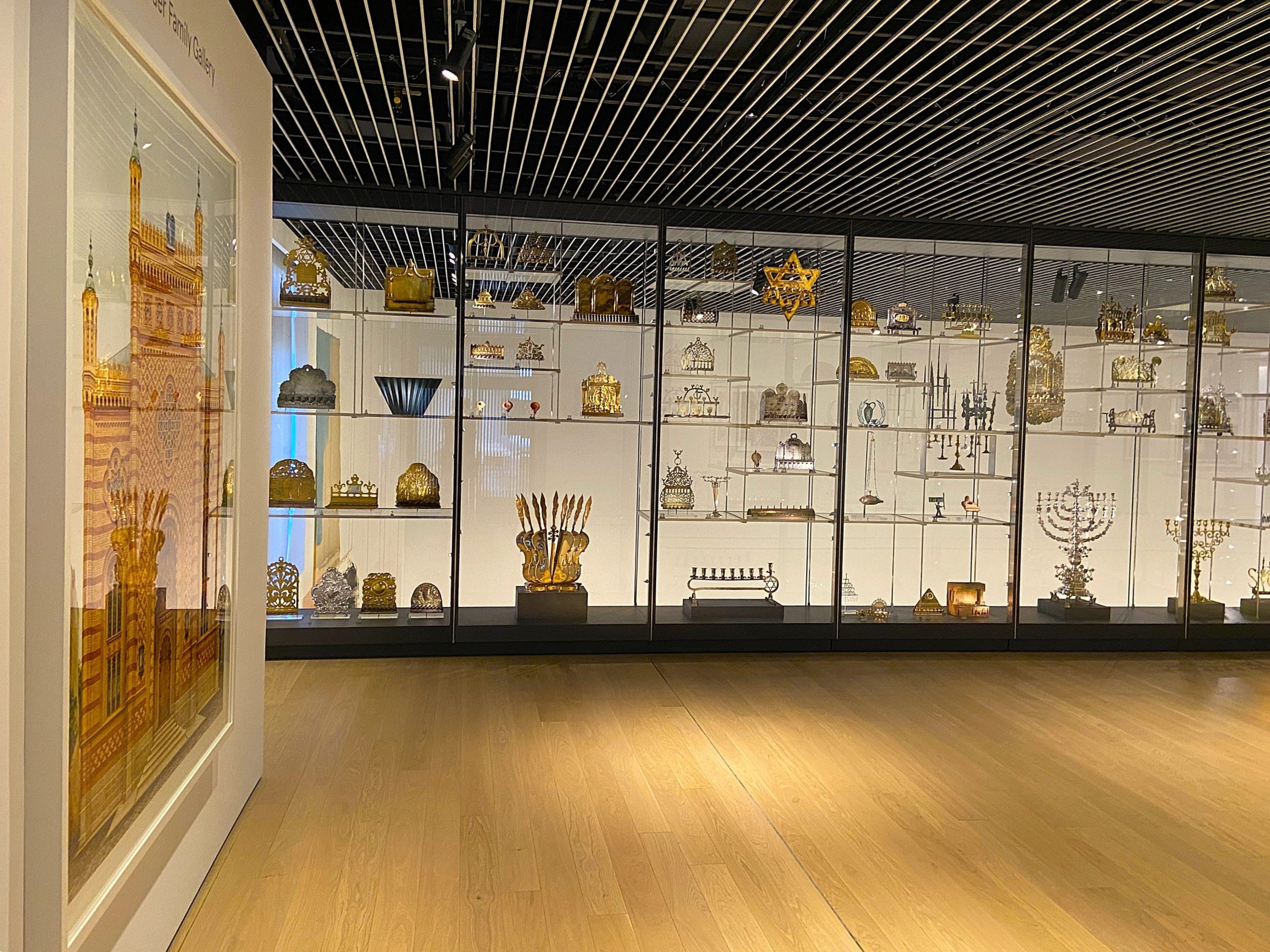
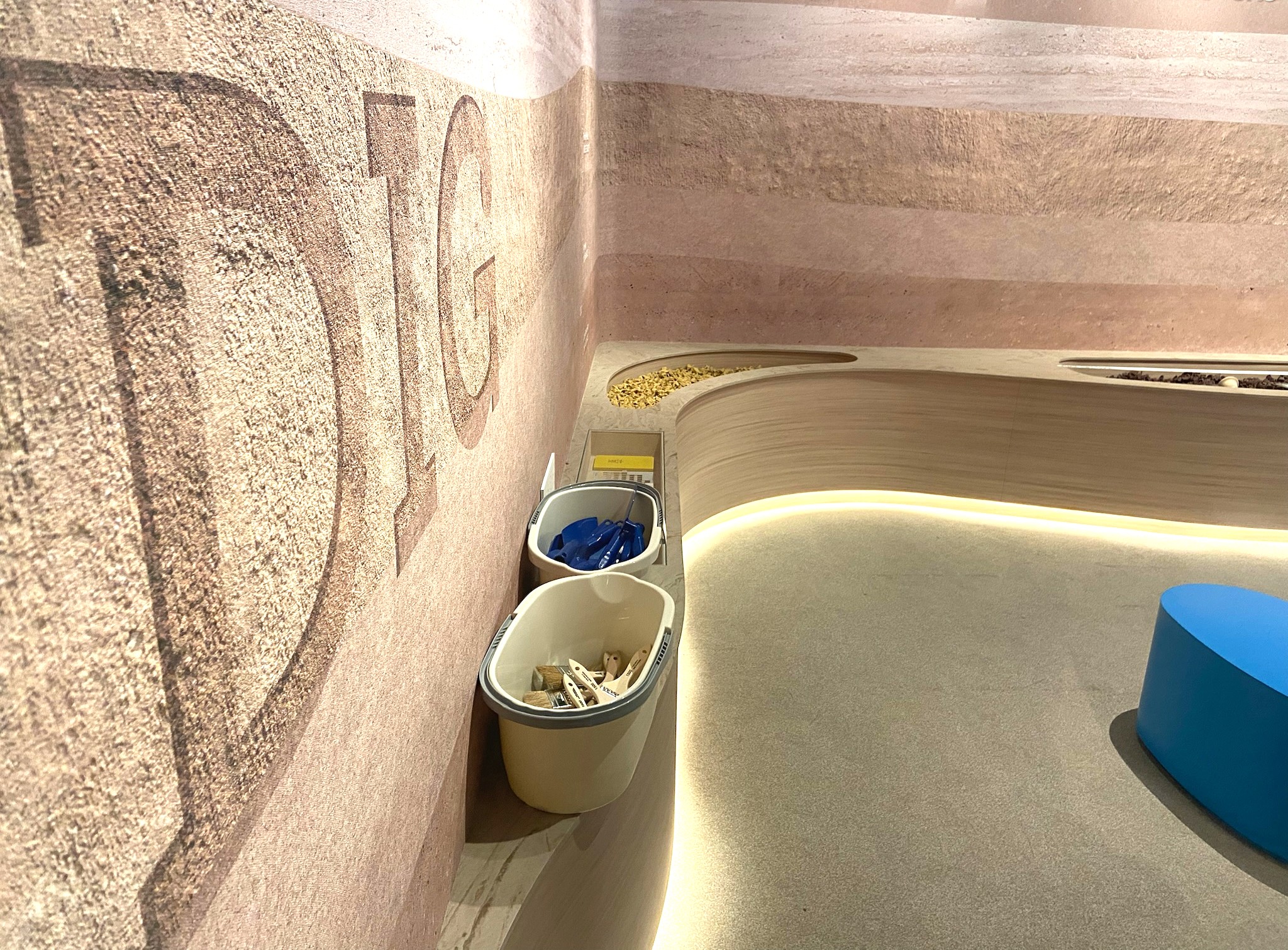
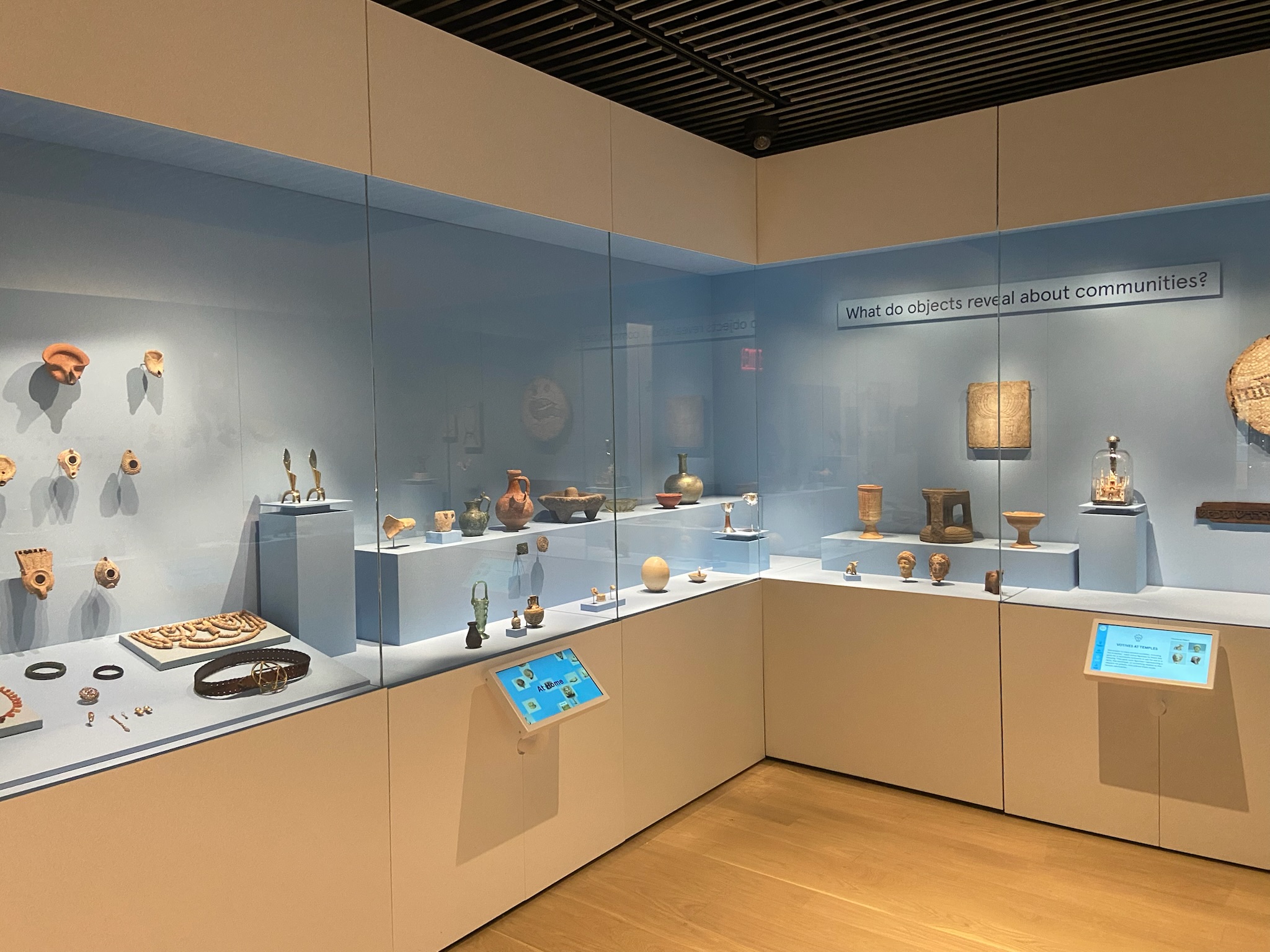
Along with two spacious rooms for art making and a salon-type space for programs, the Center has an installation of objects that reveal how ancient Israelites lived and created. In an adjacent room, a cool simulated archaeological dig gives kids a sense of how discoveries about the past are made; it’s open to groups at designed times.
Part of the Center’s art galleries, a touch wall allows everyone to feel objects, similar to actual items in the museum, made of materials such as clay and metal. Another gallery uses works from the museum’s collection of portraits and landscapes to encourage discussion of different eras and places that shaped Jewish cultures.
Besides in-museum programs such as gallery tours, artist talks, performances, programs for educators, and art-making sessions for kids and teens, the Jewish museum is planning new programs and events for its spaces (check the website). Beyond its building, the Jewish Museum collaborates with Film at Lincoln Center to produce the annual New York Jewish Film Festival. The two-week festival, celebrating its 35th edition in January 2026, explores the Jewish experience through screenings of narrative, documentary, and short films from around the world.
Side Dish
At Lox, the Jewish Museum’s restaurant, gleaming white walls and a mural by Maira Kalman with humorous illustrations form the backdrop for hearty Russian and Jewish fare, including five types of cured and smoked salmon served with bagels and in omelets and sandwiches. This kosher spot focuses on dairy dishes, so expect borscht with sour cream and cheese blintzes rather than burgers. Chef David Teyf’s creative variations aren’t inexpensive, but there are lighter bites and tempting desserts like chocolate strudel.
Linda Cabasin is a travel editor and writer who covered the globe at Fodor’s before taking up the freelance life. She is a contributing editor at Fathom. Follow Linda on Instagram at @lcabasin.
Featured Photo: The neo-Gothic former home of the Warburg family opened as the Jewish Museum in 1947. Photo by Mike Squires