
For many non-Native Americans, the continent’s indigenous people are a source of fascination, whether because of easy-to-see markers — clothing, pottery, artwork, dance styles, housing traditions and the like — or the not-so-visible features like spirituality or a history that stretches back thousands of years.
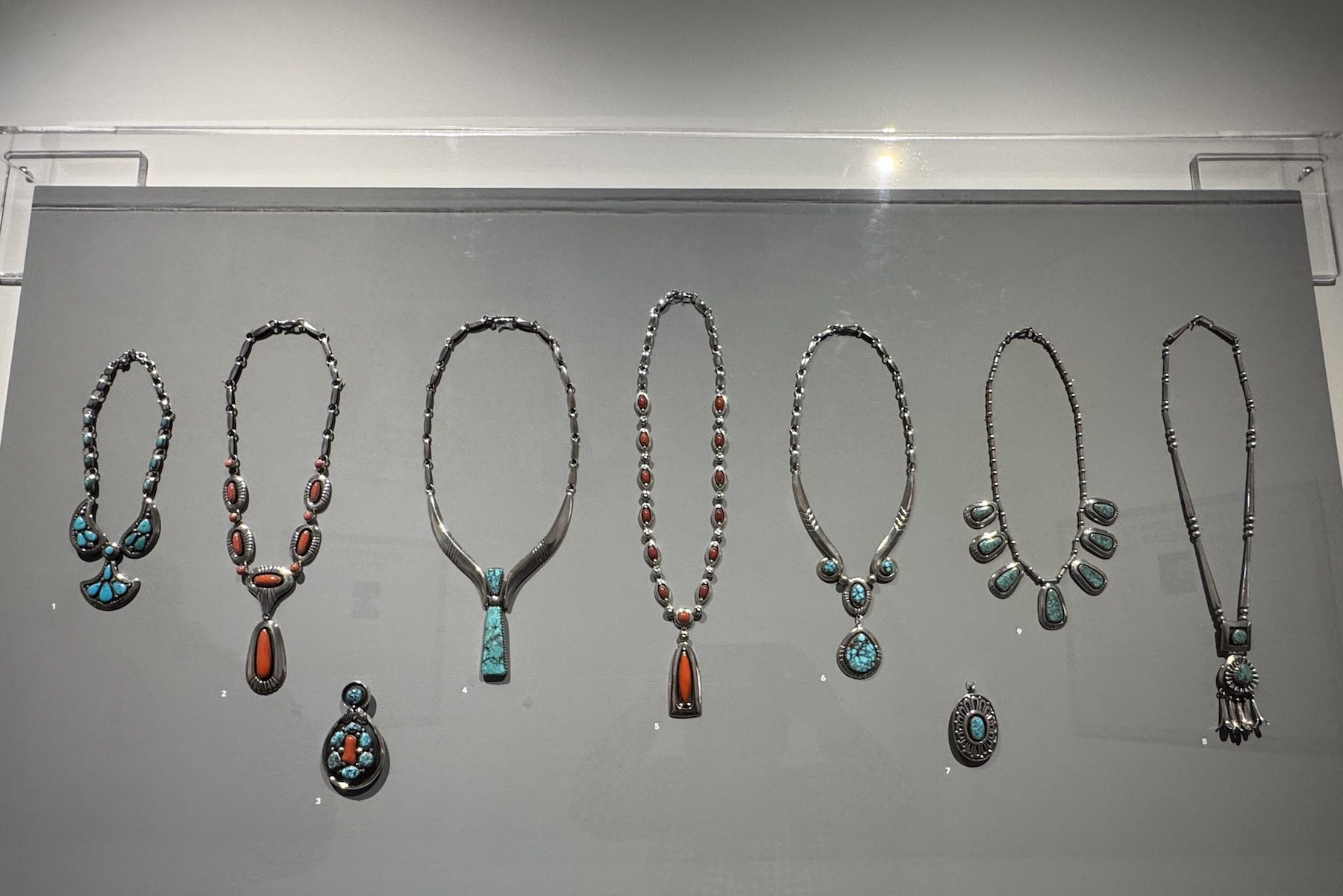
The Pueblo people of the Southwest are among the better known tribal groups, at least from a touristic standpoint. With an estimated population of 75,000 to 80,000, the Pueblo people are a tiny fraction of the country’s Native Americans, but they attract our interest because of distinctive adobe homes, as well as their sought-after pottery and jewelry.
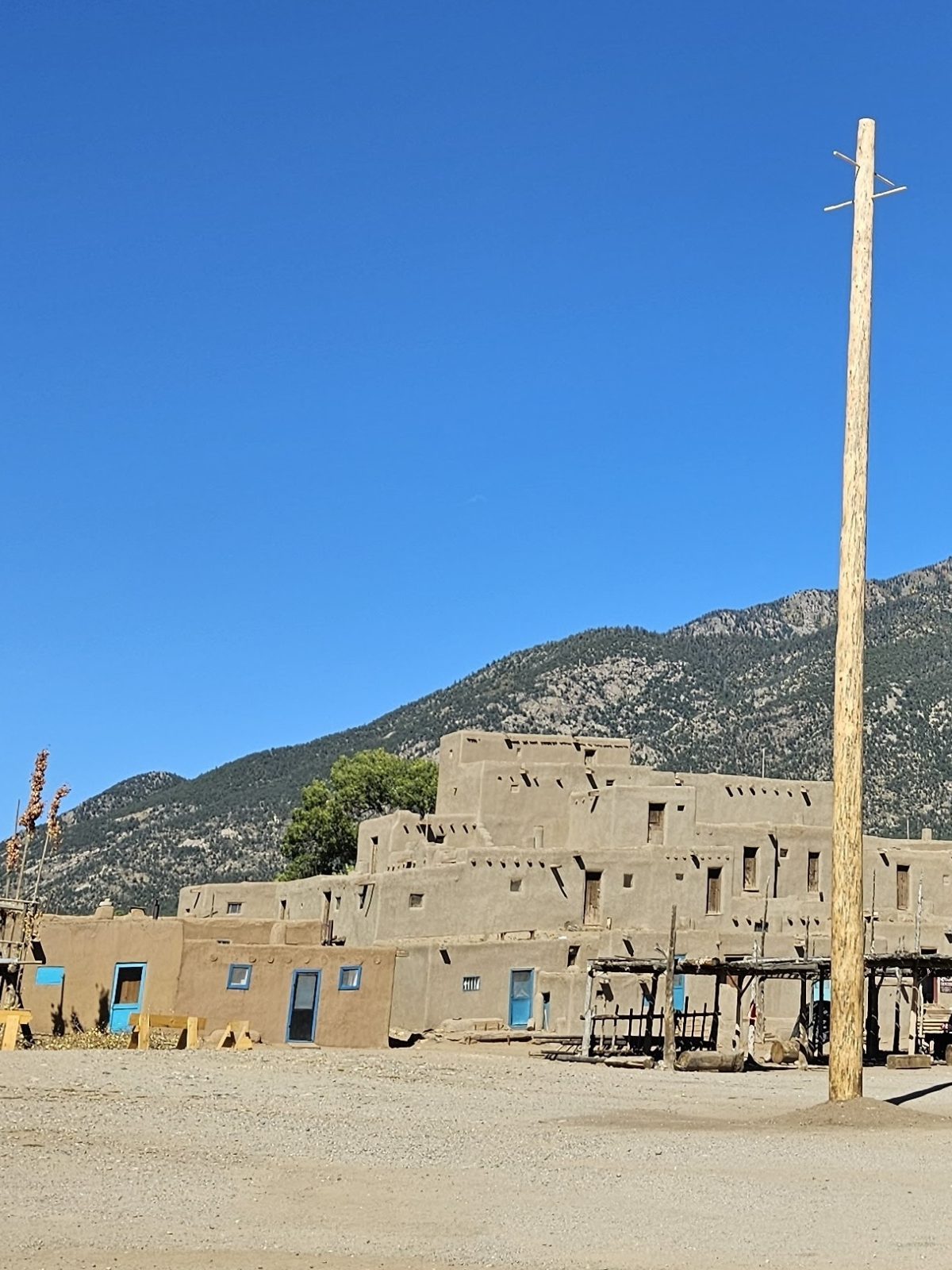
There are 21 federally recognized Pueblo tribes, 19 of them in New Mexico. (The other two are in Arizona and Texas.) Each Pueblo nation has its own origin story, spiritual understandings and governing structure. Further, among them, there are five languages, but without evidence that the languages are related. Despite differences, all Pueblo nations share the cultural heritage of Ancestral Puebloans, forebears who lived in Colorado, Nevada and Utah, as well as Arizona and New Mexico, before the arrival of Spanish explorers in the 1500s.
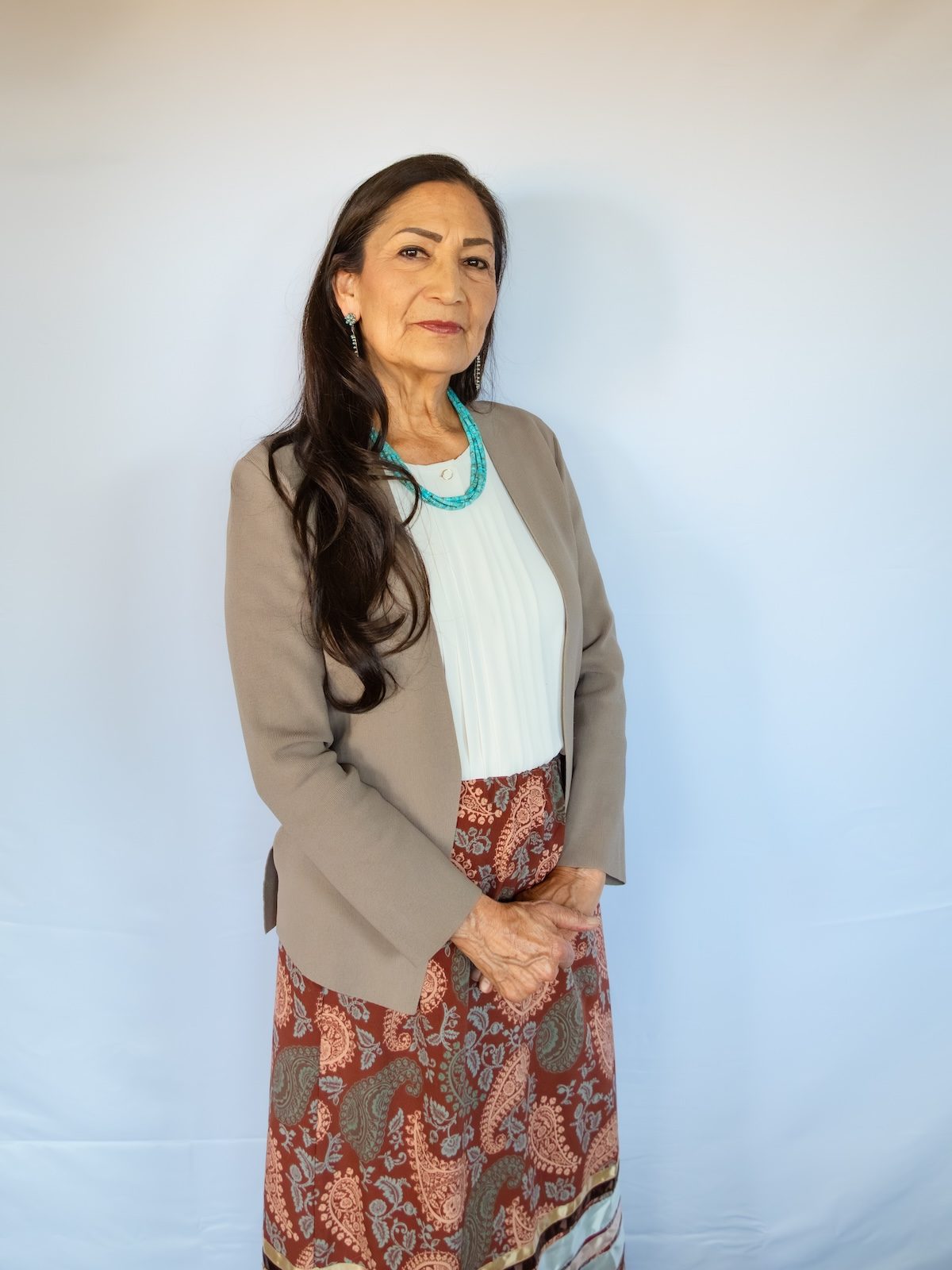
For visitors, the Acoma and Taos villages are probably the best known. And the best known modern Pueblo figure is Deb Haaland, formerly a member of Congress and secretary of the interior and now candidate for New Mexico governor.
50 years ago
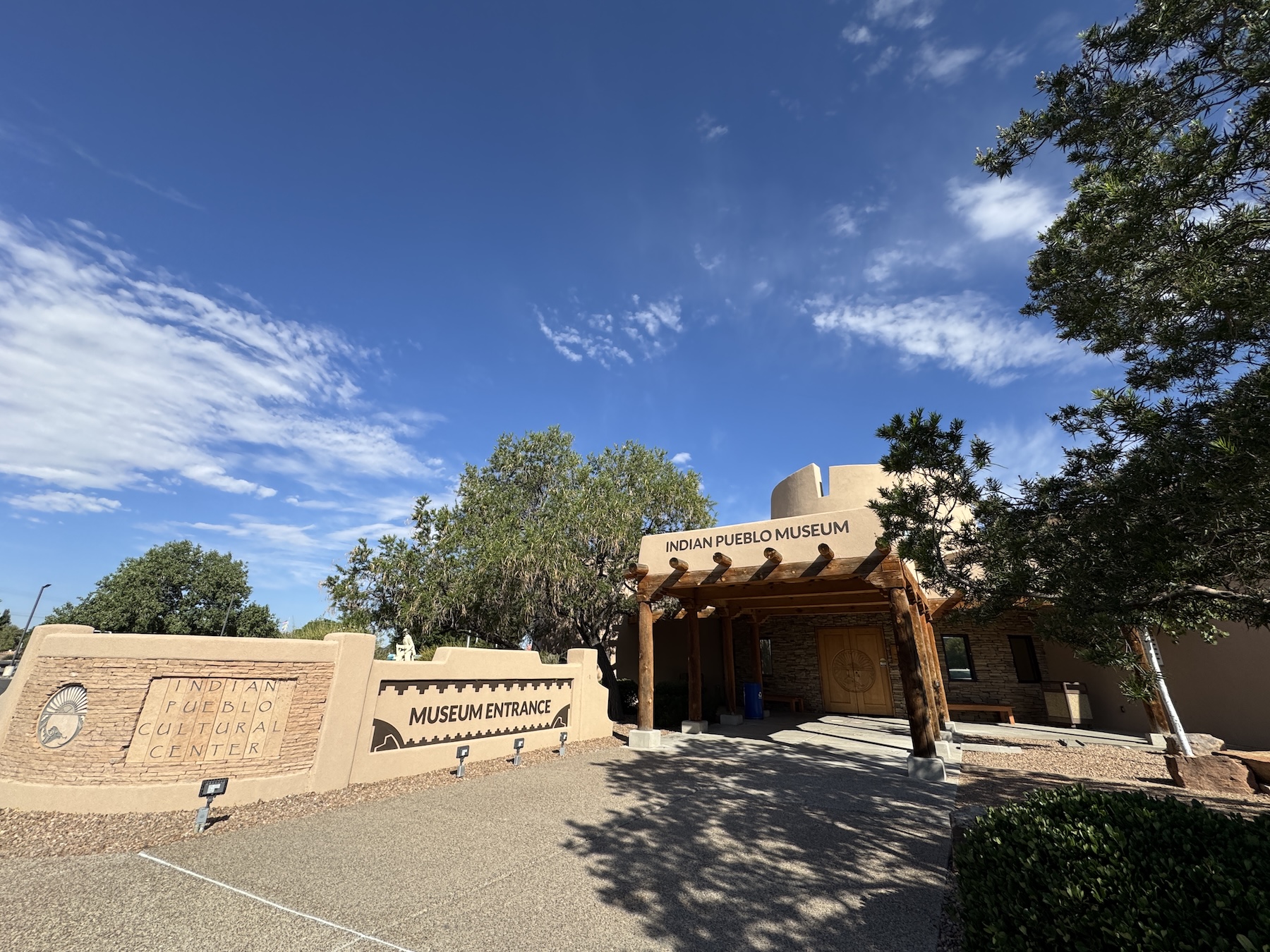
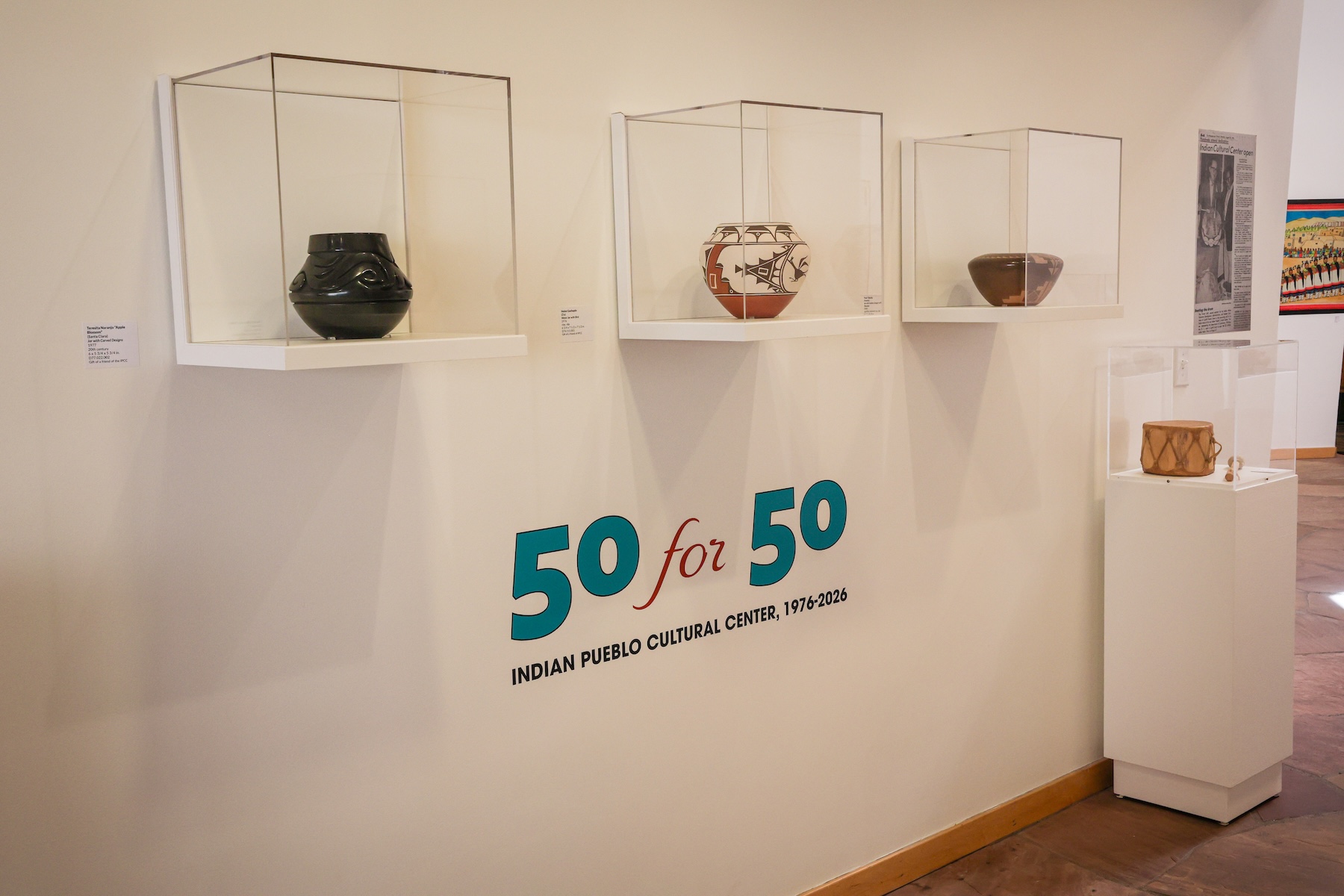
New Mexico’s 19 Pueblo tribes asserted control of their saga with the launch in 1976 of a nonprofit museum and cultural center in the heart of Albuquerque, the state’s largest city. The facility is celebrating its 50th anniversary with the exhibit, “50 for 50: Indian Pueblo Cultural Center, 1976-2026.” The show, which features 50 objects from the center’s archives is on view through Feb. 15, 2027.
Founders of the Indian Pueblo Cultural Center (IPCC) set out to enhance the public’s understanding and appreciation of the Pueblo culture while encouraging and preserving Pueblo artistic expression. What they, and we, have 50 years later is a robust establishment where strangers can dive into all things Pueblo, see the culture manifested in dancing, storytelling and artists’ demonstrations, and — not least — support Native American artists with their dollars.
Telling the story
A permanent exhibit called, “We Are of This Place: The Pueblo Story,” introduces us to the groups’ spiritual sensibilities, showcases the Pueblo way of life and lifts up Pueblo accomplishments.
The exhibit opens with the Pueblo origin story, describing the people’s emergence from underworlds. It tells of their eventual division into multiple Pueblo communities and their migrations after first living in places like Mesa Verde, Chaco Canyon, Bandelier and Puye Cliffs. It refers to Pueblo rock inscriptions — a reference to places like the Petroglyph National Monument. The arrival of the Spaniards upended Pueblo lives, and the exhibit provides some details of a 1680 Pueblo Revolt, resistance that kept the Spanish out for 12 years.
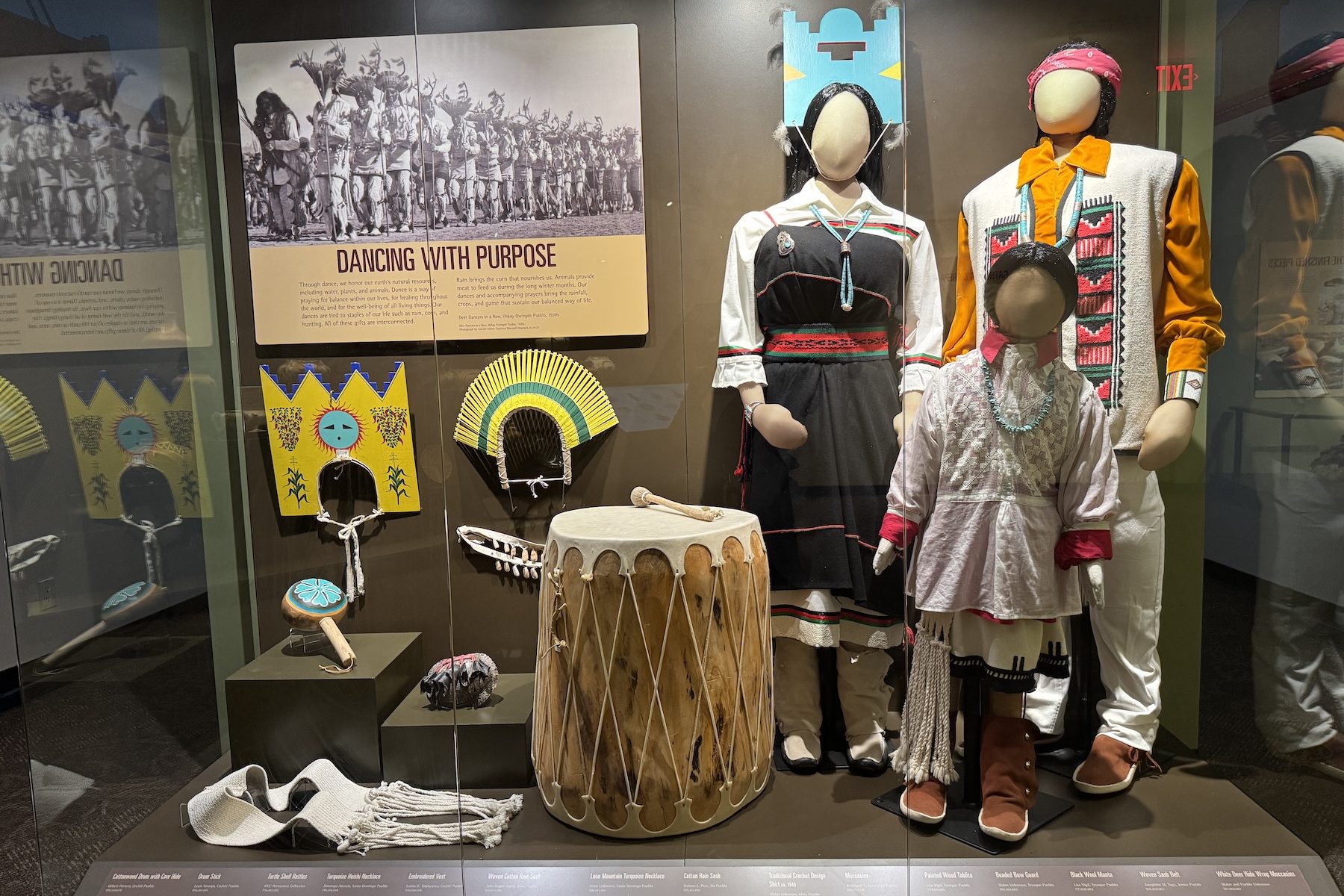
Displays illustrate how moccasins and drums are made, or how one may paint pottery. Under the header, “Dancing With Purpose,” one module reveals the role of dance as a form of prayer and a way to honor the earth and its gifts. A small darkened room lets visitors watch cultural dances that were filmed at the center.
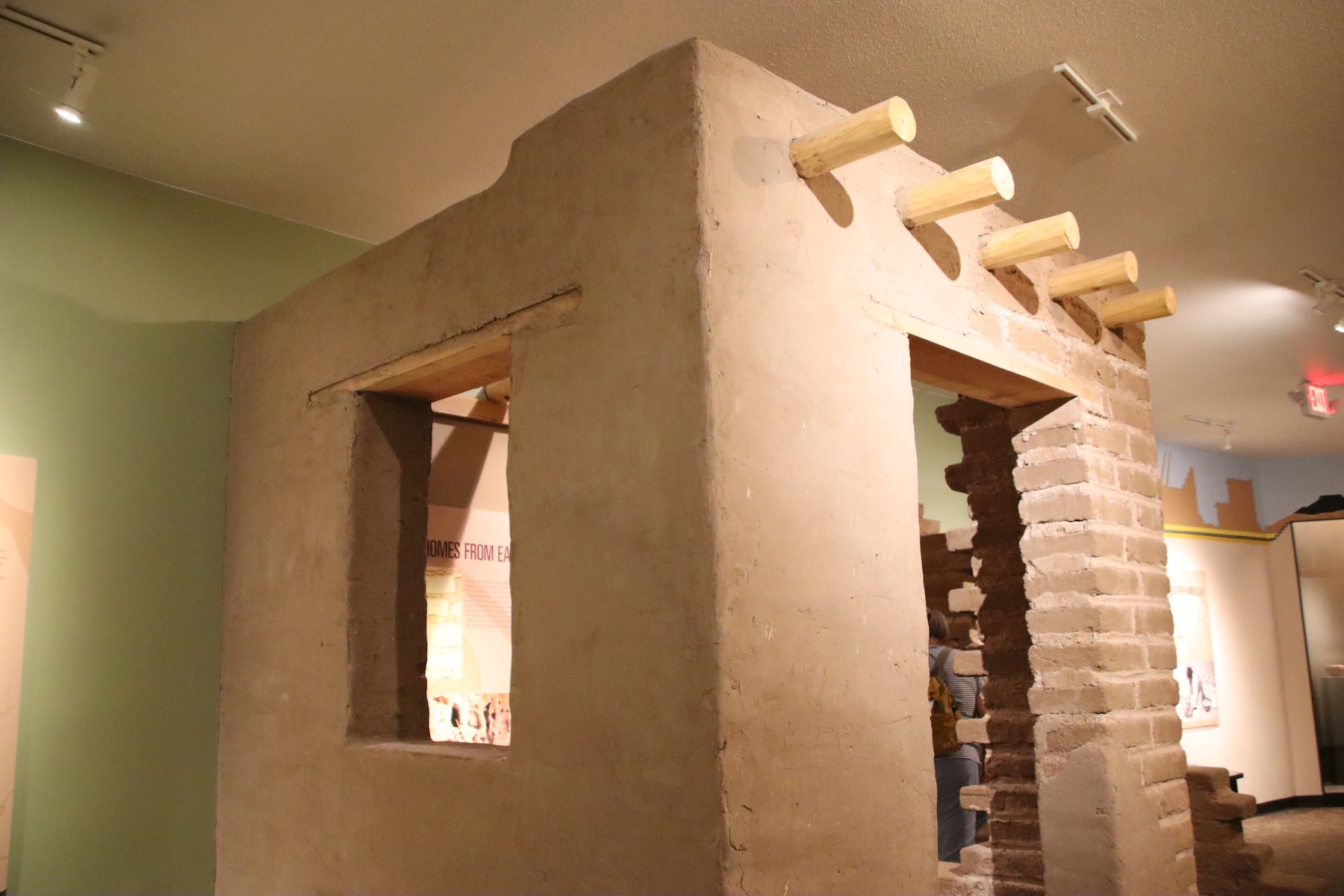
Of special interest, given the Pueblos’ iconic adobe housing, are small models of traditional adobe structures plus a partially constructed life-sized house.
Accompanying narrative advises that today’s Pueblo Indians in their home villages build their homes just as their ancestors did. We are advised the adobe absorbs desert heat by day and releases that heat on cool nights — and that, because no trees are felled and no materials mined, adobe is the most sustainable material for desert living.
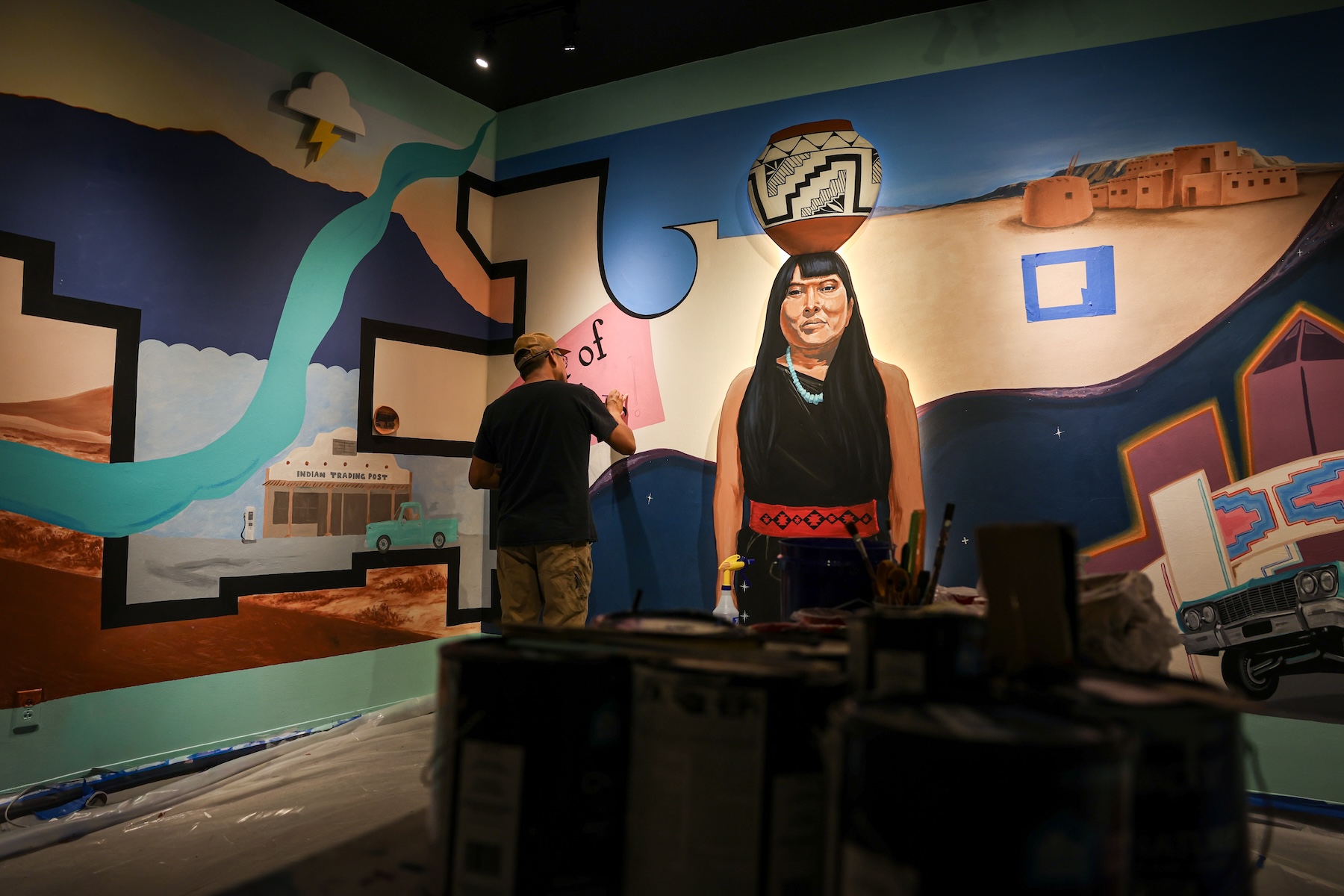
This show ends with a nod to Route 66, which runs through Albuquerque. IPCC commemorated the highway’s 100th anniversary in 2026 by commissioning a sweeping mural. Titled “The Old Road” and undertaken by four Native American artists, it explores the connections between Route 66 and the Pueblo people. It will be on view through June 27, 2027.
Pottery and more
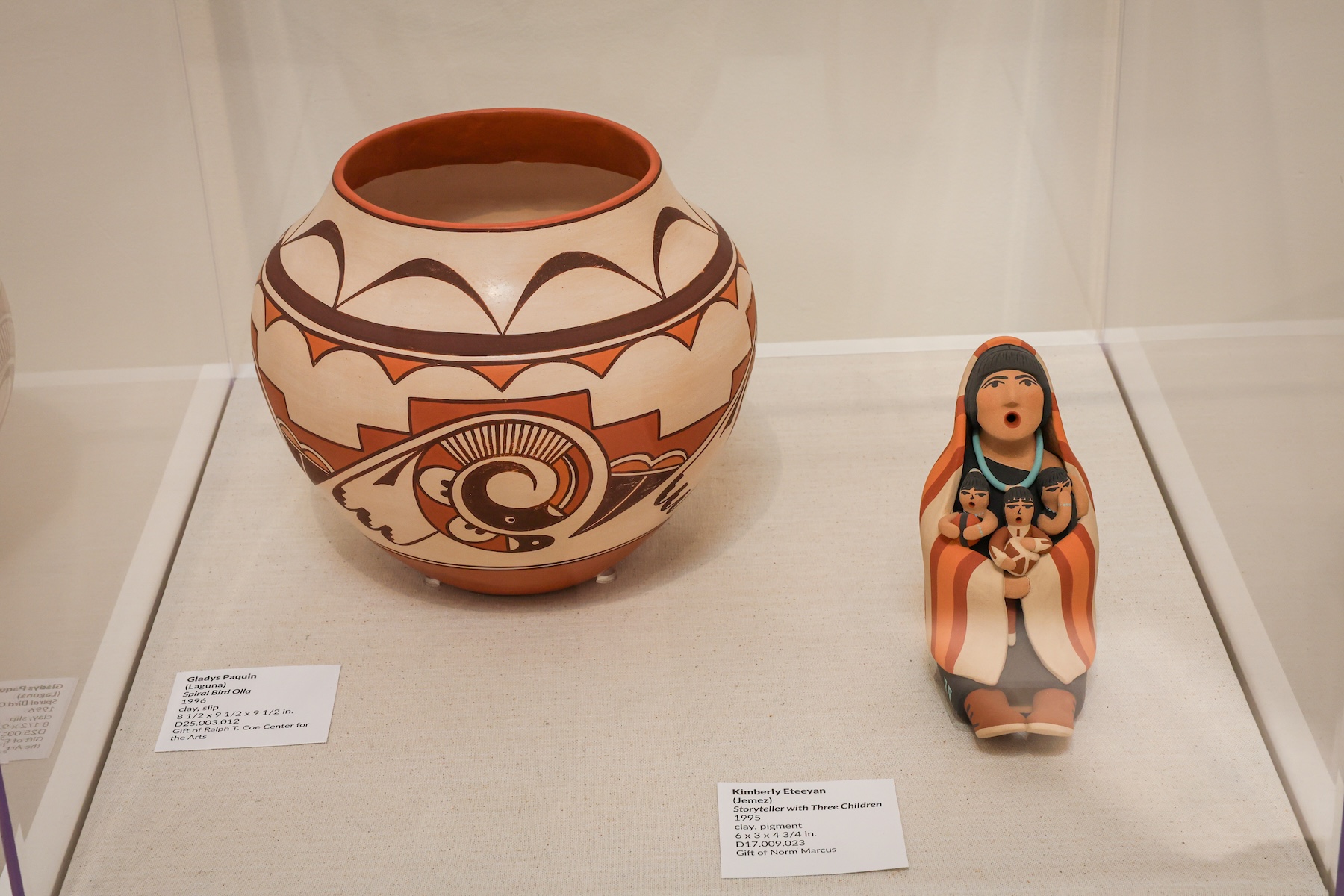
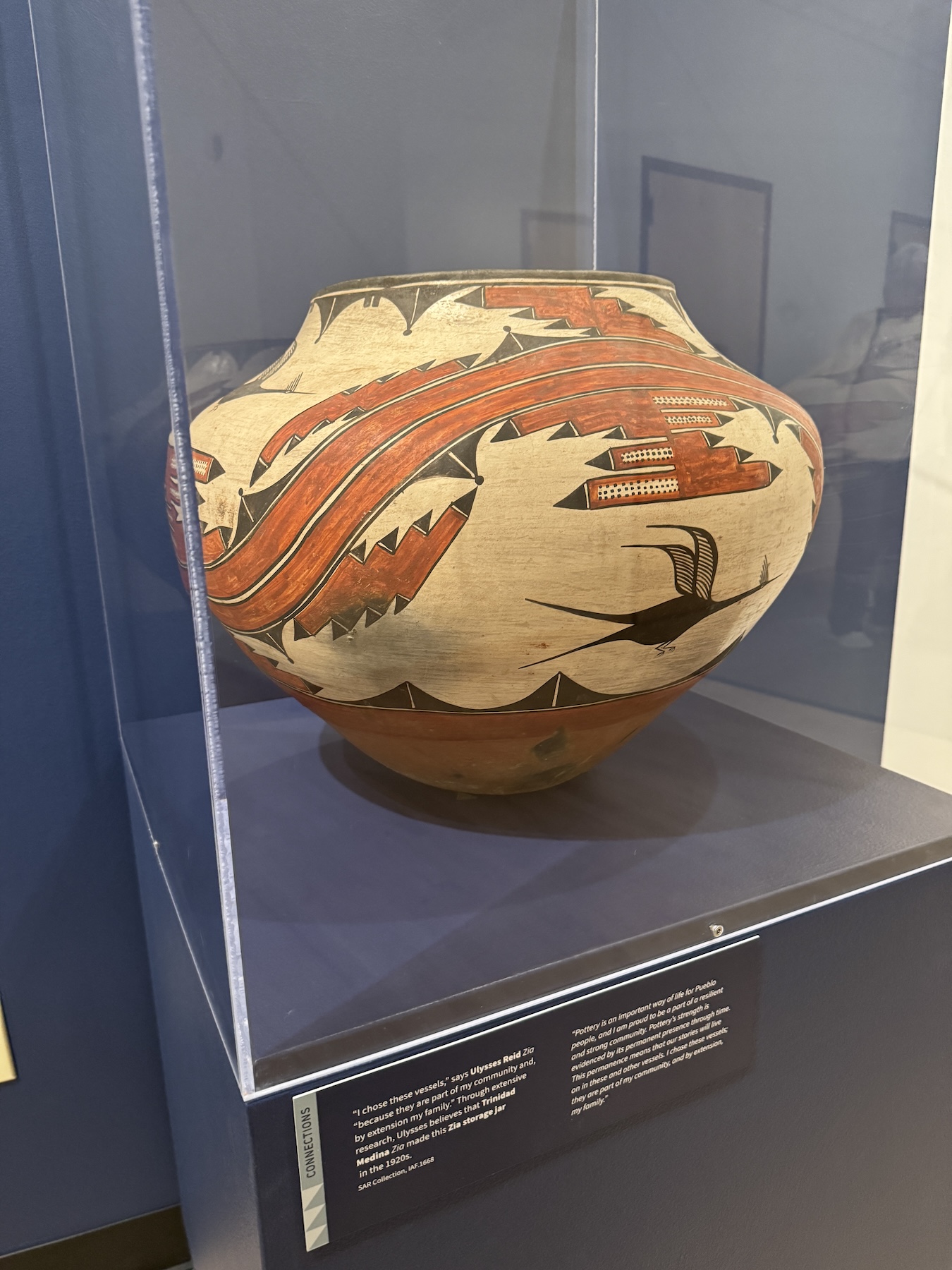
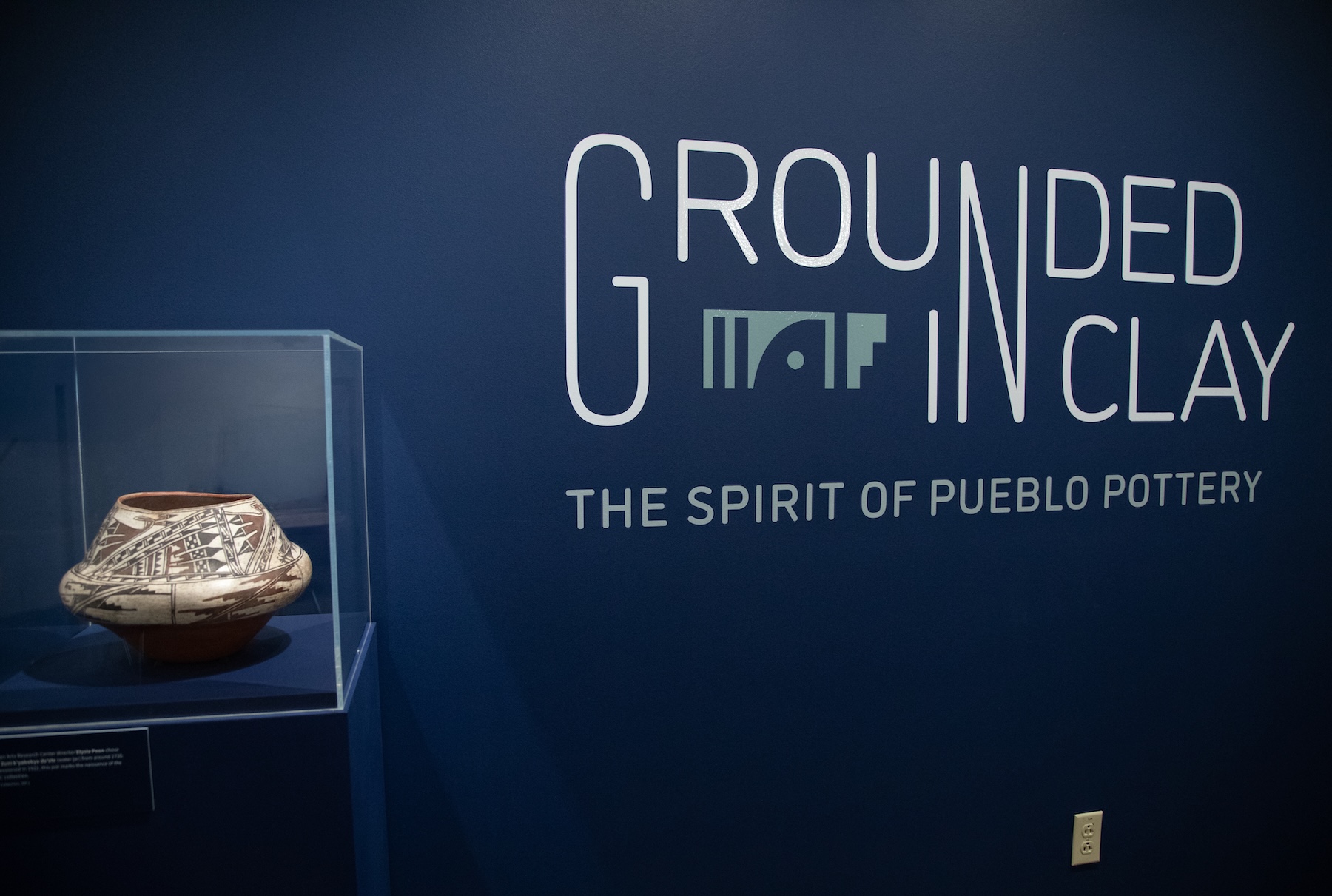
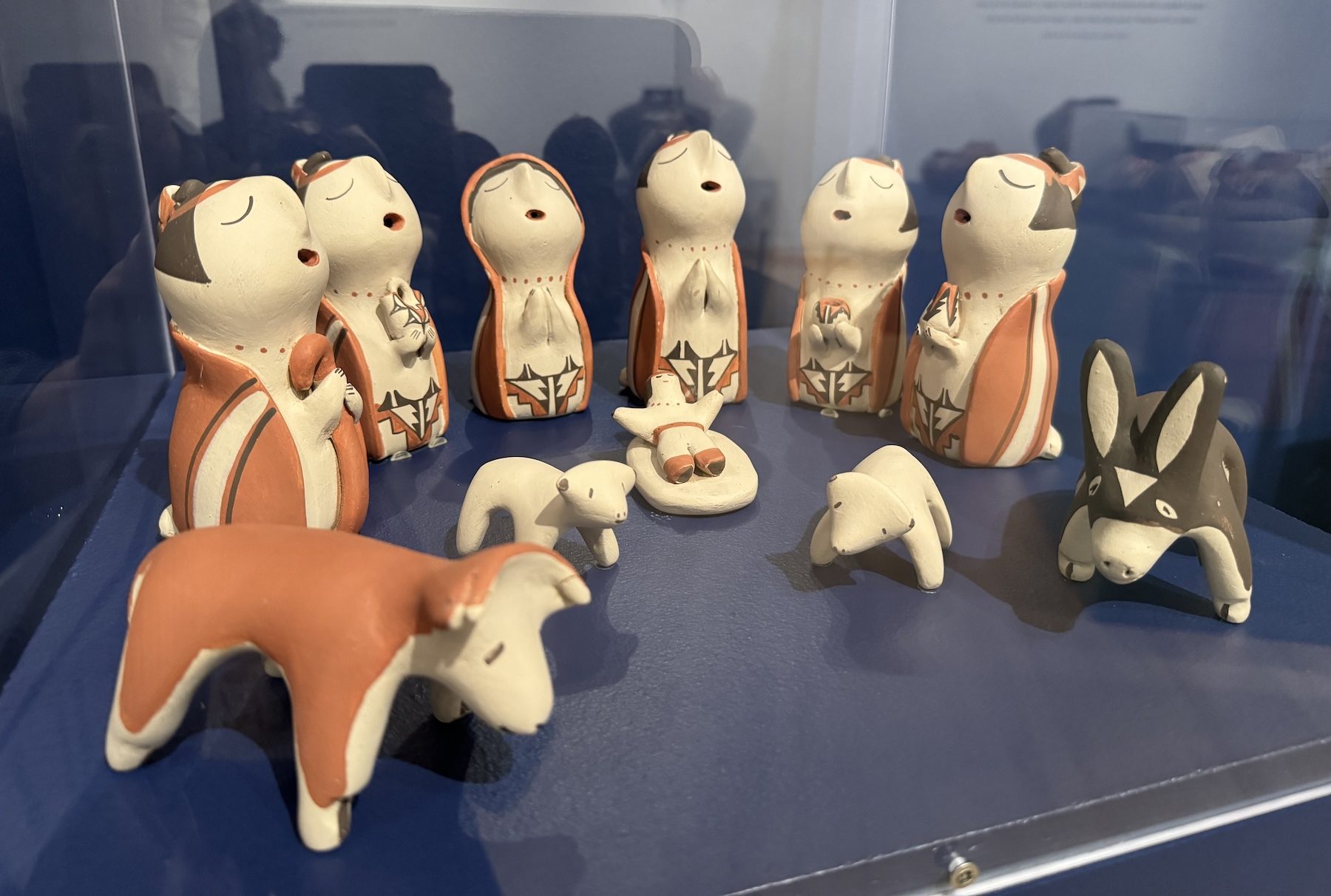
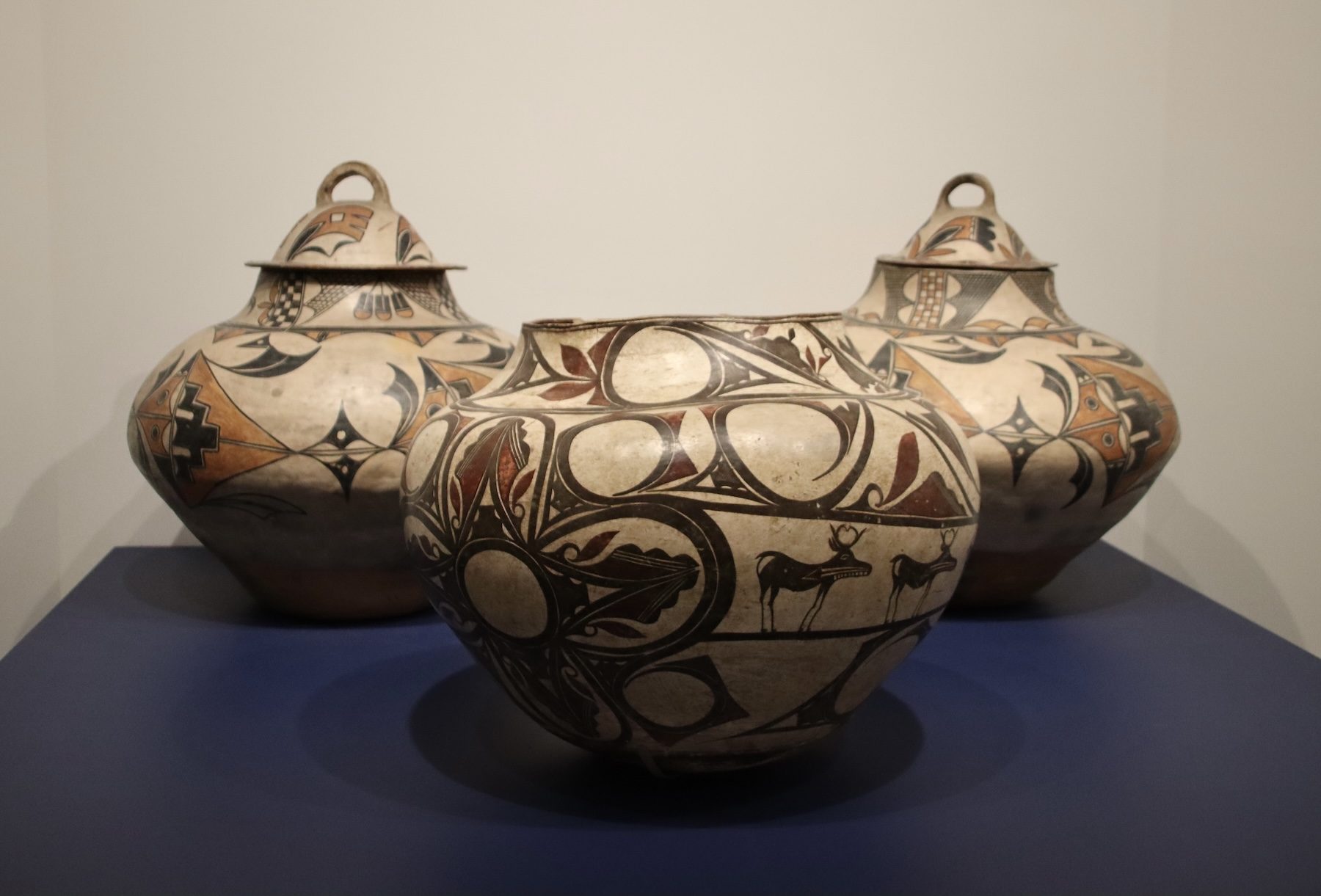
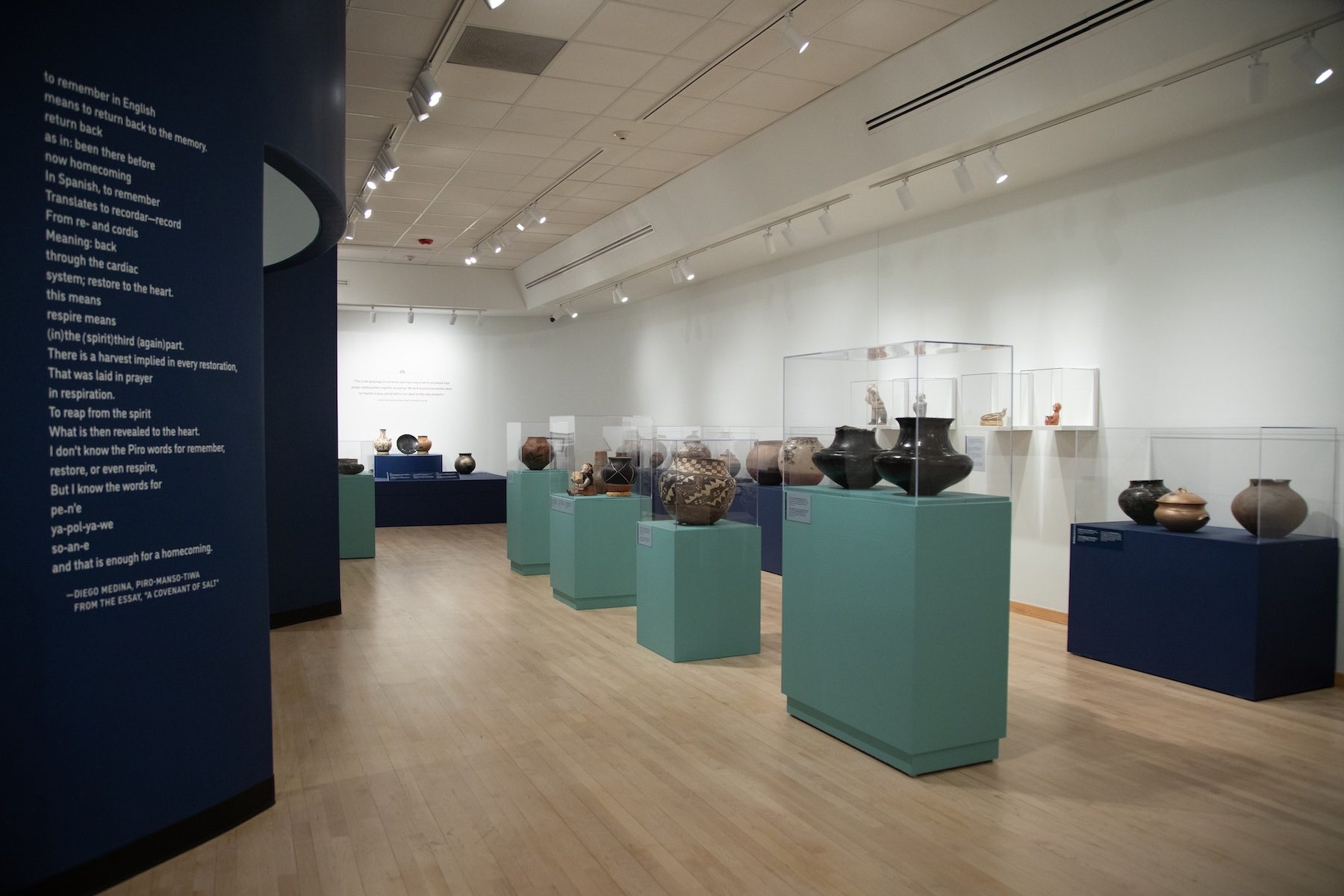
The center’s other current temporary exhibit, “Grounded in Clay: The Spirit of Pueblo Pottery,” features more than 100 historic and contemporary works in clay. It is on view through Feb. 21, 2027.
This is an expansive show, with small and large pieces, old and new, clusters of clay pots in a single case and singular pieces viewed without the distraction of any other thing. Associated commentary is sometimes provided by the artists or the descendants or admirers of the artists — a sly way to convey to us the intimate connection often felt by Native Americans with thoughtfully created works by their potter-artists, objects that are beautiful and functional.
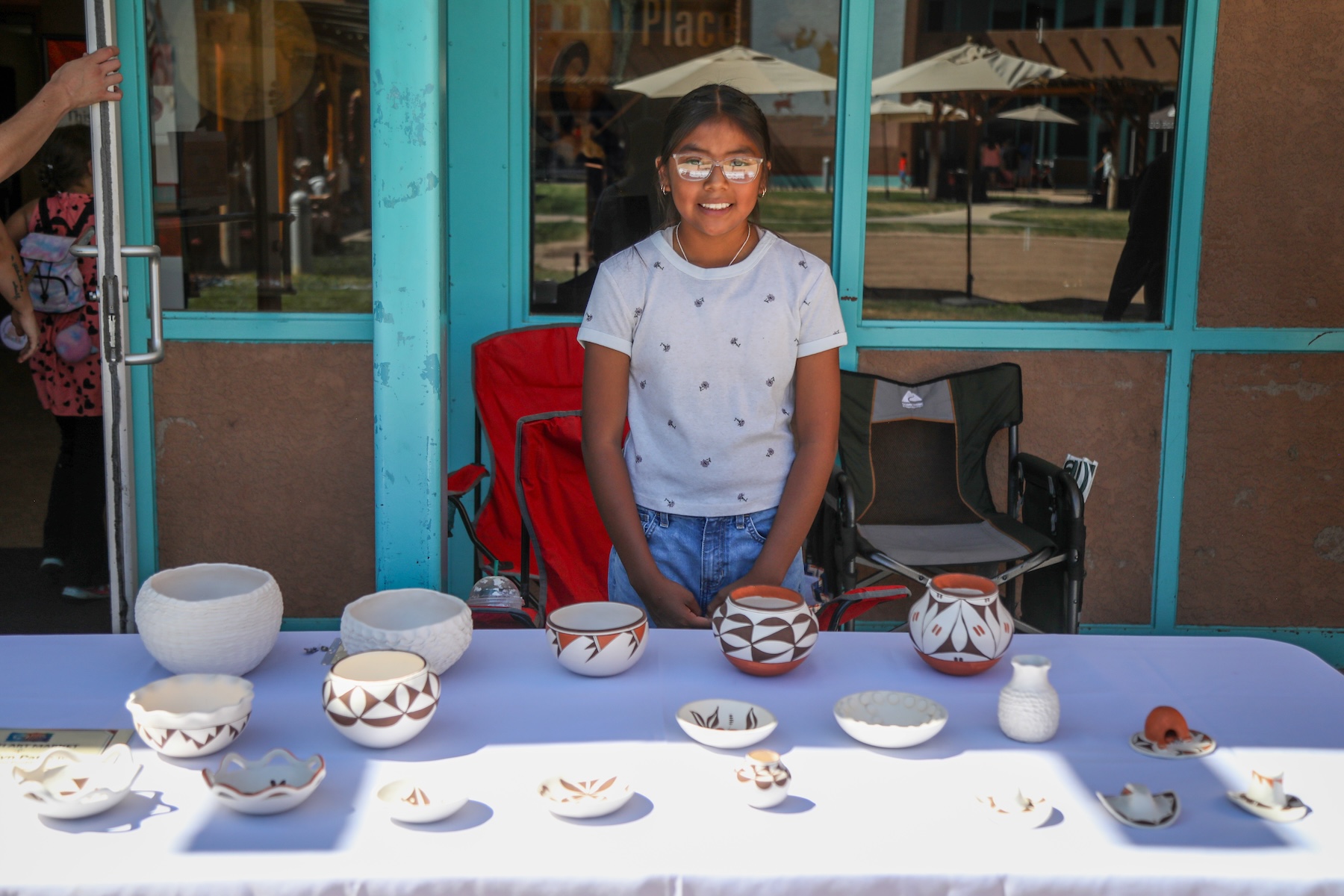
This exhibit can inspire a little shopping, starting with the on-site Indian Pueblo Store which stocks Native American artworks. Also, Pueblo artists can be seen regularly showing their wares at stands on the perimeter of the facility’s courtyard; sometimes, there are live demonstrations of jewelry making, painting or pottery work. Buyers also meet artist-sellers at on-site events such as the American Indian Arts Festival and the Youth Arts Market.
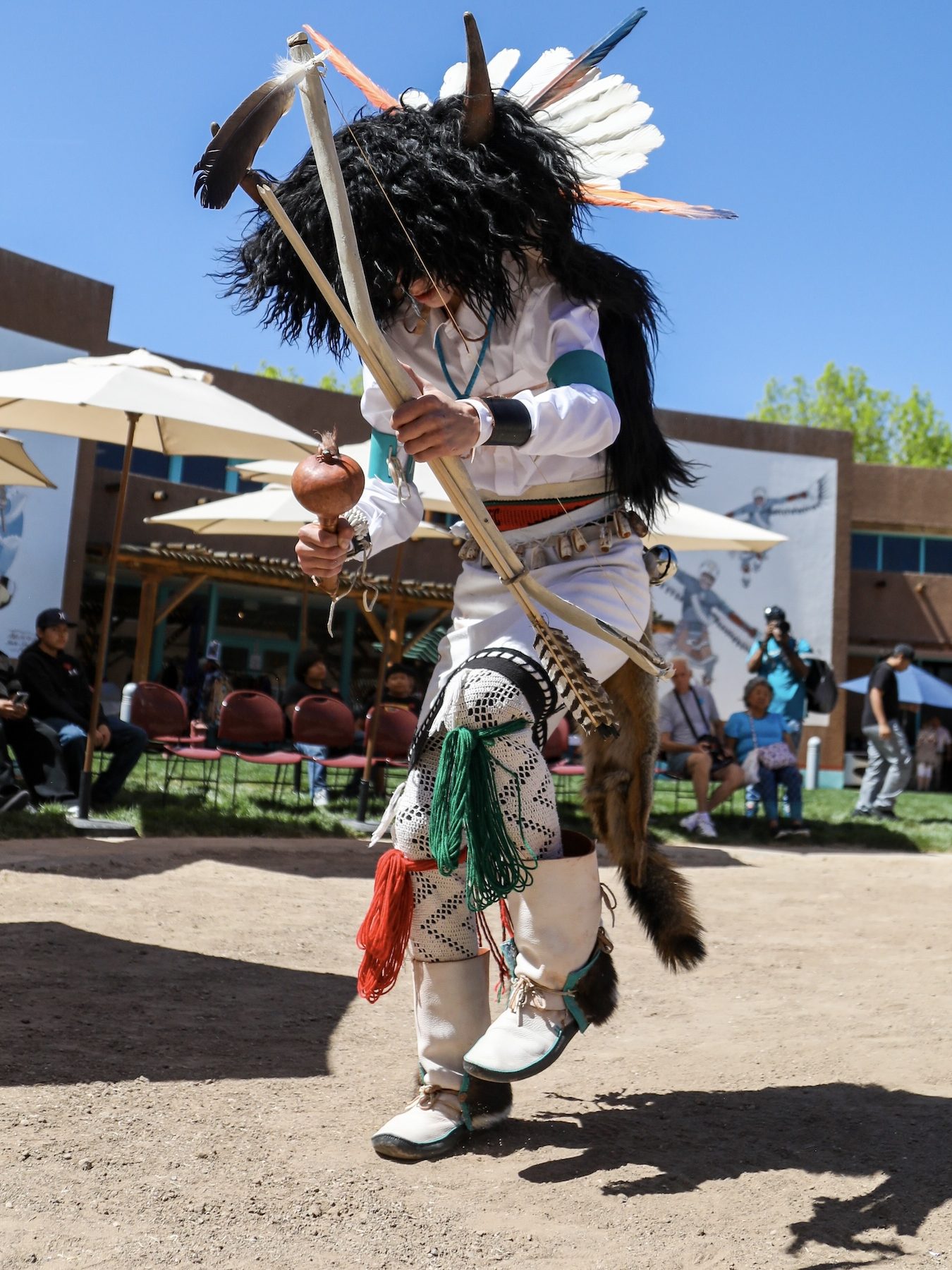
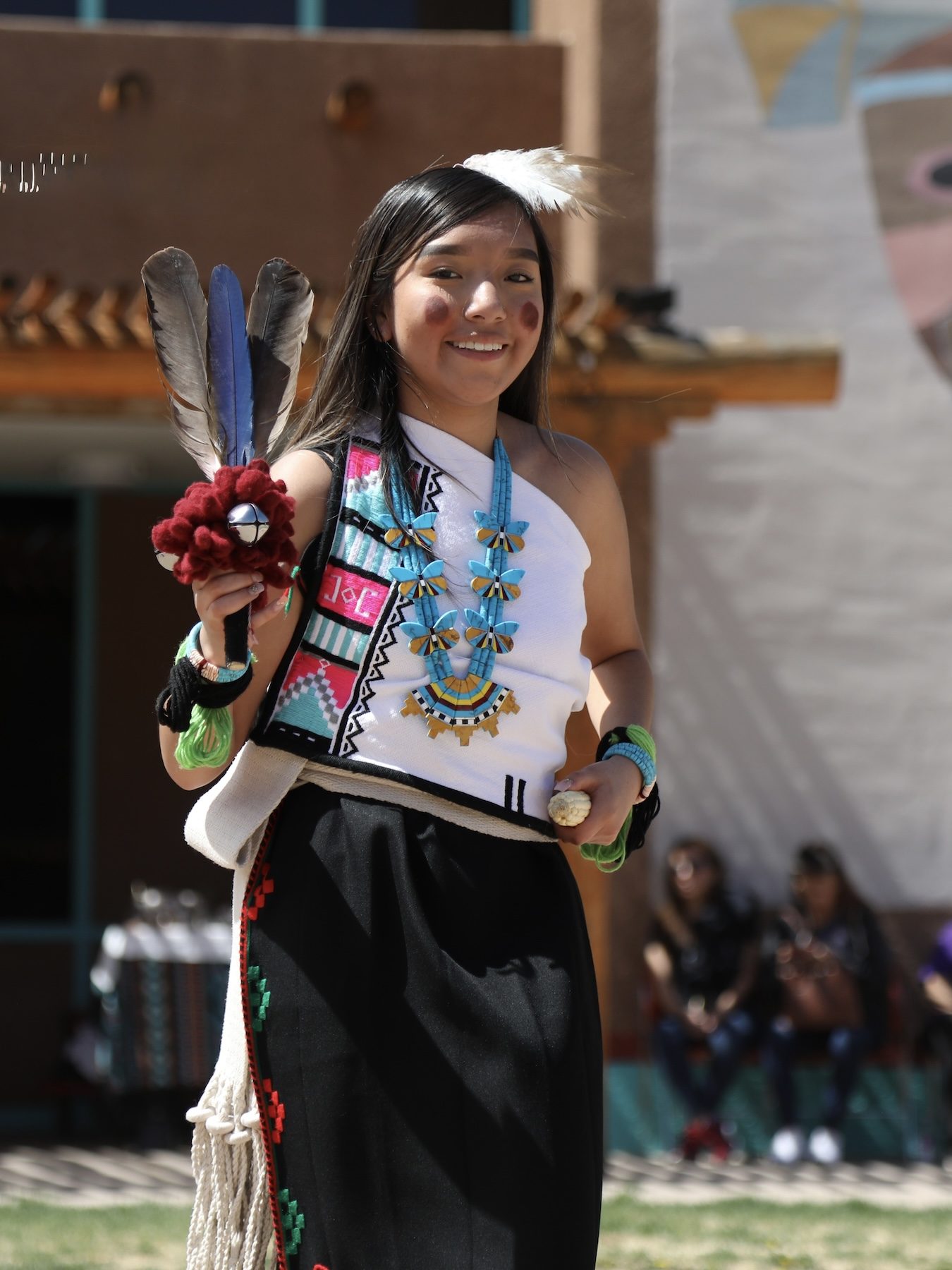
IPCC presents Native American dances every weekend year round. Dance groups represent Pueblo and other tribal groups; in some circumstances, the audience is invited to join in. A bit of everything — buying from artists, cultural dances, storytelling plus programming aimed at students — is rolled into an annual American Indian Week, set for April 19-25 in 2027.
Further, IPCC hosts student groups to interactive tours and, more ambitiously, it provides educators with curricula for teaching New Mexico’s indigenous K–12 students about Pueblo culture and history.
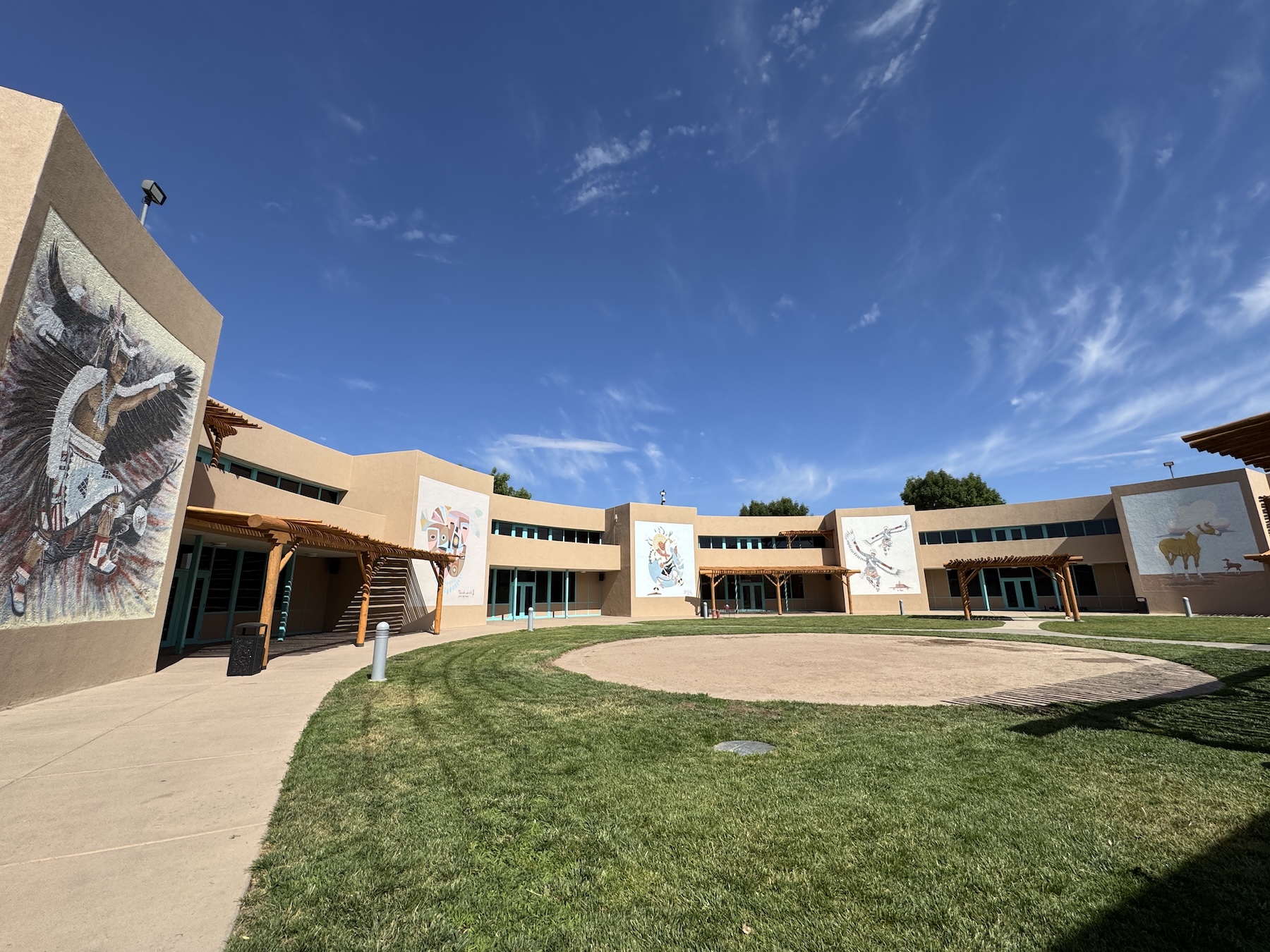
The large courtyard at the heart of the facility, where so many activities are staged, is notable for its murals. The dramatic paintings here, illustrating Pueblo dances, are part of a collection of more than 20 original murals that IPCC commissioned early in its existence. The center offers guided mural tours year round.
Start here for more information about scheduled events: https://indianpueblo.org/programs-events/.
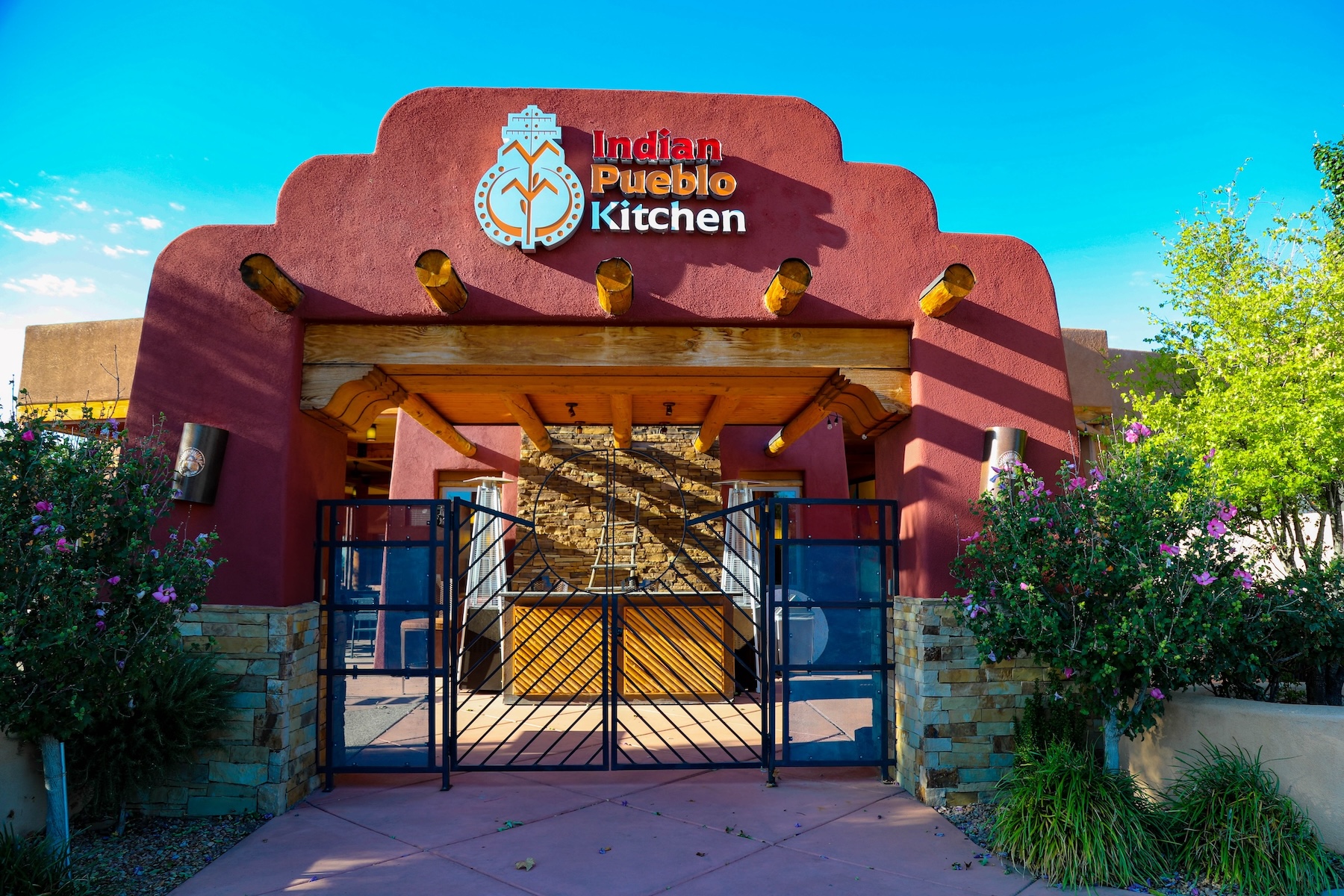
For a different kind of encounter with Pueblo life, IPCC offers the Indian Pueblo Kitchen with a menu inspired by traditional Pueblo foods. Beans and corn figure prominently here.
For-profit operations
Besides owning the Indian Pueblo Cultural Center, New Mexico’s 19 Pueblo tribes own the nearly 80-acre campus where the center is located. Further, they established a sister for-profit company called Indian Pueblos Marketing, Inc., which owns and operates several businesses on the same campus.
The businesses include the 12th Street Tavern; Rainwater Wellness, a spa and retail boutique; a Starbucks, and two hotels: a Holiday Inn Express and a Marriott-branded TownePlace Suites. The for-profit operation was created to support the center and to provide economic opportunities to Pueblo and local communities.
Side dish
IPCC provides a setting for telling the Pueblo story in one place. For those who want more, there are choices, but they require travel.
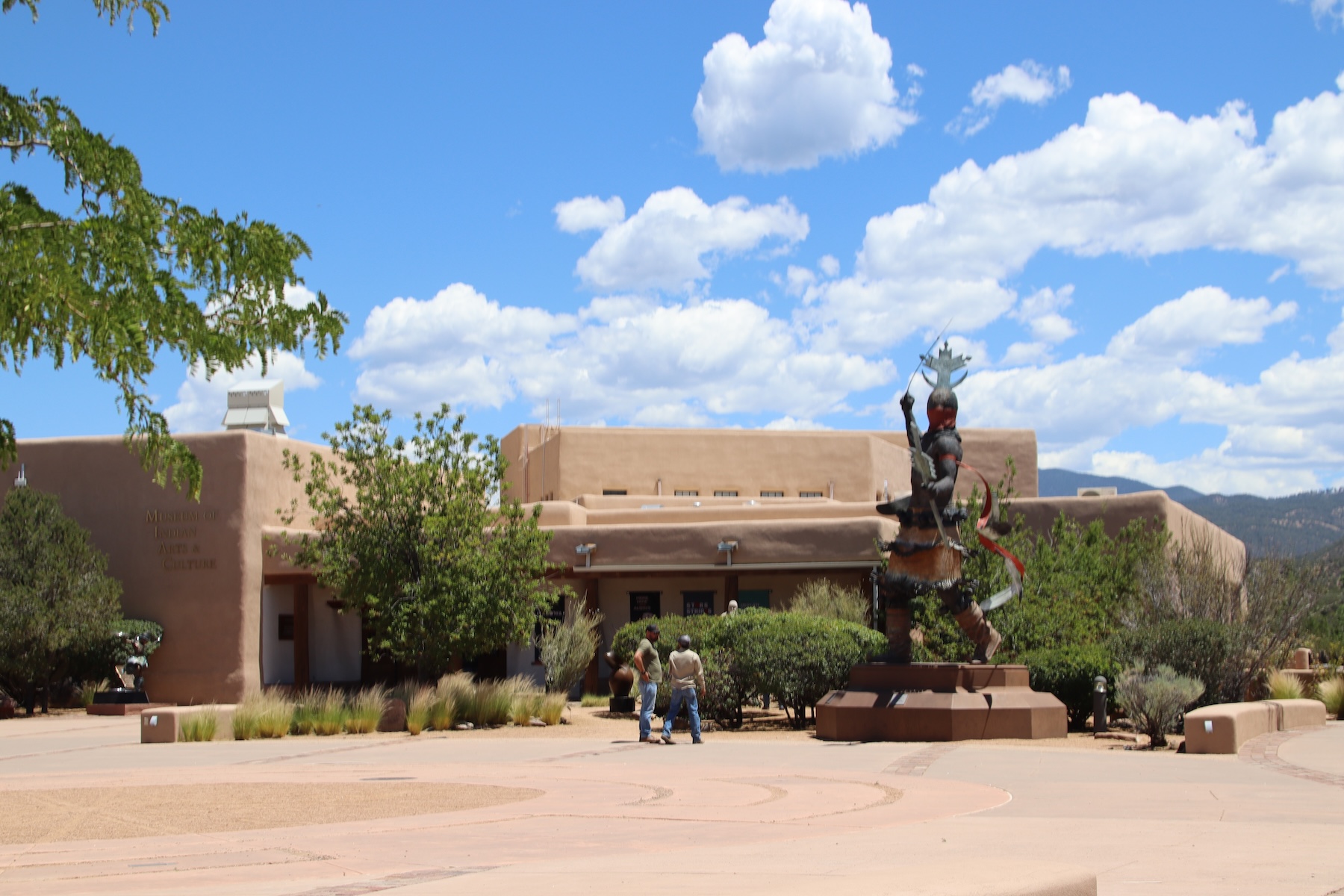
The former settlements mentioned above are now the Mesa Verde National Park, Chaco Culture National Historical Park, Bandelier National Monument and Puye Cliffs Dwellings, a National Historic Landmark. The first two are UNESCO World Heritage Sites. Mesa Verde is in southwest Colorado, the others in New Mexico. Furthermore, the Petroglyph National Park is less than 10 miles west of Albuquerque. And, if heading north to Santa Fe, consider that city’s Museum of Indian Arts & Culture and the Wheelwright Museum of the American Indian.
Finally, although many Pueblo people don’t live in their home villages, tourists have options for visiting. Taos — a UNESCO World Heritage Site — is the northernmost, while Acoma and Isleta are the southernmost. Each Pueblo group is a sovereign nation and has its own framework for visits. Some groups are large enough to have more than one village. Some do not allow photography. Villages close occasionally for private events. Bottom line: Make inquiries before visiting.
Nadine Godwin is a New York-based freelance travel writer. She is the former editor in chief and current contributor to the trade paper, Travel Weekly; editorial director of BestTripChoices.com, and author of “Travia: The Ultimate Book of Travel Trivia.”