
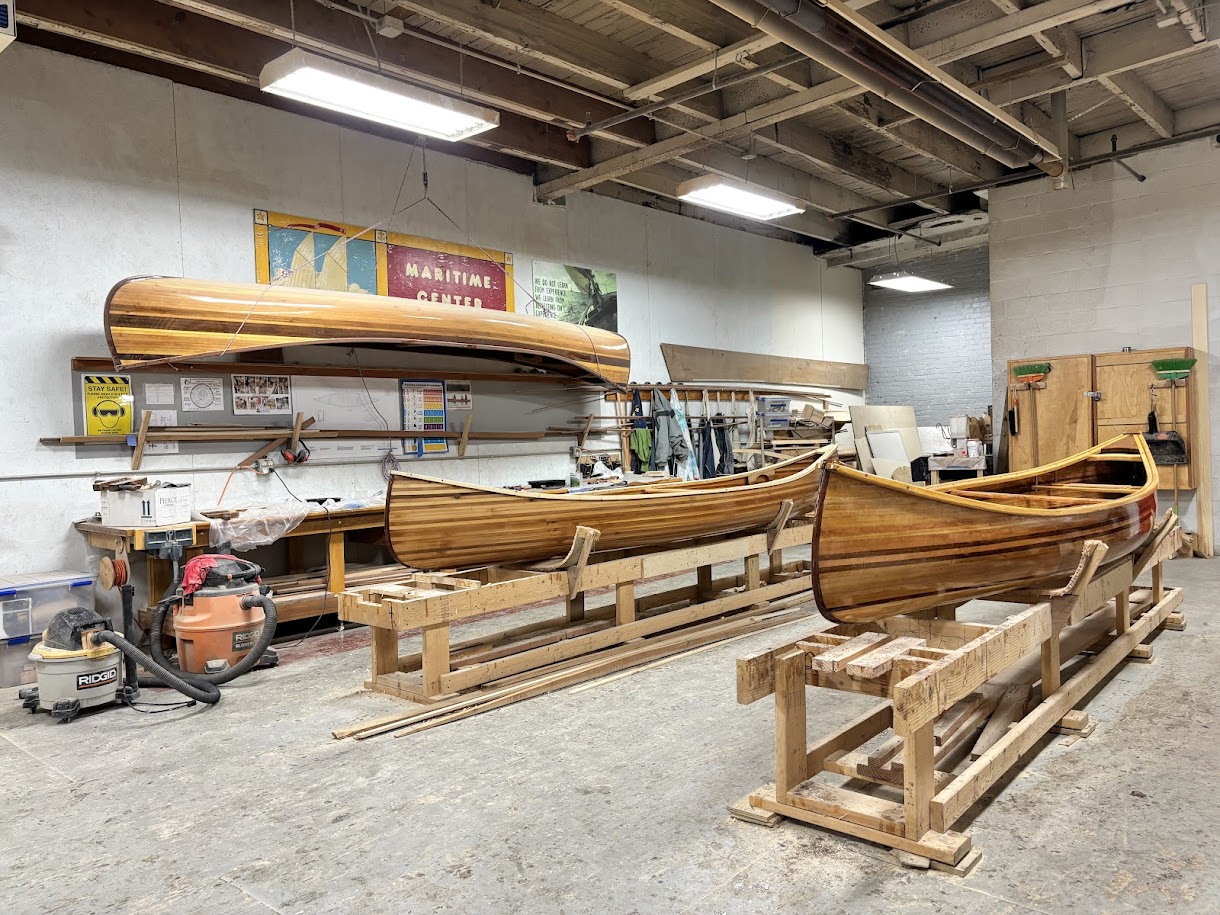
In our world today, everything is quick, and we build things to be thrown away, which harms our environment and our health.
“At Buffalo Maritime Center we teach how to take pride in your work and to build something that will last that contributes positively to the community,”
Chelsea Moore explains. “The philosophy inside the workshop is deeply rooted in patience and a profound respect for materials, contrasting sharply with today’s fast-paced, disposable culture.”
The Center is a living workshop where volunteers, students, and master craftspeople come together to build and restore wooden boats using both traditional and modern techniques. It is also a classroom, a museum, and a community hub that connects Buffalo’s maritime past to its creative present. Through hands-on education and public exhibits, the Center fosters appreciation for the region’s waterways, craftsmanship, and history.
A Living Link to the Erie Canal
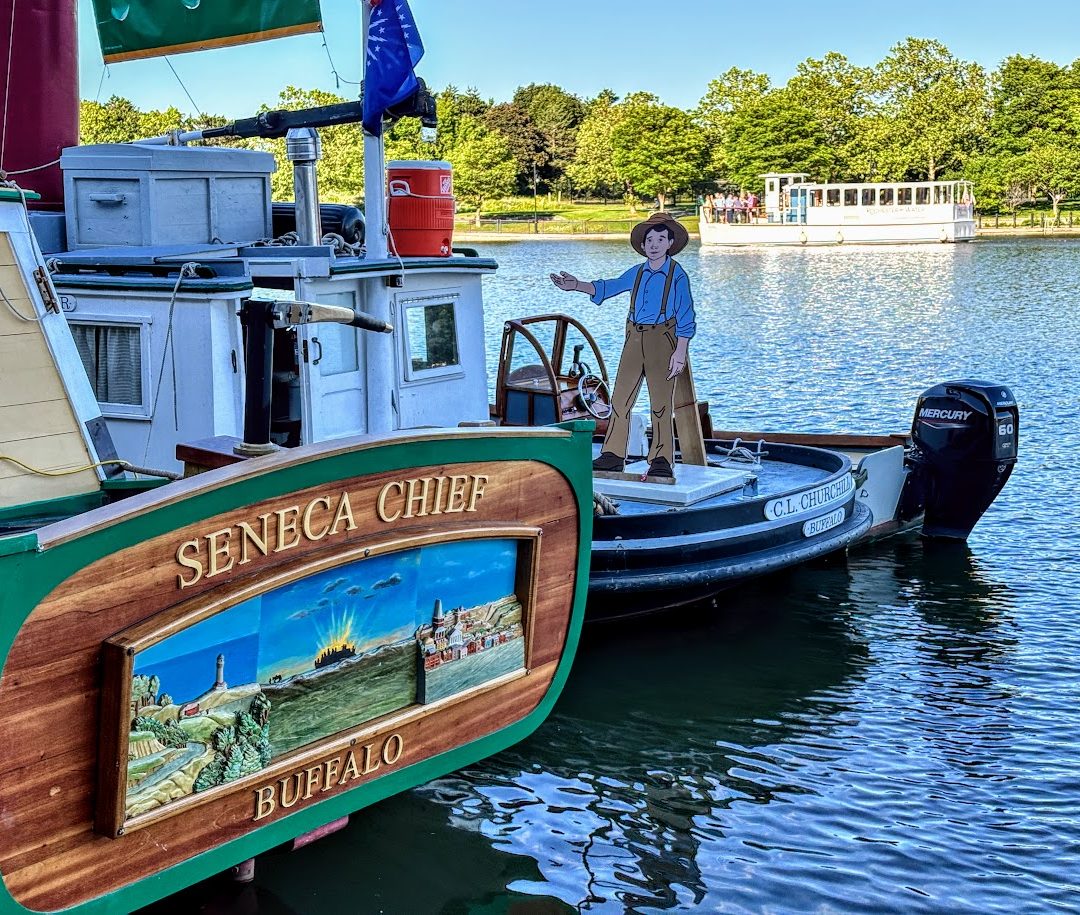
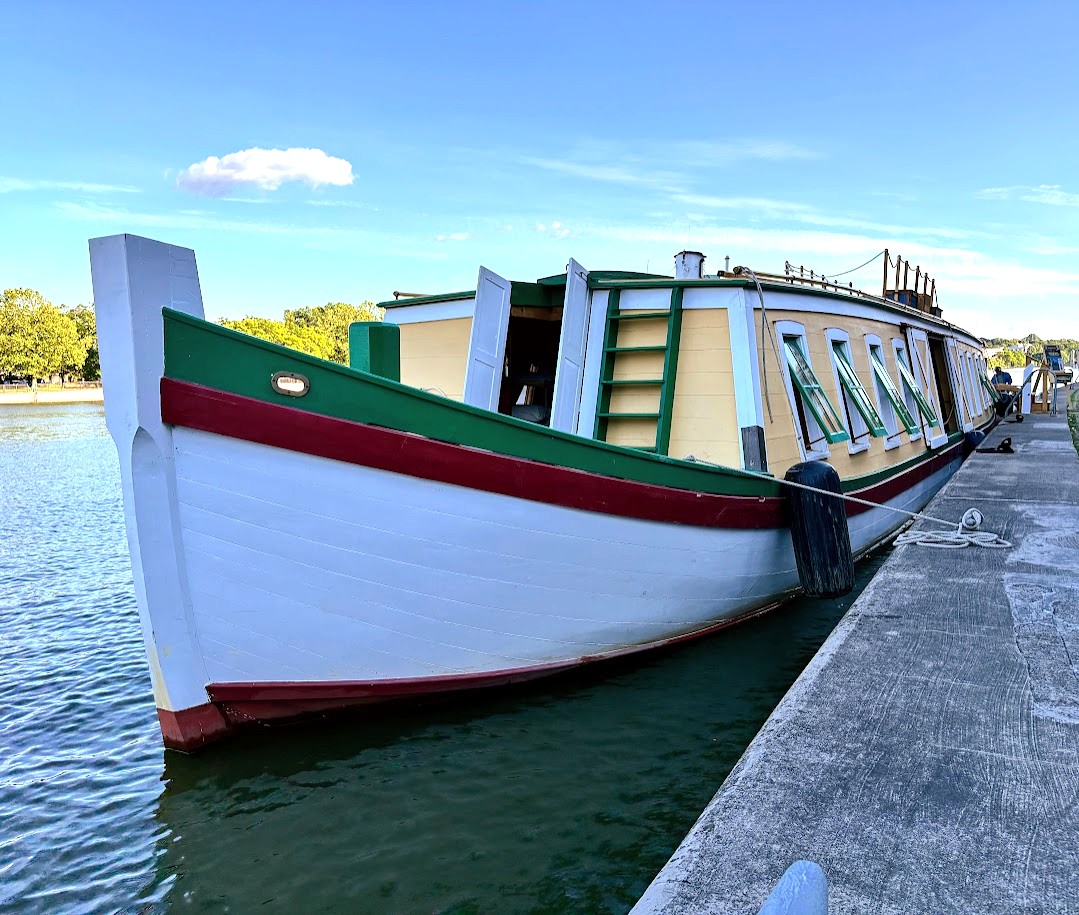
The Buffalo Maritime Center’s most ambitious project to date is the Seneca Chief, a full-scale replica of the canal boat that carried Governor DeWitt Clinton in 1825 when he poured Lake Erie water into the Atlantic, symbolically linking the Great Lakes to the ocean.
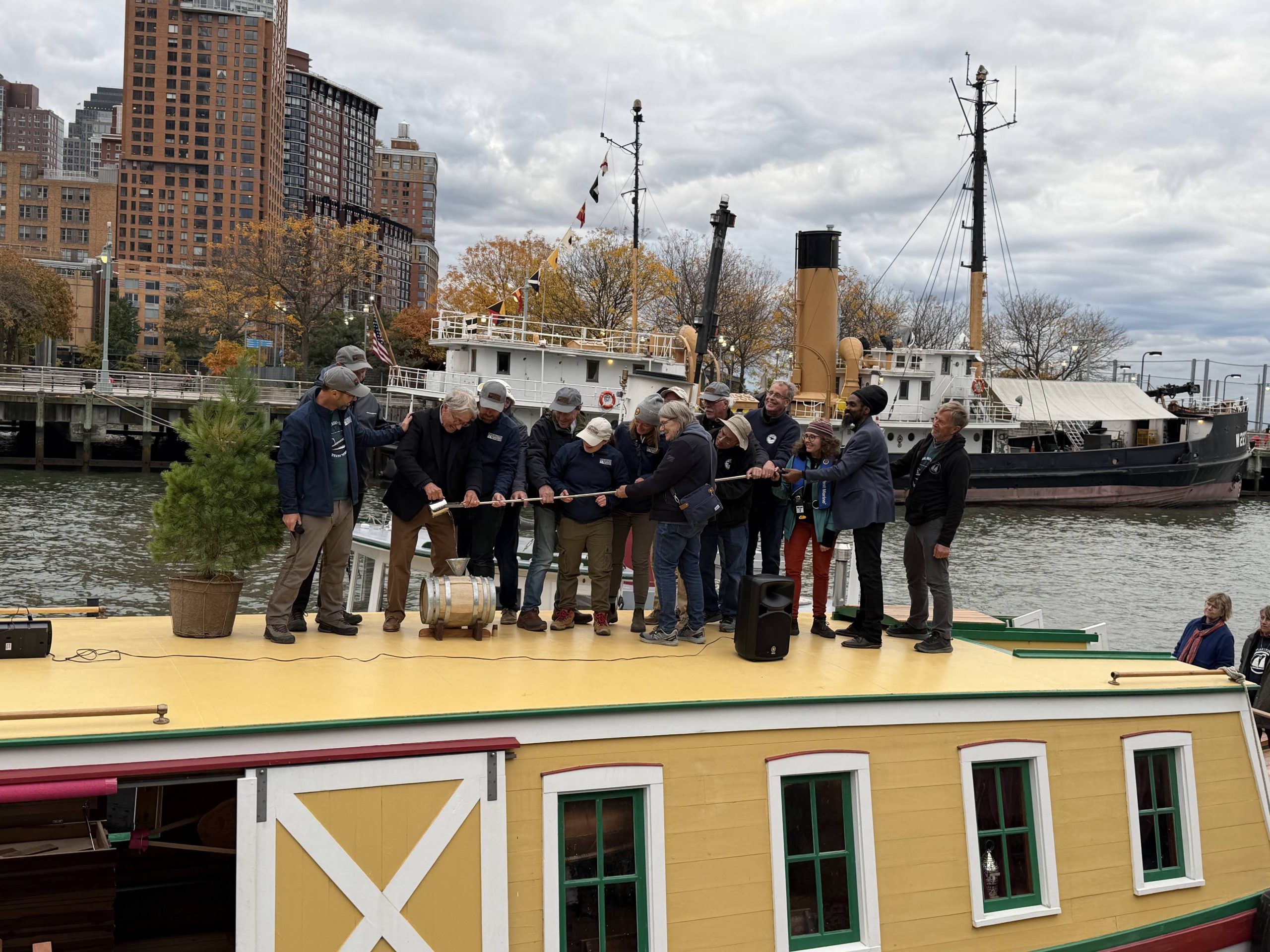
The modern voyage of the Seneca Chief marked the Erie Canal’s bicentennial, traveling from Buffalo’s Commercial Slip down to New York Harbor and back again. On the journey down, a White Pine tree was planted at each port stop as a symbolic tribute to the Haudenosaunee, whose land was taken when the canal was first built. At every destination, there was a gathering of the waters added to a barrel carried aboard the boat. Upon reaching New York City, this gathered water was used to nourish the final tree, uniting the waterways of New York State in a powerful gesture of peace, connection, and renewal.
Education Director Chelsea Moore recalls the crowds that lined the canal during the bicentennial voyage. “I don’t think I’ve ever seen so many people come out for one event,” she says. “We were never alone. People waved from bridges and lock walls, cyclists stopped to take pictures, and hundreds greeted us at each port.”
On the return trip, the crew invited student groups aboard for guided, multi-station programs. As they rotated through the ship, the children learned about the evolution of boatbuilding, what it takes to crew a canal boat, and the profound, complex impact the canal had on local Native communities.
“It’s such a tangible way to see that the canal still connects people,” Chelsea explains.
Craftsmanship as a Way of Life
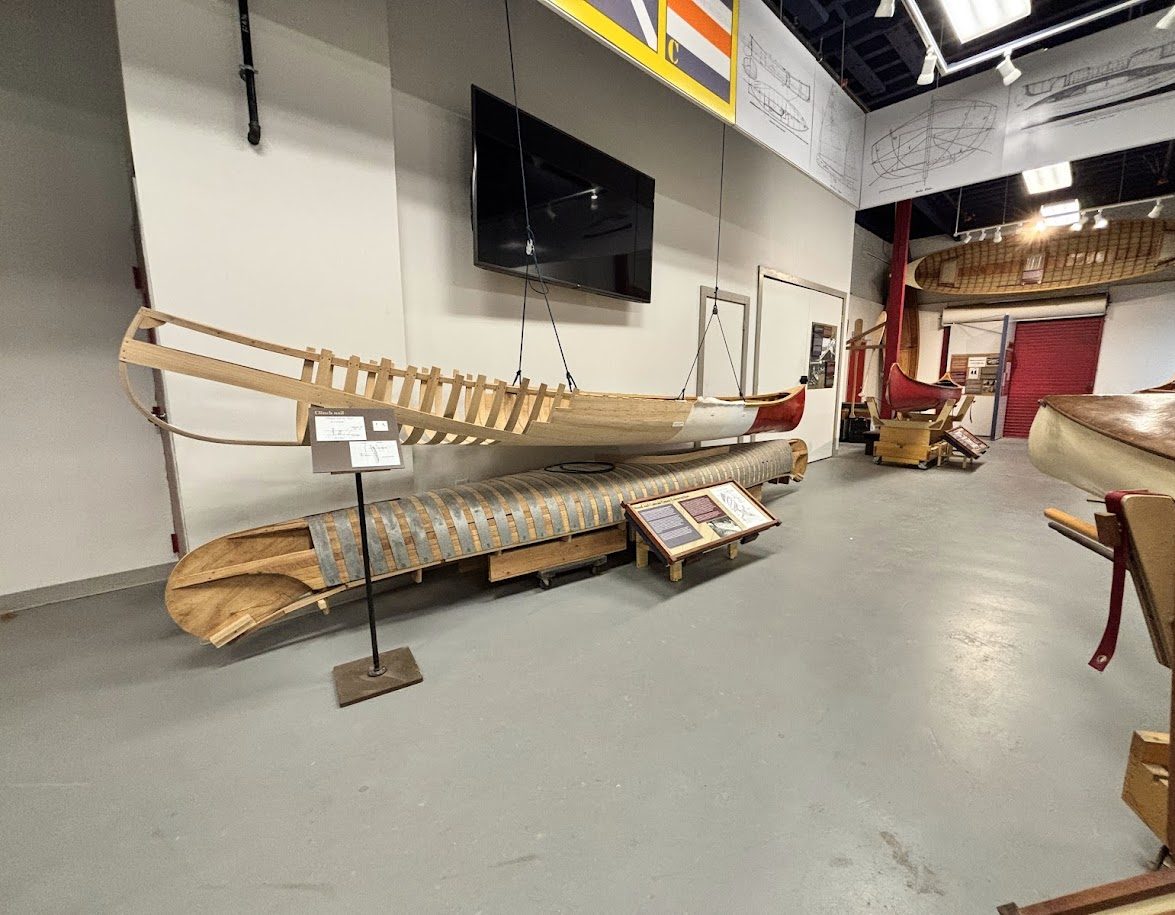
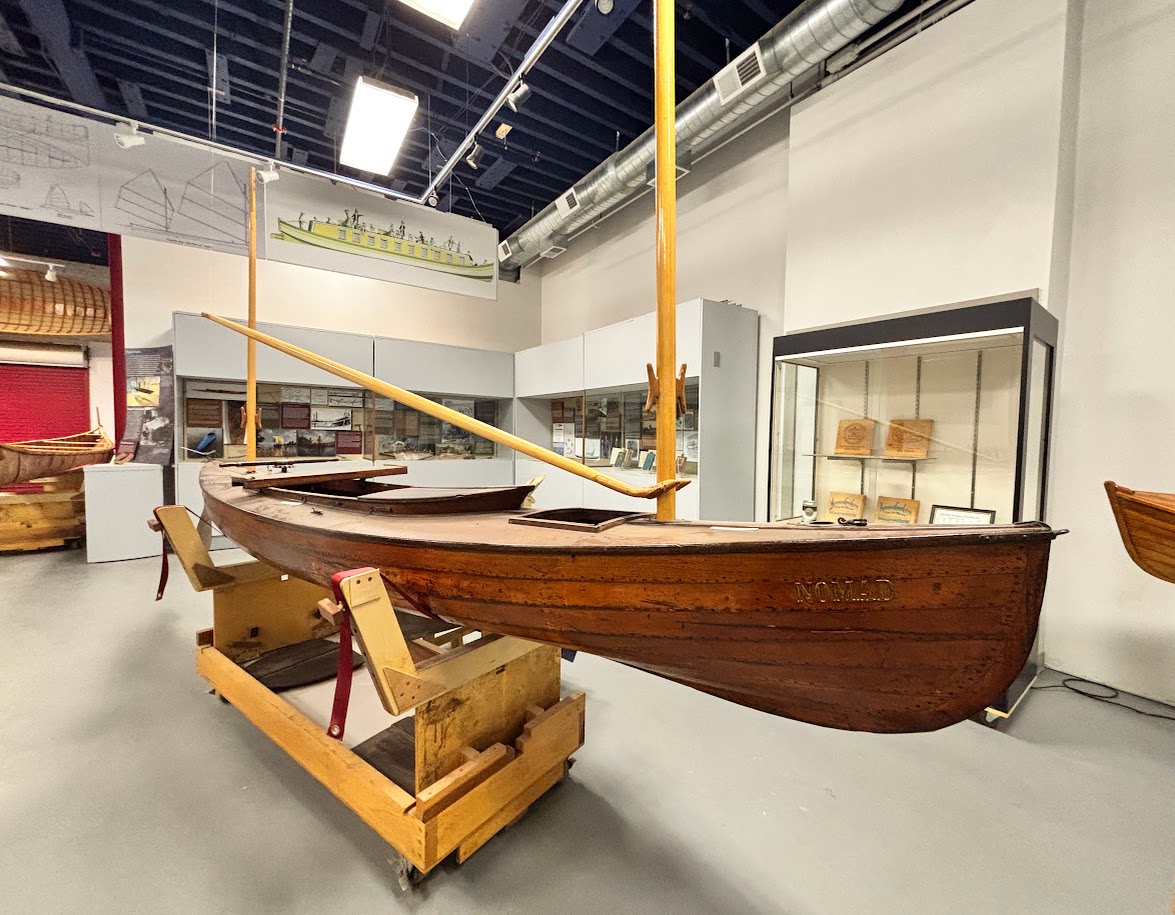
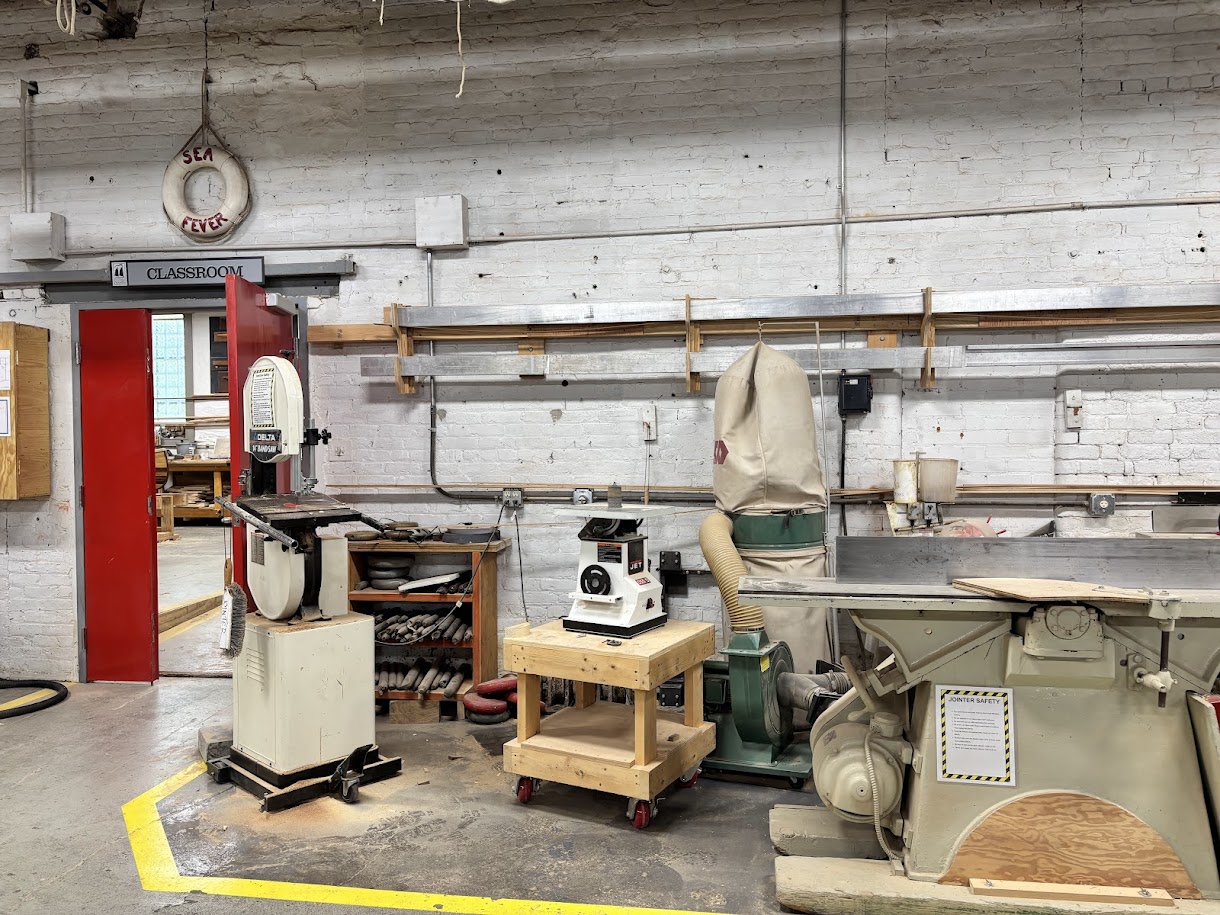
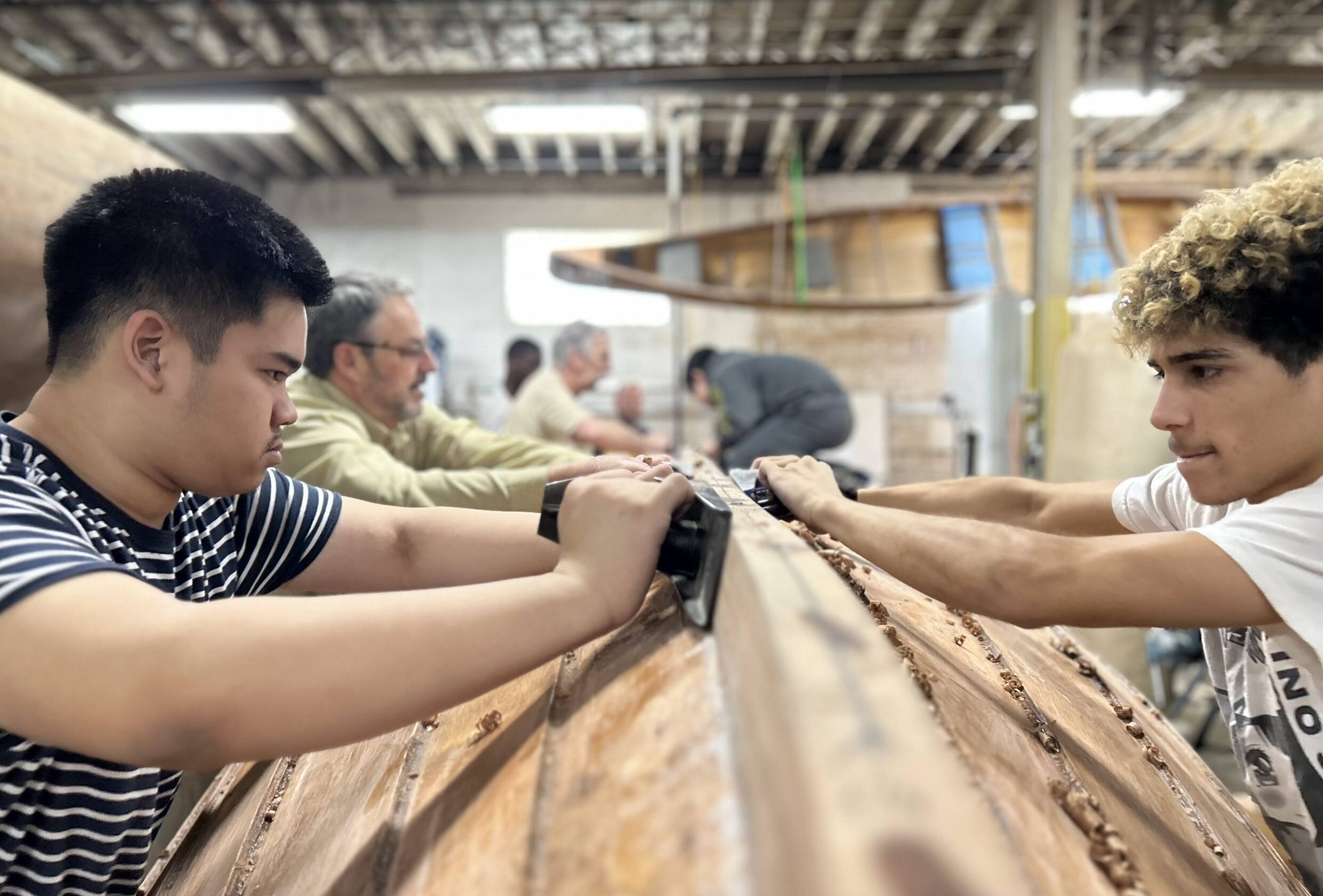
Inside the boat shop, the Center’s mission comes alive daily. Students from local schools learn to build strip-built canoes and rowboats under the guidance of skilled mentors. “Our goal is to preserve maritime history through community boatbuilding,” Chelsea says. “It’s special to see a tradition passed on to the next generation that might otherwise be lost.”
Roger Allen, the Master Boat Builder who guided the five-year construction of the 73-foot Seneca Chief, describes the process as both art and education. “We’re not just preserving skills, we’re giving them back to the kids,” he says. “When they build a boat, they learn how the world works. They take raw materials, use their hands and tools, and create something that floats. That changes how they see themselves.”
For many students, it is their first time working with wood or being on the water. “They come in unsure, maybe thinking they can’t do it,” Roger says. “But when they launch the boat they built, they realize they can. It’s a powerful moment.”
The Center’s approach revives the kind of hands-on learning that once filled high school shop classes. “We don’t give kids those opportunities anymore,” Roger adds. “Here, they learn teamwork, patience, and pride in their work. They build something that lasts.”
Roy, a retired volunteer, recalls a young student stepping off her finished canoe. She said, “I never thought I could do anything. I never thought I could build a boat. It changed my whole life.”
A Floating Museum
The Seneca Chief itself has become a floating classroom. Because the wooden packet boat was built to authentic 1825 specifications, it features no motor or propulsion of its own. Navigating the canal requires a clever mechanical ballet; the vintage tugboat C. L. Churchill provides the forward towing power, while a small 16-foot powerboat named the Buffalo Sal is used to spin the massive vessel completely around within its own length in tight locks.
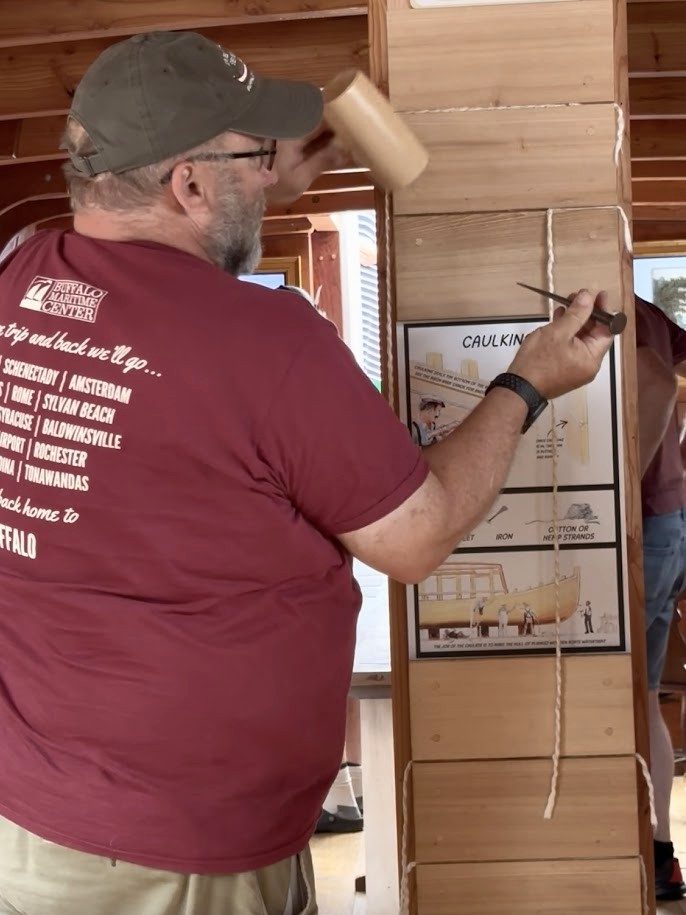
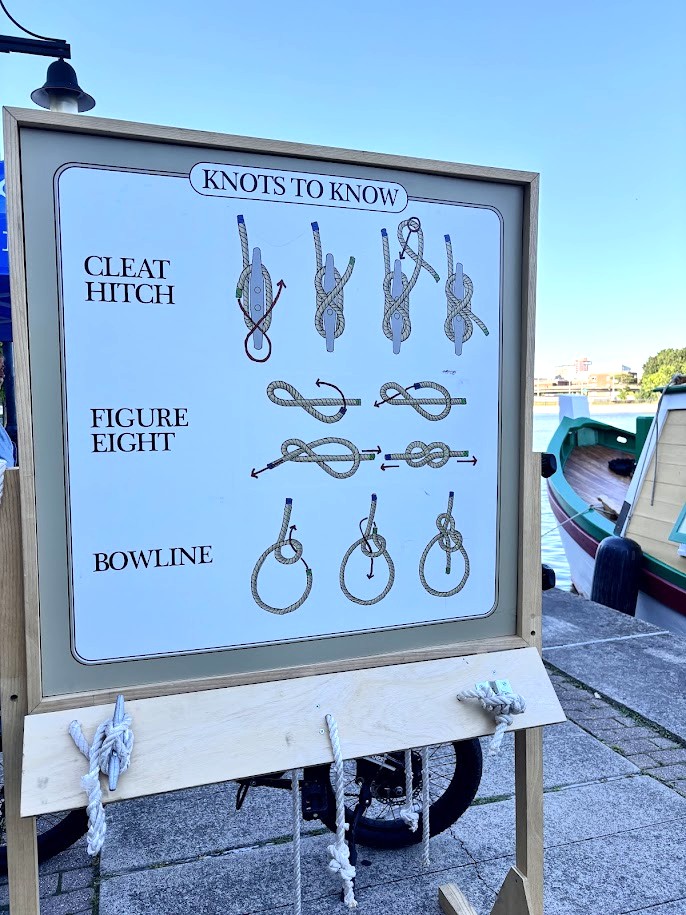
During the Back to Buffalo tour, students climbed aboard to learn knot-tying, navigation, and canal history. Volunteers demonstrated traditional tools, showing how shavings from planing wood can be used as kindling. Visitors could even make bookmarks from leftover Seneca Chief wood scraps. It’s a small piece of history to take home.
One volunteer calls the boat “a floating history museum.” He helped build parts of the Seneca?Chief and joined the voyage. “It took five years and hundreds of volunteers,” he says. “Seeing it finished and floating was incredible. Everywhere we stopped, people cheered. It reminded us how much this history means to New York.”
Executive Director Brian Trzeciak sees the Seneca Chief as a symbol of what community can accomplish. Brian, who transitioned to the Center after a diverse career as a Fisher-Price toy developer and a community organizer, wanted to return to the pure joy of making things. “We bring people together through boatbuilding,” he says. “This project shows what happens when people who didn’t know much about boats come together with a shared purpose. It’s craftsmanship, teamwork, and appreciation for the water.”
Reviving Buffalo’s Maritime Spirit
Buffalo was once known as the Queen City of the Lakes, a title earned through its bustling harbor and shipyards. The Buffalo Maritime Center is helping revive that identity for a new generation. “We want people to understand that our city exists because of the water,” Chelsea says. “For thousands of years, waterways have been how we survive, how we travel, fish, and trade. Recognizing that history inspires stewardship and passion for what these places can become.”
The Center plans to expand its presence on the waterfront, creating a space where visitors can see canal boats, learn about the Haudenosaunee, and experience Buffalo’s harbor heritage firsthand. “It’s an exciting time for us,” Chelsea says. “We’re moving toward that next step.”
The Heart of the Work
At its core, the Buffalo Maritime Center is about connection between people, between generations, and between the past and the present. “One of my personal goals is to make the world around me a little better,” Chelsea reflects. “The best way to do that is through education. If young people aren’t learning community, responsibility, and respect, then we’re missing something. I love that I can teach those values through wooden boats.”
That spirit of care and craftsmanship runs through every project. The smallest scraps of wood are saved, turning them into bookmarks or kindling. Nothing is wasted. Everything tells a story.
It reminds me that heritage is not something locked behind glass or in a book. It lives in the hands of those who build, teach, and share.
Keeping History Afloat
The Buffalo Maritime Center shows how creativity and heritage can shape a community. It is a place where students discover their abilities, volunteers find purpose, and history becomes something you can touch. From the workshop to the water, the Center keeps Buffalo’s maritime spirit alive with one boat, one student, one voyage at a time.
By Lori Bruton is a freelance and wellness writer based in western New York.