
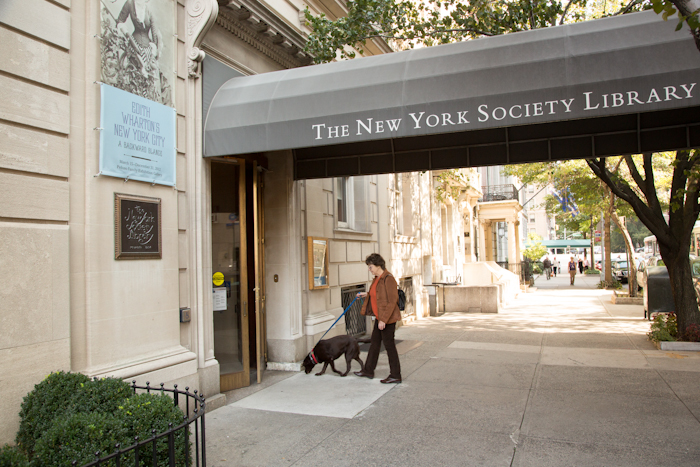
Walking across the north side of 79th Street on the Upper East Side you may notice a grey awning announcing The New York Society Library at No. 53. The Library, founded in 1754, is the oldest library and cultural institution in New York City. The word “society” in the name refers not to high society but to a gathering of people with common interest in books and learning. At its founding, the library was located in the old City Hall, which became Federal Hall after the American Revolution. There it served as the de facto Library of Congress, with members including George Washington, Alexander Hamilton, Aaron Burr and many other founders of the republic. As the population of Manhattan moved north, the library grew and relocated several times.
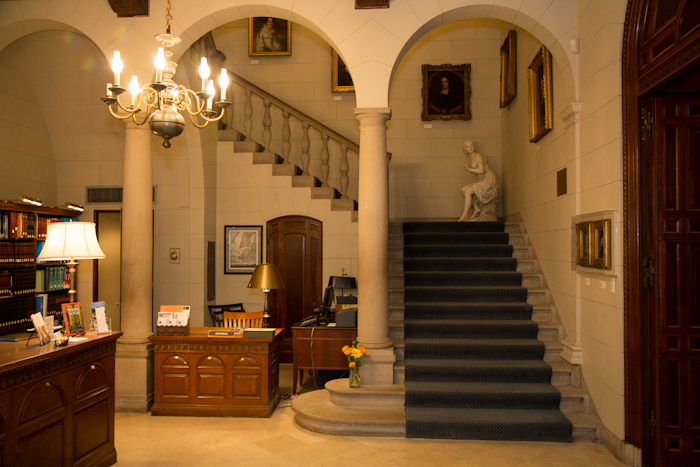
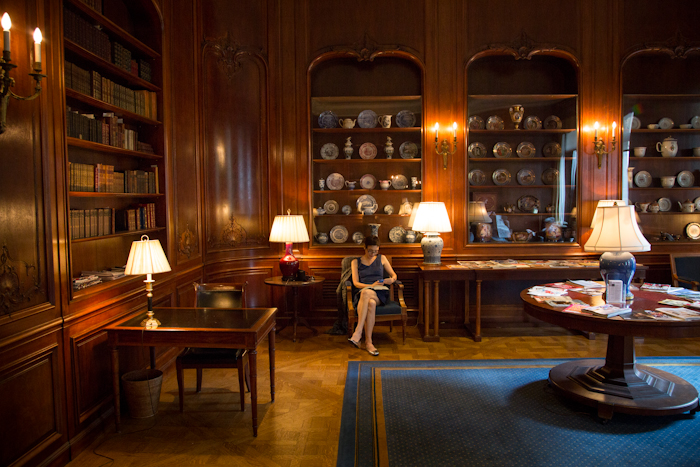
The library’s current home at 53 East 79th Street, built as the John S. and Catharine C. Rogers residence designed by Trowbridge and Livingston in 1917, became the library’s new home in 1937. At that time, 12 floors of book stacks were added behind the formal reception and family rooms of the historic house. The 40-foot-wide limestone building with a facade inspired by the Italian Renaissance is designated an individual New York City landmark. The handsome original living room on the second floor is now the Members’ Room for quiet reading or public programs, and the paneled former reception room on the ground floor is now the Reference Room open to the general public. Bistro tables and chairs on the sidewalk in front of the library invite passers-by to linger.
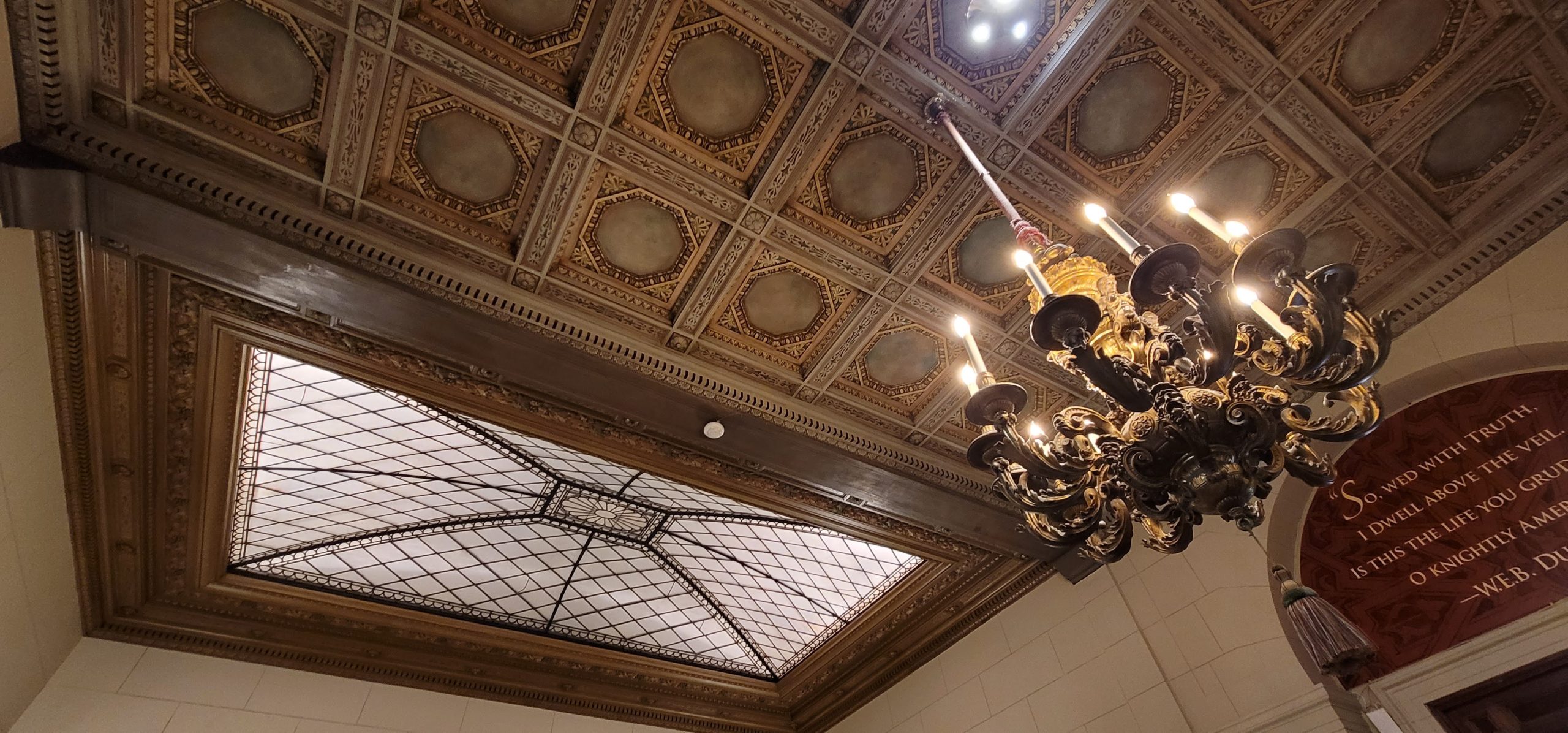
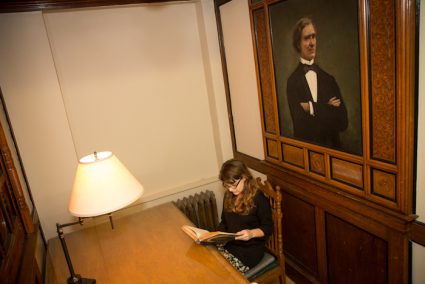
The interior of the historic building has been renovated several times since 1937, most notably in 1980-84 by the Polshek Partnership to updated code standards for egress and fire safety and in 2010 by architect Jim Czajka to create the Hornblower Room for group study and six individual study rooms on the fifth floor. At this time the original stained glass skylight over the main stair was also uncovered and restored with artificial lighting because the lightwell above had been filled in. The Children’s Library on the third floor was renovated and expanded with new reading nooks and comfy, child-size furniture in 2013. Throughout the library there are multiple sizes and shapes of rooms in which to read or write, including the charming wood paneled Green Alcove salvaged from the previous library on University Place and reinstalled in reduced size in Stack 12. This alcove with most of the original 19th century furniture was called out by architectural historian Christopher Gray as the “best seat in the house”! Because of its historic aura and popularity with members, it is a difficult seat to snag.

A New Approach
As the library continued to grow, now with more than 3,100 members, the need to maximize the space for books, members and staff became urgent. In 2018, the library hired Larson Architecture Works to develop a plan for much needed renovations. After consulting with the board of trustees and staff, architect Doug Larson developed a clever plan for sequential renovations that would allow the building to stay open to members throughout construction. He recommended initiating construction first in the empty rear yard, creating three levels of compact storage space into which nearly 30,000 books occupying the cellar level of the main building could move. (Unlike private owners, many community facilities in New York City are allowed to build up to 23 feet above the mean street curb line in their rear yard.)
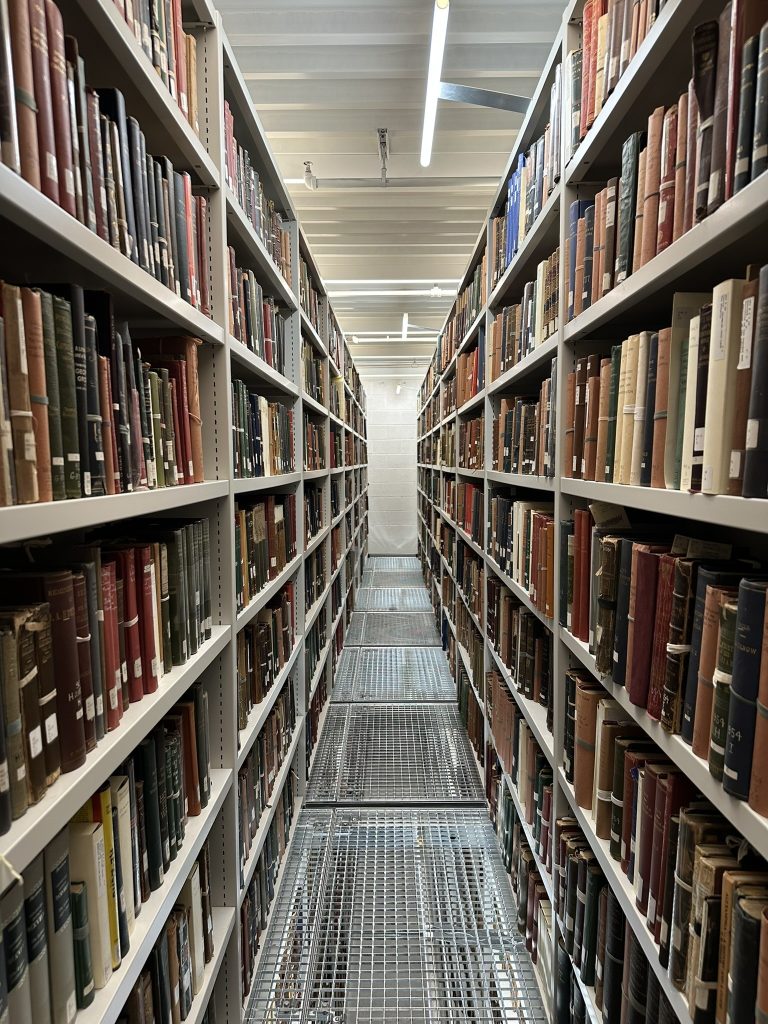
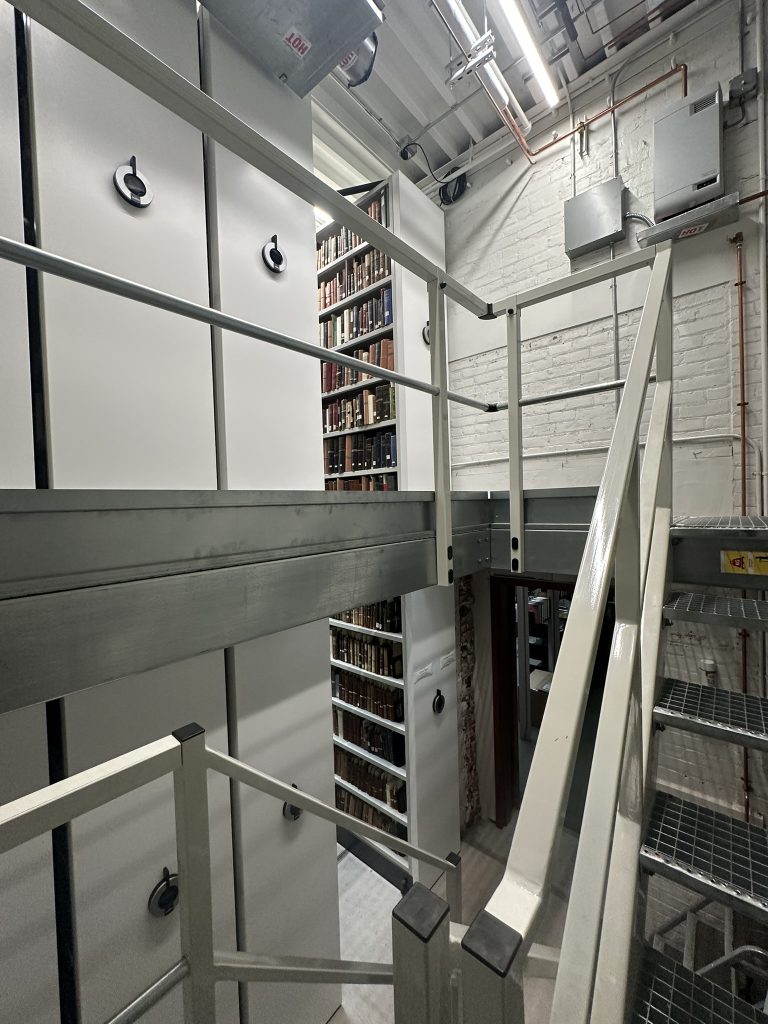
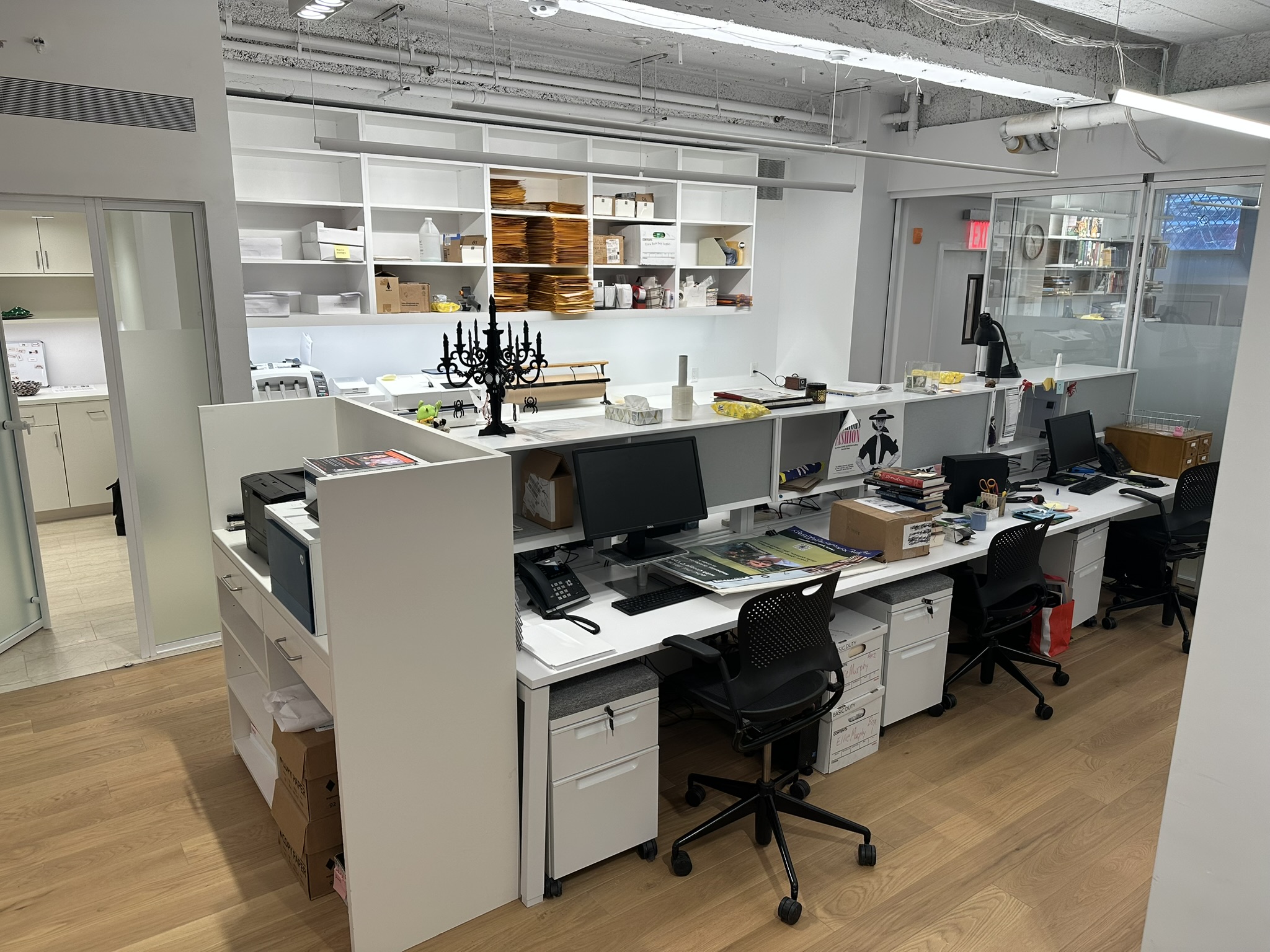
Once the cellar level was emptied of books and extraneous structure, renovations began for new staff offices that would consolidate departments formerly scattered throughout the building. New desks for 20 staff members were designed at this level in a combination of open and shared private offices, and two existing exterior windows at sidewalk level were restored to provide natural daylight. The new offices are bright and laid out to operate much more efficiently than the previous cramped quarters on several floors of the building. There are also two new staff bathrooms at this level. A new stair connects the offices to the lobby and circulation desk one flight up, and it adds a more direct secondary emergency egress from the lobby to the exterior than the previous circuitous path of egress.
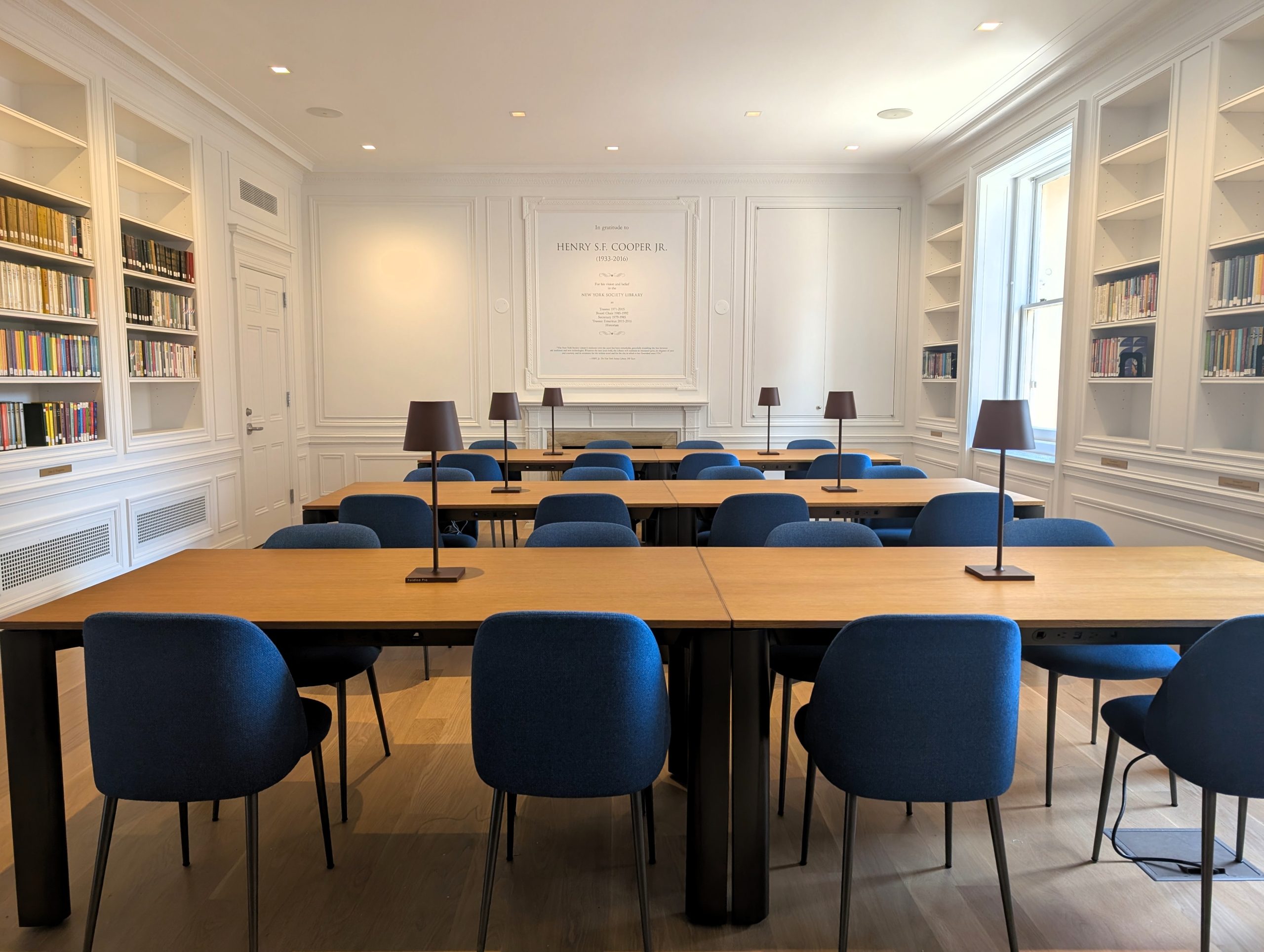
At the same time, the fourth floor of the building was cleared out of existing staff offices and a makeshift conservation lab to allow installation of a lovely new reading room for members dedicated to Henry S.F. Cooper, Jr.; a new purpose-built conservation lab dedicated to Joan K. Davidson; a rare book reading room; and two new offices for senior staff. There are also two new bathrooms on the fourth floor level. In a related effort, the large ladies’ room on the second floor was renovated to provide two stalls instead of one, and the private telephone room on the stair mezzanine was renovated and sound proofed.
After the staff had been consolidated in the cellar level, the last step in the sequence was to refurbish Stack 4 behind the circulation desk in the lobby, restoring book stacks and improving finishes and lighting, thereby significantly increasing the library’s capacity for book storage.
The library is now even better suited to offering an elegant respite from the hubbub of New York City as well as stimulating lectures, exhibitions and programs focused on books and literature. Library membership is open to all, and members enjoy book circulation privileges and use of the reading and study spaces. However the Library’s reference room, exhibits, and many events are open to the public, and the Library partners with the Authors Guild, the Harlem Writers Guild, and organizations such as Beyond the Book, Project Cicero, and the Girl Scouts of America, among many others, to provide books, writing mentorships, and a host of other educational programs.
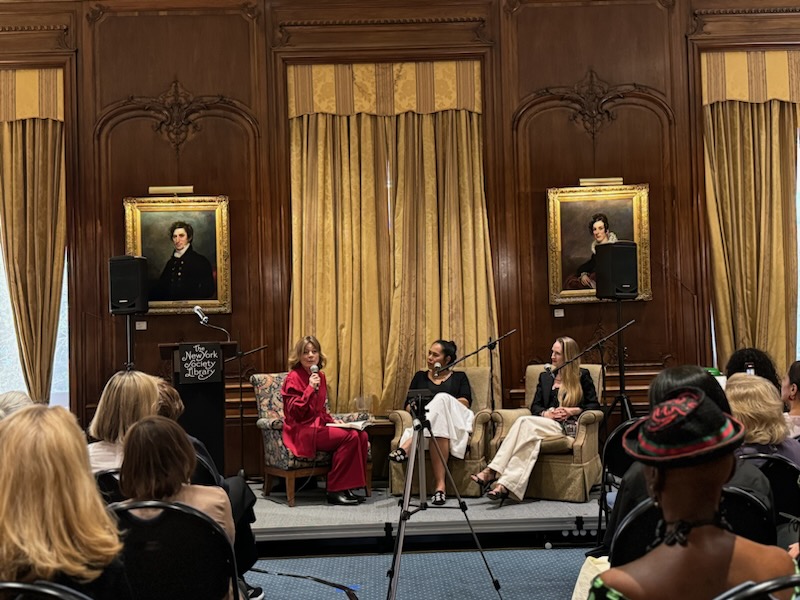
The library offers a wealth of options for reading, writing and engagement. Members can burrow into the stacks for a deep dive into an abstruse topic or join fellow members for tea and a lively chat. There are plays, author readings and open mike nights, many open to the public. I can’t think of a more congenial place to spend an afternoon or evening sparking a new literary interest or researching an old favorite!
Jean Parker Phifer, FAIA, LEED, Architect and Co-Chair of the Building Committee, New York Society Library