
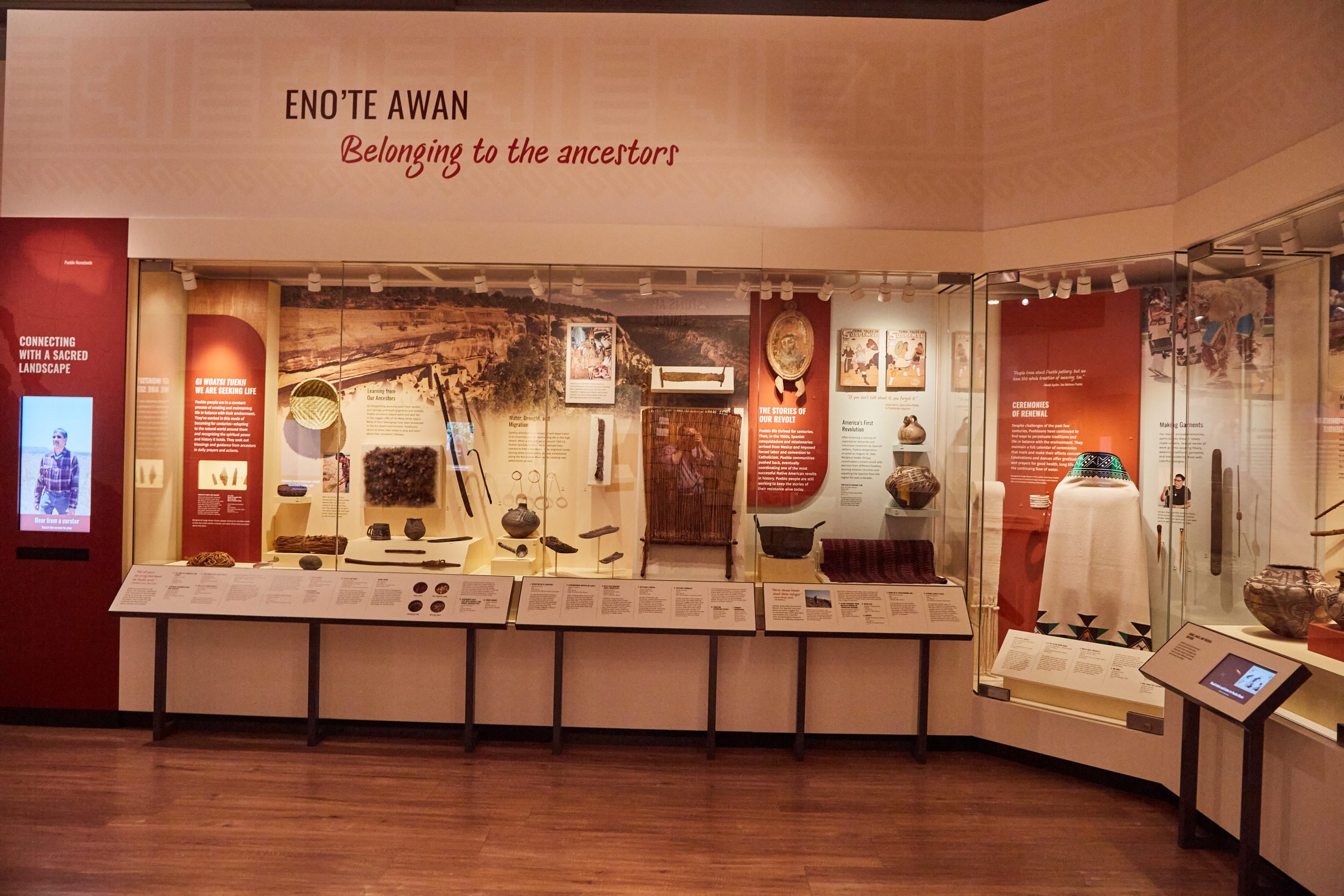
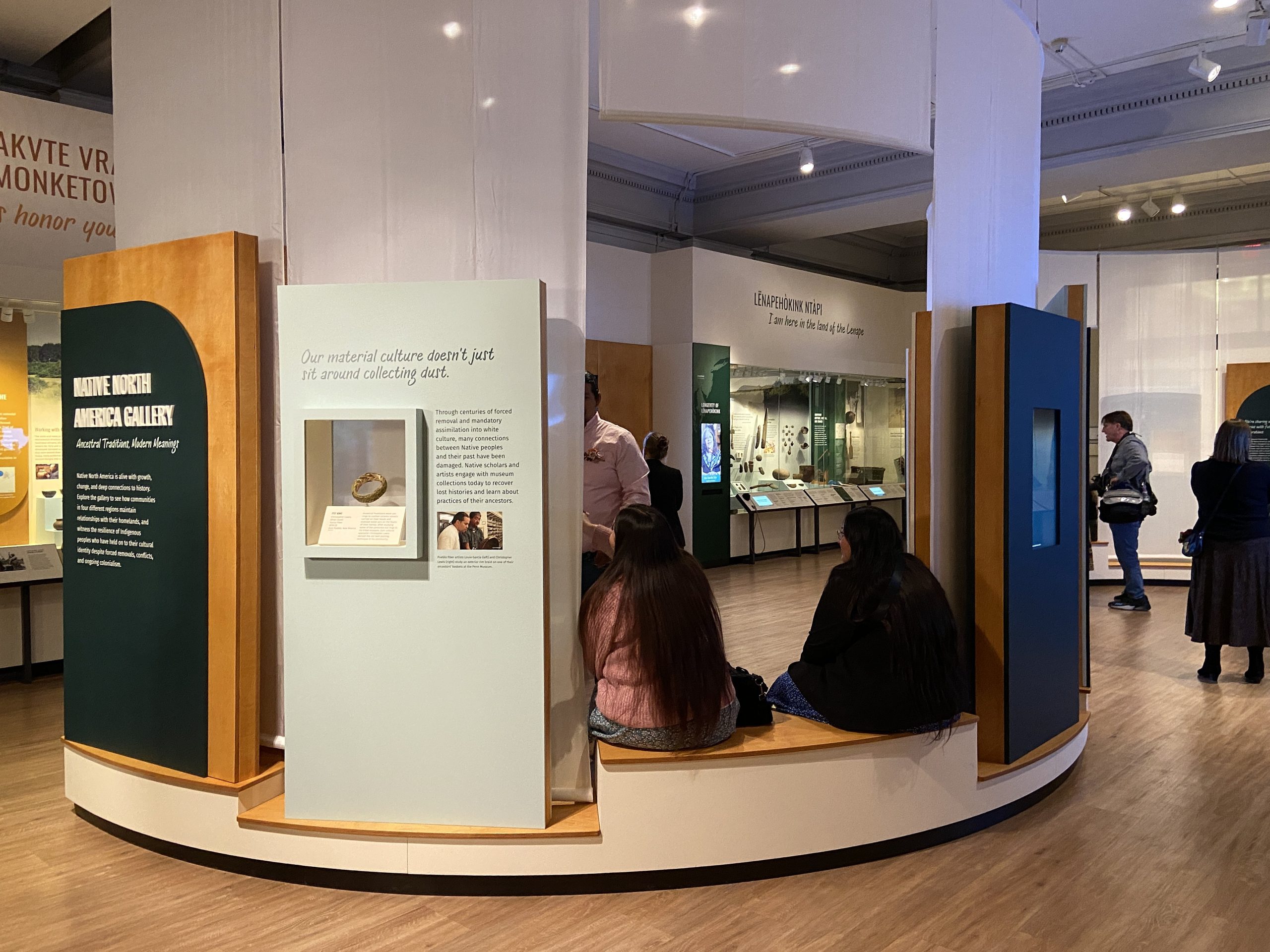
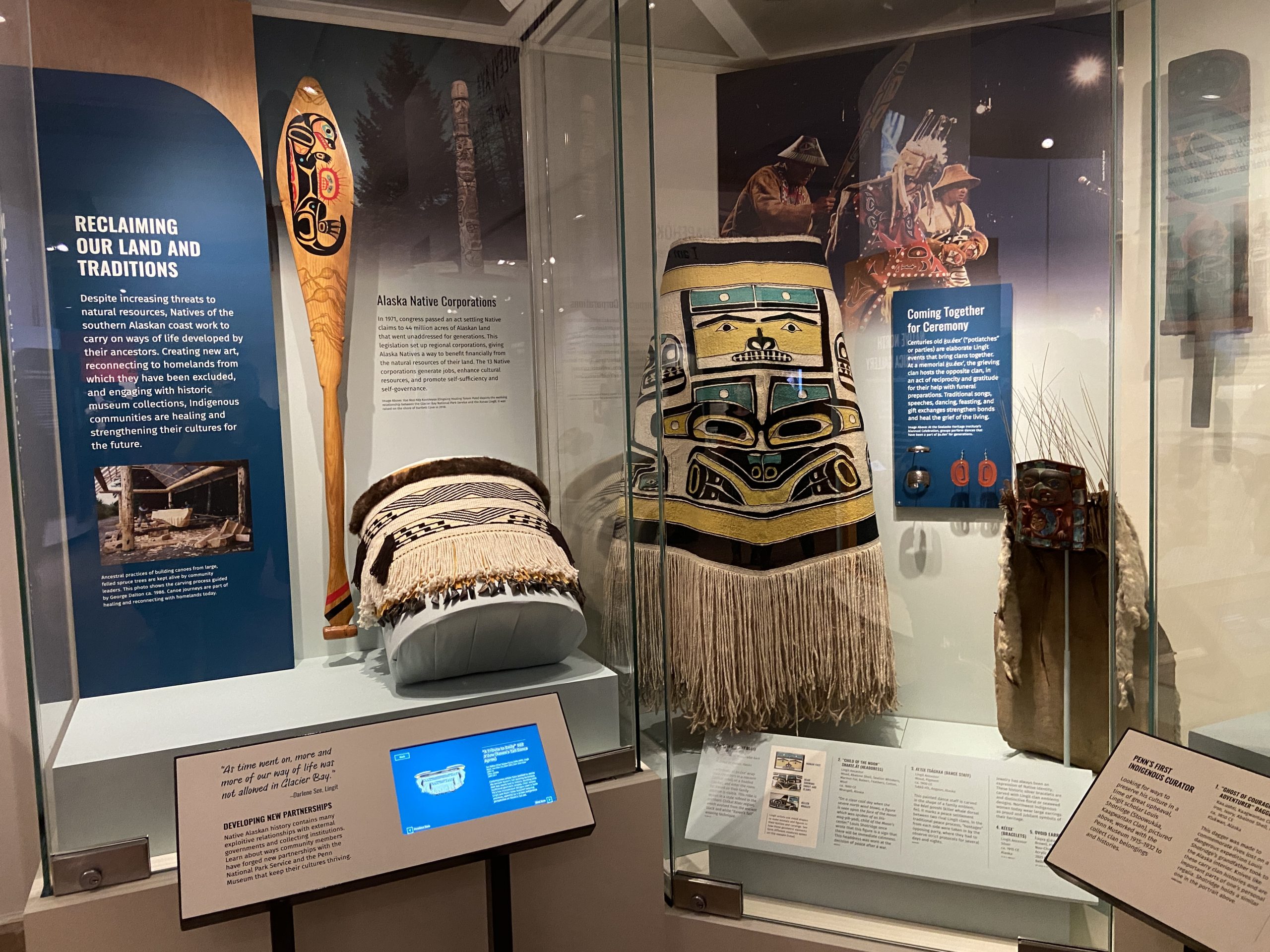
At the University of Pennsylvania Museum of Archaeology and Anthropology (Penn Museum) on Penn’s campus in Philadelphia, an innovative collaboration between eight Native Consulting Curators and two Penn curators has created a colorful space filled with videos and interactive stations. Opened in November 2025, the new Native North America Gallery brings together objects that convey the long history of Native peoples and contemporary Native voices and artworks. About 250 items fill a 2,000-square-foot space focused on tribes in four regions: the Northeast’s Lenape, the first people in the Delaware Valley; the Eastern Band Cherokee and Muscogee (Creek) of the Southeast; the Pueblo peoples of the Southwest; and the Alutiiq and Lingít of the Gulf of Alaska. From videos with the Consulting Curators to information panels, the gallery centers the perspectives of Native people, emphasizing their resilience in preserving a distinct cultural identity despite forced removal and conflicts.
The Penn Museum, founded in 1887, is a global leader in archaeology and anthropology research, with a collection of more than one million objects from places as far-flung as Egypt and Asia. More than 180,000 people, including 35,000 K–12 students, visit the museum or engage with its online programs annually. Currently underway is the massive, multiyear renovation of its renowned Ancient Egypt and Nubia Galleries, part of which will open in December 2026. The North American collection comprises about 120,000 archaeological objects and 40,000 ethnographic items. The new Native North America Gallery builds on a previous exhibition, which incorporated Native collaborators and the museum’s experiences working with Native American specialists for over a century.
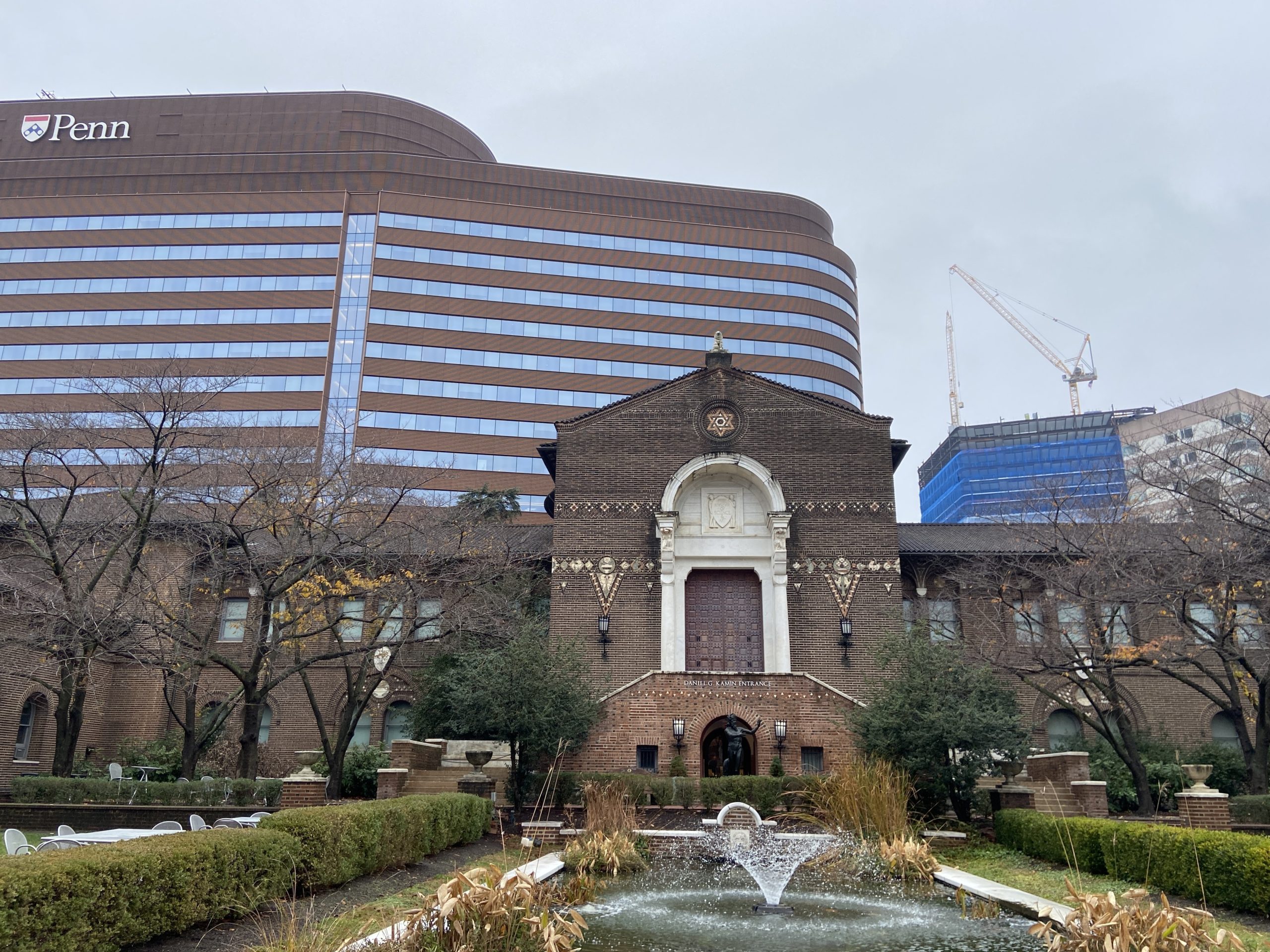
The Penn Museum’s 2024–2027 Strategic Plan discusses some of the impetus behind its new galleries. In assessing the role of museums, it noted that “Our communities are not satisfied to passively absorb the content we create for them but rightfully expect to be partners in its creation. . . . Audiences do not unquestioningly accept our collections and our interpretations of them but interrogate both. And at the same time, they ask how our collections came to be in the Museum in the first place. . . .This moment calls for a new, higher standard for ethics, equity, and accessibility.”
Building Deep Collaboration
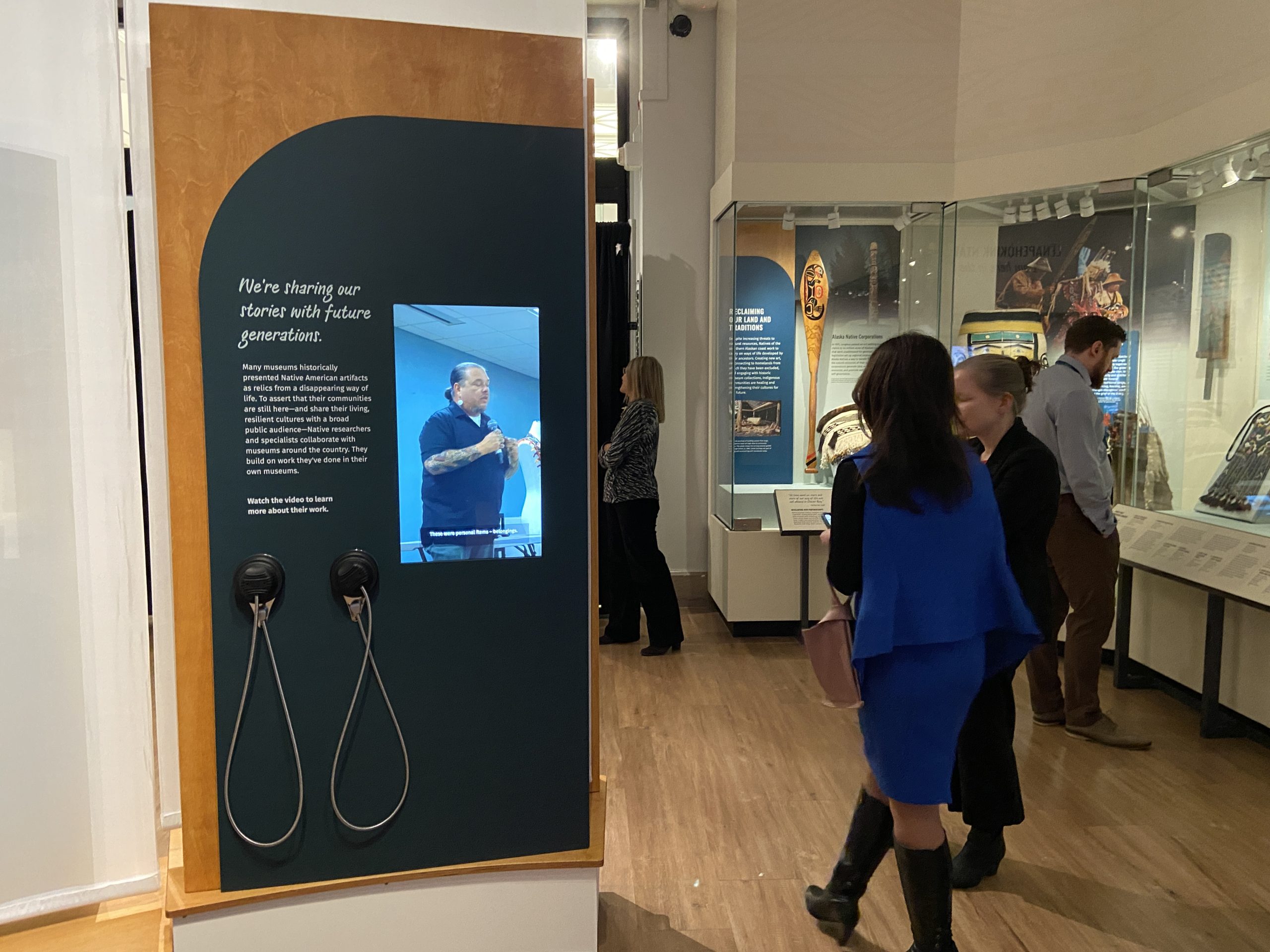
During the museum’s online Deep Dig classes (attended by Side of Culture) about the gallery, Dr. Lucy Fowler Williams, co-curator of the Native North America Gallery, Associate Curator-in-Charge, and Keeper of the American Section, and Dr. Megan C. Kassabaum, co-curator and Associate Curator of the American Section and Associate Professor of Anthropology, discussed the collaboration with some Native Consulting Curators. The Consulting Curators’ role involved many areas: selecting appropriate items and themes; design ideas; tone and cultural sensitivities; label content; audiovisual and interactive elements; and inclusion of contemporary art and craft. They also helped shape the marketing campaign. The Penn and Native curators see this mutually beneficial, ongoing connection as an example for other institutions.
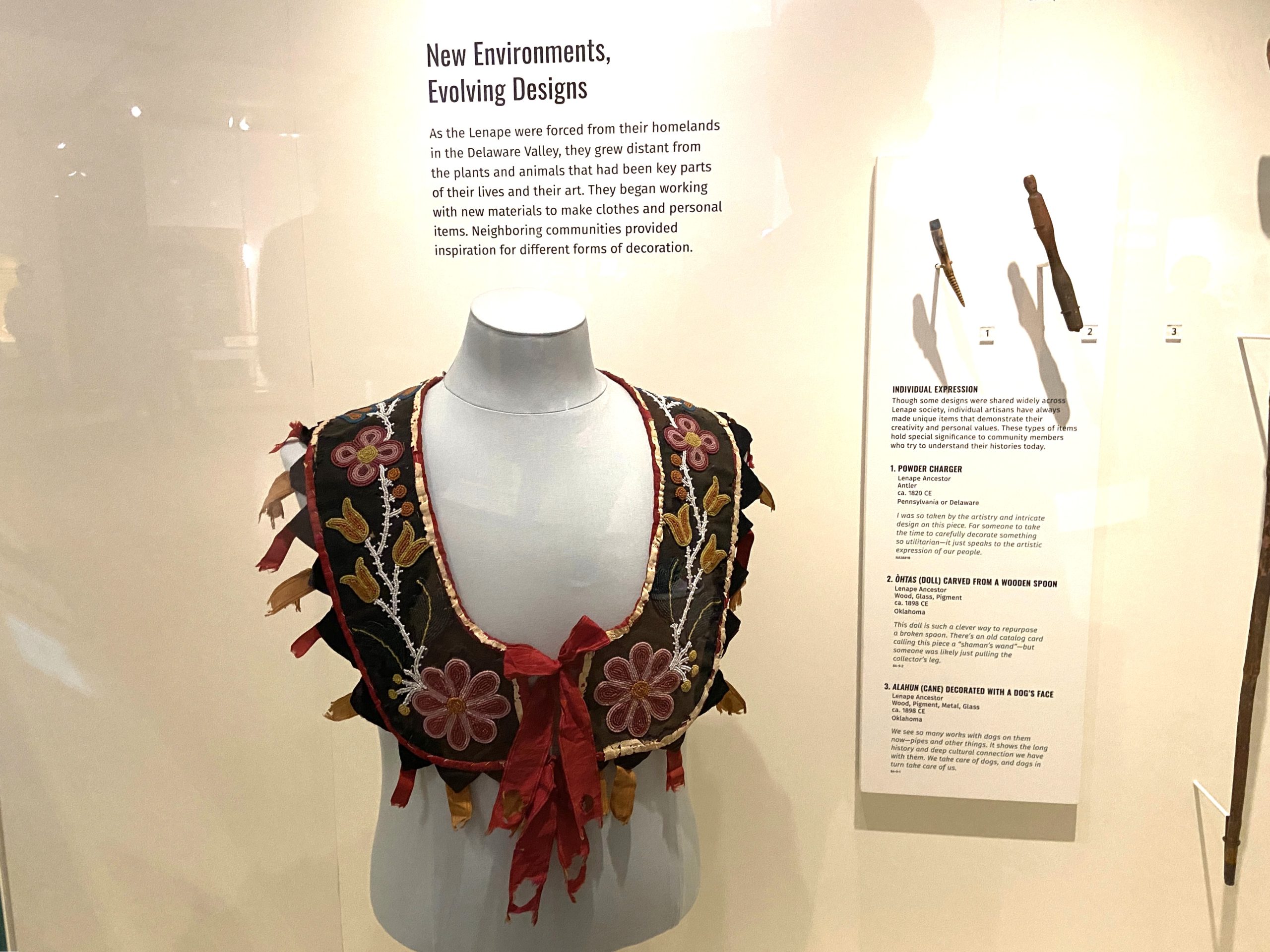
Consulting Curator Jeremy Johnson of the Delaware Tribe of Indians spoke during one class about the more than two-year consultation period for the Northeast (Delaware/Lenape) section, from Zoom meetings to time at the museum. As part of the process, select cultural items such as a beaded collar and a traditional blouse traveled with museum staff to Bartlesville, Oklahoma, headquarters of the Delaware Tribe of Indians, where people, including craftspeople, could examine them closely and learn from them. As Johnson noted, this access is critical: these are “living items” that show how ancestors worked.
Visiting the Gallery
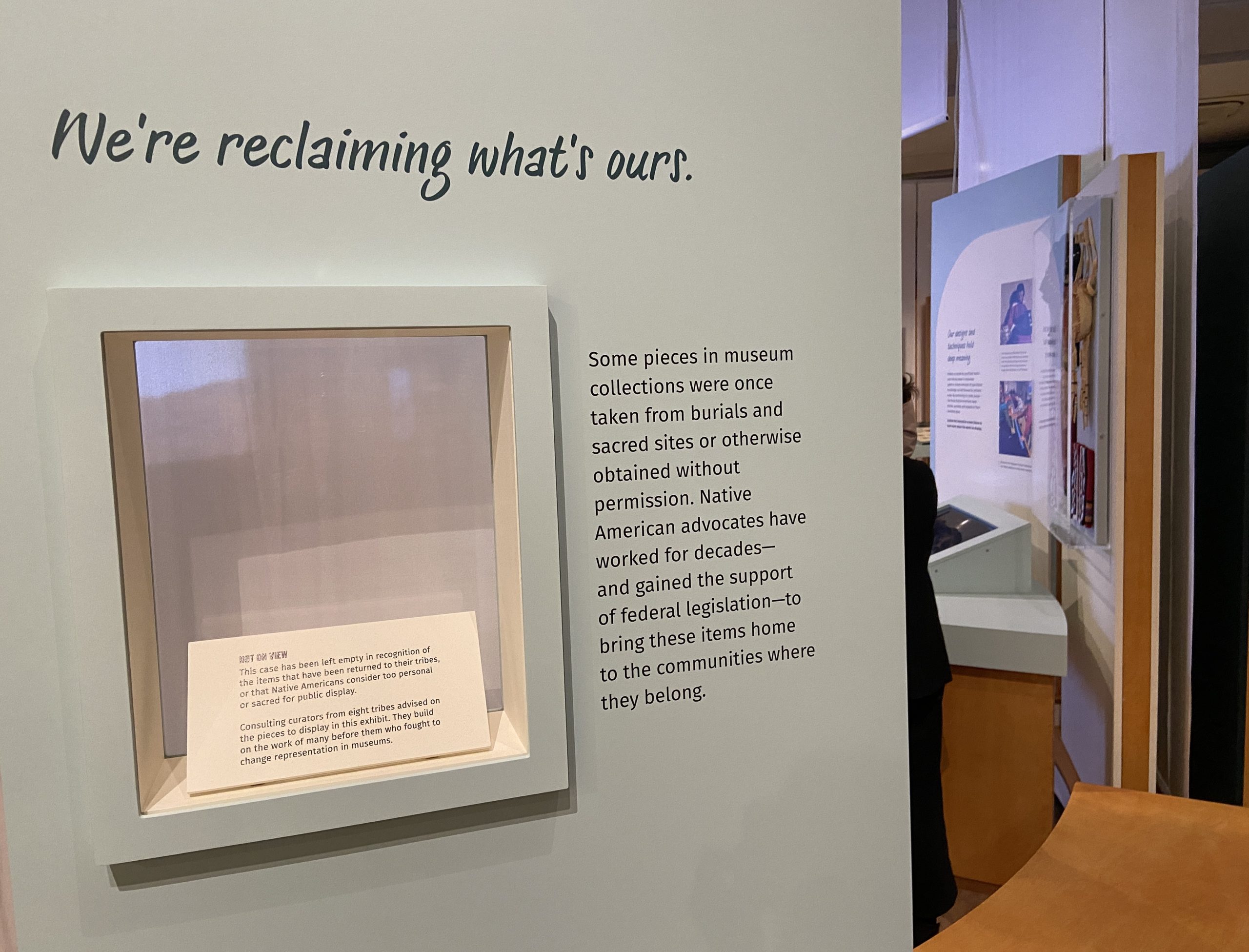
Several things may strike visitors as they enter the gallery, among them an empty case with the words “We’re reclaiming what’s ours” above it. This case represents items Native Americans consider too personal or sacred to display and items returned to tribes. As Consulting Curator Dr. Joseph Aguilar (San Ildefonso Pueblo) said in a press release, “ The inclusion of an empty case is a deliberate intervention—not an act of censorship.” It’s a reminder of Native stewardship over cultural heritage, and also of the museum’s proactive engagement with requirements of the Native American Graves Protection and Repatriation Act (NAGPRA). In addition, the primary signage over displays about the four regions is in the Native language, larger than the text below in English.
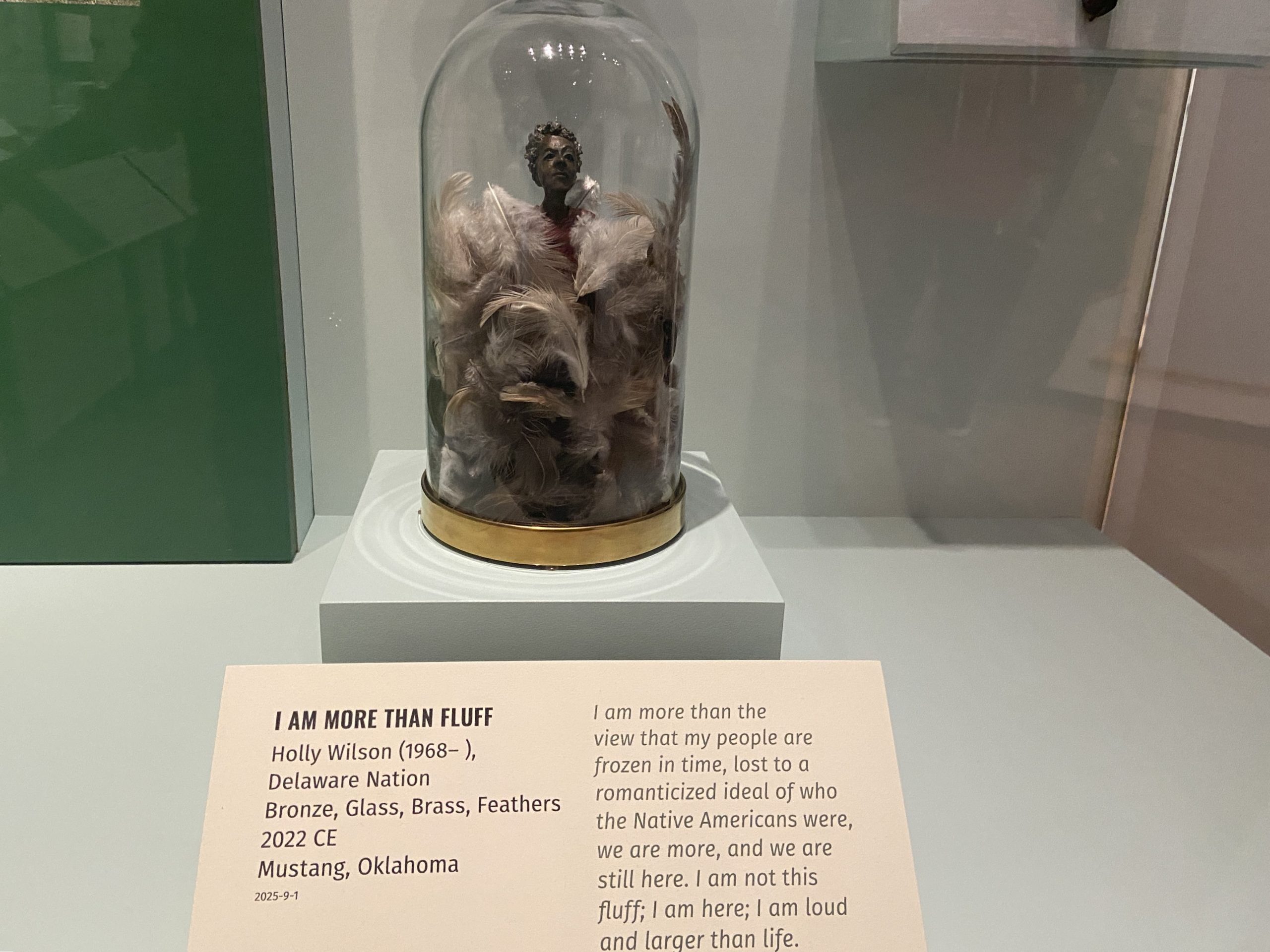
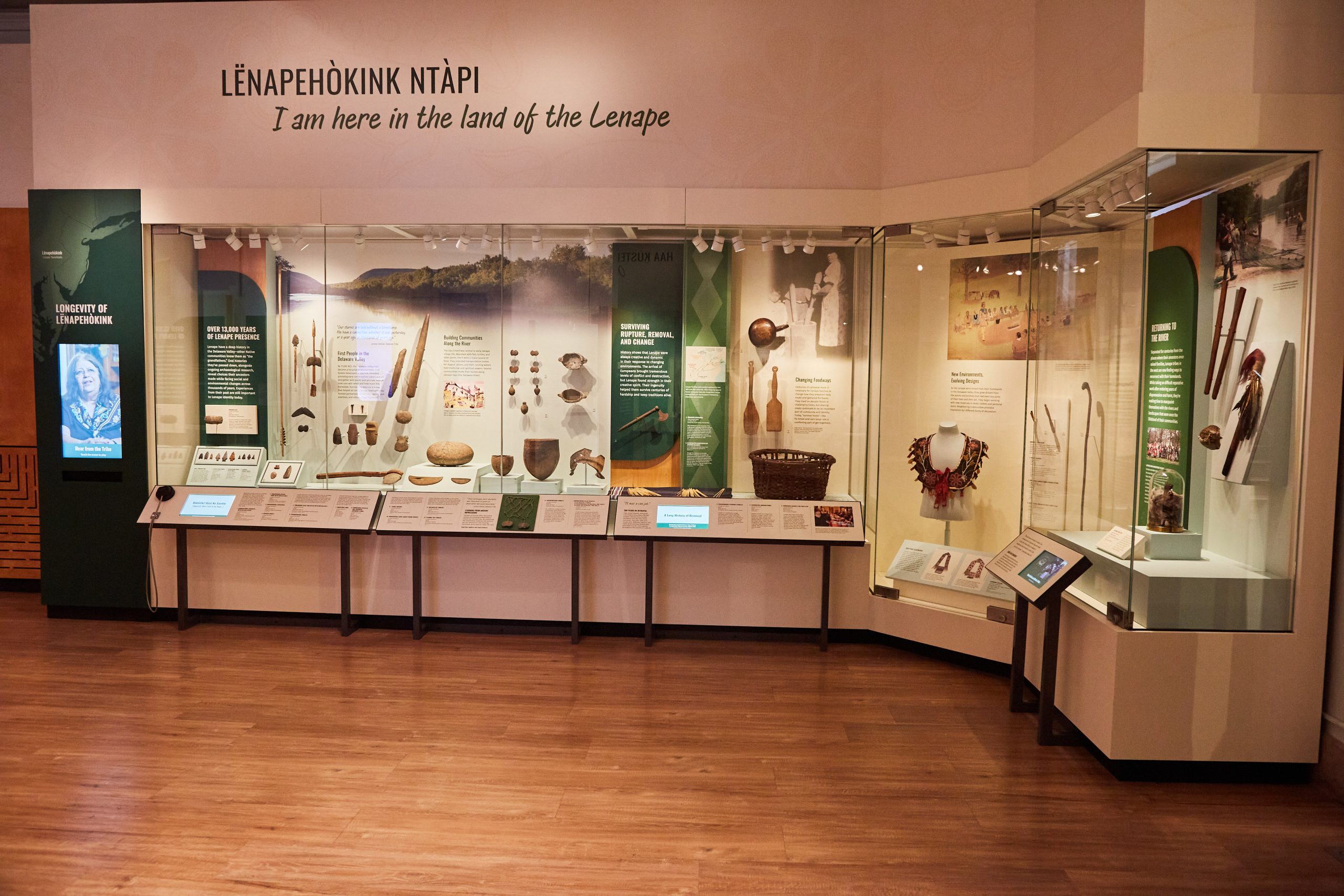
Separate areas dedicated to specific tribes of the Northeast, Southeast, Southwest, and Northwest are packed with powerful stories and items dating from more than 11,000 years ago to those created in the 2020s. A few examples demonstrate the galleries’ rich variety. In the Northeast section, displays convey the story of the Lenape of the Delaware Valley through historical artifacts and information about the centuries of conflict and removal that forced the Delaware Tribe of Indians to Oklahoma by 1867. A beaded collar made between 1850 and 1900 shows how artisans incorporated new materials and took inspiration from their new environment. Also on display is “I’m More than Fluff, ” a cast bronze mixed-media work by Delaware Nation artist Holly Wilson created in 2022. The artist’s statement about it says in part, “I am more than the view that my people are frozen in time, lost to a romanticized ideal of who the Native Americans were, we are more, and we are still here.”
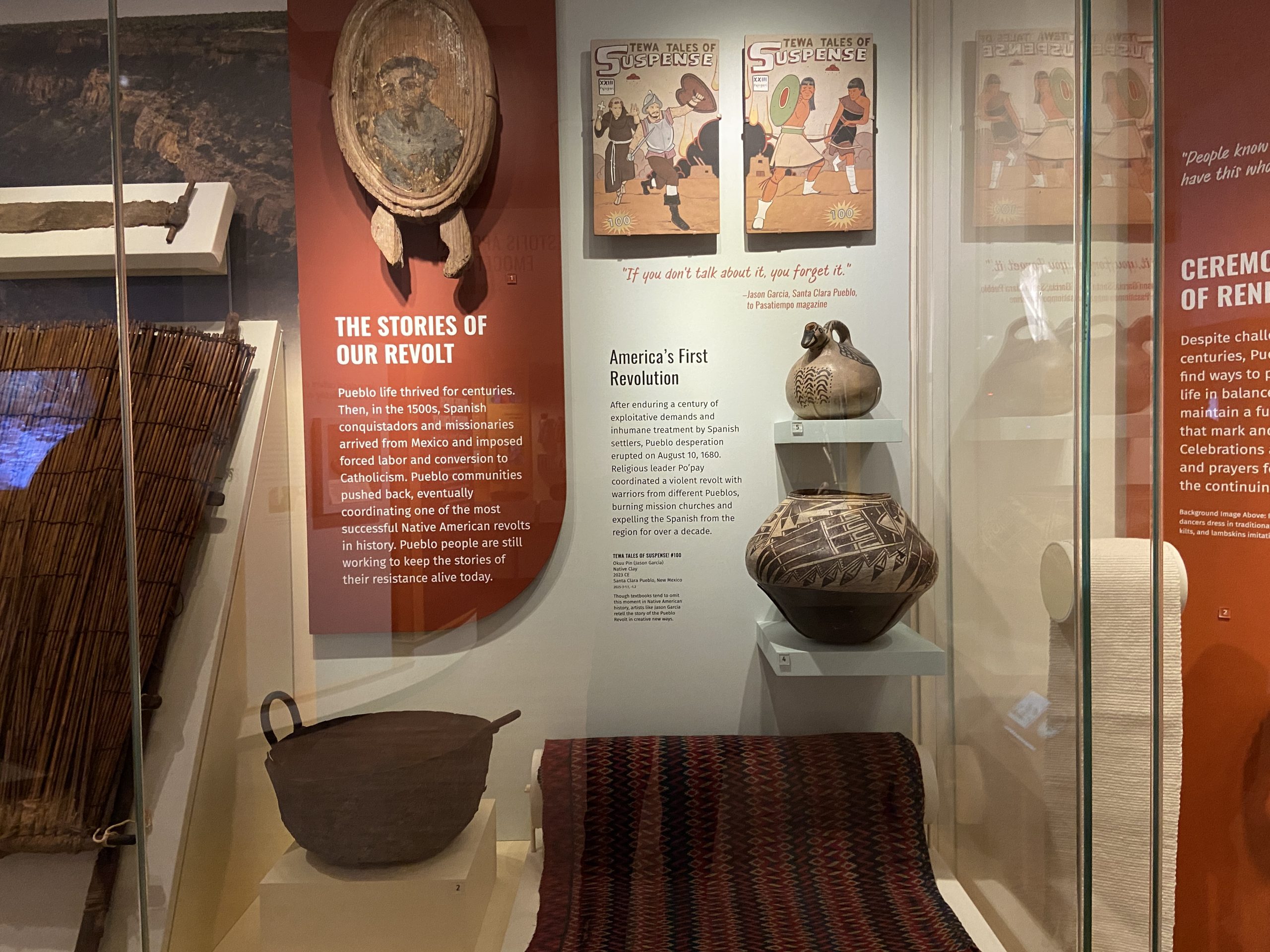
The Southwest section, focused on the Pueblo peoples, presents the oldest items on view, Clovis projectile points from 9500 BCE, as well as examples of ancient and contemporary baskets and pottery. Displays and videos highlight the cultural importance of the sacred landscape including Mesa Verde. Another panel presents information about the Pueblo Revolt of 1680, when Pueblo people rose up against the Spanish and expelled them for 12 years. A panel calls it “America’s First Revolution” and notes that resistance was ongoing.
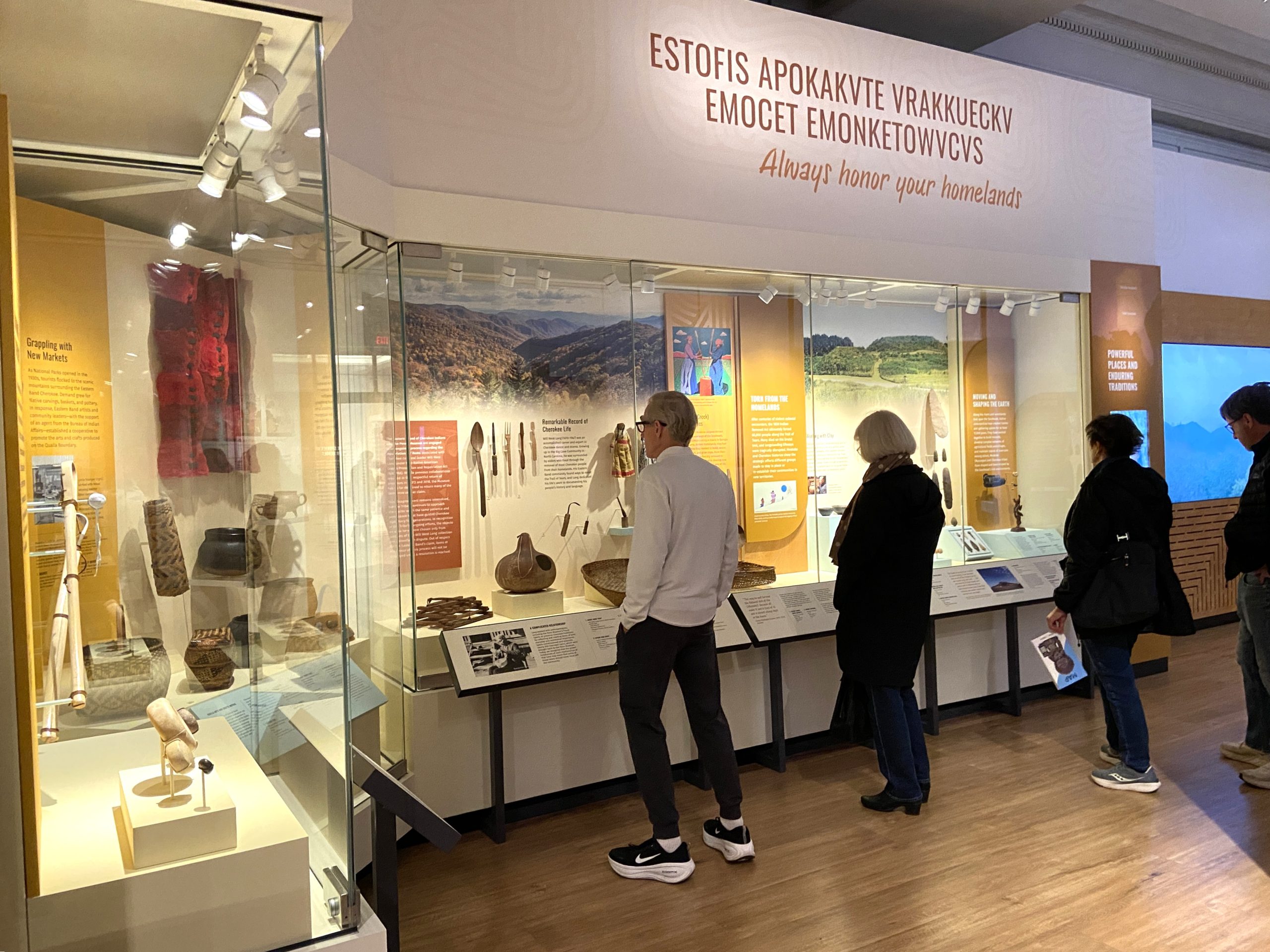
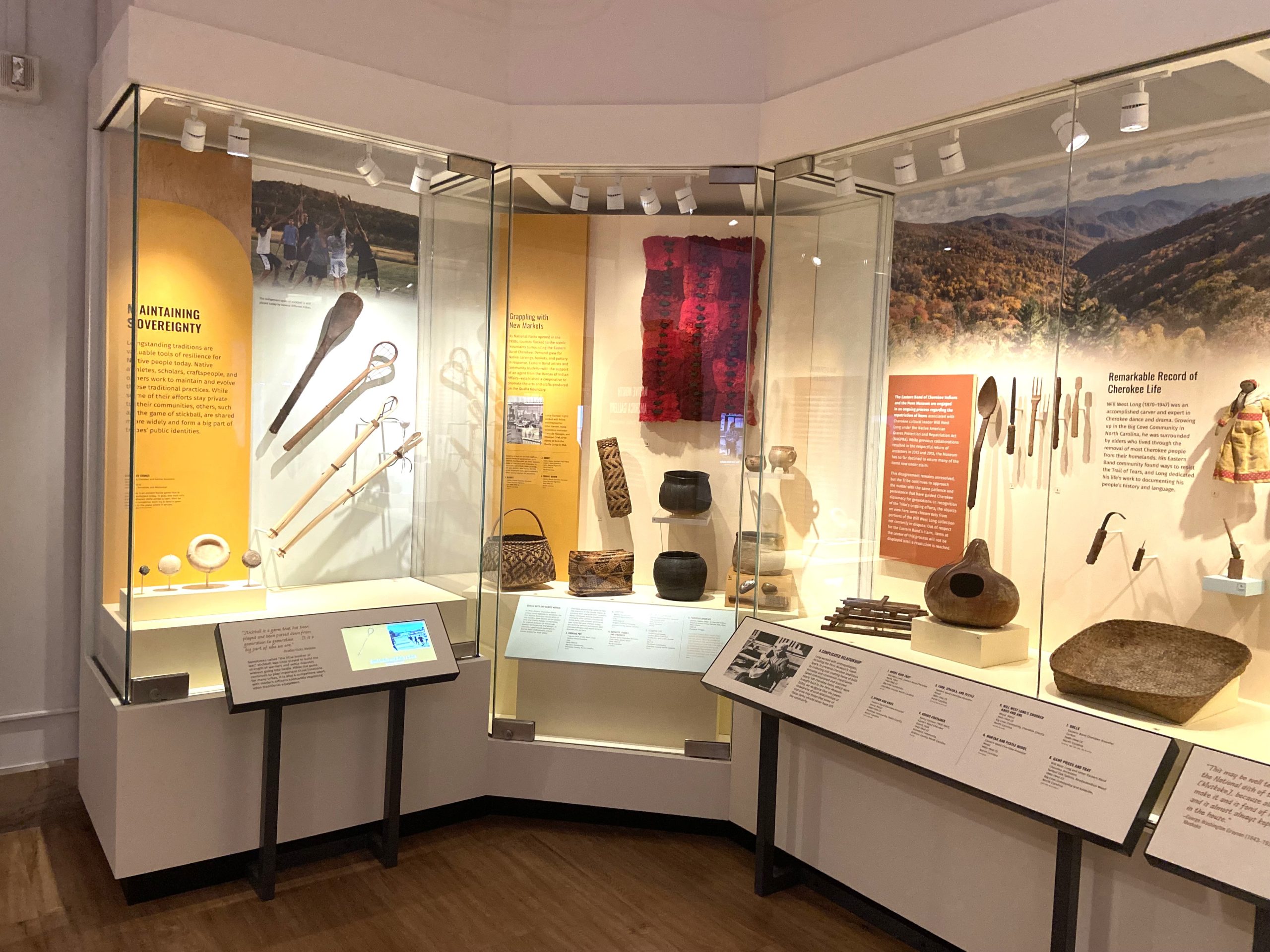
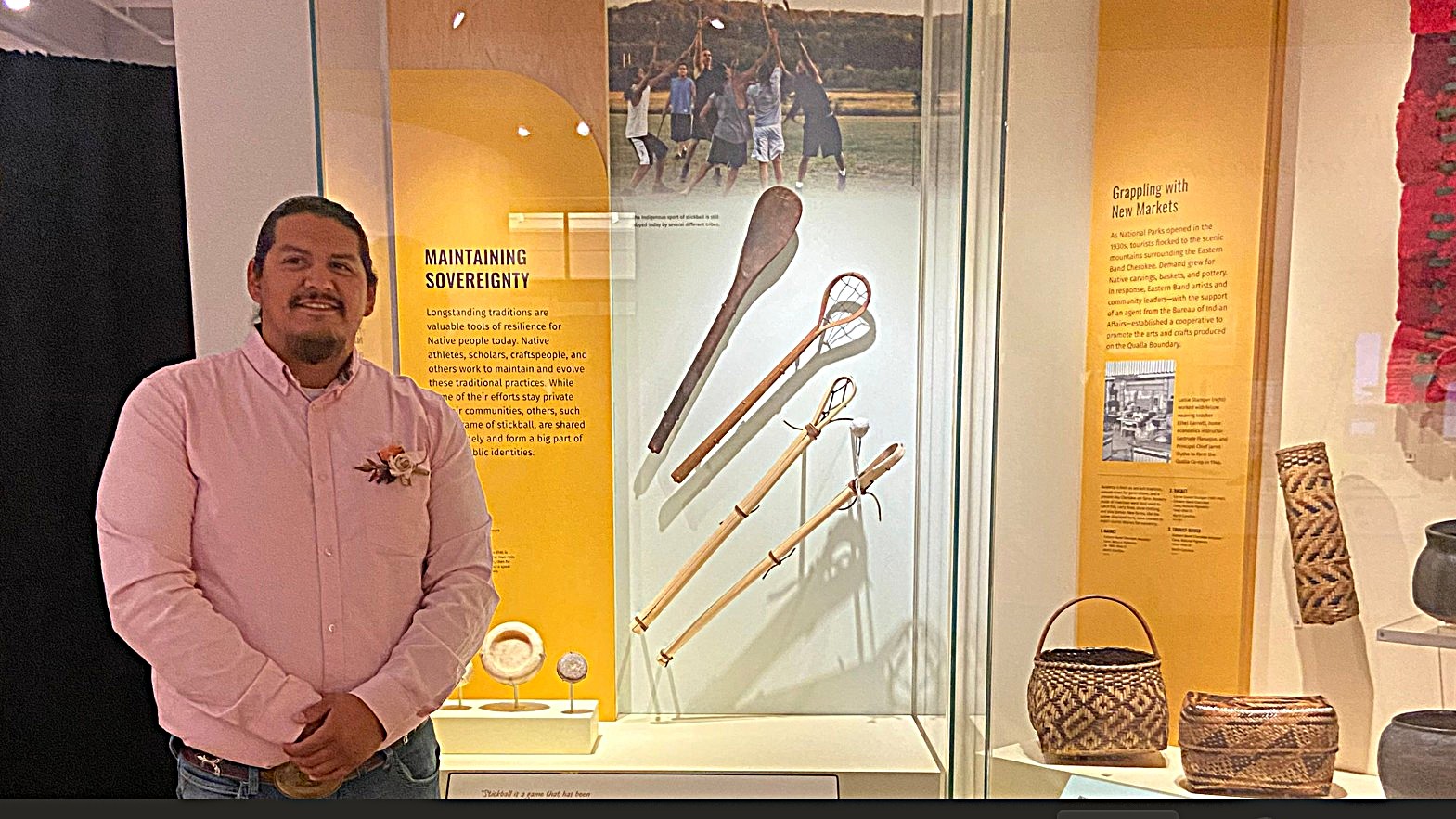
In the Southeast section, panels and items examine experiences and traditions of the Cherokee and Muscogee (Creek) peoples. Among these are the role of stickball, with a video and displays of old and new stickball sticks, the latter made of hickory by Bradley Hicks, Muscogee (Creek); the history of the Trail of Tears; and information about the sophisticated technologies and engineering techniques used by the Mound Builders of the Southeast, direct ancestors of the Cherokee and Muscogee. Consulting Curator RaeLynn Butler speaks in a video in the exhibit and also participated in the press preview and opening ceremonies, where she noted that “mounds are still a part of the culture” and are “physical representations of a way of life.”
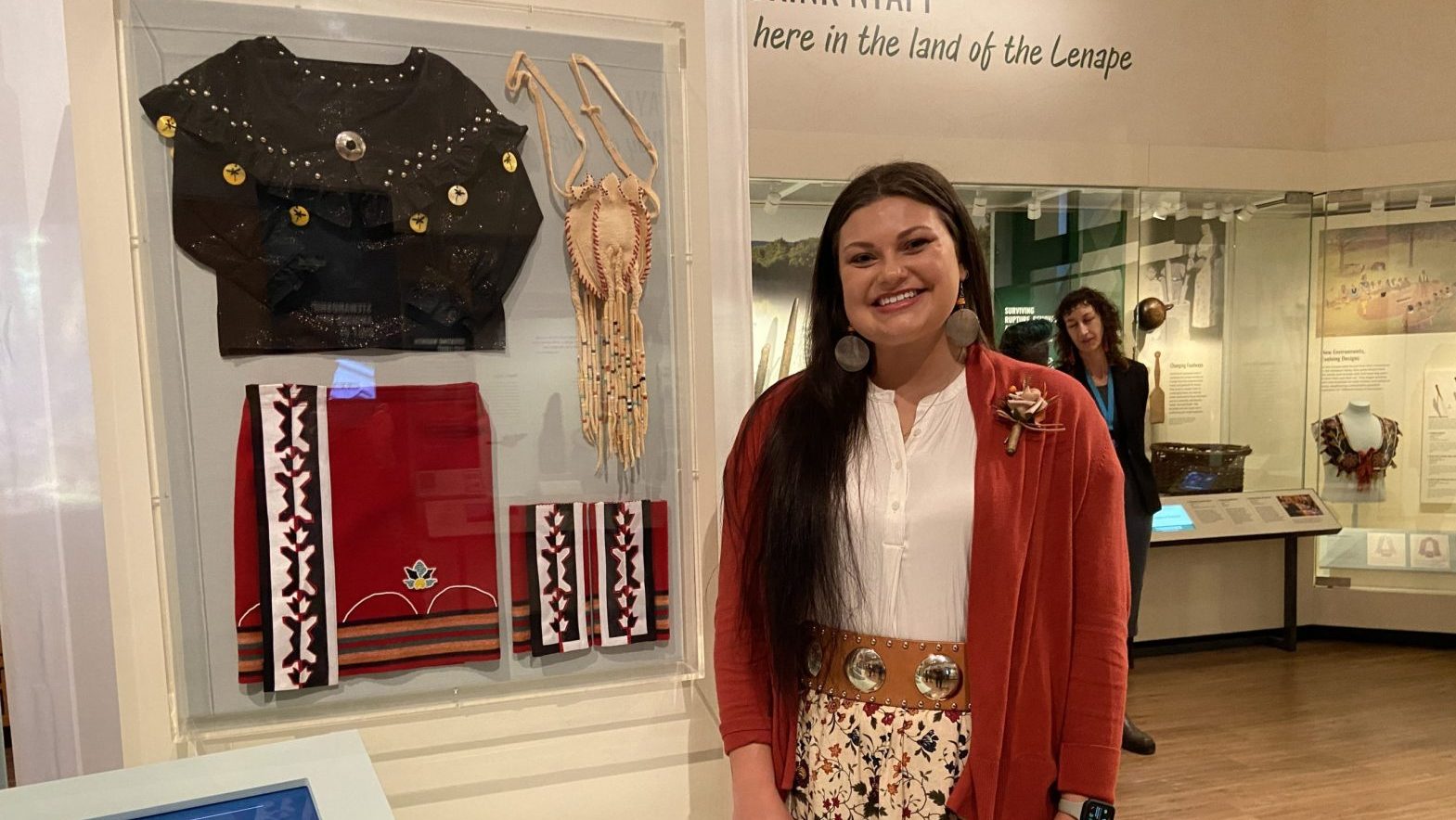
Interactive displays fill the center of the gallery, including stations where visitors learn about topics such as Native languages and how Native researchers and specialists are working with museums to present their cultures as resilient and surviving. Other displays show how Native artists and scholars can look at museum collections to recover their ancestors’ practices, such as Consulting Curator Christopher Lewis (Zuni) studying historical yucca fiber pot rings (used for cushioning ceramic vessels) and reviving a plaiting technique. At a press preview, Side of Culture spoke with Lenape artist Quay Hosey, who created the traditional girls’ clothing on display. Hosey commented that she added dyed shells with hand-painted dragonflies on a blouse collar to “represent her personal touch as the artist.” A touchscreen offers a deeper dive into the process and design.
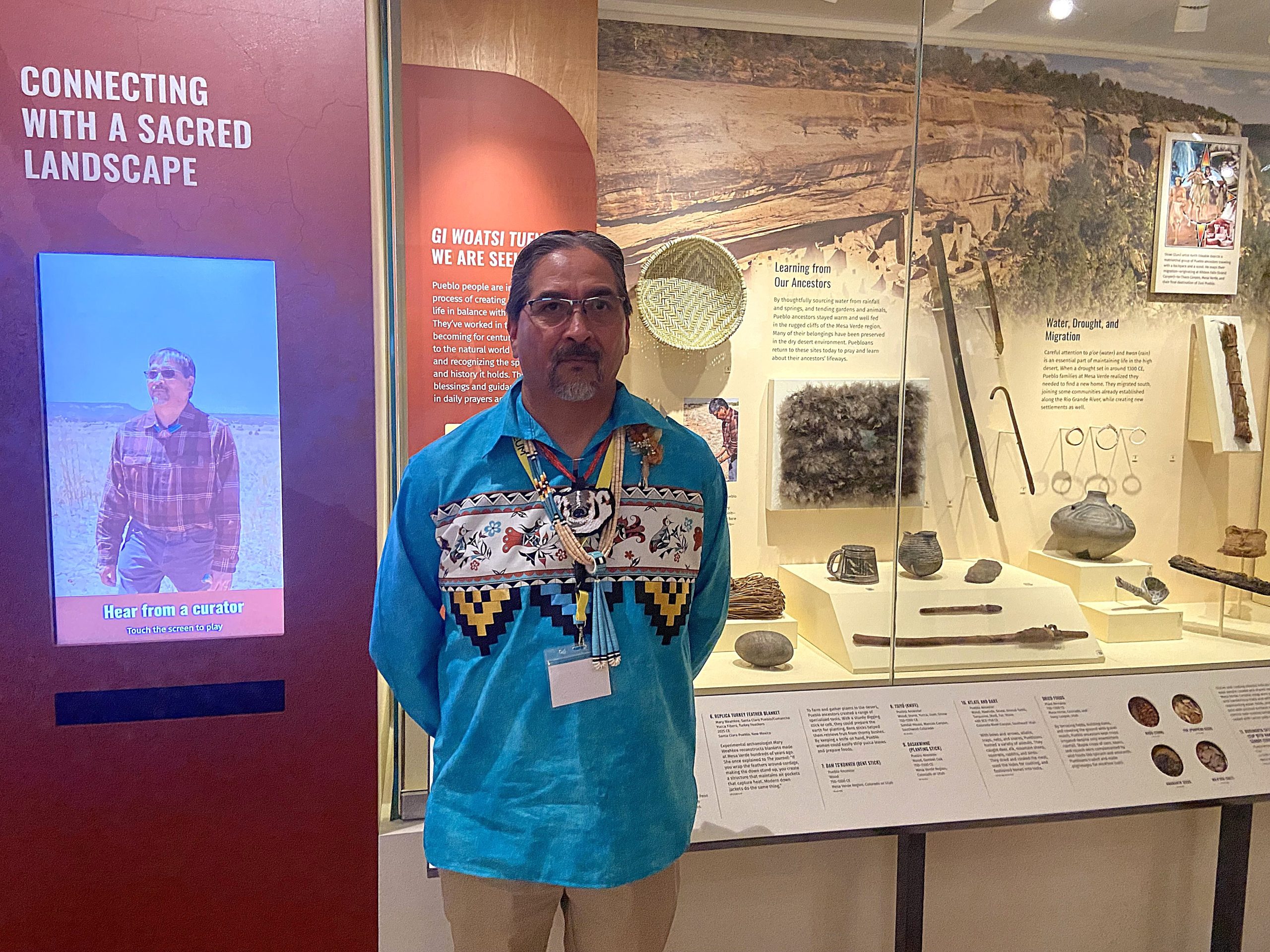
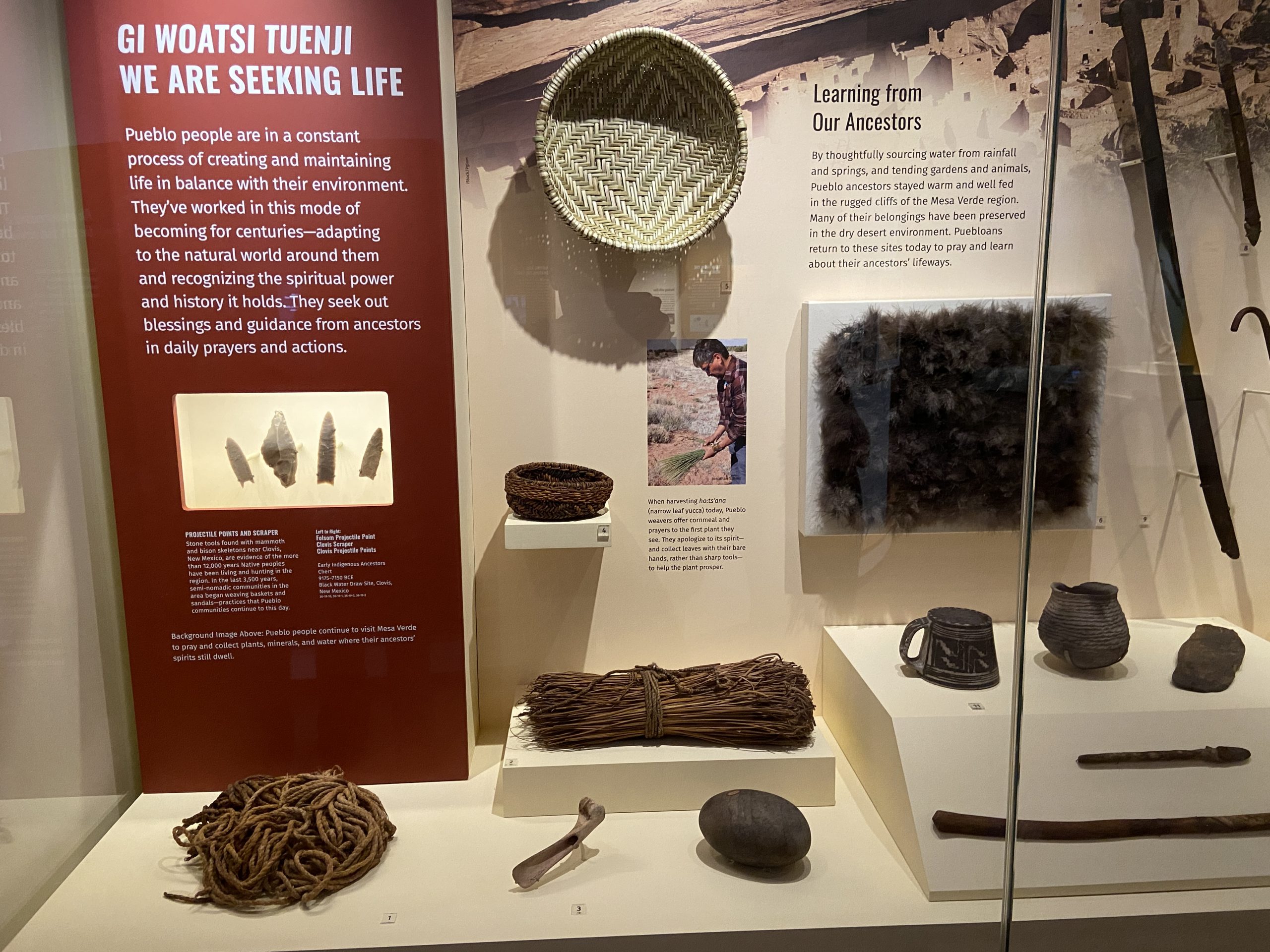
The Consulting Curators listed here brought a wide range of experience to the gallery: Joseph Aguilar, Ph.D., Archaeologist and San Ildefonso Pueblo Tribal Historic Preservation Board Member; RaeLynn Butler, Secretary of Culture and Humanities, Muscogee (Creek) Nation; Beau Carroll, Lead Archaeologist, Tribal Historic Preservation Office, Eastern Band of Cherokee Indians; Nadia Jackinsky-Sethi, Ph.D., Art Historian and Museum Consultant, Alutiiq; Jeremy Johnson, Cultural Education Director, Delaware Tribe of Indians; Christopher Lewis, Fiber Artist and Educator, Zuni Pueblo; Darlene See, Cultural Heritage Director, Huna Indian Association (HIA), Tribal House Management, Lingít and Unangan; and Mary Weahkee, Archaeologist and Anthropologist, Santa Clara Pueblo and Comanche.
Looking Forward
The collaborative efforts continue, as the Consulting Curators are authoring an edition of Expedition, the Penn Museum’s member magazine. The museum is also offering tours of the Native North America Gallery through March 2026.
In May 2026, the museum will celebrate the installation of a large-scale mixed-media work by Holly Wilson for its East Entrance, used as an entryway to its Academic Wing and by groups such as student visitors. With a theme of “Native Futurism,” the commission includes a 20-foot-long photorealistic painting. Noting that the theme refers to children, Wilson has commented that she wants people to see hope in the work: “We’re still here. That’s why I use kid imagery. The importance of who they are and where they will fit will live on with them. That’s the future.”
Holly Wilson will participate in talks and workshops at the museum on October 10, 2026, for Indigenous Peoples’ Day. These events, honoring the nation’s first inhabitants, are part of celebrations during Philadelphia’s 52 Weeks of Firsts, created for America’s 250th birthday. It’s a reminder that acknowledging and studying the history and resilience of Native communities can make us all stronger as a nation.
Linda Cabasin is a travel editor and writer who covered the globe at Fodor’s before taking up the freelance life. Writing this story gave her a fresh look at the University of Pennsylvania, her alma mater. She is a writer for Fodor’s Philadelphia and a contributing editor at Fathom. Follow Linda on Instagram at @lcabasin.
Featured Photo: The Southwest section about the Pueblo people features a photo background (center) of part of Mesa Verde, home of the Ancestral Pueblo people. Photo by Quinn R. Brown for the Penn Museum